作者: admin

  • Belize River “Devastated” by Fish Kill, Researcher Says; Endangered Hicatee and Crocodiles Among the Dead

    Belize River “Devastated” by Fish Kill, Researcher Says; Endangered Hicatee and Crocodiles Among the Dead

    A catastrophic mass wildlife mortality event along Belize’s primary waterway, the Belize River, has left ecologists sounding alarm bells over long-term ecosystem damage, after critically endangered species were confirmed among the thousands of dead animals. As of August 11, 2026, researchers report the worst of the die-off appears to be receding, but the irreversible harm already done threatens to alter the river’s ecological balance for years to come.

    Leading the on-site assessment is Dr. Donald McKnight, aquatic ecologist and research director at the Savannah Field Station near the Belize Zoo. McKnight explained that the river’s steady current has helped flush the harmful trigger of the kill through the system, meaning large-scale new deaths have become rare. “We’re still spotting a handful of fresh fish carcasses here and there, but the majority of the dead wildlife died several days ago, and the large-scale die-offs have stopped,” he noted in his on-river briefing.

    But the slowdown of deaths offers little comfort to conservation teams, who have documented that losses extend far beyond common fish species. Among the dead are multiple hicatee turtles — a critically endangered reptile that conservation programs have spent decades working to recover — as well as crocodiles. McKnight described the scale of loss as “pretty devastating” for the river’s unique, already vulnerable ecosystem.

    Local residents have provided key clues to the potential cause, reporting that the river’s water turned noticeably dark before clearing gradually in recent days. McKnight says this observation rules out a purely naturally occurring event, pointing instead to an external contaminant introduced into the river’s flow.

    “Algal blooms, one common cause of large fish kills, almost never develop in fast-flowing water systems like the Belize River,” he explained. “A bloom could form in a stagnant side channel or lagoon and then spill into the main river, but the water discoloration residents saw suggests an outside pollutant entered the system directly.”

    The leading working hypothesis points to agricultural runoff as the most likely culprit, McKnight said, such as an overflow from a pesticide or fertilizer retention pond that sent contaminated water into the river. Other potential causes, including toxic chemical pollution and algal toxin intrusion, have not been ruled out, however. Research teams are currently collecting water and tissue samples and coordinating with environmental authorities to pinpoint the exact source of the mortality event.

    Conservation scientists warn the damage will not end with the already confirmed deaths. Predators and scavengers that feed on the contaminated carcasses face secondary poisoning, which could extend the die-off to terrestrial and avian species connected to the river ecosystem. The loss of large numbers of hicatee and crocodiles — both keystone species that shape the river’s food web — is also expected to create cascading ecological impacts that will persist for generations.

    The Belize Department of the Environment’s formal investigation remains active as of the latest update. A precautionary public advisory first issued on August 5 remains in full effect, urging residents to avoid consuming any fish or aquatic resources harvested from the affected Belize River Valley region. The advisory also bans the use of untreated river water for drinking, cooking, food preparation, and consumption by livestock or domestic pets.

  • Tropical Disturbance Could Become Threat to Caribbean Islands

    Tropical Disturbance Could Become Threat to Caribbean Islands

    As weather monitoring agencies across the Atlantic track emerging cyclonic activity, a senior meteorologist from Antigua and Barbuda is calling on Caribbean communities to stay alert to a growing tropical disturbance that could put the region’s island chain at risk in the coming days.

    Dale Destin, the lead meteorologist for Antigua and Barbuda, issued a public advisory on Tuesday highlighting the active disturbance currently churning across the eastern stretch of the tropical North Atlantic. “There is a #TropicalDisturbance (red) of interest to the Caribbean over the eastern tropical North Atlantic. All are asked to monitor this system, as it could become a threat to the islands,” Destin shared in his social media alert.

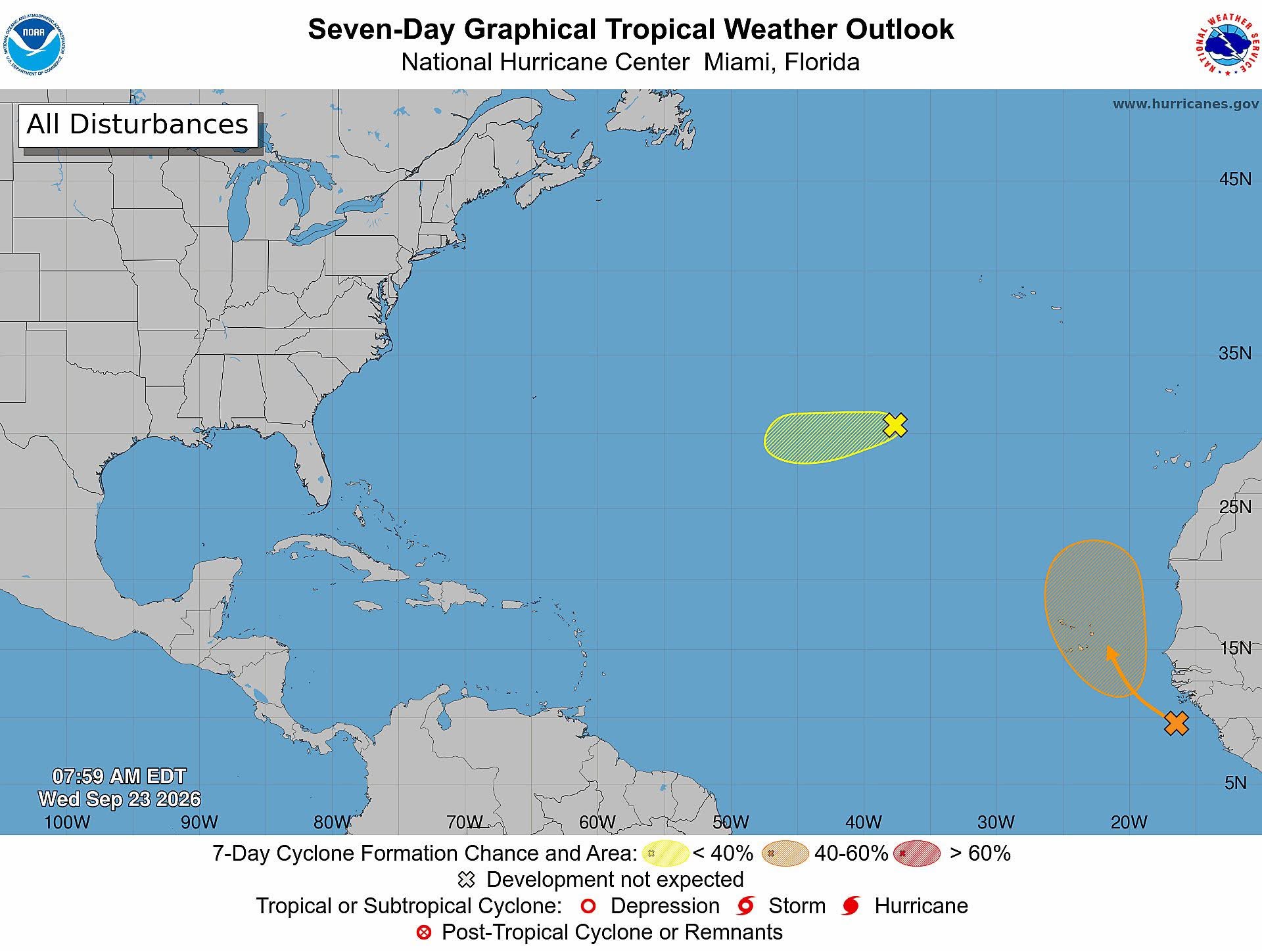
    Destin’s warning aligns with updated forecasts from the United States’ National Hurricane Center (NHC), which has upgraded the system’s odds of developing into a organized tropical depression to high probability by the end of this week. As of the NHC’s 2 p.m. Tropical Weather Outlook released Tuesday, the unorganized cluster of showers and thunderstorms is located roughly 550 miles southwest of the Cabo Verde Islands, off the western coast of Africa.

    Forecasters at the NHC note that atmospheric and oceanic conditions across the Atlantic are becoming steadily more supportive of cyclonic development over the next 48 to 72 hours. “A tropical depression will likely form during the latter half of this week while the system moves westward to west-northwestward across the central tropical Atlantic,” the agency’s official outlook stated.

    Current probability forecasts put the system’s chance of organizing into a tropical cyclone within 48 hours at 40%, while the seven-day development probability holds at a high 70%. While meteorologists emphasize it remains too early to definitively project what, if any, direct impacts the system will bring to Antigua and Barbuda or the broader Caribbean region, Destin’s early advisory underscores the need for residents to track the system’s westward progression closely and prepare for potential changes in conditions.

    In addition to the high-priority disturbance, forecasters have cleared a second system that was being monitored earlier this week. Destin confirmed that the previously tracked second area of interest, marked on regional weather maps with a grey X, is no longer forecast to develop into a cyclonic system.

    Separately, the NHC is continuing to monitor a third weather system: a trough of low pressure located roughly 750 miles east-northeast of Bermuda. This system carries a 20% probability of development over both the 48-hour and seven-day forecast windows. Forecasters project that the low-pressure trough will move into cooler ocean waters later this week, eliminating any chance of sustained cyclonic development by Thursday.

  • Landelijk onderzoek bevestigt dominante positie sociale media in Suriname

    Landelijk onderzoek bevestigt dominante positie sociale media in Suriname

    A landmark nationally representative survey has confirmed what many observers have suspected: social media has become the overwhelmingly dominant media platform in Suriname, reshaping how the country’s population accesses information and interacts with content. The 2024 Landelijk Perceptieonderzoek Suriname 3.0, carried out by the Suriname Institute for Research and Documentation (NIKOS), finds that 69% of the country’s adult population identifies social media as their most frequently used media platform — more than double the combined share of all traditional media: television, radio, and print newspapers.

    What sets this research apart is its rigorous methodological design, which allows it to claim representative insight into Surinamese media habits. Between June 25 and July 21, researchers surveyed 1,786 Surinamese adults aged 18 and older, selected via random sampling from the country’s 2025 voter registry. Fieldwork was conducted across 49 administrative ressorten spread across nine of Suriname’s ten districts, with only the remote inland district of Sipaliwini excluded from data collection. Researchers note that the random sampling approach ensures the findings accurately reflect the attitudes and behavior of the broader Surinamese population.

    Breaking down the data by age groups reveals a stark generational divide in media use. Among adults aged 18 to 39, dominance of social media is nearly complete: 88% name it as their most used medium, with television capturing just 7%, radio 4%, and print newspapers a mere 1% of this demographic. Even among the middle-aged cohort of 40 to 59-year-olds, social media retains a strong lead, with 72% identifying it as their primary platform, compared to 15% for television, 9% for radio, and 3% for print.

    The media landscape looks far different for Suriname’s oldest adult population, those aged 60 and above. Even here, social media holds a tied first place at 34%, matching the share of television. Radio remains relevant for 23% of this age group, while 8% still name print newspapers as their most used medium. This split means Suriname effectively hosts two distinct media ecosystems within one society: a digital-first ecosystem for younger citizens that centers almost entirely on social platforms, and a more diversified landscape for older citizens that retains a large role for traditional broadcast and print media.

    Among traditional media, television retains the strongest position nationwide, ranking second overall with 17% of adults naming it their primary medium. Radio, once the leading medium in Suriname, now holds just a 10% share nationwide, though it remains important for older audiences. Print newspapers have seen the steepest decline: just 4% of all adults, and only 1% of young adults, name it as their most used medium, with the share rising only to 8% among adults over 60.

    Importantly, researchers emphasize that the findings do not mean 69% of Surinamese exclusively consume news via social media. The survey question specifically asked which medium respondents use most often, not which they use at all. The data therefore cannot be read as direct market share for news outlets, nor as evidence that traditional media are no longer used by most of the population.

    The survey’s results carry major implications for Suriname’s news organizations and journalism industry. The shift confirms that reaching younger audiences is now overwhelmingly dependent on distribution through social platforms. While the core journalistic mission of providing verified, balanced, and reliable news remains unchanged, the pathway through which news reaches the public has fundamentally shifted. News outlets now face the critical challenge of maintaining a visible presence on the social platforms where their audience already engages, without sacrificing core journalistic standards of accuracy and verification to prioritize speed and broader reach.

    At the same time, the data makes clear that traditional media cannot be written off entirely. Television and radio remain critical sources of information for older population segments, meaning a media strategy that focuses exclusively on either digital or traditional platforms will fail to serve large swathes of Surinamese society. The study lays bare a fundamental transformation of the country’s media landscape: the competition for audience attention in Suriname is increasingly fought on digital terrain. For Suriname’s journalism sector, the central question is no longer whether social media needs to be part of news provision, but how journalistic organizations can remain visible and relevant on these platforms without eroding the public trust that comes from reliable, ethical reporting.

  • BMS discontinues dust haze advisory

    BMS discontinues dust haze advisory

    After days of reduced air quality driven by a thick blanket of Saharan dust, Barbados has officially ended its public Significant Dust Haze Advisory, meteorological officials confirmed this week. The Barbados Meteorological Services (BMS) announced the discontinuation of the advisory at noon local time, attributing the improving air conditions to an incoming tropical wave that is pushing the bulk of the dust plume away from the island and the wider Caribbean region.

    While the strongest dust concentrations are receding, BMS cautions that residual light to moderate haze will linger across Barbados and its surrounding territorial waters through the end of the current day and overnight. For residents and travelers monitoring air quality, the reprieve from heavy haze may be short-lived: latest satellite imagery tracked a separate mass of moderate Saharan dust across the central Atlantic that is on track to reach Barbados starting Thursday, August 13, with impacts expected to last through the following weekend.

    Saharan dust plumes are a recurring seasonal phenomenon in the Caribbean, carried westward across the Atlantic by trade winds, and can trigger respiratory irritation, reduced visibility, and changes to local weather patterns during periods of high concentration.

  • Taiwan welcomes PM Friday with military honour, state banquet

    Taiwan welcomes PM Friday with military honour, state banquet

    St. Vincent and the Grenadines (SVG) Prime Minister Godwin Friday arrived in Taipei, Taiwan on Tuesday for an official visit, marking his first intercontinental overseas trip since he took office in November last year. He was extended a formal welcome with full military honours, capping off a day of diplomatic engagements designed to strengthen the 45-year bilateral relationship between the two sides.

    Leading a nine-member official delegation, Friday was first greeted at Taipei’s airport by Taiwan’s Minister of Foreign Affairs Lin Chia-Lung. Following the arrival ceremony, Lin hosted a private luncheon for Friday and his delegation, where the two sides held preliminary discussions on avenues to deepen cooperation and people-to-people ties ahead of higher-level talks.

    Later that afternoon, Friday was welcomed with formal military honours at Taiwan’s Office of the President, where he met with Taiwan leader Lai Ching-te. Speaking at the ceremony, Friday reaffirmed SVG’s commitment to building on the four-and-a-half decades of diplomatic relations between Kingstown and Taipei, which were first established on August 15, 1981 — just two years after SVG gained full independence.

    Reflecting on the evolution of the bilateral partnership, Friday noted that what began as a formal diplomatic recognition has grown into a deep, mutually beneficial alliance. “Over the years since, that initial act has blossomed into a deep and fruitful friendship. Indeed, I believe that St. Vincent and the Grenadines and Taiwan have become more than friends. We have become partners,” he said.

    Friday framed this partnership through two key global contexts: the ongoing exclusion of Taiwan from many major international forums, and the unique vulnerabilities small island developing states (SIDS) like SVG face in the face of climate change, natural disasters, and cascading global economic shocks driven by conflicts thousands of miles from Caribbean shores. Over 45 years, he emphasized, the two nations have weathered shared challenges together, and the history of their ties provides a foundation — but not the limit — for future collaboration.

    Outlining his administration’s core priorities, Friday stated that SVG’s central mandate is improving living standards for all Vincentians amid a challenging global economic climate. He added that this goal requires partnership with a nation that shares a commitment to people-centered development, a standard he said Taiwan has consistently met. “Taiwan has demonstrated exactly that. You have shown the world what is possible when innovation, enterprise and human talent are deliberately cultivated,” he noted, adding that Taiwan’s outsized global impact defies assumptions about the limitations of its size, powered by the resourcefulness of its people.

    For four and a half decades, Friday said, Taiwan has invested in developing human capital in SVG, and in return, SVG has consistently advocated for Taiwan’s interests in multilateral bodies including the United Nations, its specialized agencies, and INTERPOL. He pledged that this support would continue and expand in the coming years.

    Looking ahead to expanded economic cooperation, Friday identified four key priority sectors for targeted investment in SVG: agriculture, tourism, the blue economy (encompassing fisheries, marinas and other maritime resources), and the new economy, which includes sports, creative industries, entertainment and information technology. He stressed that even modest investment in SVG can deliver outsized gains, creating new opportunities and quality jobs for local workers, echoing Taiwan’s example of pursuing ambitious people-centered goals regardless of a nation’s size.

    Highlighting SVG’s competitive advantages, Friday noted the Caribbean nation boasts a skilled workforce, extraordinary natural landscapes, a strategic regional position, and a government committed to building a pro-investment regulatory environment that supports business growth and shared prosperity. “What we do now will determine what this relationship means to the Vincentian and Taiwanese children who will inherit it. That is the responsibility of leadership: to honour what we inherit but never to be satisfied with simply preserving it. We must leave it stronger, more meaningful and more useful for those who come after,” he said.

    Framing his visit as an opportunity to write the next chapter of the bilateral relationship, Friday concluded his remarks by thanking Lai and the Taiwanese people for their warm, distinguished welcome, expressing optimism about the shared work ahead. Following the formal honour ceremony, Lai and Friday held closed-door bilateral discussions to advance cooperation across priority areas. Lai later hosted a formal state banquet in honour of the SVG delegation, and the day concluded with a visit to Taipei’s iconic Shilin Night Market. Friday remarked that the vibrant local market offered a useful blueprint for the future development of Middle Street in Kingstown, SVG’s capital.

    The nine-member delegation includes Friday’s wife Ave Friday, SVG Minister of Foreign Affairs, Foreign Trade, Foreign Investments and Diaspora Affairs Dwight Fitzgerald Bramble, Attorney General Louise Mitchell, Ambassador for Finance, Climate and Investment Kevin Hope, Press Secretary Danielle Veira, Research Officer Addison Thomas, and Close Protection Officers Desrick Quashie and Twana Da Silva. The trip is being coordinated by SVG’s Ambassador to Taiwan Kenton X. Chance, his wife Symantha Chance, and the staff of SVG’s embassy in Taipei. Friday and his delegation are scheduled to depart Taiwan and return to SVG on August 16.

  • NHC Tracking Two Systems in the Atlantic, One With High Chance of Development

    NHC Tracking Two Systems in the Atlantic, One With High Chance of Development

    As the 2026 Atlantic hurricane season continues, the United States National Hurricane Center (NHC) is keeping close watch on two separate low-pressure systems moving across the basin this week, with one system holding a strong probability of maturing into a tropical depression before the end of the week.

    Per the NHC’s latest official Tropical Weather Outlook, the first of the two monitored disturbances is situated in the central tropical Atlantic, centered roughly 500 miles to the southwest of the Cabo Verde Islands. While shower and thunderstorm activity linked to this low-pressure system has remained limited in recent observations, meteorologists with the agency have projected that environmental conditions will become increasingly conducive to strengthening over the coming 48 to 72 hours.

    Forecasters project that as the system tracks on a west to west-northwest course across the central tropical Atlantic, it will likely organize into a tropical depression during the second half of this week. Right now, the NHC assigns this system just a 30% probability of development within the next 48 hours, but that chance climbs significantly to 70% — a high likelihood rating — over the full seven-day forecast window.

    The second system under monitoring is a trough of low pressure located several hundred miles northeast of Bermuda, which is currently generating scattered showers and thunderstorms across the central subtropical Atlantic. The NHC notes that limited, slow development of this system cannot be ruled out over the next 24 to 48 hours as it travels eastward at around 20 miles per hour. However, the system is on track to reach much cooler ocean waters later this week, a shift in conditions that will halt any further organization by Thursday. For this second disturbance, the NHC pegs development odds at just 10% over both the 48-hour and seven-day forecast periods.

    Amid ongoing monitoring for the active hurricane season, the NHC confirmed that it will continue issuing regular updates on both systems as they progress across the Atlantic, updating forecast probabilities and development status as new observational data becomes available.

  • National Hurricane Centre: 70 per cent chance of Atlantic system developing

    National Hurricane Centre: 70 per cent chance of Atlantic system developing

    The U.S. National Hurricane Center (NHC) is actively tracking three distinct weather systems moving across the Atlantic Ocean this week, with one disturbance carrying a 70% probability of strengthening into a tropical depression within the next seven days. The first and most closely monitored system is currently positioned roughly 500 miles southwest of the Cabo Verde Islands off the west coast of Africa. Though it only generates scattered showers and isolated thunderstorms at this early stage, forecasters project that the system will enter a region of increasingly favorable atmospheric and oceanic conditions over the coming days. As the disturbance tracks generally west to west-northwest across the central tropical Atlantic, the NHC anticipates that a full tropical depression will likely form by the second half of this week. The odds of organized development within the next 48 hours stand at a more moderate 30%, before climbing to the 70% 7-day probability. A second system, a separate tropical wave, is located approximately 600 miles east of the Windward Islands. Like the first disturbance, it currently produces scattered, disorganized showers and thunderstorm activity, but forecasters say significant strengthening is extremely unlikely. As the wave approaches the Lesser Antilles, it will push through a broad expanse of dry air that inhibits tropical cyclone formation. The NHC estimates the chance of this system developing into a named cyclone is effectively zero across both the 48-hour and seven-day forecasting windows. Even with near-zero development potential, the weather system still carries localized hazards for the region: forecasters warn it could bring brief periods of heavy rain and sudden gusty winds to portions of the Lesser Antilles over the next 48 hours. The third system being monitored is a trough of low pressure located several hundred miles northeast of Bermuda. This system has a 10% chance of tropical development over the next seven days. It is projected to track eastward at around 20 miles per hour, and by later this week it will reach cooler North Atlantic waters, where conditions become far less hospitable for sustained tropical cyclone growth. Forecasters will continue updating development probabilities and track projections as the systems progress across the Atlantic, in line with standard hurricane season monitoring protocols.

  • Dominica adds its voice to global Indigenous Peoples Day celebration

    Dominica adds its voice to global Indigenous Peoples Day celebration

    Earlier this week, the Caribbean island nation of Dominica joined Indigenous communities across the globe to observe the United Nations International Day of the World’s Indigenous Peoples, marked annually on August 9. First formally adopted by the UN in 1994, the observance commemorates the inaugural 1982 meeting of the UN Working Group on Indigenous Populations, convened in Geneva under the former Sub-Commission on the Promotion and Protection of Human Rights.

    For Dominica, this annual commemoration carries unique national meaning: the Kalinago people, the island’s largest Indigenous group with approximately 3,000 members concentrated along Dominica’s eastern coast, remain a vibrant, living community whose identity continues to shape the nation’s present and future trajectory. In his official address marking the occasion, Cozier Frederick, Dominica’s Minister for Kalinago Upliftment, centered the 2025 UN theme *“Honouring Indigenous Midwives: Safeguarding Life and Well-being”* to celebrate the intergenerational legacy of Indigenous women who have sustained Kalinago culture and community through their work.

    Frederick emphasized that Kalinago midwifery has never been limited to clinical healthcare. For generations, these women have blended ancient traditional knowledge with evolving modern medical practices, serving mothers in private homes, community health clinics, and hospital settings alike. Their work, he argued, underpins cultural continuity, community cohesion, and collective survival, bridging generations by welcoming new Kalinago people into the world and passing down ancestral identity alongside care.

    In a moving portion of his address, Frederick publicly named six distinguished Kalinago midwives whose decades of service have shaped the community: Bernadette John Frederick, Bernadette Sanderson, Doreen Ettienne, Sylvie Paris-Warrington, Winnie Joseph, and Porshia Burton. The tribute carried deep personal meaning for the minister: Bernadette John Frederick, the first name on the list, is his grandmother, and the midwife who delivered him into the world. “That is a debt no public office can ever repay,” Frederick noted, tying his own life story directly to the legacy he honored.

    Beyond remembrance, Frederick stressed that symbolic celebration of Indigenous heritage must be paired with concrete action to advance Indigenous rights, protect cultural diversity, and safeguard traditional knowledge. He outlined the Ministry of Kalinago Upliftment’s ongoing core commitments: preserving the Kalinago language and cultural traditions, expanding inclusive economic opportunities for the community, building local climate resilience, and empowering younger generations of Kalinago to lead their community’s future.

    A core argument of Frederick’s address pushed back against common framing of Indigenous knowledge as a relic of the past. He noted that ancestral ecological and communal wisdom offers critical, underutilized insights for addressing modern global challenges, most notably climate change, and building more equitable, sustainable futures for all communities. “When an Indigenous language disappears, humanity loses a language. When traditional knowledge disappears, humanity loses knowledge,” he said, emphasizing that protecting Indigenous heritage is not a parochial concern for individual communities—it is a global responsibility that benefits all of humanity.

    Global UN data underscores the widespread impact of Indigenous cultures: Indigenous peoples make up roughly 5% of the global population (around 476 million people), represent more than 5,000 distinct cultures, and speak the majority of the world’s 7,000 existing languages. Closing his address, Frederick called on Kalinago community members and Indigenous peoples worldwide to continue stewarding their heritage, strengthening their communities, and carrying their stories forward for future generations, affirming: “We are still here. And we will continue to be here. We will continue to remember. We will continue to protect. We will continue to build. And we will continue to tell our stories.”

  • Dominican Republic to host first Coconut Summit on August 13

    Dominican Republic to host first Coconut Summit on August 13

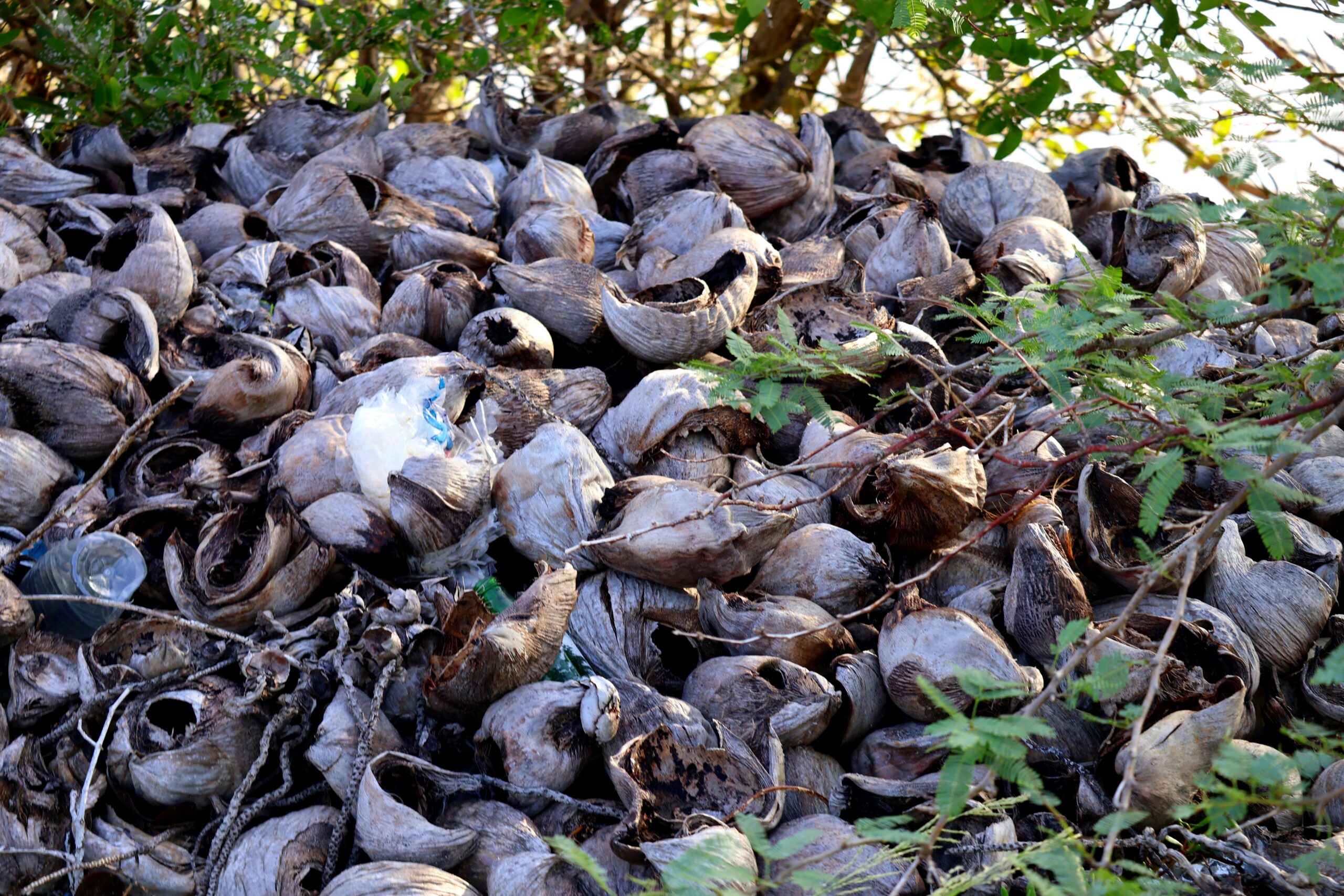
    The Caribbean nation of the Dominican Republic is gearing up to make history with its first ever national coconut industry gathering, DominiCoco 2026, scheduled to take place Thursday, August 13 at the InterContinental Hotel in the capital city of Santo Domingo. The one-day event will run from 9:00 a.m. to 7:00 p.m., welcoming a cross-section of stakeholders from across the global and local coconut sectors.

    Hosted by RAAS Irrigation Systems, the summit is designed to create a collaborative space where coconut growers, business leaders, venture capitalists, agricultural scientists, and representatives from national farming bodies can come together to dissect both the pressing challenges and untapped opportunities that exist across every link of the coconut value chain. Discussion topics will span the full scope of industry operations, from on-farm production and efficient water management techniques to large-scale industrial processing, global brand marketing, and cutting-edge product innovation.

    Attendees will work through a packed agenda that touches on critical industry data, including official updated national coconut production statistics. Other key sessions will focus on science-backed irrigation tactics designed to boost crop yields, proven frameworks for managing common coconut pests and diseases, advanced processing methods for high-demand coconut water, deep dives into coconut-based nutritional products, evolving global consumption trends, and an overview of attractive investment openings for both domestic and international market participants.

    A diverse lineup of speakers and panelists will travel to the capital for the event, drawing leading agricultural expertise from as far as Brazil alongside top executives from the Dominican Republic’s own leading agro-industrial firms. The centerpiece of the summit’s programming will be a headline panel discussion titled “The Future of Dominican Coconut: Production, Industry, Investment, and Territorial Development,” which will dig into actionable, long-term strategies to expand the sector’s domestic and global footprint.

    Event organizers note that the core mission of DominiCoco 2026 extends far beyond simple discussion. The summit is structured to facilitate meaningful cross-sector knowledge sharing, forge new collaborative business partnerships, and shine a spotlight on the enormous underutilized potential of coconut as a strategic crop for the Dominican Republic. Leaders behind the initiative emphasize that coconuts offer widespread, far-reaching opportunities across agricultural output, industrial value addition, and innovative product development that can drive broad-based economic growth across rural and urban regions of the country.

  • Santo Domingo and Puerto Rico’s Aguadilla partner to expand economic and cultural cooperation

    Santo Domingo and Puerto Rico’s Aguadilla partner to expand economic and cultural cooperation

    A new chapter of cross-island collaboration between two Caribbean municipalities has officially begun, as leaders from the Dominican Republic and Puerto Rico put pen to paper on a landmark sister city twinning agreement. On Wednesday, Carolina Mejía, mayor of the Dominican capital Santo Domingo, and Julio Roldán Concepción, mayor of the Puerto Rican coastal city of Aguadilla, formalized the partnership during a signing ceremony held at Santo Domingo’s City Hall.

    Far from a symbolic gesture, the agreement lays out a comprehensive multi-sector framework for joint work between the two local governments. The partnership covers a broad range of areas of mutual interest, from trade promotion, sustainable tourism development, and inclusive economic growth to educational exchanges, cultural programming, environmental conservation, and municipal administration innovation. It also places specific emphasis on creating opportunities to share expertise in two key community-focused projects: the revitalization of underused public spaces and sustainable park management.

    Speaking after the signing, Mejía framed the new sister city relationship as a distinct honor for Santo Domingo, emphasizing that both municipalities stand to gain significantly from pooling their knowledge and aligning their efforts. “By opening channels to share our unique local experiences, we can work hand in hand to raise the quality of public services for all the residents we serve,” Mejía noted.

    For his part, Roldán Concepción shared that the formal agreement was the culmination of three years of grassroots and administrative work, dating back to 2021 when both mayors first took office. He expressed enthusiasm that the long-discussed relationship between the two cities was now officially codified, cementing their status as official sister communities.

    Beyond the direct benefits for the two municipalities, the agreement is designed to reinforce the deep, decades-long cultural and economic bonds that already exist between the Dominican Republic and Puerto Rico. By formalizing local-level cooperation, the partnership paves the way for new collaborative opportunities that benefit not just city governments, but ordinary residents and community groups on both sides of the relationship.