作者: admin

  • Acties universiteitspersoneel opgeschort na overleg met vicepresident

    Acties universiteitspersoneel opgeschort na overleg met vicepresident

    A standoff between Suriname’s academic scientific staff and national authorities has moved toward de-escalation, after the Vakvereniging Wetenschappelijk Personeel Universiteit (VWPU), the union representing scientific staff at Anton de Kom University, agreed to suspend its industrial actions following high-level negotiations led by Surinamese Vice President Gregory Rusland. The talks, held earlier this month, brought together leadership from the university’s governing board and union representatives to address long-running grievances over working conditions and staff support that had prompted the union to ramp up protest actions in recent weeks.

    The Anton de Kom University board was led by chair Virginia Assin-Oostburg and vice chair Patrick Peneux during the discussions, while the VWPU delegation included its president Roy Badal, secretary Sunita Bipat, and treasurer Sanjeevkoemar Bisessar. Over the course of the meeting, participants thoroughly mapped out the core bottlenecks that had pushed the union to escalate its actions, centering on gaps in basic provisions for the university’s scientific workforce.

    Vice President Rusland opened the discussion by framing the issue of basic staff provisions—including competitive salaries and fair overall employment terms—as an issue that cannot be addressed in isolation. He emphasized that these demands are inherently tied to broader ongoing negotiations between the Surinamese government and national labor unions over working conditions for all public sector employees, a group that includes education workers alongside employees across other state-run sectors.

    Despite this broader context, Rusland confirmed that the government remains open to adopting targeted, immediate improvements to the working conditions of the university’s academic researchers and instructors. Specific measures tabled during the talks include institutional support for academic staff to purchase new work computers, upgrades to campus data connectivity and internet infrastructure, increased transportation stipends for faculty supervising students during off-site internships, and a limited end-of-year bonus to recognize additional academic workload.

    Under the terms of the preliminary agreement reached during the meeting, Vice President Rusland has ordered the university’s governing board to flesh out the full details of these proposed measures, with a final progress report due no later than this coming Friday. Once finalized, the proposals will be forwarded to relevant government authorities for coordination and final approval. The vice president’s office also confirmed that President Jennifer Simons has already been consulted on the framework, to ensure a coordinated, whole-of-government approach to resolving the dispute.

    Following the conclusion of productive talks, Rusland requested that VWPU leadership scale back its ongoing protest actions, a proposal that the union’s governing body put to a vote with its membership. The union ultimately approved the request, moving forward with a full suspension of all active industrial actions.

    Multiple participants in the meeting described the negotiations as taking place in a constructive, solution-focused atmosphere. Vice President Rusland emphasized that all stakeholders must uphold their shared social responsibility to advance progress for the country’s higher education sector. He stressed that collaborative effort is the only path to meaningful improvements for scientific staff, part of the government’s broader long-term goal of incrementally strengthening public services and working conditions for all Surinamese residents.

    Negotiations between the government and labor unions over broader public sector basic provisions remain ongoing, with no slowdown in discussions planned. Going forward, the government has committed to rolling out additional targeted measures in consultation with worker representatives as economic conditions allow. Officials also noted that the administration has already implemented a series of relief measures for workers and the general public, enacted to buffer the population against the impact of global economic shifts that have spilled over to affect Suriname’s domestic economy. The government has reiterated its commitment to mitigating these external impacts as much as possible within the country’s available fiscal resources.
  • Wereld reageert op ‘brutale’ Israëlische aanvallen op Libanon na VS-Iran staakt-het-vuren

    Wereld reageert op ‘brutale’ Israëlische aanvallen op Libanon na VS-Iran staakt-het-vuren

    Just hours after a two-week ceasefire between the United States and Iran was announced, Israeli forces launched devastating, wide-ranging bombardment across Lebanon that has left hundreds dead and thousands injured, sending shockwaves through the already volatile Middle East.

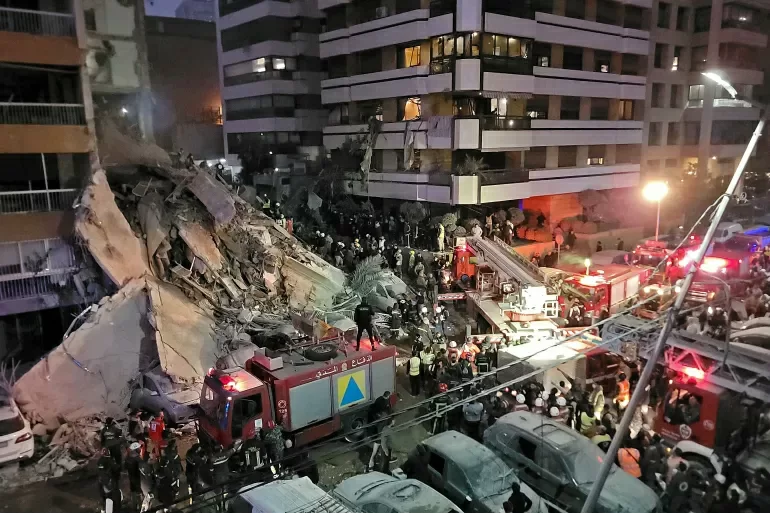
    Lebanese Civil Defense has confirmed that at least 254 people were killed and 1,165 more wounded in the airstrikes, which targeted locations across the country: including the Tallet al-Khayyat neighborhood of Beirut, the Bekaa Valley, the Lebanon Mountains, the coastal city of Sidon, and multiple villages in southern Lebanon. Emergency response workers and local residents have already gathered at the scene of the Beirut strike to recover victims and provide aid, according to AFP photos from the attack site.

    The Israel Defense Forces labeled the operation the largest coordinated assault on Lebanon since it launched a new military campaign in the country on March 1. IDF officials confirmed that the strikes targeted more than 100 Hezbollah command centers and military installations across the country.

    The scale of the casualties has overwhelmed Lebanon’s already strained healthcare system. Elias Chlela, head of the Lebanese Medical Association, issued an urgent call for all doctors to report to hospitals immediately to assist with the influx of wounded patients. One of Beirut’s largest hospitals also announced a critical need for blood donations of all blood types to support emergency operations.

    Dispute has already erupted over whether Lebanon falls under the scope of the newly announced U.S.-Iran ceasefire. Israeli Prime Minister Benjamin Netanyahu stated openly that Lebanon is not included in the ceasefire deal, arguing the truce does not apply to clashes with Hezbollah. U.S. President Donald Trump echoed this position, describing Lebanon as a separate case excluded from the agreement. However, Pakistan, which served as a mediator in the ceasefire negotiations, confirmed that Lebanon was intended to be covered by the truce, creating a major rift over the terms of the deal.

    Reactions from global actors and regional stakeholders have been swift and widespread: In Lebanon, Parliament Speaker Nabih Berri condemned the strikes on densely populated civilian areas as a full-fledged war crime. He noted the attack came immediately after the ceasefire announcement, calling it a serious test for the international community and a blatant violation of international law, while urging all Lebanese citizens to unite in solidarity with the victims.

    Lebanese armed group Hezbollah affirmed its inherent right to respond to the attacks, stating that the blood of its killed and wounded members will not be spilled in vain, and reaffirming its right to resist occupation. A Hezbollah member of parliament warned that the Israeli strikes constitute a serious violation of the ceasefire, and continued attacks will put the entire truce agreement at risk.

    On the Israeli side, Defense Minister Israel Katz explained that Israel intends to separate the conflict with Iran from its military campaign in Lebanon in order to fundamentally alter the situation on the ground. Netanyahu reaffirmed that Israeli operations will continue, as the ceasefire does not apply to Hezbollah targets.

    Iran’s leadership issued a stark warning that it will retaliate if Israel does not immediately halt its attacks on Lebanon. Iranian Foreign Minister Abbas Araghchi stressed that the terms of the ceasefire are clear, stating “The United States must choose: either a ceasefire, or war through Israel.” He added that the entire world is witnessing the bloodshed in Lebanon, and responsibility for any further escalation rests with the U.S.

    The U.S. maintained its position that Lebanon is excluded from the truce due to its conflict with Hezbollah, with Vice President JD Vance characterizing the disagreement over Lebanon’s inclusion as a legitimate misunderstanding of Iran’s position, in contrast to the Pakistani prime minister’s confirmation that Lebanon was part of the deal.

    Multiple regional and global governments have condemned the strikes. Qatar’s Foreign Ministry decried the brutal series of attacks as a dangerous escalation and a blatant violation of Lebanese sovereignty and international law, expressing full solidarity with Lebanon and calling on the international community to hold Israel accountable. Egypt condemned the bombardment as a premeditated attempt to undermine regional and international de-escalation efforts and plunge the entire region into chaos. Turkey’s Foreign Ministry strongly condemned the attacks, warning they will drastically worsen the already catastrophic humanitarian situation, and called on the international community to act immediately to end Israeli operations and protect civilian lives. Spanish Prime Minister Pedro Sánchez called Netanyahu’s disregard for civilian life and international law disgraceful, calling for Lebanon’s immediate inclusion in the ceasefire and the imposition of sanctions on Israel. Italian Foreign Minister Antonio Tajani expressed solidarity with Lebanon, warned the offensive could create a second Gaza conflict, and called on Israel to halt bombing and guarantee safe operating conditions for United Nations peacekeepers.

    United Nations officials issued a sharp condemnation of the strikes, calling for urgent diplomatic action to prevent further civilian casualties. The UN High Commissioner for Human Rights described the scale of destruction as appalling, and stressed that protecting civilian peace and safety must be the top priority. The International Committee of the Red Cross also expressed outrage over the deadly destruction in densely populated civilian areas, emphasizing that any regional ceasefire agreement must prioritize the safety and dignity of Lebanese civilians.

  • Greene Details Healthcare, Housing and Skills Investments in St. Paul’s Ahead of Election

    Greene Details Healthcare, Housing and Skills Investments in St. Paul’s Ahead of Election

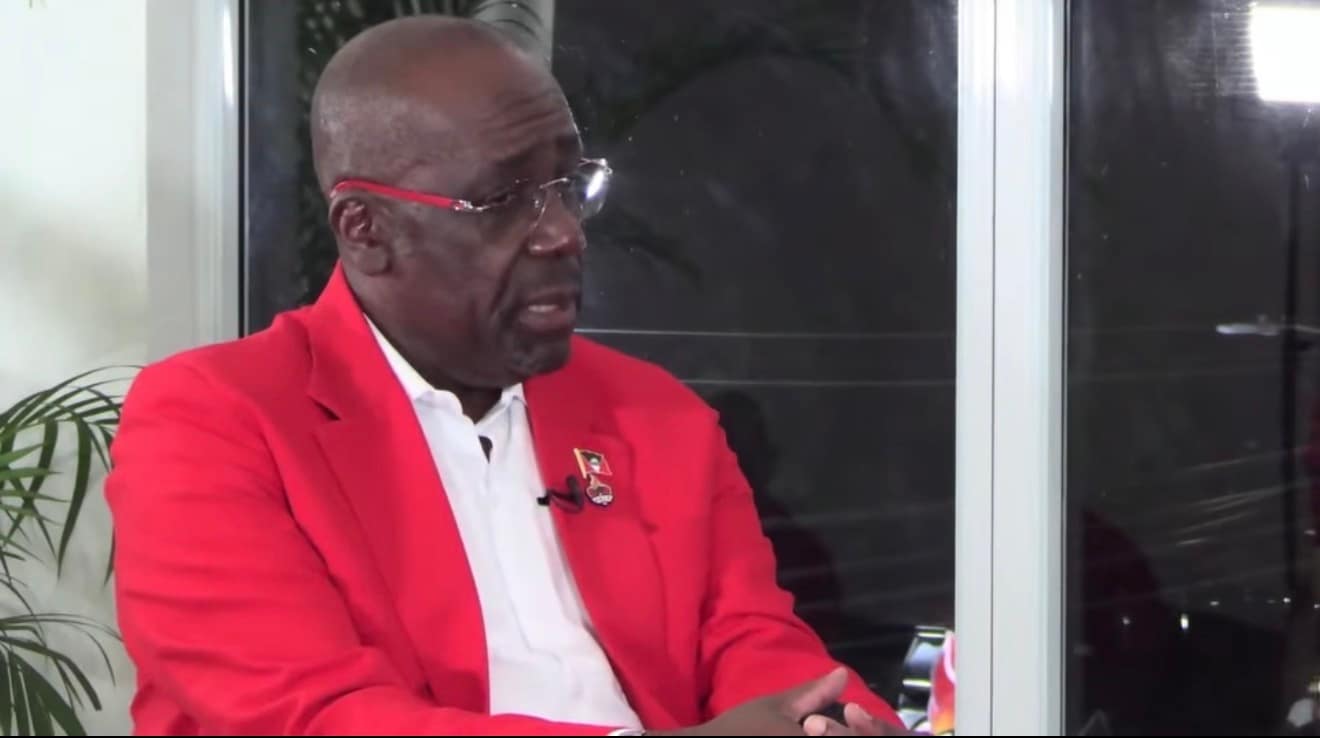
    As political parties across Antigua and Barbuda ramp up campaign efforts ahead of the approaching national general election, Chairman of the ruling Antigua and Barbuda Labour Party (ABLP) E.P. Chet Greene has laid out a comprehensive portfolio of completed and planned development initiatives for the St. Paul’s constituency, framing the work as proof of consistent, long-term progress rather than last-minute electioneering.

    At the core of the constituency’s recent gains are expanded public healthcare infrastructure, designed to reduce barriers to access for local residents. Greene confirmed that two upgraded healthcare facilities are now fully operational: a newly constructed primary care clinic in the community of Cobbs Cross, and a comprehensive renovation of an existing clinic elsewhere in St. Paul’s. “We have two very functional clinics in St. Paul’s, bringing healthcare services to a new level,” Greene shared in his remarks, emphasizing that the upgrades were structured to bring essential care directly closer to the communities that need it. Looking ahead, the ABLP has further plans to widen the scope of available services, adding specialized dental and vision care to the constituency’s public health offerings in coming months.

    Beyond healthcare, the ABLP has prioritized youth development and workforce readiness through expanded education and vocational training opportunities. A key milestone in this effort is the nearing completion of a new technical training centre, which will offer programming across a range of practice-focused career tracks. One dedicated wing of the facility will provide professional training in beauty and skincare, while other sections will cover a broad spectrum of vocational skills aligned with local labour market demands.

    This new centre complements existing training partnerships with larger post-secondary institutions across the country, including the University of the West Indies Five Islands Campus, where dozens of St. Paul’s residents are already enrolled in skills-building programs. “We have about 30 students on short courses… and others in longer programmes,” Greene noted, adding that youth empowerment and accessible education remain non-negotiable pillars of the constituency’s long-term growth strategy.

    The ABLP’s development agenda for St. Paul’s also includes targeted expansion of affordable housing, with Greene confirming that new parcels of land will soon be opened up for residential development to accommodate the constituency’s growing population. Complementary infrastructure upgrades, including improved emergency response facilities, are also in the works to support the area’s expanding population and growing local economic activity.

    Greene took explicit care to distinguish the ABLP’s ongoing work from pre-election campaign promises, stressing that consistent progress in St. Paul’s has been a years-long priority rather than a temporary push for votes. “While others campaign, I maintain,” he said, emphasizing his administration’s sustained presence and on-the-ground engagement with constituents throughout his tenure. The rollout of the constituency’s development record comes as the ABLP works to highlight its delivery track record across all electoral districts ahead of the upcoming vote.

  • Column: Sportpaspoort affaire

    Column: Sportpaspoort affaire

    In the lead-up to a critical World Cup qualifying play-off against Bolivia, a heated public and institutional campaign has erupted in the Netherlands targeting Dutch-born footballers who represent Suriname in international competition. What began as an isolated eligibility dispute raised by an Eredivisie club over a player’s purported naturalization as an Indonesian citizen quickly spilled over to the entire group of Suriname national team players, who were already in Mexico preparing for their do-or-die qualification match for this year’s World Cup.

    As media coverage of the eligibility debate intensified, the Suriname technical staff initially dismissed the controversy as unfounded noise, choosing to downplay the issue to protect their players’ focus ahead of the high-stakes fixture. But after Suriname dropped the match on Mexican soil, criticism and regulatory action accelerated rapidly. When the players returned to their club duties across Europe, a raft of punitive measures followed: some were dropped from club selection, while others faced demands questioning their retention of Dutch nationality. Even in Belgium, player Gyrano Kerk was sidelined and barred from training with his club as collateral damage from the broader dispute.

    The situation quickly devolved into confusion, with inconsistent application of measures across leagues and clubs. For some players, eligibility issues were resolved quickly after they secured official work permits, allowing them to return to competitive action, while others remained in limbo.

    Officials from the Suriname Football Association (SVB) have pushed back against the eligibility claims, emphasizing that the special sports pass used to allow Dutch-born players to represent Suriname holds no legal standing for nationality claims. In contrast, the Royal Dutch Football Association (KNVB) has warned all domestic clubs to only field players that can prove full eligibility, and has joined a number of clubs in demanding work permits from players that have represented Suriname.

    A close look at Suriname’s existing nationality law makes clear that the eligibility claims against the players lack legal foundation. Article 8 of Suriname’s Law on Nationality and Residency explicitly outlines requirements for obtaining Surinamese nationality, mandating both a clear legal basis for naturalization and five consecutive years of primary residency in Suriname ahead of any application. Even the exception for naturalization granted for state interests, laid out in Article 9, requires formal legislative action to take effect. According to public records, none of the players in question have completed the mandatory steps to obtain Surinamese citizenship.

    Without completed legal naturalization, none of the players hold Surinamese nationality. That means calls to strip them of Dutch nationality and treat them as foreign non-citizens carry severe unintended consequences: if the players are not Dutch and not Surinamese, they would effectively be rendered stateless. Legal observers note that the current actions by the KNVB and several European clubs appear to contradict the 1961 Convention on the Reduction of Statelessness, an international treaty designed to prevent exactly this outcome. To date, there is no evidence that Suriname has enacted any legal change that would grant these players formal nationality. The core purpose of the Suriname sports pass, officials confirm, is only to establish eligibility for international football representation, not to grant citizenship or change the players’ existing legal nationality status.

  • Dasac delivers emergency food aid to families affected by flooding in multiple provinces

    Dasac delivers emergency food aid to families affected by flooding in multiple provinces

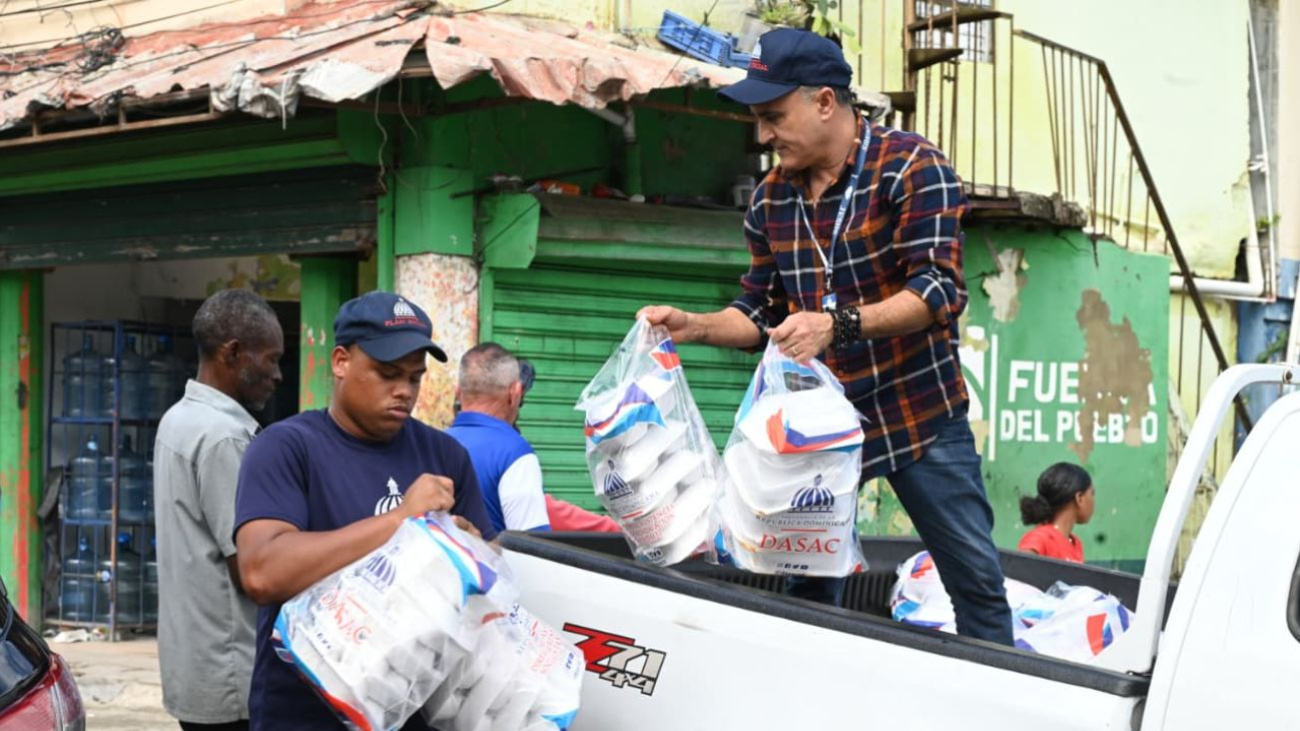
    In the Dominican Republic, widespread severe flooding triggered by relentless recent heavy rainfall has left hundreds of families displaced and in urgent need of support, prompting rapid disaster response action from the country’s Directorate of Social Assistance and Community Food (Dasac). The government agency has mobilized specialized response brigades to deliver life-sustaining emergency supplies to hard-hit communities across at least four administrative regions, addressing immediate food insecurity in the wake of the natural disaster.

    Dasac Director Édgar Augusto Féliz Arbona personally took charge of on-the-ground response operations in two of the most affected areas: the northern and western municipalities of the national capital district, Santo Domingo. Response teams working under his leadership distributed thousands of prepared meals to vulnerable residents in low-lying, heavily impacted neighborhoods including La Arenita, El Aguacate, Los Platanitos, and Manganagua, where floodwaters have destroyed homes and cut off access to local grocery and food supply networks.

    Beyond the Santo Domingo metro area, additional mobile response brigades have been dispatched to extend support to affected households in two more provinces: San Cristóbal, located along the country’s southern coast, and Valverde, in the northwestern Cibao region. Local disaster management officials confirmed that the entire agency remains on heightened alert under direct orders from Dominican Republic President Luis Abinader, who prioritized rapid, people-centered response to the flooding disaster.

    To expand outreach and meet diverse community needs, Dasac has deployed a full network of response assets: fully mobile kitchen units that can prepare hot meals close to flood zones, fixed community soup kitchens for residents who have relocated to emergency shelters, and specialized damage assessment teams that survey impacted residential areas to document housing damage and identify unmet needs for long-term recovery support. To streamline communication with affected residents, the agency has also publicized a dedicated emergency hotline (829-222-9194) across all its official social media platforms, allowing community members to submit urgent requests for aid directly to response coordinators.

  • Kleurrijke start 61e Avondvierdaagse: bijna 5.000 deelnemers op pad

    Kleurrijke start 61e Avondvierdaagse: bijna 5.000 deelnemers op pad

    One of Suriname’s most beloved annual community walking events, the 61st edition of the Avondvierdaagse (AVD), officially launched on Wednesday, bringing together thousands of participants in a vibrant celebration of movement, community and local culture.

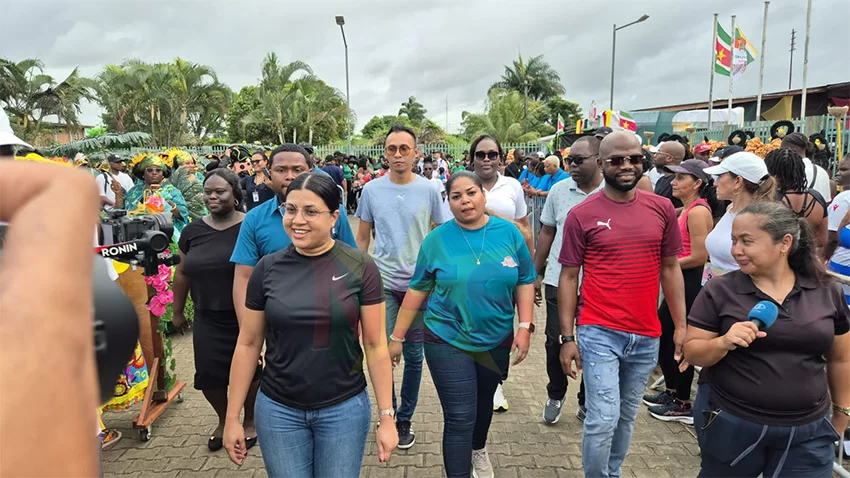
    The multi-day walking marathon opened with a festive, energetic atmosphere, where participants showcased elaborate, finely detailed costumes paired with creative, handcrafted accessories that turned the route into a moving display of local creativity. A standout feature of this year’s edition is the unprecedentedly large contingent of individual participants: more than 1,900 solo walkers have registered to take part in the four-day event.

    The official opening ceremony was led by two top government officials: Nalini Gopal, Minister of Sport, and André Misiekaba, Minister of Public Health. Joined by Lakshmi Vishnudatt, chair of the BVSS — the organizing body behind the event — the trio took the official first steps to mark the start of the 61st AVD, kicking off four days of scheduled walking for participants across all age groups.

    As of the opening day, event organizers have counted a total of 4,900 registered participants. The field breaks down into 9 junior groups, 38 senior groups, and the 1,900+ individual walkers. Cultural participating groups drew attention from onlookers kilometers away thanks to their bright, eye-catching costumes and group singing that brought a joyful soundtrack to the walking route.

    Across all organized participating groups, the National Democratic Party (NDP) remains the largest contingent by a significant margin, a consistent trend in past editions of the event. On the opening day of the 2026 AVD, participants completed an 11.3-kilometer route, with organizers already releasing the route details for the second day of the multi-day walking event. The four-day event is expected to draw ongoing community attention as participants complete each day’s route ahead of the closing ceremony.

  • U.S. judge orders Dominican Republic to pay US$44 million in Duquesa landfill dispute

    U.S. judge orders Dominican Republic to pay US$44 million in Duquesa landfill dispute

    A years-long international investment dispute centered on a Santo Domingo landfill has hit a decisive new milestone, after a U.S. federal judge formally confirmed a binding arbitration order requiring the Dominican Republic to pay close to $44 million in damages to Canadian billionaire investor Michael Lee-Chin, local Dominican outlet El Nacional reported.

    U.S. District Court Judge Colleen Kollar-Kotelly rejected the Dominican government’s legal bid to vacate the 2023 international tribunal ruling, instead upholding the panel’s finding that the state illegally seized Lee-Chin’s investment when it terminated Lajun Corp.’s operating concession for the Duquesa landfill in 2017 and seized direct control of the waste management facility located in Santo Domingo Norte.

    The structured compensation award breaks down into $38.7 million in direct damages for the unlawful expropriation, $4.8 million to remedy unfair regulatory treatment, plus accrued interest and adjudicated legal fees. When combined, the total owed to Lee-Chin amounts to just over $43.6 million, a figure that rounds to nearly $44 million.

    The origins of the dispute stretch back to 2018, when Lee-Chin launched his formal claim at the International Centre for Settlement of Investment Disputes, the leading global body for resolving cross-border investment conflicts. In his filing, the investor argued that the Dominican Republic’s actions breached binding investor protection provisions laid out in the CARICOM regional trade agreement.

    The latest ruling from the U.S. federal court eliminates the last major avenue for the Dominican Republic to challenge the award, leaving the government stuck with a binding payment obligation that marks one of the largest international arbitration losses the country has faced in recent years. The outcome also reinforces the enforceability of international investor rulings against sovereign states, setting a notable precedent for future cross-border investment disputes in the Caribbean region.

  • Quiz : Did You Know ? #13

    Quiz : Did You Know ? #13

    As part of its ongoing monthly general knowledge series “Did You Know?”, the popular free quiz platform Quiz.HaitiLibre has released its 13th installment, focusing on a hidden historical gem of Haiti that ties together national heritage and revolutionary legacy: Fort Ogé in Jacmel.

    Perched on the elevated Cap-Rouge hills overlooking Haiti’s southern coast, the fort carries the name of Vincent Ogé, one of the earliest martyrs who fought for civil and political rights for freedmen in the colonial era of Santo Domingo, the precursor territory to modern Haiti. Constructed shortly after Haiti gained independence in 1804, the installation was originally a core component of Jean-Jacques Dessalines’ national defense strategy, tasked with monitoring Caribbean waters to fend off potential colonial reconquest invasions.

    Architecturally, Fort Ogé follows the standard defensive design of early 19th-century Haitian fortifications, built with dry stone and mortar to maximize structural durability and unobstructed strategic visibility across the coast. The decision by Haiti’s founding leaders to name the fort after Ogé was no accident: it was a deliberate choice to anchor the young nation’s new built heritage to the heroes who paved the way for revolution before independence was achieved.

    Today, the fort serves two key roles for Haitians and visitors alike: it offers sweeping, unrivaled panoramic views of the Caribbean Sea, while also acting as a living educational landmark that connects younger generations to the sacrifices made by the earliest pioneers of Haitian freedom.

    This little-known historical fact is pulled from the answer key accompanying the 13th entry in Quiz.HaitiLibre’s popular series. The free, no-registration platform caters to knowledge seekers of all backgrounds, offering dozens of quiz games covering topics from Haitian history and culture to global current events, with three adjustable difficulty levels – normal, intermediate, and advanced – and full support for both French and English languages.

    As part of its scheduled April 2026 monthly update, 28 brand new quiz games were added to the platform on Wednesday, April 8, expanding the already extensive library of content available to users. Curious readers and knowledge enthusiasts can explore the full collection of quizzes, including previous installments of the “Did You Know?” series, by visiting the official Quiz.HaitiLibre website at https://quiz.haitilibre.com/en.

  • CARIFTA Games 2026

    CARIFTA Games 2026

    The 2026 edition of the CARIFTA Games, one of the Caribbean’s most prestigious youth athletic competitions, broke with tradition this year by spreading its two core disciplines across two separate island host locations. From April 4 to 8, the CARIFTA Aquatics Championships welcomed over 500 regional swimmers to the Le Lamentin facility in Martinique, a French overseas department, while track and field events unfolded between April 4 and 6 at Grenada’s iconic Kirani James Stadium.\n\nFor Team Haiti, the 2026 Games will go down in history as a breakthrough performance, with the nation securing a total of six medals: two gold, two silver, and two bronze across swimming and athletics. The highlight of Haiti’s campaign came in the pool, where a small three-person delegation delivered the country’s best ever swimming results at the regional competition.\ Seventeen-year-old Christian Jérome emerged as Haiti’s undisputed star of the Games, claiming two gold medals and one silver in butterfly events. Jérome clocked 55.23 seconds to take top honors in the men’s 100m butterfly, followed by a winning time of 2:07.75 in the 200m butterfly. He added a silver medal in the 50m butterfly with a finish of 24.9 seconds, and further cemented his status as a rising Haitian swimming star by breaking his own country’s national record in the 50m backstroke, posting a new benchmark time of 28.97 seconds. Jérome’s two teammates, Jude Jérome and Mayah Chouloute, also turned in strong performances, both hitting new personal best times over the course of the aquatics competition.\n\nOn the track in Grenada, Haiti’s seven-member all-female athletics delegation exceeded pre-Games expectations by meeting the Haitian Athletics Federation’s explicit target of at least three podium finishes, adding one silver and two bronze medals to the country’s overall count. In the under-17 women’s 400m hurdles, Hope Edwards claimed silver with a time of 1:02.48. Breanne Barnett took bronze in the under-20 women’s 200m sprint with a 23.49-second finish, while Aisha Wajid rounded out the athletics medal haul with bronze in the under-17 women’s 800m, clocking 2:14.96.\n\nThe historic six-medal performance marks a new milestone for Haitian youth sports, highlighting the emergence of talented young athletes across both swimming and track disciplines at one of the Caribbean’s most competitive regional youth sporting events.

  • St. Kitts and Nevis National Public Poll – Your Voice Matters

    St. Kitts and Nevis National Public Poll – Your Voice Matters

    Residents of the Federation of St. Kitts and Nevis have been invited to participate in a new nationwide public opinion poll that aims to center public voice in shaping the country’s future trajectory, according to an official notice posted early Thursday morning on April 9, 2026.

    Organized by a local independent polling firm, the initiative calls on every eligible member of the public to set aside just a few minutes of their time to share their perspectives via a set of survey questions. A core guarantee of the project is full respondent anonymity, a design choice intended to encourage open, honest feedback without fear of attribution or personal consequence.

    The notice framing the poll emphasizes that the long-term direction of St. Kitts and Nevis is ultimately determined by its citizenry, making widespread public participation critical to capturing a representative snapshot of public priorities and views across the federation. With anonymity built into the survey structure, organizers hope to remove barriers to participation and encourage a diverse cross-section of residents to contribute their input.