作者: admin

  • ECJ presents electoral boundary realignment proposal for new Portmore parish

    ECJ presents electoral boundary realignment proposal for new Portmore parish

    KINGSTON, Jamaica – Nearly four months after Jamaican legislators passed a law turning Portmore into the island nation’s 15th official parish, the country’s independent Electoral Commission (ECJ) has laid out its planned redrawing of electoral district lines across Portmore and the adjacent parish of St Catherine.

    The boundary realignment work is not an arbitrary adjustment, ECJ officials clarified in an official statement released this Tuesday. The initiative was ordered by Parliament’s Boundaries Committee, and it aligns directly with a core requirement laid out in Jamaica’s Constitution: no single electoral constituency can cross the borders of two separate parishes. The creation of a new parish thus made the boundary adjustment a mandatory legal step.

    The proposed changes will reshape four existing constituencies across the region: St Catherine South Eastern, St Catherine East Central, St Catherine Southern, and St Catherine South Central. All four currently overlap with the territory that now forms the independent parish of Portmore, requiring redrawing to bring the electoral map into line with the new administrative structure.

    The formal proposal was presented during a joint gathering of the Parish Boundary Advisory Committee (PBAC) and the Parish Boundary Forum (PBF) for Portmore and St Catherine, held on May 29.

    Glasspole Brown, Jamaica’s Director of Elections, framed the presentation as a critical milestone in a deliberate, constitutionally mandated process. “This session marks an important step in a structured and constitutionally guided process,” Brown stated. “At this stage, we are presenting technical proposals developed through GIS analysis and stakeholder input. The feedback received will be carefully considered as we refine our recommendations for submission to the Parliamentary Boundaries Committee for further review and determination.”

    Remoski Russell, the ECJ’s Geographic Information Systems (GIS) manager, led the presentation, walking attendees through the details of the proposed boundary changes and explaining the data-backed technical review process that shaped the draft plan.

    ECJ officials stressed that the entire process is designed to uphold three core priorities: full compliance with constitutional requirements, fair representation for all voters, and accurate alignment of electoral districts with Jamaica’s new administrative map. Work on the plan will continue through open collaborative discussions with local and national stakeholders, additional GIS-fueled reviews and validation checks, and the drafting of a final set of recommendations that will eventually be sent to Parliament for formal approval.

    In closing, the commission reaffirmed its pledge to run a fully transparent, inclusive, and data-led process that will strengthen Jamaica’s electoral administration and ensure every resident of the new Portmore parish and surrounding St Catherine receives fair and effective representation in government.

  • Jamaican Brandon Burke secures fourth consecutive term on WTA Board

    Jamaican Brandon Burke secures fourth consecutive term on WTA Board

    KINGSTON, Jamaica — Brandon Burke, a respected Jamaican lawyer and former six-time national Davis Cup competitor, has earned re-election to the Women’s Tennis Association (WTA) Tour Board of Directors, securing his fourth straight two-year term as the body’s player alternate representative. His new tenure will officially get underway this coming September.

    In this renewed leadership position, Burke will sustain his close collaborative work with other player-elected board members to maintain open lines of communication with both singles and doubles players across the tour. A core part of his mandate remains centering player perspectives in high-level discussions and advancing their collective interests at both the board and executive management levels of the organization.

    Burke’s governance work in women’s tennis extends far beyond the main WTA Tour Board. He already holds a board seat at the Women’s Tennis Benefit Association, and also serves as a member of the board for the WTA Foundation — the tour’s charitable branch, which works globally to push progress in gender equality, access to education, leadership development, and public health and wellness initiatives.

    Reflecting on the milestone of his fourth consecutive re-election, Burke shared insights into his approach to player representation. “When I first took on this role 12 years ago, I was one of the youngest player representatives serving the board,” he said. “I came into the position hungry to listen, to learn from my peers, and to represent the needs of players to the best of my ability. Over the years, I’ve learned that truly effective representation starts with intentional listening — that’s how you build trust, remain open to new ideas, and show up consistently for the community you serve.”

    “As I prepare to start this new term in September, I’m incredibly proud of the trusting relationships I’ve built with players across the tour, and I never take that confidence for granted,” Burke added. “I bring the same level of enthusiasm and fresh perspective I had when I started out, but now that energy is strengthened by years of experience and a much deeper understanding of how to advocate effectively for the player base.”

    Burke closed by noting he feels deeply honored by the trust placed in him through re-election, and expressed excitement to continue partnering with players to drive meaningful progress and push the growth of professional women’s tennis forward globally.

  • Boca Chica to receive new boardwalk, plaza and park in major tourism upgrade

    Boca Chica to receive new boardwalk, plaza and park in major tourism upgrade

    BOCA CHICA – A sweeping multi-project infrastructure upgrade is underway in the popular coastal community of Boca Chica, after Dominican Republic Tourism Minister David Collado officially launched construction on three major public space developments. Together, the Andrés boardwalk, Plaza Caracoles, and Central Park renovation projects represent a total public investment exceeding RD$414 million, forming a core pillar of the national tourism ministry’s long-term strategy to reposition Boca Chica as a more sustainable, accessible, and economically vibrant destination for both local residents and international visitors.

    The centerpiece of the development package is the new Andrés boardwalk, the largest and most well-funded of the three initiatives. With a total investment allocation of RD$380.7 million, the project will span more than 53,800 square meters, running continuously from Brisas del Caucedo Street to the far end of Boca Chica’s beach corridor. Planned improvements extend far beyond a new pedestrian promenade: the scope includes full reconstruction of the waterfront, comprehensive overhauls of local roads and stormwater drainage systems, structural rehabilitation of the aging seawall, and the addition of new public amenities ranging from expanded parking lots and modern public lighting to curated landscaping, multi-use recreational facilities, public sports courts, dedicated children’s play areas, accessible public restrooms, and zoned commercial spaces for local businesses. The project also includes targeted upgrades to a key stretch of the Puerto Caucedo roadway, designed to cut congestion and improve overall traffic mobility for residents and visitors alike.

    Beyond the flagship boardwalk project, the tourism ministry has earmarked an additional RD$16.7 million for the complete reconstruction of Plaza Caracoles. The redesigned public space will prioritize pedestrian access and green infrastructure, adding expanded parkland, wider walkable corridors, updated lighting, new urban furniture, enhanced landscaping, and improved accessibility for visitors with disabilities. The third initiative, a full renovation of Boca Chica’s Central Park, carries a separate RD$17 million budget. Planned upgrades for the community’s central green space include expanded native plantings, resurfaced paved walkways, new accessibility ramps, and a complete modernization of the park’s shared public areas.

    In comments marking the launch of construction, Minister Collado emphasized that the three projects are more than just infrastructure upgrades: they are designed to drive long-term economic and social revitalization for the Andrés neighborhood, while supporting Boca Chica’s broader destination development strategy. That wider plan includes additional investments across the region, covering beach infrastructure, expanded public security facilities, preservation and restoration of local historic landmarks, and continued upgrades to shared public spaces that benefit both the local community and the tourism economy.

  • Dominican Republic competes for top Caribbean destination honor at Wave Awards

    Dominican Republic competes for top Caribbean destination honor at Wave Awards

    The Caribbean’s tourism landscape continues to see the Dominican Republic emerge as a standout contender, with the nation and a roster of leading hospitality brands operating within its borders picking up an array of prestigious nominations for the 2026 Wave Awards. Organized by TravelAge West, a leading trade publication serving the North American travel advisor community, the annual awards recognize excellence across the global travel and hospitality sector.

    One of the most high-profile nods for the Dominican Republic comes in the category for Caribbean Destination with the Highest Visitor Satisfaction, a nomination that reaffirms the country’s long-standing reputation as a top-tier leisure spot in the region. This recognition underscores the consistent work the nation has put into elevating visitor experiences and cementing its position as a go-to choice for international travelers seeking Caribbean getaways.

    Beyond the national destination nomination, a number of the Dominican Republic’s top properties have earned spots on the shortlist for Best New or Renovated Resort in the Caribbean. These include three standout properties: Club Med Punta Cana, Secrets Playa Esmeralda Resort & Spa, and the adults-only all-inclusive W Punta Cana.

    Major hotel groups with extensive footprints across the Dominican Republic have also racked up nominations across a range of brand-focused categories, which cover everything from top all-inclusive operators to leading options for romantic getaways and family vacations. The full list of nominated brands includes Club Med, Hyatt Inclusive Collection, Majestic Resorts, Meliá Hotels International, Princess Hotels & Resorts, The Excellence Collection, plus a suite of family-focused hospitality names: Dreams Resorts & Spas, Finest Resorts, Grand Palladium Hotels & Resorts, Hyatt Ziva, and Nickelodeon Hotels & Resorts.

    Unlike many industry awards that rely on public voting, Wave Awards recipients are chosen through a rigorous, multi-stage evaluation process led by TravelAge West’s experienced editorial team. The selection process combines on-site property inspections, in-depth product reviews, surveys of professional travel advisors, and comprehensive market analysis to ensure winners represent the highest standard of quality in the industry. All winners are set to be revealed during a black-tie gala ceremony scheduled for June 4 in Los Angeles, where the leading names in travel will gather to celebrate this year’s top performers.

  • Dominican Republic opens Latin America and Caribbean Week at UNESCO

    Dominican Republic opens Latin America and Caribbean Week at UNESCO

    PARIS — A major new regional cultural gathering kicked off this week at UNESCO’s iconic Paris headquarters, with Dominican Republic’s Culture Minister Roberto Ángel Salcedo leading the inaugural ceremony for 2026 Latin America and Caribbean Week. The landmark four-day event, running from June 2 to 5 under the organizational leadership of the Group of Latin America and the Caribbean (GRULAC), gathers cultural delegates, community leaders, and industry stakeholders from across 33 countries in the region to advance cross-cultural exchange, collaborative cultural policy, and culture-centered sustainable development. Over the course of the event, attendees will engage with a diverse program spanning visual art exhibitions, gastronomic showcases, film screenings, academic roundtables, and creative industry networking sessions.

    In his opening address to delegates and UNESCO officials, Minister Salcedo centered his remarks on the unifying threads and remarkable diversity that define Latin America and the Caribbean. He framed the region as a dynamic, living tapestry of overlapping histories, Indigenous knowledge, and evolving identities forged through centuries of cultural exchange. Turning the spotlight to his home country, he highlighted the Dominican Republic’s globally celebrated cultural legacy, spotlighting five traditions formally inscribed on UNESCO’s Intangible Cultural Heritage List: the Brotherhood of the Holy Spirit of the Congos of Villa Mella, the traditional performance practice of the Guloyas of San Pedro de Macorís, the iconic national dances of merengue and bachata, and the centuries-old traditional knowledge tied to producing and enjoying casabe, or cassava bread.

    Salcedo went on to reaffirm the critical role of cultural preservation and exchange as a foundational driver of global peace, inclusive social cohesion, and long-term sustainable development. He also credited UNESCO with its decades-long leadership in protecting vulnerable cultural heritage sites and practices across the world. A key announcement during his address was the formal promotion of the Dominican Republic’s candidacy for a seat on the UNESCO World Heritage Committee for the 2027–2031 term. This influential governing body is tasked with reviewing new global heritage nominations, monitoring the conservation status of existing inscribed sites, and setting global standards for heritage protection.

    To mark the opening of the week, the Dominican Republic debuted a special exhibition of traditional carnival hand-carved masks, each originating from distinct regions across the country. The curated display traces the blended origins of Dominican national identity, illustrating how Indigenous, African, and European cultural influences have merged over centuries to create the country’s distinct, rich cultural landscape that endures today. The event will wrap up on June 5 with the annual Caribbean Day celebration, a full day of programming dedicated to highlighting the region’s dynamic music, contemporary and traditional dance, authentic culinary traditions, and fast-growing creative sectors.

    For the Dominican Republic, this high-profile participation in one of the region’s most influential cultural forums does more than showcase its cultural offerings: it further solidifies the country’s standing as a premier cultural destination across the Caribbean, and demonstrates its expanding commitment to global collaborative efforts to protect, preserve, and promote shared cultural heritage for future generations.

  • Drug case against Jamaican businessman dropped in Antigua

    Drug case against Jamaican businessman dropped in Antigua

    Regional Caribbean media outlet Caribbean Media Corporation (CMC) reports from St John’s, Antigua, that a major drug-related prosecution against Jamaican-born local entrepreneur Francis Young has been formally terminated after the Office of the Director of Public Prosecutions (DPP) of Antigua and Barbuda elected not to move forward with the case.

    Chief Magistrate Ngaio Emanuel officially recorded the discontinuation of proceedings against Young in court, but the DPP has not released any public explanation for its abrupt decision to drop the case.

    Young’s prosecution stemmed from a high-stakes drug seizure in May 2025 at the Deep Water Harbor port facility. When authorities searched an incoming cargo shipment, they uncovered 62 pounds of concealed cannabis, with local law enforcement estimating the contraband had an illicit street value of EC$372,000. Young was originally charged alongside co-accused Nadeem Brandon Doumith in connection with the seizure.

    While Young has been cleared of all charges, the legal case against Doumith remains active. The next court hearing for Doumith is scheduled to take place on August 8, 2026. Both men originally faced a slate of severe drug offenses, including conspiracy to traffic illegal narcotics, possession of cannabis, possession with intent to distribute cannabis, illegal importation of cannabis, and involvement in the supply of controlled substances.

    Public records show Young has resided in Antigua for four years alongside his wife and three minor children, and he runs a local business that provides employment for multiple Antiguan workers.

    This case marks the second high-profile drug prosecution that the Antigua DPP’s office has discontinued in less than a month. Just one week prior, prosecutors moved to dismiss charges against 48-year-old Canadian national Roselynee Crisostomo, who was arrested after authorities found 67 pounds of cannabis in her possession at VC Bird International Airport in March 2026. Unlike the Young case, the DPP cited undisclosed medical reasons as the justification for ending that prosecution.

  • Two killed in Kenya protests over US Ebola centre — rights group

    Two killed in Kenya protests over US Ebola centre — rights group

    NAIROBI, KENYA – Deadly clashes have erupted over a planned United States Ebola quarantine facility in central Kenya, leaving at least two civilians dead and intensifying public and legal pushback against the project, a Kenyan human rights organization confirmed this Tuesday. The violence comes amid deep public anger over Washington’s plan to house and quarantine American travelers exiting the Democratic Republic of the Congo (DRC), which is currently grappling with an aggressive, months-long Ebola outbreak.

    The proposed 50-bed isolation center, constructed on Kenyan military land at Laikipia Air Base roughly 125 miles northwest of Nairobi, was originally scheduled to welcome its first patients last week. Under the original agreement, the facility would be run exclusively by US medical personnel to monitor Americans arriving from the DRC, where the outbreak has already claimed dozens of lives. As part of the broader partnership, the US State Department announced last week it would allocate $13.5 million to bolster Kenya’s overall national Ebola preparedness infrastructure.

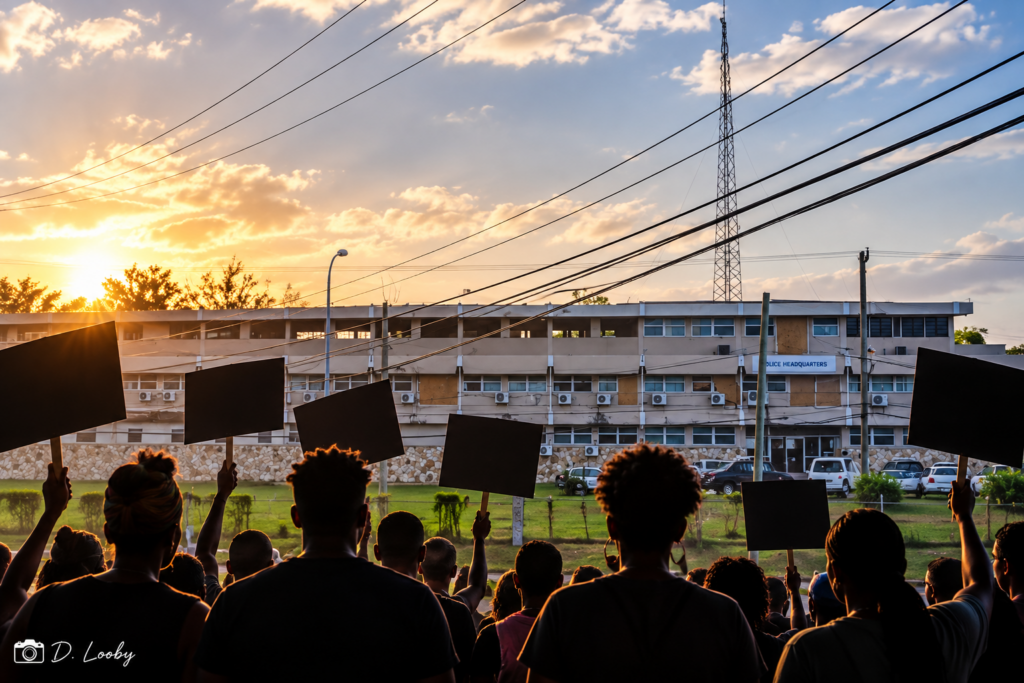
    Despite the promised investment, the plan triggered swift public outrage across Kenya, with many residents objecting to the use of Kenyan territory to host potential Ebola patients and criticizing the lack of public transparency around the bilateral agreement between Nairobi and Washington. Violent demonstrations erupted near the facility site on Monday, with local media footage showing crowd clashes with security forces, who responded by firing tear gas to disperse protesters.

    Hussein Khalid, executive director of Kenyan rights group VOCAL Africa, announced via social media platform X that a 27-year-old man was shot and killed during the Monday unrest, dying instantly at the scene. Khalid told Agence France-Presse Tuesday that a second fatality has been confirmed, though the victim’s identity is still pending official verification. Kenyan police have so far declined to confirm the two deaths in statements to AFP.

    In a public statement posted to X Tuesday, Kenyan President William Ruto defended the planned facility, pushing back against public anxiety and framing the project as a standard component of Kenya’s national public health preparedness framework. “This facility is neither unique nor exceptional, but part of a broader national preparedness system,” Ruto wrote. “It will be there to serve the people of Kenya and to serve our friends, including the Americans. We are a responsible government. We know what we are doing. So people should relax.”

    To date, Kenya has not recorded any confirmed Ebola cases, even after widespread screening of incoming cross-border and international travelers. However, neighboring Uganda has documented 15 cases linked to the DRC outbreak, including one death. As of Tuesday, the World Health Organization (WHO) reports the DRC outbreak – declared back in mid-May – has reached 321 confirmed cases, with 48 total deaths recorded so far. One American citizen, a medical missionary working in the DRC, has contracted the virus; he has already been evacuated for treatment in Germany.

    The legal challenge to the facility gained traction this Tuesday, after Kenya’s High Court extended an existing temporary moratorium on the project’s opening. The pause was requested by the Kenyan legal and rights organization Katiba Institute, which filed a formal petition opposing the center. The court ordered the Kenyan national government to release all documents and formal agreements related to the facility within a seven-day deadline, amid widespread demands for transparency.

    On Tuesday, a small contingent of peaceful protesters gathered in downtown Nairobi to continue their opposition. Demonstrators wore white medical protective gear and carried a symbolic coffin marked with the word “Ebola”, alongside signs reading “Reject Ebola in Kenya”.

    The controversial project has also drawn criticism from political figures in the United States. The Democratic majority staff of the US House Foreign Affairs Committee issued a statement via X criticizing the plan, arguing: “The Trump admin should bring Americans home and help them, not outsource that responsibility to a foreign government.”

  • White House press gala rescheduled after shooting

    White House press gala rescheduled after shooting

    Weeks after a violent assassination attempt targeting then-President Donald Trump forced an emergency evacuation and shut down the annual White House correspondents’ dinner, event organizers have announced the gala will be revived next month with upgraded security protocols. The White House Correspondents Association (WHCA) confirmed the long-awaited rescheduling in a member notice issued Tuesday, scheduling the revamped gathering for Friday, July 24 in Washington, D.C.

    The chaotic original event unfolded on April 25 at a downtown Washington hotel. As Trump prepared to deliver his scheduled keynote address, a gunman opened fire at an exterior security checkpoint near the event ballroom, triggering an immediate emergency evacuation of the sitting president. The accused attacker, 31-year-old Cole Allen, a California resident, has since entered a plea of not guilty to a series of felony charges, including attempted assassination of the president.

    In an official email circulated to WHCA members, association president Weijia Jiang framed the decision to reschedule as a stand against violent intimidation, tying the moment to the United States’ ongoing 250th founding anniversary celebrations. “We will not allow an act of violence to have the last word, especially during a year when we are reflecting on the 250th anniversary of America and everything we stand for,” Jiang stated.

    Jiang confirmed that the rescheduled event will roll out substantially enhanced safety measures and revised entry protocols to prevent a repeat of the April incident. Unlike the large, glitzy annual gathering that typically draws thousands of journalists, government officials, and public figures to the Washington Hilton, the July event will be structured as a smaller, more intimate gathering, Jiang added. Specific details regarding the exact venue, ticket sales, and event programming are still being finalized and will be released to members in the coming weeks.

    Notably, the WHCA president declined to confirm whether Trump would be in attendance at the rescheduled dinner. Trump himself has publicly voiced support for reviving the disrupted event, and has also cited the security breach to bolster his push for construction of a controversial new event ballroom on White House grounds, a project that has drawn political pushback from critics.

  • Mathematicians say ‘don’t believe hype’ on AI capabilities

    Mathematicians say ‘don’t believe hype’ on AI capabilities

    In a collective rebuke of growing commercial overstatement of artificial intelligence’s capabilities in pure mathematics, more than 150 mathematicians from leading academic institutions across Europe, Japan, the United States and other regions have put their names to a public statement calling on the global mathematics community to push back against the trend of AI developers leveraging the discipline to inflate their products’ reputations.

    The statement, dubbed the Leiden Declaration, arrives amid a wave of aggressive claims from major AI corporations about their systems’ supposed breakthroughs in mathematics — including supposed solutions to long-unresolved open problems in the field and strong performances in high-level competitive mathematics challenges. The signatories specifically urge governments and research funders not to fall for the overblown marketing surrounding AI’s current mathematical competencies.

    Ulrike Tillmann, vice-president of the International Mathematical Union (IMU), offered her public backing for the declaration, noting that while AI has unlocked intriguing new opportunities for mathematical inquiry, the risks and ethical questions it introduces demand rigorous, critical examination. “The future of mathematical research must be guided by human judgment, fair and transparent practices, and the shared values of the global mathematical community, Tillmann emphasized in her endorsement.

    The declaration itself calls out the core conflict of interest driving the current hype: AI developers operate under intense commercial pressure to overstate what their tools can do, as hundreds of billions of dollars in venture capital and public investment hang in the balance. Unlike peer-reviewed mathematical research, which advances at a deliberate, verification-focused pace, AI development and publicity is driven by market timelines. This leads to misleading framing, the declaration argues, where narrow performance on specific mathematical tasks is incorrectly presented as proof of general reasoning ability in commercial AI models.

    Michael Harris, a Columbia University professor and co-author of the declaration, explained the high-stakes dynamic at play to AFP. “There is a competition to the death on the part of the main labs… they are trying, using mathematics… to attract investment so that each of them will be left standing, Harris said. This scramble for funding comes as the AI industry is in a period of major market expansion: in recent weeks, Elon Musk’s SpaceX, which owns AI developer xAI, and AI startup Anthropic have both moved forward with plans for initial public offerings, with industry leader OpenAI widely expected to follow suit shortly.

    The declaration also pushes back against recent high-profile endorsements of AI’s research potential from leading mathematicians. Just one week before the declaration’s release, OpenAI shared a social media video featuring Terence Tao, a UCLA professor and former Fields Medal winner — the highest honor in pure mathematics — praising the company’s AI tools for their ability to support mathematical research. Harris acknowledged Tao’s immense contributions to the global mathematics community but argued that it is unhealthy for the field to consistently hold up a single mathematician as the official voice endorsing commercial AI tools.

    Beyond the problem of co-opting mathematics for commercial marketing, the signatories outline a host of deeper risks to the discipline itself. AI systems can generate logically plausible but fundamentally incorrect mathematical proofs that are extremely difficult for human researchers to verify, they note. The technology also erodes clear attribution for the foundational human research that AI models are built on.

    Longer-term harms to research culture are also a major concern: widespread adoption of AI in mathematics could push more researchers to chase trendy, AI-aligned problems at the expense of exploring less hyped but equally important lines of inquiry. It could also weaken traditional peer review systems and reorient academic research to serve the priorities of commercial AI developers, rather than the open, self-directed inquiry that has long defined university-based mathematics.

    The declaration also highlights broader societal harms tied to unregulated AI development, including risks of weaponization for warfare, expansion of mass surveillance, political interference, and increased environmental damage from energy-intensive AI model training. In closing, the statement urges all practicing mathematicians to carefully assess the ethical implications of any AI-related work they take on, and to step away from projects that cause undue harm.

  • Dominican Republic achieves Category 2 ranking in Global Labor Rights Index

    Dominican Republic achieves Category 2 ranking in Global Labor Rights Index

    In a landmark recognition for regional labor rights progress, the Dominican Republic has secured placement in Category 2 of the 2026 Global Rights Index released by the International Trade Union Confederation (ITUC), cementing its status among the top three countries in the Americas for the protection of collective labor rights.

    The Caribbean nation shares this strong standing with Barbados, while Uruguay remains the sole regional economy to hold the highest classification of Category 1, according to statements from the Dominican Ministry of Labor.

    Developed to benchmark global labor conditions, the ITUC index assesses four core pillars of international labor standards: freedom of association for workers, the right to collective bargaining, legal protection for strike action, and equitable access to labor justice systems. Across more than 150 nations, the index has emerged as one of the most widely referenced global yardsticks for measuring institutional commitment to workers’ rights, guiding decision-making for cross-border investors, multilateral organizations, and labor industry stakeholders worldwide.

    Dominican Labor Minister Eddy Olivares Ortega emphasized that the new ranking reflects tangible, sustained progress across the country’s efforts to strengthen labor governing institutions, expand inclusive social dialogue between workers, employers and the state, and align domestic regulations with the core international labor principles advanced by the International Labour Organization (ILO).

    Olivares credited the improved outcome to collaborative cross-sector work, noting that the achievement would not have been possible without coordinated efforts from the national government, organized worker groups, employer associations, and public labor institutions, all of which have aligned to advance fair employment relations and broader social justice across the Dominican workforce.

    Notably, the 2026 ranking marks an upgrade in the Dominican Republic’s standing compared to previous ITUC evaluations. This improvement comes at a time when the global landscape has seen widespread rollbacks of labor protections, with many nations recording setbacks in workers’ rights amid post-pandemic economic shifts and evolving labor market pressures.

    Moving forward, the Dominican Ministry of Labor has reaffirmed its long-term commitment to advancing policy reforms that further strengthen core labor rights. Key priority areas include expanding protections for freedom of association, improving collective bargaining frameworks, enhancing workplace safety standards, increasing the reach and efficacy of labor inspections, and upholding balanced protections for both workers and employers across all sectors of the national economy.