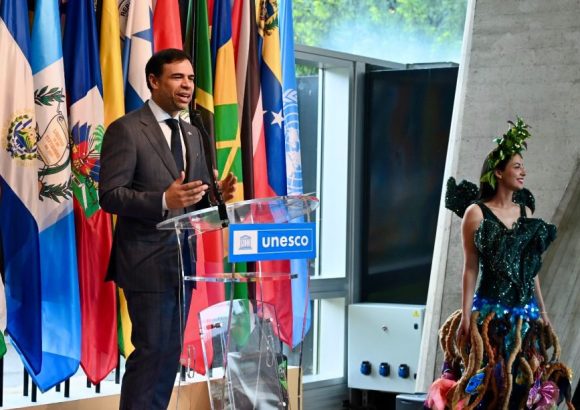
PARIS — A major new regional cultural gathering kicked off this week at UNESCO’s iconic Paris headquarters, with Dominican Republic’s Culture Minister Roberto Ángel Salcedo leading the inaugural ceremony for 2026 Latin America and Caribbean Week. The landmark four-day event, running from June 2 to 5 under the organizational leadership of the Group of Latin America and the Caribbean (GRULAC), gathers cultural delegates, community leaders, and industry stakeholders from across 33 countries in the region to advance cross-cultural exchange, collaborative cultural policy, and culture-centered sustainable development. Over the course of the event, attendees will engage with a diverse program spanning visual art exhibitions, gastronomic showcases, film screenings, academic roundtables, and creative industry networking sessions.
In his opening address to delegates and UNESCO officials, Minister Salcedo centered his remarks on the unifying threads and remarkable diversity that define Latin America and the Caribbean. He framed the region as a dynamic, living tapestry of overlapping histories, Indigenous knowledge, and evolving identities forged through centuries of cultural exchange. Turning the spotlight to his home country, he highlighted the Dominican Republic’s globally celebrated cultural legacy, spotlighting five traditions formally inscribed on UNESCO’s Intangible Cultural Heritage List: the Brotherhood of the Holy Spirit of the Congos of Villa Mella, the traditional performance practice of the Guloyas of San Pedro de Macorís, the iconic national dances of merengue and bachata, and the centuries-old traditional knowledge tied to producing and enjoying casabe, or cassava bread.
Salcedo went on to reaffirm the critical role of cultural preservation and exchange as a foundational driver of global peace, inclusive social cohesion, and long-term sustainable development. He also credited UNESCO with its decades-long leadership in protecting vulnerable cultural heritage sites and practices across the world. A key announcement during his address was the formal promotion of the Dominican Republic’s candidacy for a seat on the UNESCO World Heritage Committee for the 2027–2031 term. This influential governing body is tasked with reviewing new global heritage nominations, monitoring the conservation status of existing inscribed sites, and setting global standards for heritage protection.
To mark the opening of the week, the Dominican Republic debuted a special exhibition of traditional carnival hand-carved masks, each originating from distinct regions across the country. The curated display traces the blended origins of Dominican national identity, illustrating how Indigenous, African, and European cultural influences have merged over centuries to create the country’s distinct, rich cultural landscape that endures today. The event will wrap up on June 5 with the annual Caribbean Day celebration, a full day of programming dedicated to highlighting the region’s dynamic music, contemporary and traditional dance, authentic culinary traditions, and fast-growing creative sectors.
For the Dominican Republic, this high-profile participation in one of the region’s most influential cultural forums does more than showcase its cultural offerings: it further solidifies the country’s standing as a premier cultural destination across the Caribbean, and demonstrates its expanding commitment to global collaborative efforts to protect, preserve, and promote shared cultural heritage for future generations.