作者: admin

  • Clarification on the Temporary Closure of the Grays Farm Dental Clinic

    Clarification on the Temporary Closure of the Grays Farm Dental Clinic

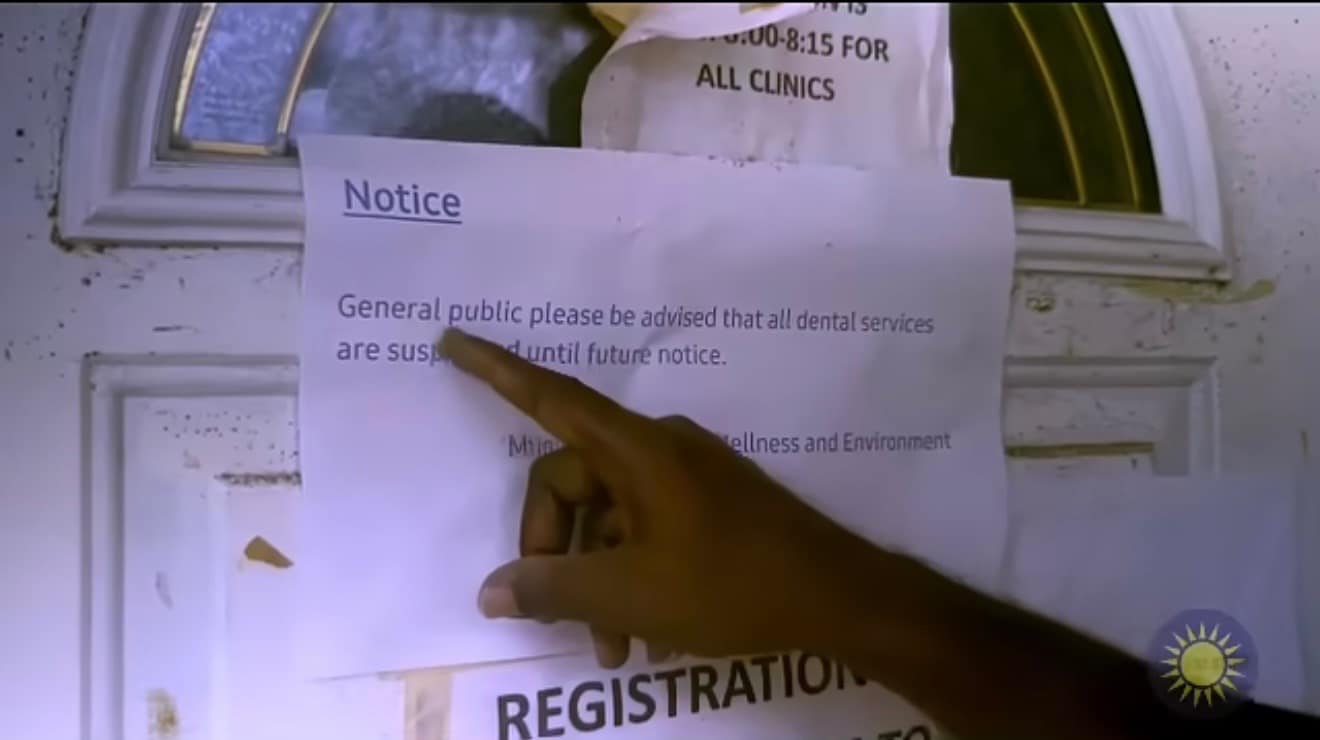
    Antigua’s Ministry of Health, Wellness, Environment and Civil Service Affairs has released an official statement to clear up public confusion surrounding the ongoing temporary shutdown of the Grays Farm Dental Clinic. The initial notice announcing the clinic’s temporary closure was first distributed publicly in October 2025, framed as a measure to carry out targeted facility upgrades requested by Dr. Derek Marshall, Head of the national Dental Department. These planned works were originally positioned as part of the government’s regular routine maintenance programs, designed to uphold rigorous service standards across all public healthcare facilities across the country.

    After joint preliminary inspections were carried out by specialists from the Ministry of Works and the Ministry of Health’s technical team, officials quickly determined that the range of required repairs and upgrades was far broader than initial projections had suggested. A series of unanticipated structural and operational deficiencies were uncovered during the assessment, requiring far more extensive intervention than planned to bring the clinic fully in line with national safety and quality benchmarks for patient care. As a result, the clinic has remained closed while authorities coordinate the expanded scope of work.

    In its statement, the ministry stressed that local residents who rely on the Grays Farm Dental Clinic for routine and emergency dental care have not been left without access to treatment. Administrative teams have already put in place alternative care arrangements to guarantee service continuity, advising all patients from the closed clinic to access equivalent services at the Villa Polyclinic, which has adjusted its scheduling and capacity to accommodate the additional patient load.

    While formal requests for the required upgrades have been submitted to the Ministry of Works, the health ministry confirmed that on-site construction has not yet gotten underway. The delay stems from competing national infrastructure priorities, as multiple other public facilities across the country require urgent major repairs that have taken precedence in resource allocation.

    The ministry was firm in pushing back against suggestions that the extended closure stems from government neglect of public healthcare. Officials emphasized that keeping the facility closed longer is a deliberate, patient-centered choice: the goal is to ensure that when Grays Farm Dental Clinic reopens, it not only meets the original required operational standards, but surpasses them. The ultimate objective of the project is to deliver a safer, more efficient, and more comfortable care environment for both patients receiving treatment and clinical staff delivering services.

    In closing, the ministry expressed its gratitude for the patience and understanding of the local public as it works to deliver long-term, sustainable upgrades to the nation’s public healthcare infrastructure.

  • ABEC’s Chairman Pre-Election Day Address

    ABEC’s Chairman Pre-Election Day Address

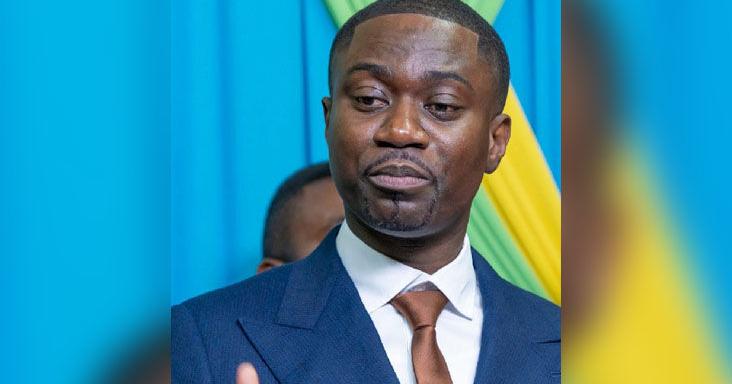
    In the lead-up to the highly anticipated April 30 general election in Antigua and Barbuda, the chairman of the country’s Electoral Commission has issued a critical, time-sensitive warning to all registered voters: anyone without a valid, updated voter identification card will be barred from casting a ballot on polling day.

    Speaking in a national address from St. John’s, the commission head delivered a firm message to the electorate, emphasizing that there will be no exceptions to the new identification rule. “If you have not yet replaced your voter’s ID card, you must do so immediately,” he stated, reinforcing that “No elector can be permitted to vote without a valid voter identification card.”

    To help voters meet this mandatory requirement, the Electoral Commission has already implemented a series of adaptive measures to streamline the ID replacement process. Operating hours for commission offices have been extended across the country, additional trained staff have been brought on to handle increased demand, and extra resources have been deployed to local processing centers to cut down on wait times. Even with these institutional adjustments, however, the chairman stressed that the onus now falls on individual voters to take action and complete their ID updates well before election day.

    Beyond the identification mandate, the commission leader also outlined key expectations for all participants in the electoral process, calling for disciplined, peaceful conduct across the board. He emphasized that meaningful democratic participation goes hand in hand with respect for the rule of law and fellow stakeholders, outlining four core pillars of respectful engagement: “Respect the electoral process and its rules. Respect opposing political parties and their supporters. Respect the election officials … and respect the security personnel.” The chairman made clear that order, compliance, and mutual respect are not optional suggestions, but non-negotiable requirements for the poll.

    In a specific directive to competing political parties, he reminded campaign teams of their legal obligation to remove all campaign materials, posters, and promotional paraphernalia from all polling divisions before voting opens. The chairman noted that strict neutrality is a foundational requirement for polling stations, and all efforts must be made to keep voting areas free from any form of undue influence on voters.

    Framing free and fair general elections as the cornerstone of Antigua and Barbuda’s democratic system, the chairman closed his address by urging all eligible citizens to honor the country’s long-standing democratic traditions by preparing to cast their votes in a responsible, peaceful, and lawful manner on April 30.

  • Matthew Says Land Shortage Limits Housing Expansion in St John’s Rural South

    Matthew Says Land Shortage Limits Housing Expansion in St John’s Rural South

    The persistent lack of available government-controlled land has cemented housing as the most urgent unmet challenge for constituents in St John’s Rural South, according to Antigua Barbuda Labour Party (ABLP) candidate and incumbent Education Minister Daryll Matthew. Speaking during a recent interview on ABS Television’s weekly candidate-focused segment “Know Your Candidates”, Matthew detailed the unique geographic and structural barriers that set this dense urban constituency apart from other regions when it comes to advancing large-scale housing development.

    Unlike many rural and suburban constituencies across the country, St John’s Rural South has essentially no undeveloped government-owned land available to repurpose for new residential construction. The vast majority of parcels in the area are held by private owners, with existing development packed tightly across the constituency. Matthew added that a large share of the current housing stock is not only extremely compact and low-density but also significantly deteriorated, with many structures falling into disrepair after years of neglect.

    Given these hard constraints, regional and national government officials have shifted their focus away from building entirely new residential communities and toward upgrading the existing housing that already exists in the constituency. A key pillar of this ongoing work is the national government’s HAPI home repair program, which provides subsidized construction materials to eligible homeowners looking to complete critical repairs and renovations to their properties. Matthew noted that dozens of local residents have already been able to leverage the program to fix structural damage, update outdated systems, and dramatically improve their overall quality of life.

    Beyond targeted home improvements, the government has also ramped up efforts to clear dangerous abandoned structures from the constituency. Matthew confirmed that local teams have already completed a substantial number of demolitions of derelict, unoccupied properties that posed safety hazards to neighboring residents and dragged down local property values.

    Looking toward the future if he retains his seat in the upcoming election, Matthew outlined several long-term strategies currently under consideration to expand housing access in the region. With space at a premium, one of the most promising proposals is to rezone underused parcels for higher-density residential development, specifically condominium-style complexes that can house more families on the same amount of land than low-rise single-family developments. Matthew added that the government is also moving forward with plans to inventory and repurpose long-abandoned private properties that have sat unused for decades, clearing them and returning them to the open real estate market to increase available inventory.

    Many of these new developments, Matthew explained, will help ease overcrowding in the existing housing stock by giving local residents the option to move into newer, larger homes within the region. For residents who are able to access land in other, less developed parts of the country, moving outside the constituency also opens up much-needed housing space for families that remain.

    In closing, Matthew emphasized that there is no single silver bullet to solve St John’s Rural South’s housing challenges, given the constituency’s unique combination of dense development and limited available land. He argued that a holistic approach combining targeted home repair support, targeted redevelopment of blighted existing sites, and smarter, more efficient land use policies will be required to meaningfully expand access to safe, affordable housing for all constituents.

  • Dominican Republic, Costa Rica and Ecuador condemn Iran’s seizure of MSC Francesca

    Dominican Republic, Costa Rica and Ecuador condemn Iran’s seizure of MSC Francesca

    In a rare coordinated display of diplomatic pushback, three Latin American nations — the Dominican Republic, Costa Rica, and Ecuador — have publicly condemned Iran’s seizure of the Panama-flagged commercial vessel MSC Francesca in the strategically critical Strait of Hormuz, issuing a unified call for the immediate release of both the ship and its crew.

    The joint statement released by the three governments outlines key details of the incident: the container ship, which is owned by an Italian shipping firm and registered under Panama’s flag, was intercepted by Iranian authorities while making a routine transit through the busy international waterway. Beyond demanding the vessel’s release, the three nations are calling for an immediate halt to all actions that put unimpeded, free navigation through international waters at risk.

    Senior officials from the three countries argue that the seizure does not merely run counter to established international norms, but constitutes a clear violation of binding international law. They frame the action as a direct challenge to the long-recognized principle of freedom of navigation, a right explicitly enshrined and protected under the United Nations Convention on the Law of the Sea. The statement also notes that Iran’s actions infringe on the sovereign rights of Panama, the flag state of the seized vessel, and amplify long-simmering security concerns across one of the globe’s most vital trade and energy chokepoints. Roughly 20% of the world’s daily oil supplies pass through the Strait of Hormuz, making consistent, unthreatened access critical to global energy markets and economic stability.

    The joint communique further warns against the escalating trend of coercive actions targeting civilian shipping engaged in legitimate international transit, emphasizing that such moves are fundamentally incompatible with the global legal obligations all signatory nations are bound to uphold. In closing, the three governments called on the broader international community to stand against any behavior that erodes maritime security, reaffirmed their unwavering solidarity with Panama, and reiterated their full commitment to upholding the framework of international maritime law.

  • Abinader oversees progress on República de Colombia Avenue project

    Abinader oversees progress on República de Colombia Avenue project

    SANTO DOMINGO – Dominican Republic President Luis Abinader recently conducted an on-site inspection of the ongoing expansion and redevelopment work on Avenida República de Colombia, a flagship government infrastructure initiative designed to tackle chronic traffic congestion and boost urban mobility across the National District.

    Valued at nearly 12 billion Dominican pesos (approximately $213 million USD), the entire project is funded through revenue generated from the Aerodrom concession contract, a deal that grants the private airport operator management rights over the country’s primary air facilities. The total budget also covers all land expropriation costs required to clear space for the expanded roadway and associated infrastructure.

    Joining the president during the site visit was Eduardo Estrella, the nation’s Minister of Public Works, alongside lead project engineers and senior ministry officials. During the walkthrough, government representatives outlined the core goals of the initiative: the project targets one of the capital’s most gridlocked traffic corridors, where daily commutes often stretch for hours due to outdated road design and rising vehicle ownership. By upgrading the roadway and creating new connecting infrastructure, officials aim to cut travel times, reduce vehicular emissions from idling traffic, and ultimately improve the daily quality of life for thousands of area residents.

    As of the inspection, the project has already hit key early milestones: several new U-turn lanes along the corridor leading toward La Monumental have been completed and opened to the public, providing early relief for local drivers. The full scope of work includes the construction of a new bridge spanning a local ravine, which will connect directly to a newly built tunnel system. When complete, the project will create a seamless, uninterrupted through-route that eliminates the need for traffic lights and repeated stops along the busy corridor. The upgraded road will establish direct, high-speed connections between three of the capital’s major arterial routes: Avenida Jacobo Majluta, the existing República de Colombia Avenue, and Avenida Monumental.

    Authorities confirmed the project will be delivered in sequential phases to minimize disruption to daily traffic in the area. The first completed section of the new roadway is on track to open to the public by the end of the current calendar year, with full construction completion projected for the third quarter of 2025. During his visit, President Abinader toured multiple active construction zones, reviewed progress against the project timeline, and received detailed technical briefings from the engineering team and public works leadership on outstanding work and upcoming milestones.

  • Dominican Republic promotes UNESCO World Heritage nomination for La Isabela

    Dominican Republic promotes UNESCO World Heritage nomination for La Isabela

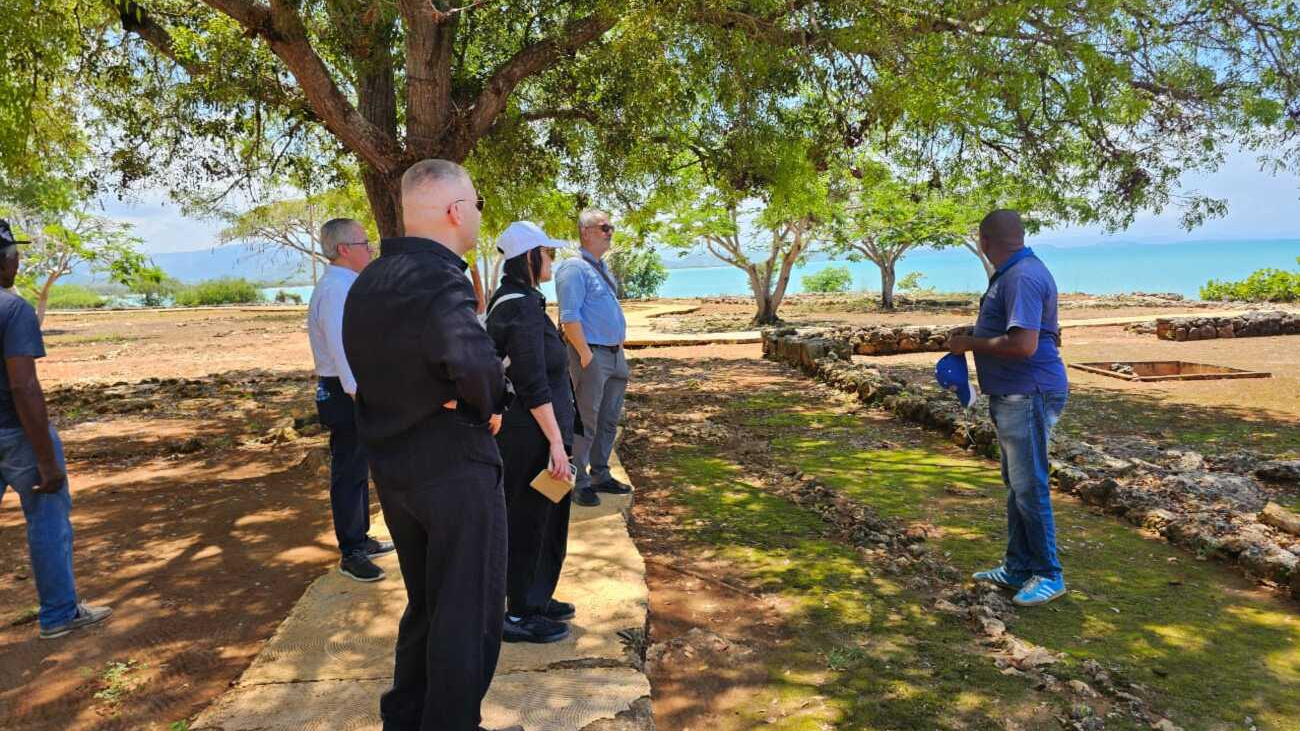
    In a step forward for cultural preservation and international collaboration, the Dominican Republic is actively moving closer to its goal of securing UNESCO World Heritage designation for La Isabela, a landmark colonial-era site on the nation’s northern coast. To strengthen the site’s nomination dossier and tap into global specialized expertise, the country has welcomed a delegation of Turkish cultural heritage professionals, led by veteran underwater archaeologist Harun Özdaş, for an in-depth technical assessment of the historic location.

    The Turkish delegation also included senior diplomatic representatives, headed by Ambassador Emriye Bağdagül Ormancı of Turkey’s diplomatic mission to the Dominican Republic, alongside senior cultural heritage officials from the Dominican Republic’s Ministry of Culture. During the visit, participating authorities repeatedly highlighted the critical role that the site’s submerged archaeological remains play in establishing its global cultural significance. Underwater cultural artifacts and structural remnants, they noted, are not just secondary additions to the site’s history—they are a core component that will help prove La Isabela’s ‘outstanding universal value,’ the key requirement for UNESCO World Heritage inscription.

    La Isabela holds a unique place in modern global history: founded in 1493 by Christopher Columbus during his second voyage to the Americas, it was the first permanent European settlement established across the entire Western Hemisphere. Today, the site preserves irreplaceable archaeological evidence from the earliest days of transatlantic colonization, including foundational urban planning traces, intact structural foundations, and a vast collection of period artifacts that offer unparalleled insight into the earliest interactions between European colonizers and Indigenous populations of the Caribbean. For years, La Isabela has held a spot on the Dominican Republic’s tentative UNESCO nomination list, a preliminary step toward formal consideration for the coveted global designation.

    The technical partnership with Turkish archaeologists is part of a broader strategy by the Dominican Ministry of Culture to expand global collaboration in heritage conservation. Beyond advancing the UNESCO bid, the cooperation facilitates cross-border knowledge sharing, builds capacity for specialized underwater heritage preservation, and allows both nations to exchange evidence-based best practices for protecting vulnerable submerged cultural assets. Dominican cultural officials noted that this international collaboration strengthens not only La Isabela’s nomination prospects but also the country’s broader national efforts to preserve and promote its unique historic and cultural legacy to the world.

  • TTPS to take control of  municipal  police weapons

    TTPS to take control of municipal police weapons

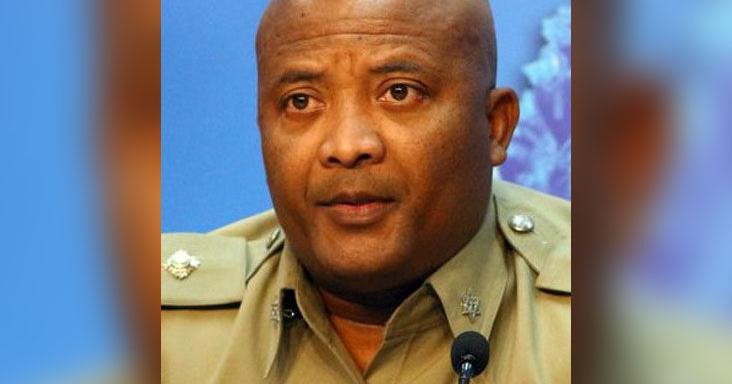
    A sweeping security overhaul is underway in Trinidad and Tobago after a shocking incident of law enforcement-linked gun trafficking left an acting municipal police corporal dead and exposed months of illegal weapons diversion to criminal networks. All firearms held at local government municipal stations across the country are being moved to the custody of the Trinidad and Tobago Police Service (TTPS), following a formal recommendation from Police Commissioner Allister Guevarro that has been immediately approved by senior government officials.

    The urgent policy shift was triggered by the murder of Acting Corporal Anuska Eversley at the San Fernando Municipal Police Station, which occurred last Sunday alongside the theft of a large cache of firearms and ammunition from the facility. What initially appeared to be an isolated violent robbery quickly unraveled into a far-reaching scandal, revealing that guns had been systematically stolen from the municipal station for months and sold on the black market to underworld criminal groups. Investigators have also uncovered evidence that municipal police officers falsified official station records to cover up the missing weapons, and Eversley herself is reported to be a key figure in the illegal racket, with investigators eyeing a fellow municipal officer as the primary suspect in her killing.

    In a formal letter dated April 22, 2026, addressed to Minister of Rural and Local Government Khadijah Ameen, Guevarro outlined that preliminary reviews had uncovered widespread administrative irregularities in the Firearm User’s Licences issued to municipal corporations under the Ministry of Local Government. To address these gaps and bring all weapons holdings into compliance with national firearms legislation, Guevarro proposed the immediate transfer of all licensed municipal firearms to secure storage at designated police stations within their respective jurisdictions, following coordination with local division senior superintendents.

    Under the new temporary arrangement, municipal officers will still be able to access assigned firearms for official duty directly from the police stations where they are stored. This structure preserves full operational capacity for municipal policing while implementing strict, accountable custody controls that were missing under the previous system. The transfer order will remain in effect until a full national audit and verification of all municipal firearms and ammunition is completed, and all relevant Firearm User’s Licences are brought into full regulatory compliance. Guevarro requested Ameen’s intervention to disseminate the order through her permanent secretary to all department heads with oversight of municipal weapons holdings.

    Ameen, who also serves as Member of Parliament for St Augustine, confirmed in an interview with the Express that she accepted the recommendation immediately, issuing a direct directive to all chief executive officers of city, borough and regional corporations to comply with the transfer order without delay. She noted that the TTPS will partner with local government bodies to ensure full compliance across all jurisdictions. The existing allocation process for municipal firearms already requires the assistant commissioner overseeing municipal policing to submit formal requisitions for weapons and ammunition to the Police Commissioner, who then authorizes purchases — a process that will now be reviewed alongside broader regulatory reforms.

    Speaking at a press conference on Monday, Guevarro announced that a full audit of firearms holdings at the San Fernando Municipal Corporation would be the first step, with permanent policy changes to follow once the scope of the irregularities is fully mapped. On Wednesday, Prime Minister Kamla Persad-Bissessar publicly addressed the scandal, confirming that the illegal gun racket had been operating undetected for roughly eight months before Eversley’s murder exposed the network. The investigation into Eversley’s killing and the broader gun trafficking ring remains ongoing, with law enforcement continuing to interview suspects and review municipal records to identify all involved parties.

  • 3 out of 10

    3 out of 10

    As the United National Congress (UNC) administration prepares to mark its first full year in power following the April 2025 general election, Trinidad and Tobago’s Opposition Leader Pennelope Beckles has delivered a scathing assessment of the government’s tenure, awarding it a failing 3-out-of-10 performance score. Speaking at a press briefing hosted Tuesday at the Opposition Leader’s Office in Port of Spain, Beckles outlined a litany of unmet promises and policy failures that she said have left ordinary citizens worse off.

    At the top of Beckles’ list of criticisms is the government’s ongoing failure to curb rising violent crime and homicide rates across the country. She noted that the current state of emergency implemented to tackle public safety has yielded no measurable improvements, leaving communities still vulnerable to violent offending. She added that Prime Minister Kamla Persad-Bissessar has refused to engage transparently and honestly with the public on the most pressing issues affecting daily life.

    On economic and employment fronts, Beckles argued that the UNC has betrayed core campaign pledges to create new jobs and expand access to affordable housing. Instead of delivering on promises of growth, Beckles said the administration has overseen mass layoffs of workers from two major public job programs — the Community-based Environmental Protection and Enhancement Programme (CEPEP) and the Unemployment Relief Programmes (URP). To date, she claimed, the government has not completed construction of a single new affordable housing unit, and no meaningful expansion of employment opportunities has materialized.

    Beckles also pointed to widespread economic strain hitting local communities. During recent visits to public markets, she said, vendors reported that perishable goods are regularly going unsold and rotting, as cash-strapped consumers cut back on discretionary spending. She added that small and medium-sized businesses, the backbone of the local economy, are closing at alarming rates amid shrinking consumer demand.

    A further point of contention is the government’s reversal on the Dragon natural gas deal negotiated with Venezuela by the previous administration. Beckles recalled that Persad-Bissessar had heavily criticized the agreement ahead of the election, even labeling Venezuela’s acting president Delcy Rodriguez a narcotrafficker, and ultimately allowed the deal to collapse. Now, she said, the government claims it wants to secure its fair share of revenue from the deal, an incoherent shift that underscores the administration’s incoherent foreign and energy policy.

    Turning to the government’s planned anniversary celebration — a public fete scheduled to take place Wednesday in Couva — Beckles warned Trinidad and Tobago residents not to accept the administration’s rosy narrative of progress. She said officials will likely attempt to claim crime is falling, the construction sector is growing, and the energy industry is attracting new investment, but none of these claims match on-the-ground reality.

    In a fact check of the government’s construction claims, Beckles noted that domestic cement sales have dropped by 41% — a clear indicator that construction activity has not revived, contrary to official claims. She also pointed to rising unemployment in Tobago as further evidence of economic decline, and questioned what the administration has done with the property tax revenue collected by the previous government, breaking a campaign promise to reimburse those funds to eligible citizens.

    Beckles also called out new tax measures implemented by the UNC, saying what citizens were promised would be a welcome “Christmas present” from the new administration turned out to be a slate of new and increased taxes: higher road traffic fines, a new landlord tax, and increased duties on alcohol, among other levies.

    Beyond economic and public safety failures, Beckles highlighted crises in other key policy areas. She criticized the government’s push for full digitalization of the education system, noting that similar policies have failed to deliver improvements in other countries, and warned the shift is leaving disadvantaged students behind. She also confirmed the public health system is facing a severe ongoing crisis under the current administration, with reduced access to care for ordinary patients.

    Concluding her assessment, Beckles said she could identify almost no policy areas where the one-year-old UNC administration has delivered meaningful success. She called on all Trinidad and Tobago residents to hold the government accountable for its broken promises and rejected the administration’s attempts to frame its first year in power as a success, labeling the government “heartless and wicked” for its treatment of unemployed and working-class citizens.

  • Mystar tipped for top municipal police post

    Mystar tipped for top municipal police post

    A major leadership transition is unfolding at the top of the Trinidad and Tobago Municipal Police Service (TTMPS), coming on the heels of a shocking on-duty murder and unfolding allegations of widespread illegal weapons diversion linked to serving officers. Senior police and government sources confirm that current Assistant Commissioner of Police Wayne Mystar has been tapped to replace outgoing TTMPS head Surrendra Sagramsingh, who was placed on immediate administrative leave earlier this week to facilitate the ongoing investigation.

    As of Thursday evening, however, Mystar had not yet received formal written documentation of his appointment, multiple sources close to the process confirmed to local media. Discussions to finalize the leadership change have already been concluded at the highest levels of both the Trinidad and Tobago Police Service and the Ministry of Local Government and Rural Development, with Mystar the unanimous pick to take over the troubled municipal force.

    Sagramsingh, who has led the TTMPS for the past six years, publicly confirmed this week that he had been placed on leave. In a phone interview with the Express, he acknowledged the administrative action, noting that the decision was framed as a necessary step to preserve the impartiality and transparency of the ongoing probe into the murder of 33-year-old corporal Anuska Eversley and the theft of government firearms and ammunition from the San Fernando Municipal Police Station.

    “Because of the investigation ongoing; and they wouldn’t want you to be around performing duty; and to ensure transparency in case they see a connection,” Sagramsingh explained of the official rationale. The long-serving officer added that while he would have preferred to remain on active duty, he has fully complied with the government’s directive. “The fact is I am in my career as a police officer (and) have been bent on service. So, definitely you would have preferred to have served. But if the authorities feel that is the best thing to do at the time, I am compliant,” he said.

    The formal administrative order placing Sagramsingh on leave is laid out in an April 21, 2026 letter from acting permanent secretary Peter Mitchell. The letter clarifies that the leave is a precautionary procedural measure, not a finding of wrongdoing or liability on Sagramsingh’s part. He has been ordered not to report for duty or exercise any of his former official powers until further notice, but is required to remain accessible to investigators and fully cooperate with all inquiries.

    The crisis rocking the TTMPS began early Sunday morning, when Eversley — a mother of three — was found dead inside the San Fernando Municipal Police Station at approximately 4:40 a.m. A post-mortem examination conducted this week confirmed the 33-year-old officer suffered blunt force trauma before being strangled and stabbed to death. To date, police have taken 10 people into custody for questioning in connection with Eversley’s killing.

    Preliminary findings from the ongoing investigation have uncovered disturbing ties between the murder and a wider alleged criminal ring operating within the municipal police force. Senior investigative sources told the Express that early probes point to a group of serving municipal officers who have allegedly been stealing police firearms and ammunition and selling the weapons to criminal gangs and underworld networks. Sources say the illegal trafficking operation is believed to have been active for between six and eight months, raising urgent questions about systemic oversight failures within the TTMPS that allowed the alleged scheme to continue undetected for months.

  • THA passes Marine Parks Bill

    THA passes Marine Parks Bill

    On April 23, the Tobago House of Assembly (THA) approved the landmark Tobago Marine Parks Bill 2026 during a special sitting held at the Assembly Chamber in Scarborough. The date of the vote carried profound symbolic weight: it marked the eighth birthday that Angelica Saydee Jogie, a young child killed in a high-profile jet ski collision off Tobago’s Pigeon Point beach in April, would have celebrated.

    Angelica lost her life on April 8 when an out-of-bounds jet ski collided with her and her family during what was meant to be a pre-birthday getaway. Speaking ahead of the vote, THA Chief Secretary Farley Augustine, who sponsored the bill, reflected on the tragedy that pushed forward this long-stalled legislation. The family had traveled to Tobago specifically because the island represented joy, peace and natural beauty to their children, Augustine noted. What should have been a celebratory trip turned into an unthinkable nightmare for the Jogie family, he added, joining their call for urgent regulation of unregulated recreational watercraft after the incident. Angelica’s mother Salisha Jogie has repeatedly called for a full ban on jet skis across Tobago’s public swimming beaches in the wake of her daughter’s death.

    The core purpose of the new bill is to establish a formal, enforceable legislative framework for the protection, adaptive management and sustainable use of all of Tobago’s marine protected areas. It aims to preserve fragile coastal biodiversity, secure marine ecosystems for future generations, and clarify enforcement powers to crack down on unsafe or illegal watercraft activity in designated swimming zones. Key enforcement provisions outline steep penalties for anyone who interferes with authorized inspectors – including police officers and Coast Guard personnel – carrying out their official duties under the law. Individuals convicted of obstructing enforcement face a maximum fine of $100,000 and up to 12 months of imprisonment, sending a clear signal about the seriousness of regulatory compliance.

    Augustine confirmed that following the THA’s approval, the bill will move to Trinidad and Tobago’s national Parliament for final consideration within the next two to three weeks. He noted that while the legislation shares core foundations with a 2020 bill drafted when the People’s National Movement (PNM) controlled the THA, the previous PNM-led national government allowed the proposal to languish for years without action. He criticized former PNM Prime Minister Keith Rowley for publicly calling for a jet ski ban after leaving office, pointing out that Rowley’s own administration failed to advance the necessary legislation when it had the power to do so. Augustine emphasized that the THA can only set policy; enforceable national law is required to put that policy into practice, a point Rowley omitted in his post-office commentary.

    The Chief Secretary also raised pointed concerns about ongoing enforcement gaps at the popular Buccoo Reef Marine Park, noting that just one week after Angelica’s death, jet ski operators were still found operating illegally in zones marked exclusively for swimmers. He accused the Trinidad and Tobago Police Service (TTPS) of failing to intervene against these trespassing operators, warning that if any future incident leads to legal action against the THA, his administration will direct its legal team to shift responsibility to the Attorney General and the national central government. Augustine argued that the THA has fulfilled its duty by creating policy, running public education campaigns and marking restricted zones, but it cannot enforce rules without the full backing of national law and active cooperation from national law enforcement agencies, which have left the THA unable to act effectively to date.