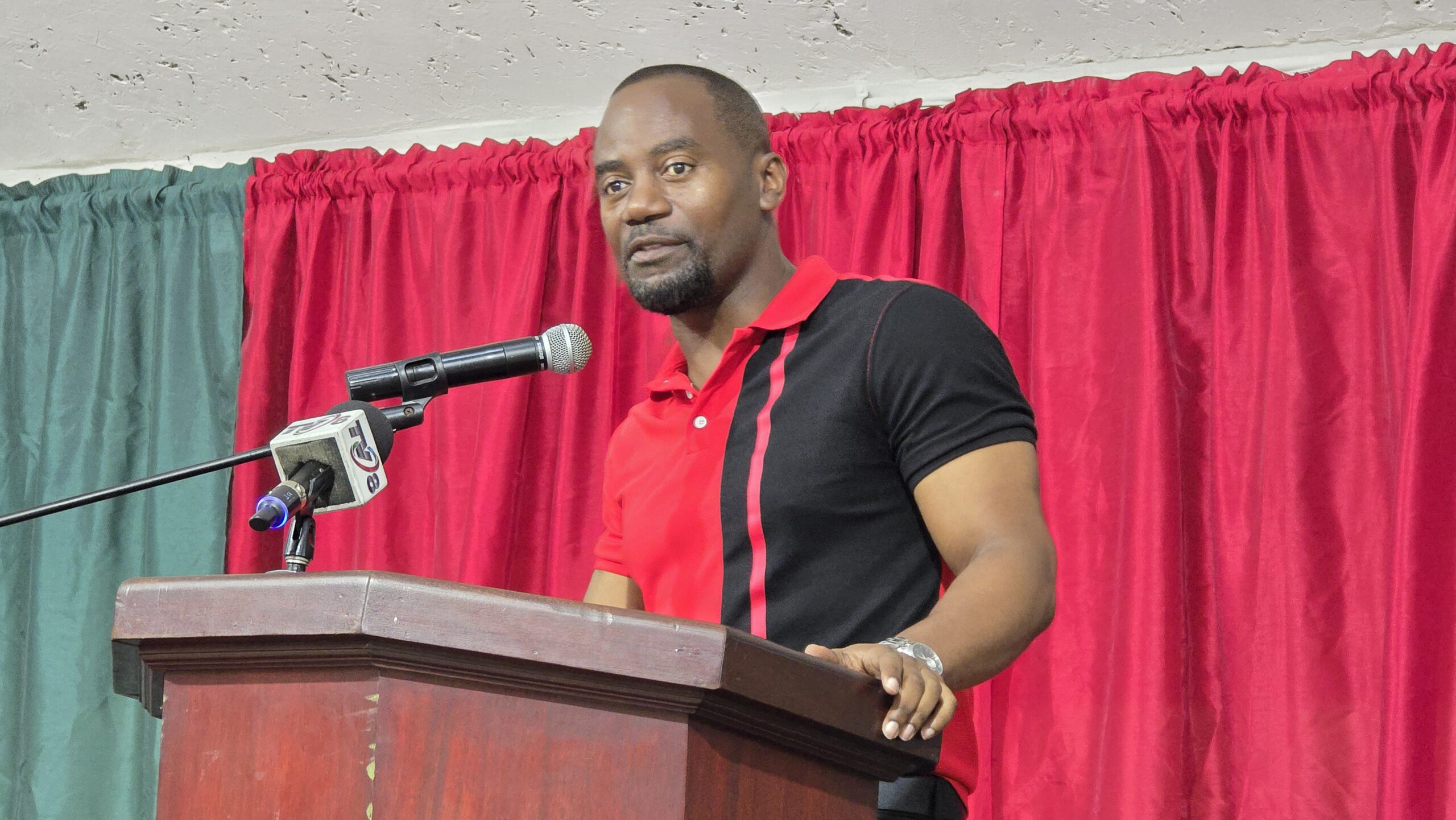
Barbados’ Ministry of Transport and Works is moving forward with a long-awaited infrastructure project to widen the heavily traveled Ronald Mapp Highway (Highway 2A) into a four-lane dual carriageway, part of a national initiative to cut chronic traffic congestion across the island, Transport and Works Minister Kirk Humphrey has confirmed. The 12-kilometer arterial route, which has become the island’s second-busiest northern corridor over the past 40 years, runs parallel to the coastal Highway One, stretching from the D’Arcy Scott Roundabout in Warrens, St. Michael in the south to Mile-and-a-Quarter in St. Peter, with segments also cutting through St. Thomas and St. James. Currently, only the section from Warrens to the Redman’s Village/Bagatelle junction already operates as a four-lane road, leaving the vast majority of the highway as a congested two-lane thoroughfare. Making the announcement on the sidelines of his St. Michael South constituency branch’s annual general meeting on Sunday, Humphrey explained that the expansion project required a full redesign of the highway’s seven existing underpass bridges, as original engineering plans for earlier bridge upgrades did not account for the planned road widening. “Highway 2A has seven bridges running underneath it. To be able to widen that road, you obviously have to do the bridge work,” Humphrey said. “The ministry had already engaged on four of the bridges to be able to do some work, but they hadn’t accommodated for the expansion. We’re now in the process of reviewing and redesigning the bridge drawings for all seven bridges.” While the government awaits revised engineering schematics for all seven structures, paving work continues on the existing highway alignment toward Lancaster in St. James, and Minister Humphrey noted that the full expansion is on track to break ground imminently once design work wraps up. “It’s our intention to go for four lanes on that highway and to start our work as soon as possible,” he said. “Between the designing of the bridges and the design for the road, because people must understand that you have to design the road, you don’t just build a road, so that work should start very soon as well.” Beyond the Highway 2A expansion, Humphrey outlined the progress of dozens of road improvement projects launched across the island since he assumed office in February, highlighting that upgrades in Thorpes Cottage and Newbury, St. George have already been fully completed. In St. Lucy, the island’s largest-ever water infrastructure upgrade, which has laid 20 kilometers of new water pipes at a multi-million-dollar cost, required a follow-up road rehabilitation program after construction disturbed existing road surfaces. “St. Lucy has seen the most development in terms of water infrastructure in the history of our Barbados,” Humphrey said. “We’ve done about 20 kilometres of new pipe at millions of dollars in St. Lucy, but the unfortunate thing is that once you lay pipe, you’re disturbing the road, so we have to go back and do a number of those roads as well. But we’ve already started that.” The ministry has also launched a new phase of its island-wide pothole repair program, contracting two private local firms – INFRA and C O Williams – to handle pothole patching and road reinstatement work across the country. INFRA is currently focusing on pothole repairs in the southern parishes, while C O Williams is leading work in the north, with most repair sites already active. Addressing another long-standing public complaint, Humphrey said the ministry has also launched a dedicated project to bring raised and sunken manholes across the island level with road surfaces, eliminating a persistent source of vehicle damage and driver inconvenience. To help the ministry prioritize repairs, Humphrey encouraged Barbadian residents to report potholes and other road hazards through the newly launched Pearly mobile app, as well as through social media and direct communication channels. “Use the Pearly app or any other source to be able to just let us know where the areas of concern are, and I’ve been trying to respond to people when they message me,” he said. “I try to send somebody to do the work, when they call me, when I see on Instagram, I try to respond, but we also have to be strategic, you know, you can’t just be ad hoc, so we have a strategic pothole plan in place.” Humphrey also acknowledged a gap in public communication around infrastructure projects, committing the ministry to improve transparency around project timelines and delays moving forward. “What I have to do is just communicate to the public a little bit better about where we’re going, when there are delays, why there are delays, and so on, so that the public is not caught off guard,” he said.