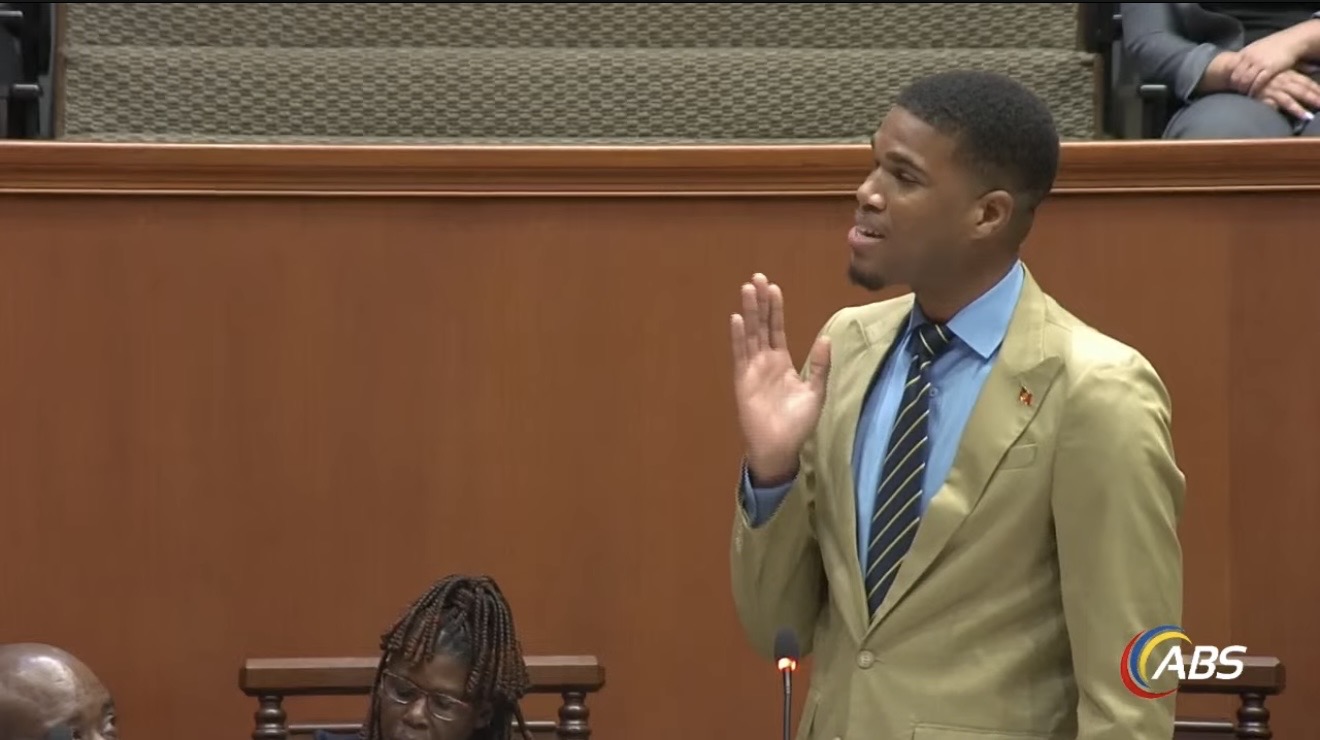
In his landmark first address to the Senate on Monday, opposition lawmaker Jonathan Wehner put forward a impassioned call to revise the Fatal Accidents Bill 2026, aiming to close a gap that denies critical financial protection to children raised outside formal adoption arrangements when their primary caregiver passes away.
Wehner broke down the inconsistencies he identified within the proposed legislation: while Clause 2 of the bill casts a broad net to define what counts as a dependent for general purposes, Clause 4 – the section that sets rules for awarding bereavement damages – explicitly carves out an exclusion for children who have been raised by non-biological, non-legally adopted caregivers. This gap, he argued, ignores a long-standing cultural norm across Caribbean communities, captured in the enduring adage that “it takes a village to raise a child.”
In Antigua and Barbuda specifically, Wehner noted that informal care arrangements have deep roots across the country. Many families open their homes and hearts to children who have been orphaned or abandoned by their biological parents, without completing formal adoption paperwork. To illustrate how common this practice is, he highlighted the legacy of the late Hilson Baptiste, a former Member of Parliament for St. Mary’s South who raised and supported dozens of children over his lifetime without ever formalizing the relationships through legal adoption.
Under the current draft of Clause 4, Wehner explained, these vulnerable children would be left with no legal right to claim any compensation after losing the person who provided them with care, stability and support. He challenged his fellow legislative colleagues to deliberate on whether it is ethical to knowingly pass legislation that abandons these minors at their most vulnerable moment.
“I hope that we are compassionate in this house. We see the needs that we have reflected in our society, and we show some consistency from the same legislation that the government would have been bringing to this house,” Wehner stated. He pushed for the amendment to be taken up during the bill’s committee stage, rejecting the option of delaying the change for a future legislative session. He emphasized that the change is minimal: all his proposal asks is that Clause 4 be aligned to match the broad definition of dependents already laid out in Clause 2. He added that the public would overwhelmingly back the adjustment, which would then return to the House of Representatives for final approval.
Beyond the exclusion of informally raised children, Wehner also raised concerns about the bill’s fixed $20,000 cap on bereavement damages. He argued that the legislation should include an built-in adjustment mechanism that would allow the award amount to rise over time in line with inflation or shifting economic conditions, eliminating the need for Parliament to reconvene and pass a new amendment every time the sum needs updating. “Let us now make the amendment here that you don’t have to come to amend the bill,” he said.
During the committee stage deliberations, the bill’s lead legal drafter offered clarification on the fixed $20,000 award: the sum is designed as a guaranteed one-time statutory payment for grieving spouses, parents and qualifying children, and it does not block courts from awarding additional damages in other eligible categories. Despite this clarification and Wehner’s well-reasoned proposals for amendment, the governing party leveraged its majority voting power in the Senate to approve the bill in its original form, rejecting all proposed changes.