作者: admin

  • Central cops eye five post locations

    Central cops eye five post locations

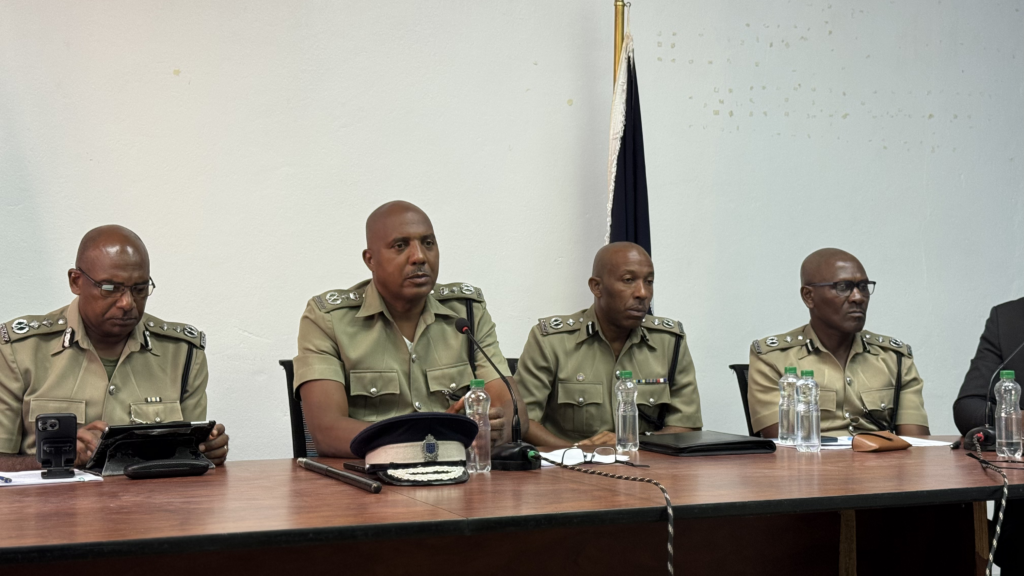
    Law enforcement leadership in Trinidad and Tobago’s Central Division has unveiled a proposal to establish permanent joint army-police security posts across five high-priority locations, part of a broader national crime reduction initiative announced earlier by Prime Minister Kamla Persad-Bissessar.

    Senior Superintendent Rudolph Bhagwandeen, speaking at a press conference held at the Police Administration Building in Port of Spain on Wednesday, clarified that the identification of the five sites does not guarantee all posts will move forward, as formal approval and implementation planning are still ongoing. The shortlisted locations, mapped from south to north across the division, are: the Couva Interchange near the NP gas station, Carlsen Field east of the main highway, Brentwood adjacent to a local gas station and east of the highway, Felicity in Chaguanas on the highway’s western flank, and the St Helena district in Caroni.

    Three of the five proposed sites — Couva Interchange, Carlsen Field, and Felicity — were already included in the Prime Minister’s earlier announcement of a national plan to roll out 30 joint army-police posts nationwide, with six additional locations still to be finalized.

    Bhagwandean explained that the five Central Division locations were chosen following a rigorous data-driven assessment. Selection criteria included an in-depth review of historical crime statistics, actionable intelligence collected through ongoing police operations, feedback from community engagement initiatives, and data shared by cross-agency partners. The division also incorporated guidance from the Police Service’s Crime and Problem Analysis Branch (CAPA) to validate its site choices.

    A key factor in site selection was proximity to major transit corridors, particularly the region’s main highway. Bhagwandeen noted that positioning mobile security units at these strategic intersections would cut response times and improve officers’ ability to intercept criminal suspects moving through the area.

    The proposal comes as the Central Division grapples with long-standing operational challenges: it covers a sprawling policing territory that includes nine distinct districts, requiring officers to respond to everything from minor infractions to serious violent crimes, and already faces strain on existing personnel and vehicle resources.

    To address these constraints, the Police Service is implementing a flexible shared-resource model, where personnel, vehicles, and specialist units can be reallocated across station districts based on real-time crime trends, intelligence reports, and emerging threats. “We’ll put resources where the problem is, not simply where the resource is normally stationed,” Bhagwandeen explained of the new approach.

    Despite the progress in site selection, critical details about the posts remain unresolved. Discussions about staffing and resource allocation are still ongoing with the Police Service’s executive leadership, and no final decisions have been made about how the 24-hour posts will be manned. Additional resources will be required both to operate the posts and to enable officers to respond to incidents dispatched from the new locations, but no finalized staffing data is available yet.

    Bhagwandeen also confirmed that no timeline has been set for the deployment of the first post, and he could not share specific details about on-site facilities such as holding cells. Early plans indicate the posts will likely be constructed from prefabricated buildings, though their exact layout and size have not been confirmed. Once operational, the facilities will be open to the public, allowing community members to file reports and interact directly with officers on-site.

  • CCJ fallout over dress code

    CCJ fallout over dress code

    A simmering internal conflict over institutional governance and judicial attire has erupted into an open, high-stakes rift at the Caribbean Court of Justice (CCJ), pitting the court’s president against his judicial peers and raising urgent questions about the institution’s commitment to transparency, collegiality and cultural inclusion. The controversy first came to a head on July 3, 2026, when CCJ President Justice Winston Anderson sent a formal email to sitting Justice Chile Eboe-Osuji, demanding written assurance that Eboe-Osuji would wear a traditional European-style business suit and tie for two upcoming high-profile judicial hearings: *Fisher v Guyana Elections Commission* scheduled for July 16, and *Ramirez and Zabane v Attorney General of Belize* set for July 28. In his message, Anderson noted that a formal court-wide judicial dress code was still pending adoption, and that compliance with traditional business attire was the longstanding custom of the court and the wider Caribbean region. He set an ultimatum: Eboe-Osuji had to respond by 12:01 p.m. on July 6, or Anderson would reconfigure the hearing panels based on previous communications about Eboe-Osuji’s stance on dress. The demand drew a sharp, public rebuke from Eboe-Osuji, who identified as Nigerian and pushed back against what he framed as an overreach of executive authority and a rejection of his cultural identity. In a response sent the following day, July 4, Eboe-Osuji called Anderson’s directive “highly inappropriate behaviour towards a peer,” arguing that the CCJ’s founding agreement grants the court president no unilateral power to dictate the dress of sitting judges. He went further, accusing Anderson of pushing a Eurocentric standard of judicial professionalism that requires him to reject his innate cultural identity, a move he said would not hold up to scrutiny before global human rights bodies including the Inter-American Commission on Human Rights and the UN Committee on Human Rights. On July 5, Eboe-Osuji shared the full exchange with all sitting CCJ justices, opening the debate to the entire bench and detailing his desire to wear traditional Nigerian attire while on the bench. What began as a disagreement over clothing quickly ballooned into a broader debate over institutional authority, cultural decolonization, and judicial independence, with multiple judges weighing in to share their perspectives and voice solidarity with Eboe-Osuji. Guyanese-born Justice Arif Bulkan was the first to respond on July 6, noting that his home country had relaxed colonial-era dress rules for legal professionals as early as the 1970s, permitting Nehru-collar shirts in place of European suits and ties as a more culturally and climate-appropriate alternative decades ahead of neighboring Trinidad and Tobago. That same day, Belize-born Justice Denys Barrow added his voice, affirming that non-European judicial attire carries full dignity, and warned against unilateral rule-making by a single court leader without broader consultation. He also called on colleagues to maintain perspective as tensions rose over the panel reconfiguration controversy. By July 7, the conflict escalated further: Anderson followed through on his initial ultimatum, informing Eboe-Osuji that he would be removed from both hearing panels due to the lack of requested written assurance on attire. Eboe-Osuji immediately pushed back, calling the removal unlawful, a violation of the CCJ’s founding agreement and a breach of international human rights law, and urged Anderson to reverse the decision. After holding informal discussions with other judicial colleagues, Anderson backed down hours later, agreeing to reinstate the original hearing panels until the underlying dress code and governance dispute could be resolved. The detente did not end the broader institutional crisis, however. On July 8, Trinidad and Tobago-born Justice Peter Jamadar framed the conflict as a far more serious threat to the court’s core mission, warning colleagues that the dispute exposed broader threats to the rule of law, judicial independence, institutional integrity and impartiality that extended well beyond the question of attire. He also raised deep concerns about the mental health and well-being of non-judicial CCJ staff, noting the bitter irony that the court was potentially poised to deliver an advisory opinion to the Caribbean Community (Caricom) on good governance and procedural fairness, even as its own internal governance lay in chaos. Bulkan echoed Jamadar’s concerns, stating that he shared full solidarity with Eboe-Osuji and warning that the incident exposed a foundational governance crisis at the court. He questioned what less powerful non-judicial staff must experience if a sitting equal judge could be targeted and singled out in this way, noting that the court risks losing its moral authority to advise Caribbean governments on issues of natural justice, human rights and human dignity if it cannot uphold those values internally. Eboe-Osuji concluded the public exchange by reiterating his claim that Anderson was acting as “lord and master” of the institution rather than a public servant, framing the attack on him as an attempt to force all other court members into line with Anderson’s directives for the remainder of his six-year term, calling the power play a “tragic mistake.” Local media outlet *Trinidad Express* first obtained the full cache of internal email exchanges and reached out to Justice Anderson for comment on the full set of allegations via his personal email on August 5, but received no response. The CCJ’s official communications team issued a general statement two days later, reaffirming the institution’s commitment to judicial independence, integrity and public confidence in the administration of justice, but declined to address any of the specific allegations raised in the internal dispute, noting that claims could be “misunderstood or mischaracterised without the proper context.”

  • Cops kill ‘H-Man’

    Cops kill ‘H-Man’

    In a tense late-night operation that closes one high-profile homicide case but adds to growing police violence statistics in the country, an 18-year-old suspect wanted for the killing of a Trinidad and Tobago police officer was killed in a shootout with law enforcement at his girlfriend’s residential property in Matura Tuesday night.

    Hassan “H-Man” Johnson was shot dead at a small two-bedroom concrete home located at the 7 3/4-mile marker along Main Road, Mora Trace, Matura. His death pushes the total number of people killed by police operations across Trinidad and Tobago to 21 so far this year, according to official law enforcement data.

    Authorities launched the targeted manhunt after receiving credible intelligence shortly before 11 p.m. confirming Johnson had been hiding out at the property, after going off the grid following the July 28 murder of Police Constable Rommel Douglas. Johnson had avoided his own registered residence on Second Street in Printeryville, Arima, to evade capture for weeks.

    A multi-unit tactical team assembled to execute the apprehension, drawing specialist officers from the Home Invasion Team, Special Investigations Unit, the Western and South-Western Division Gang Units, and the Deputy Commissioner of Police Operations Team, supported by troops from the Trinidad and Tobago Defence Force. Law enforcement surrounded the property fully before moving in through an entryway on the building’s eastern side.

    As armed officers entered the residence, police officials confirmed Johnson opened fire on the responding team. Officers immediately returned fire, striking Johnson multiple times. Two other civilians — a 19-year-old man and Johnson’s girlfriend — were inside the home during the exchange of gunfire but escaped the incident without physical injury.

    Johnson was quickly rushed to the nearby Sangre Grande Hospital, where medical staff pronounced him dead at approximately 11:55 p.m. The two unharmed civilians were taken into police custody for questioning following the shootout.

    Johnson was the primary suspect in the July 28 killing of Douglas, an officer assigned to the Four Roads Police Station. The fatal attack on the off-duty officer unfolded at around 11:05 p.m. that night, as Douglas sat in his parked vehicle at the intersection of Hydraulic Trace and Caroni South Bank Road in Kelly Village. A white Nissan Tiida pulled alongside Douglas’s car, carrying the alleged robbery crew that targeted the officer.

    Police reports indicate the occupants of the Tiida attempted to rob Douglas, triggering a chaotic exchange of gunfire that left Douglas fatally wounded. One of the suspected accomplices, 19-year-old Adetola Ammon of Arima, was also killed during the encounter; law enforcement investigators believe Ammon was mistakenly shot by one of his co-conspirators during the attack.

    Douglas was laid to rest on August 6, after a public funeral service held at the Morvant Central Community Centre on Cipriani Street in Morvant. During the memorial service, loved ones and colleagues remembered Douglas as a devoted family man who prioritized his relatives and held deep commitment to those close to him.

  • CPL 2026: Saint Lucia Kings edged by St Kitts & Nevis Patriots despite strong contributions from Kamil Pooran and Jewel Andrew – The Tribune

    CPL 2026: Saint Lucia Kings edged by St Kitts & Nevis Patriots despite strong contributions from Kamil Pooran and Jewel Andrew – The Tribune

    As preparations ramp up for the 2026 edition of the Caribbean Premier League (CPL), two major franchises — the Saint Lucia Kings and the St Kitts & Nevis Patriots — have begun unveiling their core rosters for the upcoming T20 tournament, revealing a mix of experienced international talent and emerging Caribbean cricket stars set to compete on the island grounds.

    The Saint Lucia Kings, based in the scenic coastal town of Gros Islet, have confirmed that several high-profile cricketers will rejoin or join their squad for the 2026 season. Fan-favorite West Indies wicketkeeper-batsman Andre Fletcher, who has built a loyal following among local fans for his explosive batting at the top of the order, is set to return for another campaign with the Kings. He will be joined by fellow Caribbean standout all-rounder Kamil Pooran, hard-hitting batsman Jason Holder, and dynamic all-rounder Jewel Andrew, forming a core group that blends power hitting, solid bowling, and on-field leadership.

    Across the inter-island rivalry, the St Kitts & Nevis Patriots have locked in Saurabh Netravalkar, the American left-arm fast bowler who has made a name for himself in global T20 leagues with his disciplined death-over bowling and ability to pick up late wickets. Netravalkar’s addition to the Patriots roster adds a key international dimension to the franchise’s bowling attack, as the team looks to contend for the CPL 2026 title after mixed results in recent editions.

    The CPL has long served as a showcase for top T20 talent from across the Caribbean and the globe, drawing millions of cricket viewers annually and boosting tourism to the host islands. The early announcement of key player signings for 2026 has generated early excitement among cricket fans, who are already looking forward to the high-intensity matches scheduled to take place across the Caribbean’s world-famous cricket grounds next year.

  • Fletcher, bowlers set up big win for Patriots

    Fletcher, bowlers set up big win for Patriots

    The 2026 Republic Bank Caribbean Premier League (CPL) logged its first victory for the St. Kitts and Nevis Patriots on Wednesday, with a calm, unbeaten 48-run innings from veteran batter Andre Fletcher and match-winning bowling performances sealing a five-wicket triumph over hosts Saint Lucia Kings at the Daren Sammy Stadium.

    The Patriots’ bowling attack dominated the Saint Lucia batting line-up from the first over, with pace bowlers Saurabh Netravalkar and Jason Holder sharing six wickets between them to restrict the home side to a modest total of 155 for eight off their full 20 overs. The pair put the Kings’ top order under immediate pressure with the new ball, knocking over two key wickets inside the powerplay – including dangerous opening batter Andreis Gous – leaving the hosts reeling early in their innings.

    Young prospect Kamil Pooran, playing just his second top-flight T20 match, led the Kings’ fightback, joining emerging batter Jewel Andrew at the crease to rebuild the innings. The third-wicket pair stitched together an 82-run stand, with a steady, composed batting approach that set the platform for a late attacking surge. Both batters went on to record half-centuries, with Pooran notching his first ever T20 half-century in the process.

    The partnership was broken in spectacular fashion by Patriots spinner Wanindu Hasaranga, who ran out Pooran with a pinpoint direct hit from the deep cover boundary. Andrew pushed on, finishing with an impressive 58 runs off 42 deliveries, but he could not stop the home side’s lower order from collapsing dramatically around him. The final five overs of the innings yielded just 22 runs for the loss of five wickets, capping a dramatic collapse that left the Kings well short of a competitive total.

    Chasing 156 for victory, the Patriots started their innings cautiously, with opener Kyle Mayers growing into the innings and shifting the run rate to put the visitors firmly in control. Mayers’ innings ended on 32, however, when a clever piece of bowling from Kings spinner Maheesh Theekshana claimed his wicket.

    After Mayers’ departure, Fletcher anchored the innings with a calm, measured approach, rotating the strike consistently to keep the run rate ticking over just above six runs per over. Theekshana and all-rounder Roston Chase attempted to replicate their match-winning spin performance from a few nights prior against the Antigua & Barbuda Falcons, putting the squeeze on the Patriots’ middle order. The spin duo pegged the visitors back whenever they looked to seize control, picking up the wickets of Kevin Wickham and Jason Holder to keep the Kings in the contest.

    Once the two star spinners had completed their allotted overs, however, the remaining Kings bowlers were unable to maintain the same pressure. Fletcher closed out the chase comfortably, guiding the Patriots to their first win of the tournament with room to spare.

    Looking ahead to upcoming fixtures, the Saint Lucia Kings will face the Barbados Tridents at their home ground on Friday, while the Patriots travel to Sabina Park in Kingston, Jamaica, to take on the Jamaica Kingsmen next Tuesday.

  • SPBS to Honor Ms. Shermin Stevens with 2026 Distinguished Alumna and Community Service Leadership Award at Dr. Stewart O. Williams Awards Gala

    SPBS to Honor Ms. Shermin Stevens with 2026 Distinguished Alumna and Community Service Leadership Award at Dr. Stewart O. Williams Awards Gala

    BRONX, NY – August 13, 2026 – The Sandy Point Benevolent Society (SPBS) has announced that esteemed educator and community advocate Shermin Stevens will be named the 2026 recipient of the Distinguished Alumna and Community Service Leadership Award. The honor will be presented during the upcoming Dr. Stewart O. Williams Awards Gala, scheduled to take place September 5, 2026 at the Maestros Catering Hall in the Bronx.

    With a professional legacy stretching more than 30 years, Stevens has built a reputation as a transformative leader across academia, administration and public service. Her career has been defined by consistent dedication to elevating student success, supporting peer professionals, and strengthening academic institutions, with a track record that has earned widespread acclaim for her integrity, professionalism and relentless commitment to excellence.

    Stevens has carved out a particularly distinguished legacy in the niche fields of hospitality education and culinary arts. Her deep expertise spans core academic functions, from developing specialized culinary curricula and designing new training programs to overseeing quality assurance and leading academic administrative teams. Under her strategic direction, culinary education programs have been expanded and refined to equip students with the full range of technical abilities, hands-on practical skills, and professional competencies required to build thriving careers in the competitive global hospitality sector. By balancing rigorous academic standards with hands-on, industry-aligned training, she has consistently driven innovation, institutional accountability, and measurable gains in student achievement throughout her tenure.

    Her impact extends far beyond the walls of academic institutions, rooted in a longstanding commitment to community service that has created lasting, positive change for generations of residents. Currently serving as President of SPBS’ St. Kitts Chapter, Stevens has spearheaded a range of targeted educational initiatives and community outreach programs designed to expand access to opportunity for local students. Through accessible mentorship, intentional educational support, and selfless, forward-thinking leadership, she has lifted up the communities she serves across the Caribbean region.

    Across her decades of work in education, academic leadership, and community development, Stevens’ accomplishments have created a blueprint for service that continues to inspire emerging leaders. SPBS notes that her selection for the 2026 award is a formal recognition of her decades-long enduring contributions, transformative cross-sector leadership, and unwavering dedication to improving quality of life for others through intentional service.

    The annual Dr. Stewart O. Williams Awards Gala brings together a cross-section of community leaders, accomplished educators, and SPBS supporters from across the globe for an evening of celebration, honoring individuals who have made extraordinary contributions to education and community development. Tickets for the 2026 event are available for purchase through SPBS members or via the official event website at www.givebutter.com/spbsinc.

    This announcement was distributed as a prepared press release from SPBS, originally published by SKNVibes.com.

  • Police officer charged with murder of missing Dominican teenager

    Police officer charged with murder of missing Dominican teenager

    On Thursday, August 13, Dominica’s top law enforcement official announced a landmark development in a high-profile missing person case that has gripped the Caribbean nation: a serving police officer has been formally charged with the murder of 16-year-old Jerbiah Paul, whose decomposing remains were recovered earlier this week following a days-long multi-agency search.

    Police Commissioner Lincoln Corbette shared details of the investigation breakthrough during a public press conference held in Basseterre, St. Kitts, outlining the step-by-step process that led to the arrest and charge. According to Corbette, investigators received credible new intelligence on August 10 that pointed investigators to a remote, hard-to-reach area of the country. A search team made up of police personnel, along with firefighters and ambulance service first responders, launched an operation that evening, but poor light forced the team to suspend the search overnight. Crews returned to the site at first light on August 11, and shortly after resuming their work, they recovered human remains in a isolated cliffside precipice. Forensic testing rapidly confirmed the remains belonged to Paul, who had been reported missing weeks prior.

    In the 24 hours following the identification of the body, investigators built their case against Constable Jean Langlais, the officer now accused of the killing. Langlais was officially charged with murder late on August 12, and made his first court appearance before a Dominican magistrate the following day, where he was remanded to the Dominica State Prison to await his trial. The accused had already been held in police custody for several days before charges were filed and the case was made public, a timeline Corbette defended as a deliberate, methodical choice to protect the investigation.

    Corbette explained that the decision to withhold details from the public throughout the probe was not an attempt at secrecy, but a necessary step to preserve the integrity of the case. He stressed that investigators prioritized building a solid, prosecutable case over rushing to make a public announcement, a choice that has resulted in the first formal charge in the killing.

    The commissioner also noted that the investigation has drawn support from a network of law enforcement partners across local, regional, and international levels, including the Regional Security System (RSS), a regional security body that supports Caribbean nations in complex criminal investigations. He emphasized that the probe is far from over, and investigators have not ruled out additional arrests as they continue to untangle the circumstances of Paul’s death.

    In his remarks, Corbette extended heartfelt condolences to Paul’s grieving family, as well as to the broader Dominican community that has followed the case closely since the teen was first reported missing. He reaffirmed the full commitment of the Dominican police force to seeing the case through to its conclusion, promising that no stone would be left unturned in the search for full justice. “Anyone who had any involvement in the disappearance and murder of this young child will face the full force of the law,” Corbette said, underscoring that even those within law enforcement will not be granted immunity for criminal acts.

  • Hof van Justitie luidt noodklok over politieke ingreep

    Hof van Justitie luidt noodklok over politieke ingreep

    On August 11, the entire bench of Suriname’s Court of Justice issued a stark public warning to the country’s National Assembly (DNA), sounding the alarm over planned constitutional and legislative amendments that the judiciary says threaten the foundational independence of Suriname’s judicial branch and undermine the rule of law.

    The alarm comes in response to newly proposed amendments to three core pieces of Suriname’s legal framework: the national constitution, the Law on the Legal Position of the Judiciary, and the Regulation on the Organization and Composition of the Judicial Power (RIS). While the proponents of the changes have framed the reforms as an effort to strengthen the judicial organization, the Court of Justice rejects this claim outright in its official letter addressed to DNA Speaker Ashwin Adhin. Signed by all sitting judges, the document warns the proposals will result in a significant weakening of the constitutional role of the judiciary.

    The court outlines a series of critical flaws in the current draft of the reforms. First, it notes that the necessary alignment between the proposed constitutional changes and supporting implementing legislation under the RIS is entirely missing. This gap, the court argues, will create major delays and practical barriers to implementing any changes, and the dispute at hand is not merely a disagreement over minor policy details: it centers on provisions that directly threaten the constitutional standing and real-world independence of the entire judiciary. The court emphasizes that any legitimate constitutional amendment should permanently strengthen the judiciary’s independence, expertise, and overall quality – a standard the current proposal fails to meet by a wide margin.

    Contrary to framing that casts the judiciary as an opponent of reform, the court makes clear it has consistently supported constructive, collaborative change through years of consultations, congressional discussions, and back-and-forth correspondence. The judiciary itself has put forward its own proposals for constitutional and legal adjustments, which were previously discussed with President Jennifer Simons, and the court says it remains committed to dialogue rather than confrontation. However, it warns that the cumulative effect of the individual measures included in the current package adds up to a dangerous weakening of institutional checks and balances.

    “We do not oppose change,” the court wrote in its official letter. “But we oppose any development that weakens the constitutional position of the judiciary, and thus the entire rule of law.” The court has not ruled out taking formal action to protect judicial independence if the proposals move forward, stating it will take “appropriate measures” in the interest of safeguarding the branch’s autonomy.

    Beyond core constitutional concerns, the court has also pushed back on proposed changes to the structure of Suriname’s Public Prosecution Service (OM). Reform proponents have scrapped the existing framework of a College of Prosecutors-General in favor of a new governing Board of Directors, composed of the Prosecutor-General and between two to four Attorneys-General. Critically, the court is entirely excluded from the process of nominating, appointing, and removing these Attorneys-General, a change the judiciary says removes a key check on political interference.

    The court notes that the OM’s own proposal to reorganize its existing Management Team into a dedicated OM Council, with clear role divisions and portfolio responsibilities for different officials, has been completely sidelined by proponents. Additionally, the court’s own proposal for a rotation system for senior leadership roles – which would replace lifetime appointments for the Court President and Prosecutor-General with seven-year terms – has been gutted: reform proponents only apply the seven-year limit to the Prosecutor-General, dropping the limit for the court presidency. To guard against political interference, the court proposed that Attorneys-General should receive lifetime appointments after formal review and recommendation from the judiciary, a standard international practice for checks and balances, but this provision was also cut from the proposal.

    The reforms also create new questions around a proposed change to retirement ages: the bill lowers the retirement age to 60 for OM members and 65 for the Prosecutor-General, but does not extend the same change to sitting judges, who are part of the same judicial branch. The court says it cannot find any logical justification for this unequal treatment.

    Another major point of contention is the sidelining of judicial expertise in the drafting process. “Carefully developed proposals worked out with experienced experts have been set aside without any substantive consultation,” the court states. For example, a long-held plan to establish multi-judge panels in first-instance courts, which would enable critical specialization for judges to handle complex cases, has not been enshrined in law, leaving the reform dead in the water.

    The introduction of cassation proceedings (a process for reviewing lower court judgments) also lacks critical transitional rules, which the court says will immediately create legal uncertainty for ordinary citizens with ongoing cases. The provision allowing cassation in the public interest of upholding the law has also been entirely cut from the proposal. At the same time, qualification requirements for judges serving on Suriname’s highest court have been watered down: the existing requirement of 10 years of experience as a judge is eliminated, as is lifetime appointment, with reform proponents only requiring that candidates be 40 years old as a practicing jurist to serve on the highest appellate court. Finally, the proposed changes eliminate accumulated financial rights and benefits for both sitting and retired judges.

    In closing, the court expressed its hope that the national legislature will prioritize protecting Suriname’s democratic rule of law. “We trust that protecting the democratic rule of law and strengthening the constitutional position of the judiciary is also part of the mission of your Parliament, as the highest organ of the state,” the letter reads. Copies of the official letter have been distributed to the president, the minister of justice, professional associations for lawyers, notaries, bailiffs and court clerks, and the court staff union to raise broad awareness of the judiciary’s concerns.

  • Column: Kort dag

    Column: Kort dag

    The fifth edition of the Concacaf Nations League is just around the corner, with all preliminary preparations already finalized: group stage draws have been completed, group compositions set, and match dates officially confirmed. Suriname has been drawn into Group B of the competition’s top tier, League A, where they will compete against five other nations for a top-two finish that advances them to the next stage of the tournament.

    Two familiar opponents from recent FIFA World Cup qualifying rounds, El Salvador and Guatemala, are also in Group B, though El Salvador will not face Suriname in this phase of the competition. Based on Suriname’s recent performance in major international tournaments including the Gold Cup and the aforementioned World Cup qualifiers, the nation was not placed in the lowest tier of the competition – Group B also features Martinique, alongside former World Cup participants Honduras and Jamaica. Unlike traditional round-robin group formats, this tournament uses the Swiss system, meaning Suriname will not face every team in the group during the group stage.

    Suriname’s first three matches of the campaign are scheduled during the September 2026 FIFA international window, against Honduras, Martinique and Guatemala, respectively. The team’s opening fixture is an away match against Honduras set for September 29. Off the pitch, the Suriname Football Association (SVB) has recently completed two key organizational steps in professional fashion: unveiling the national team’s new kit and introducing its new head coach. Notably, the coach signed a long-term contract with the association, a move expected to bring stability to the program and create space to build a cohesive, competitive squad. If the team meets its initial targets, the long-term structure will give the side consistent opportunities to develop toward its ultimate long-term goals.

    However, a major unresolved issue hangs over Suriname’s campaign: a months-long passport eligibility dispute that has left several top professional players unwilling to represent the nation. The dispute centers on players born in the Netherlands with Surinamese heritage, who want to represent Suriname without having to renounce their Dutch citizenship. The four-month-long impasse has yet to be resolved, leaving major uncertainty over whether the national team will be able to call up these high-level players for the upcoming Nations League fixtures.

    Suriname authorities have reportedly drafted a legislative amendment to resolve the eligibility issue and clear the players to compete, but no detailed information about the proposal has been released to the public, leaving doubts about whether it will actually achieve the desired outcome. Compounding the urgency, just 46 days remain between now and Suriname’s first match, and the amendment still needs approval from Suriname’s national legislature. Lawmakers are scheduled to begin their month-long September recess imminently, leaving only 13 working days for the body to consider and pass the measure. While the recess is not a mandatory break and emergency legislation can technically be considered during the period, past practice shows that holding legislative sessions is extremely difficult at this time, as most lawmakers travel abroad for vacation. With time running extremely short, the clock is ticking for Suriname to resolve the eligibility issue ahead of its opening Nations League clash.

  • A monumental legacy for new generations

    A monumental legacy for new generations

    On August 13, 2026, during the third session of the inaugural International Colloquium titled *Fidel: Legacy and Future*, Cuban officials formally presented the landmark publishing project *Fidel Castro Ruz, Selected Works* — a work conceived as a centennial gift from the Cuban people to the world, honoring the birth of the Cuban Revolution’s iconic leader Fidel Castro Ruz. The launch event was attended by Cuba’s highest-ranking leadership, including Miguel Díaz-Canel Bermúdez, First Secretary of the Central Committee of the Communist Party of Cuba and President of the Republic, who received a symbolic copy of the complete collection during the ceremony.

    René González Barrios, director of the Fidel Castro Ruz Center, detailed the massive scope and rigorous work that went into compiling the collection. The final product is a 23-volume monumental work spanning 15,944 pages, bringing together 690 documents spanning 33 distinct formats, supported by 12,210 contextual footnotes designed to help readers situate Fidel’s words within their specific historical moments. A full standalone volume, the 23rd, is dedicated exclusively to the correspondence exchanged between Fidel Castro and Hugo Rafael Chávez Frías, the late Commander and former President of Venezuela, which González Barrios described as “a true treasure and a manual of revolutionary ethics.”

    González Barrios emphasized that the collection is the product of years of collective work by a team of academic and historical specialists united by a shared commitment: to deliver Fidel Castro’s ideas, shaped across decades of changing global and national contexts, to the Cuban people and the wider world as a living resource for political and social struggle. The project would not have been possible without the solidarity support from one of Cuba’s longstanding international partners: the Communist Party of Vietnam and the people of Vietnam, who took on the responsibility of printing 3,000 copies of the complete collection.

    Vu Trong Lam, director and editor-in-chief of Vietnam’s National Political Publishing House “The Truth”, which completed the printing work, noted that the collaboration represented more than a publishing project. It stands, he said, as a new demonstration of the shared commitment between the two nations to protect, expand, and carry forward the longstanding traditions of solidarity, special friendship, and comprehensive cooperation that have defined Vietnam-Cuba relations for decades.

    Alongside President Díaz-Canel, the presentation ceremony was attended by multiple senior leaders of Cuba’s Communist Party and national government, including Esteban Lazo Hernández, President of the National Assembly of People’s Power; Manuel Marrero Cruz, Prime Minister of Cuba; Roberto Morales Ojeda, Secretary of Organization of the Party Central Committee; and Salvador Valdés Mesa, Vice President of the Republic, among other senior political officials.