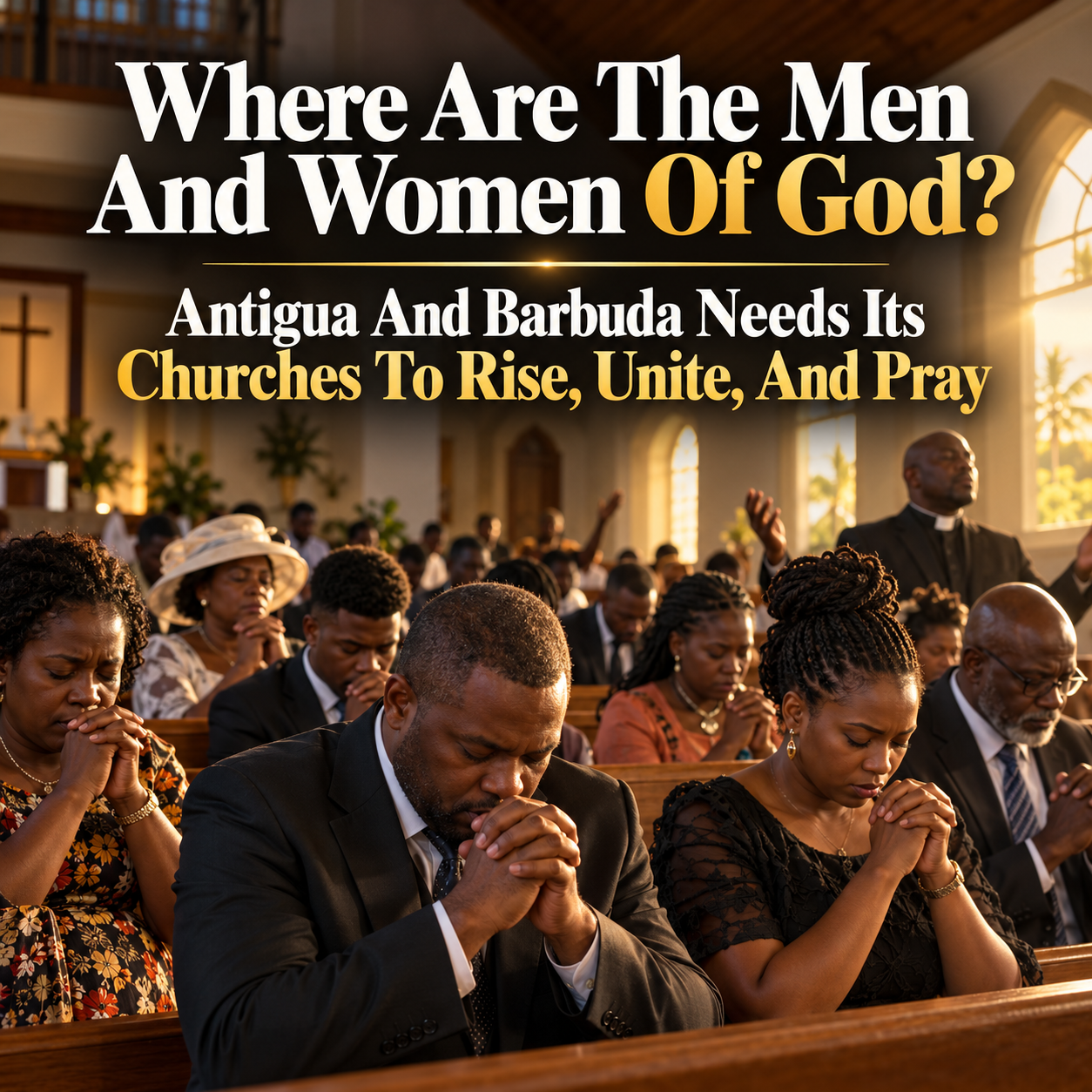
An open letter from a concerned Antiguan citizen has sparked a public conversation about shifting social norms, cultural preservation, and the role of faith-based institutions in Antigua and Barbuda, calling on religious leaders and believers across denominations to take unified, consistent action to reverse what the writer frames as a growing moral erosion of national life.
The author opens with a pressing question: as secular and harmful worldviews permeate every layer of society, where are the nation’s faith leaders – from pastors and priests to evangelists and dedicated prayer advocates? They argue that mainstream popular culture has increasingly normalized harmful, immoral behaviors, from the open glorification of witchcraft, violent crime, and explicit sexual content in popular music to the mainstream acceptance of what the writer labels deviant alternative lifestyles, ranging from devil worship to non-traditional sexual identities.
Looking back to decades past, the writer paints a picture of a tight-knit, morally grounded society where faith was woven into the fabric of daily public life. Schools across the country held daily morning worship in classrooms, and weekly general assemblies opened with collective prayer before turning to school business. Children were taught clear boundaries of right and wrong from early childhood, and communities were so safe that residents routinely left their front doors unlocked when they left home. Public airwaves once operated under clear unwritten standards: radio never played explicit content describing sexual acts, detailed instructions for committing violent crimes, or promoted occult practices such as the use of amulets, skulls, and duppies (Caribbean supernatural entities) to accumulate wealth. Graphic, explicit music videos featuring this content were unheard of, and profanity was never broadcast over public radio.
The writer also addresses the issue of migration, noting that as a welcoming nation, Antigua and Barbuda has long accepted migrants without prejudice. However, they argue that in the process of adopting outside cultural norms, the nation has failed to protect its own distinct cultural identity and way of life – a shift that has opened the door to the importation of organized criminal activity. The author acknowledges that crime has always existed in the nation, but points to official data showing an alarming share of recent crime is committed by non-nationals. They stress that any person moving to Antigua and Barbuda is expected to abide by local laws, and those who fail to comply should face full legal consequences, including deportation where permitted by law. Echoing the longstanding maxim, “When in Rome, do as the Romans do,” the author emphasizes that all new residents must respect Antiguan social norms and rules.
The writer also highlights the erosion of longstanding cultural traditions around Sundays, the traditional day of rest and worship. In past years, radio stations honored the sanctity of the weekend by playing gospel music or softer, more restrained programming out of reverence. Community bars and other establishments never played loud music that blared through residential neighborhoods until sunrise, disrupting peace and preventing residents from getting adequate rest. This change, the author argues, must be reversed through targeted action.
The core of the letter is a urgent, unifying call to action for all Christian denominations across Antigua and Barbuda – from Baptists and Catholics to Seventh-day Adventists, Anglicans, Moravians, and other groups – to set aside divisions and launch a sustained collective effort. The writer urges churches to organize regular intercessory prayer sessions, going neighborhood by neighborhood to reach community members who have drifted from faith. Rather than holding one-off annual prayer events for show, the author calls on religious leaders to coordinate a large, public gathering at a major national venue such as the Antigua Recreation Ground or Sir Vivian Richards Stadium, after securing government approval, to bring thousands of believers together to pray for national renewal.
This is not a call for empty ceremony, the writer stresses: it is a demand for consistent, visible action. Churches must reclaim their role as a leading force for righteousness, strong families, safe communities, and national peace. If believers truly hold to the power of collective prayer, the writer argues, now is the time to put that faith into practice – not as individual believers, not once a year, but as a unified, consistent movement across the nation.
“Antigua and Barbuda needs its churches to stand up, speak up, and pray up,” the author concludes. “Let us return to God, reclaim our communities, and fight for the soul of our nation.”