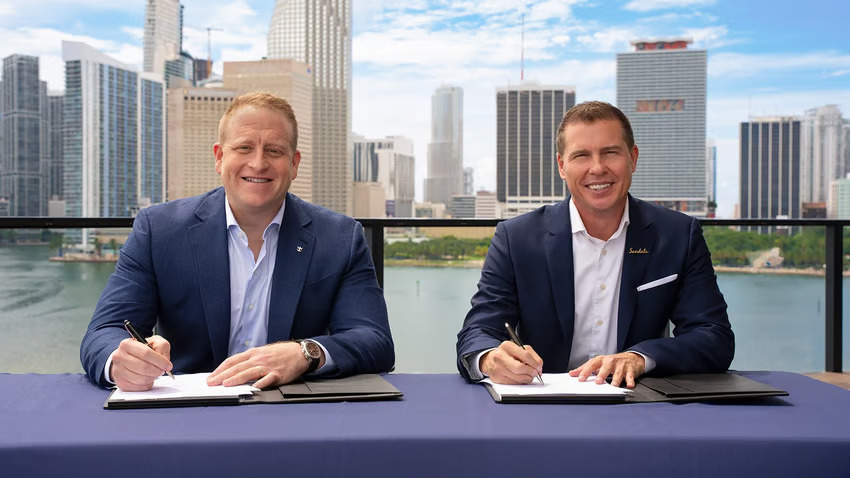
Two of the travel industry’s most iconic vacation brands are joining forces in a transformative deal set to reshape Caribbean leisure offerings, as Royal Caribbean Group announced a landmark partnership to acquire a 50 percent equity stake in Sandals and Beaches Resorts for approximately $3 billion. The alliance combines Sandals and Beaches’ decades of expertise in all-inclusive Caribbean resort hospitality with Royal Caribbean Group’s robust, diversified vacation platform, creating an unmatched collection of cruise, private destination and land-based resort experiences for global travelers.
Royal Caribbean Group’s existing portfolio spans three industry-leading cruise brands – Royal Caribbean, Celebrity Cruises and Silversea – alongside a growing network of exclusive private destinations, an upcoming entry into river cruising launching in 2027, and one of the travel sector’s most innovative customer loyalty programs. Both brands share deep, longstanding roots in the Caribbean and a shared commitment to supporting local communities across the region, aligning their missions to deliver memorable vacation experiences while growing their undisputed leadership in Caribbean travel.
“For nearly 60 years, we’ve reimagined what a vacation can be, constantly expanding the ways we inspire our guests to explore, connect and create lifelong memories,” said Jason Liberty, Chairman and Chief Executive Officer of Royal Caribbean Group. “We have been building a vacation platform that brings joy to millions of people around the world and creates meaningful long-term relationships with our guests. Our partnership with Sandals and Beaches Resorts is an important next step on that journey – bringing together two iconic leading vacation companies to further strengthen and grow one of the most admired resort portfolios in the world. The Stewart family has built powerful, beloved brands, and we are honored to build on that legacy. Together, we see tremendous opportunity to expand the reach of Sandals and Beaches Resorts and continue turning the vacation of a lifetime into a lifetime of vacations.”
Adam Stewart, Executive Chairman of Sandals Resorts, emphasized the shared vision for growth that underpins the agreement, noting that the partnership will deliver benefits for the brand’s team members, travel advisor partners, and the Caribbean communities that have long hosted its resorts. “The future has never been brighter, and I know this moment would make my father incredibly proud,” Stewart said.
Valued at a forward EBITDA multiple of approximately 10x, the $3 billion investment will be fully funded through committed debt financing arranged by Morgan Stanley, per the terms of the deal. The transaction is expected to close in early 2027, pending completion of customary regulatory approvals and standard closing conditions, and is projected to be accretive to Royal Caribbean Group’s earnings as early as next year.
Financial advisory for Sandals Group was led by BofA Securities and PJT Partners, with legal counsel provided by Latham & Watkins and Jones Day. Perella Weinberg Partners and Morgan Stanley served as financial advisors to Royal Caribbean Group, while Kirkland & Ellis LLP handled legal advisory work for the cruise group. The partnership agreement was signed at Royal Caribbean Group’s new headquarters in Miami, with Liberty and Stewart marking the milestone at the official signing event.
A global leader in vacation experiences, Royal Caribbean Group currently operates 71 ships that call on more than 1,000 destinations across all seven continents through its three wholly owned cruise brands, in addition to holding a 50% joint venture stake in TUI Cruises, which operates the Mein Schiff and Hapag-Lloyd cruise lines. The company is actively expanding its collection of private destination getaways through its Perfect Day and Royal Beach Club brands, and is set to launch Celebrity River Cruises, its new river cruising division, in 2027. Backed by innovative brands, cutting-edge technology and an industry-leading loyalty program, Royal Caribbean Group has built a fully connected vacation ecosystem focused on turning one special vacation into a lifetime of getaways for guests. Recognized as one of Fortune’s World’s Most Admired Companies for 2026 and named to Forbes’ 2026 list of Best American Companies, the group operates around its core mission of delivering exceptional vacations responsibly.
For more than 40 years, Sandals and Beaches Resorts have redefined all-inclusive Caribbean hospitality, drawing on the region’s unique warmth, vibrancy and cultural spirit to create distinct guest experiences. Sandals Resorts, the brand’s adults-only all-inclusive division, operates beachfront properties across eight Caribbean nations: Jamaica, Antigua, Saint Lucia, The Bahamas, Barbados, Grenada, Curaçao, and Saint Vincent and The Grenadines. The brand combines elevated offerings ranging from local and global gourmet cuisine and dedicated butler service to signature suites and the Caribbean’s first overwater villas with the unique cultural identity of each host island.
Beaches Resorts, the family-focused arm of the brand, caters to modern travel preferences with family-centric all-inclusive getaways. It currently operates resorts in Negril, Jamaica and Turks and Caicos, with new locations under development in Exuma (The Bahamas), Barbados, Runaway Bay (Jamaica), and Saint Vincent and The Grenadines. Amenities including spacious multi-bedroom villas, diverse dining and live entertainment, on-property waterparks, and award-winning kids’ camps that include specialized autism-friendly programming have made Beaches a top choice for family and multigenerational group travel.
Beyond its hospitality operations, Sandals and Beaches runs the Sandals Foundation, the brand’s non-profit philanthropic arm dedicated to strengthening Caribbean communities through targeted programs focused on education, community development and environmental conservation.
As with all major corporate transactions, the agreement carries forward-looking statements that are subject to a range of risks and uncertainties that could impact actual outcomes, including general economic conditions, shifts in consumer travel demand, global health events, regulatory changes, cybersecurity risks, fluctuations in fuel prices and foreign exchange rates, and challenges related to staffing and supply chain operations.