作者: admin

  • Digital services firm expands with major investment

    Digital services firm expands with major investment

    A homegrown digital services leader based in Barbados has officially launched its expanded regional operations, backed by more than $1 million in capital investment, with ambitious plans to bring robust digitisation and information management support to governments and public institutions across the Caribbean.

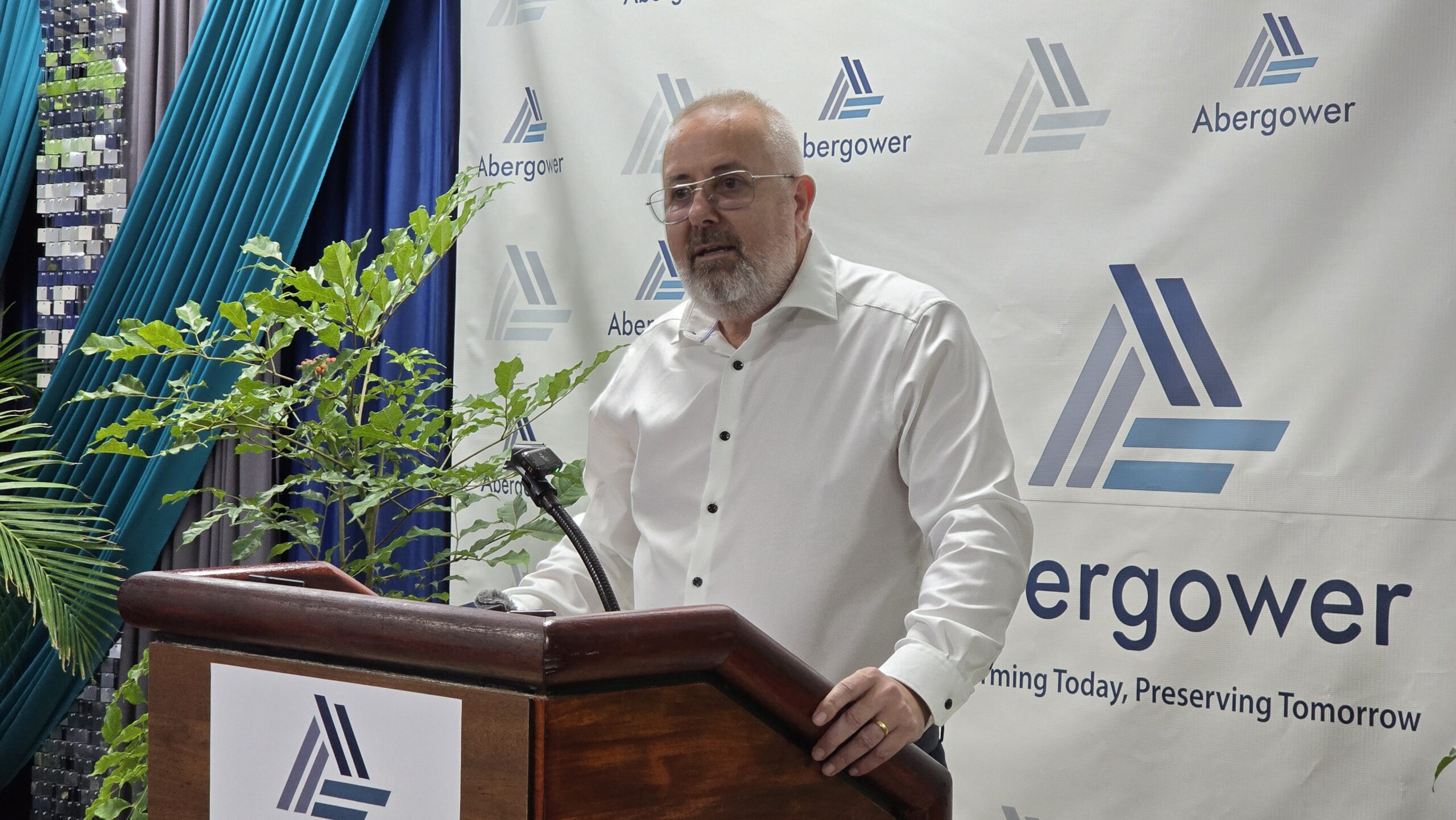
    Abergower Barbados Limited, which has built a five-year track record as a large-scale digitisation provider, has established its new hub at the former Banks Brewery compound in Wildey, where it currently employs 40 skilled local workers. For founder and chief executive Robin Prior, the expansion marks more than just a growth milestone—it represents a long-term investment in Barbados’ digital economy and its emerging knowledge sector.

    “By establishing and expanding our operations here, we are investing in local talent, creating high-quality employment and building a knowledge-based ecosystem that positions Barbados as a leader in digital services within the Caribbean,” Prior explained during a media tour of the new facility, where he walked reporters through the end-to-end digitisation workflow. “Our team, now over 40 strong and growing, is at the heart of everything we do. We are deeply committed to developing our people, promoting from within and equipping our staff with the skills needed to drive in an increasingly digital world.”

    The cornerstone of the company’s current work is a landmark partnership with Bridgetown’s Queen Elizabeth Hospital, where Abergower is leading a full-scale digitisation of the facility’s millions of paper medical records. All operations adhere to strict international quality and data protection standards, with robust cybersecurity protocols built into every step of the process. Prior noted that more than $1.09 million in cutting-edge capital equipment—sourced and tested before shipment from the United Kingdom—powers the facility’s workflow, including high-performance scanners purpose-built for sensitive medical document processing.

    The 40 current staff members were selected from more than 100 local applicants and completed extensive training covering secure document handling, ISO-compliant quality management, and internal operational tracking that allows every file to be traced throughout the digitisation process. Abergower Facility Manager Wayne Banfield outlined the meticulous workflow designed to preserve data accuracy: after client boxes of records are received and sorted, scanning teams process each individual file, before scanned data moves to quality control teams that cross-verify digital copies against original physical documents. Once verified, records are re-packaged and stored for return to the client, while encrypted digital copies are secured in on-site and backup systems.

    Prior emphasized that strict data protection is non-negotiable for the firm: “None of the information we’re processing is available anywhere else except here and our backup systems, so there is no access, there is no knowledge, there is no ability for anybody to get into any of the information at all.” The company holds ISO 27001 certification, requiring annual independent audits of its data security processes and operational procedures to maintain compliance.

    Looking ahead, Abergower is poised to expand its partnerships and geographic footprint across the region. The firm is finalizing a memorandum of understanding with the University of the West Indies that will create new collaborative opportunities across multiple cutting-edge sectors, including artificial intelligence, additive manufacturing, microfilm conversion, and digital dental technology. The partnership will bridge academia and local industry, creating pathways to train the next generation of digital professionals while leveraging local expertise to drive innovation, according to Prior.

    Beyond Barbados, the company is already exploring expansion opportunities in several Eastern Caribbean and Caribbean nations: Saint Lucia, Guyana, St. Vincent and the Grenadines, and Antigua and Barbuda. As regional governments and institutions accelerate their own digital transformation journeys to deliver more modern, citizen-centered services, demand for Abergower’s specialized services has grown significantly. “The demand for modern citizen focused and future ready services has never been greater, and we are proud to play a part in that evolution,” Prior said, noting that the firm is positioned to support regional partners as they transition from legacy paper-based systems to efficient digital infrastructure.
  • NOTICE: Works At Fadi Building Supplies To Fresh And Eazy Supermarket

    NOTICE: Works At Fadi Building Supplies To Fresh And Eazy Supermarket

    Motorists and local residents in Antigua and Barbuda are being put on formal advance notice of upcoming major infrastructure upgrades that will disrupt travel along a key stretch of All Saints Road (ASR). The works, which will run between the FADI Building Supplies and Fresh and Eazy Supermarket locations on the route, are scheduled to kick off at 7:00 pm on Wednesday, 6 May 2026, and wrap up by 7:00 am the next morning, according to an official advisory released by the country’s Ministry of Works.

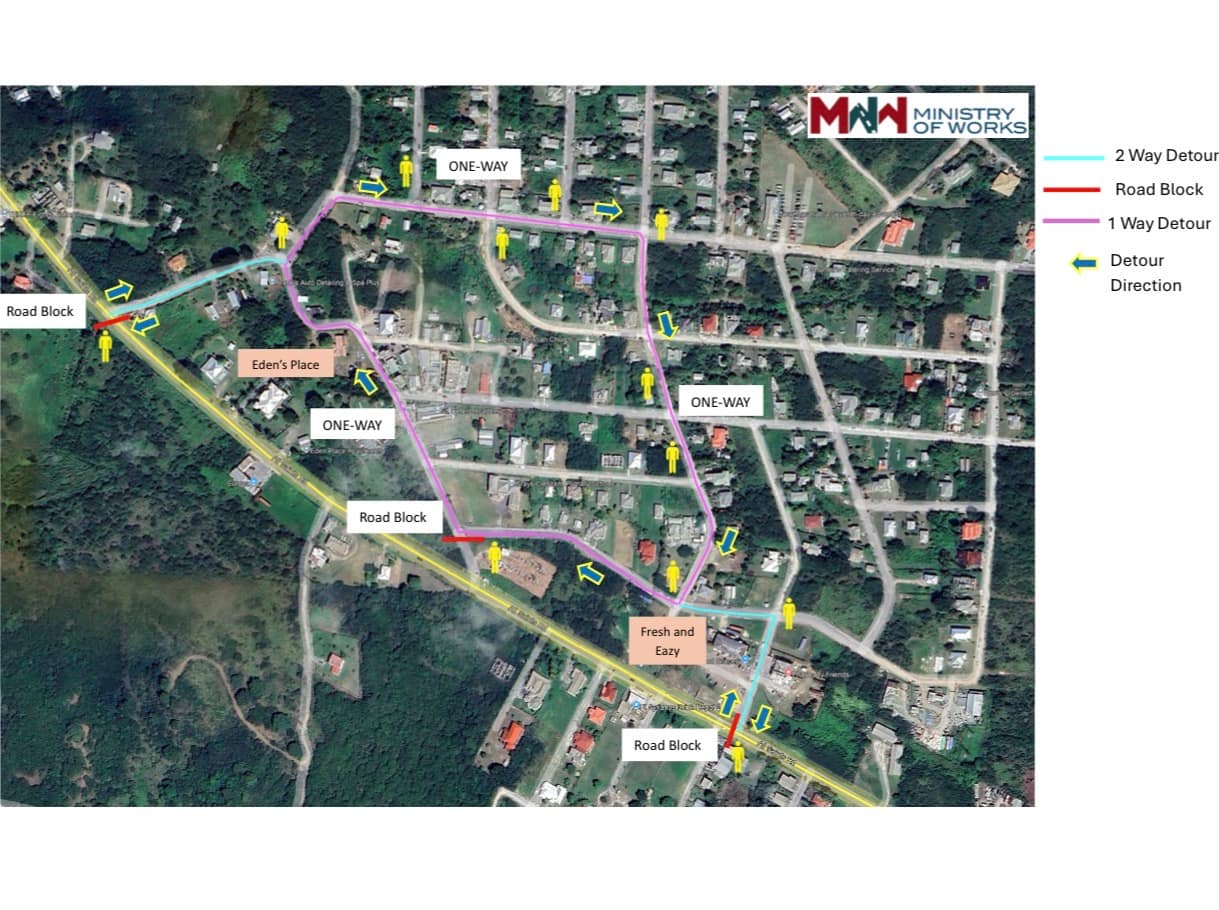
    To manage traffic flow during the construction period, a formal detour route has been put in place for both inbound and outbound commuters. Drivers traveling out of town will be required to make a left turn at the Hazelroy’s junction on All Saints Road, before following the marked path laid out on official project maps. For those heading into town, the detour calls for a right turn at the Fresh and Eazy Supermarket intersection, with all directional guidance also reflected on the official project mapping.

    Project organizers have put several support measures in place to minimize confusion and safety risks during the overnight works. Trained flag persons will be stationed at key points along the detour to direct vehicle movement, while clear permanent and temporary signage has been placed throughout the route to guide drivers in both travel directions. It is important to note that specific segments of the detour have been designated as temporary one-way zones, a restriction that is clearly marked on all official maps and on-site signage.

    Local residents who live in the immediate vicinity of the construction zone will still be granted access to their properties, though officials are urging all people in the area to proceed with extreme caution. The work site will host active heavy-duty construction equipment, creating potential hazards for anyone moving through the area near the works. Crucially, all commercial businesses located along the affected stretch of road will remain fully open to customers throughout the construction period, meaning no disruption to retail operations is expected.

    This infrastructure upgrade forms part of the broader All Saints Road Project, a government-led initiative overseen by the Government of Antigua and Barbuda aimed at improving the long-term condition and capacity of this key arterial route. Project stakeholders and everyday commuters are strongly encouraged to adjust their upcoming travel plans in advance to account for potential delays associated with the detour and construction activity.

    Any members of the public with questions or concerns about the upcoming works and detour arrangements can reach out for more information directly to the Project Implementation Management Unit by phone at 562-9173 during regular operating hours.

  • QEH digital records rollout ‘set for July’

    QEH digital records rollout ‘set for July’

    Barbados’ largest public healthcare facility, Queen Elizabeth Hospital (QEH), is on schedule to launch the first phase of its transformative digital patient record initiative by this July, senior officials confirmed Wednesday, marking a major milestone in the island nation’s multi-year healthcare system modernization drive.

    The project, developed in partnership with digital management service provider Abergower, aims to convert a total of 170,000 existing paper-based patient medical records into standardized, secure, and readily accessible digital data. Since work kicked off in August last year, the team has already completed digitization for 75,000 patient records, corresponding to roughly four million scanned pages of clinical documentation, with thousands of additional files processed every month.

    QEH Chief Executive Officer Neil Clark framed the digitization effort as a long-overdue fix for systemic inefficiencies that have plagued paper-reliant healthcare operations for decades. “We’re not just scanning pieces of paper – we’re transforming static physical records into dynamic, usable digital information that will upend how care is delivered here,” Clark explained during the official launch of Abergower’s Barbados operations in Wildey.

    Beyond basic digitization, the overhaul integrates a suite of interconnected upgrades to support the new system. Parallel work streams already underway include infrastructure overhauls, cybersecurity hardening, equipment updates, and staff upskilling. The hospital has identified 60 “super users” across different clinical and administrative departments to lead a train-the-trainer model, ensuring all personnel can adapt to the new software workflow. Wards and outpatient clinics are also being fitted with new end-user devices and a purpose-built, medical-grade Wi-Fi network to enable uninterrupted, on-the-go access for clinical staff. To address growing concerns over patient data privacy, an external cybersecurity team has been brought in, working alongside the Ministry of Innovation, Science and Technology to conduct rigorous penetration testing and strengthen the system’s resilience against cyber threats.

    Per the current timeline, the first phase of the digital system will go live in hospital wards and primary care clinics around July. Clark projects full hospital-wide deployment will take an additional two to three months after the initial rollout, with full system implementation across QEH targeted for the end of 2026. Once fully operational at QEH, the digital network will be expanded to connect with public polyclinics and eventually private healthcare facilities across Barbados, creating a unified national patient health record ecosystem.

    Clark emphasized that the shift to digital records will deliver tangible improvements to both clinical safety and patient experience. At present, patients seeking emergency care often face repeated testing and long delays because clinicians cannot quickly locate their existing paper records. With the new system, emergency department teams will have instant, full access to a patient’s complete medical history, eliminating redundant testing and cutting wait times. Faster information access also enables clinicians to make more informed, safer care decisions, and gives patients greater confidence that their health data is reliably accessible when needed.

    “Digitization is the critical foundation that makes our entire future health information system work,” Clark noted. “A system is only as strong as the data it holds, and this project turns decades of scattered paper records into the reliable core of that system. It will transform how we manage patients, track ongoing care, and run our daily services.”

    While technical work has progressed steadily, Clark acknowledged that the greatest challenge to successful implementation will not be infrastructure or technology, but changing decades-old work habits among staff. “The biggest hurdle isn’t the equipment or the cybersecurity – it’s behavioural change. People naturally default to the processes they’ve used for years, and even with new digital tools in place, many still try to force old manual workflows into the new system, steps that no longer need to exist,” he said.

    QEH has operated with paper-based records for 62 years, and Clark noted that the digital overhaul will not just update record-keeping, but re-engineer the entire patient journey to eliminate unnecessary steps built around outdated paper systems. Even as the hospital continues to grapple with broader systemic challenges such as patient surges, Clark expressed confidence that the new digital system will deliver meaningful, long-lasting improvements to care quality and operational efficiency. “Digitization won’t solve every challenge we face, but it will make accessing the data that drives all care much faster – and in healthcare, data is king,” he added.

  • Trump’s Open-Ended Iran Talks Leave 1,600 Ships and the World Waiting

    Trump’s Open-Ended Iran Talks Leave 1,600 Ships and the World Waiting

    Two months after the outbreak of open hostilities between the United States and Iran that began in late February, the world is stuck in limbo as open-ended negotiations between the two powers leave global energy security and hundreds of vessels in peril at one of the world’s most critical chokepoints. As of May 6, 2026, 1,600 commercial ships remain trapped in the Strait of Hormuz, the narrow waterway that carries roughly a fifth of the world’s daily oil supplies, and global fuel prices have continued a steady upward climb with no clear end to the crisis in sight.

    In remarks released Tuesday, former US President Donald Trump announced that Washington had held “very good talks” with Iranian officials over the preceding 24 hours, striking an optimistic tone about the prospects of a negotiated settlement. “We’re in good shape… They want to make a deal. It’s very possible that we’ll make a deal,” Trump told reporters. But despite this upbeat assessment, the White House has declined to set any formal deadline for a response from Tehran, leaving the timeline for a breakthrough completely undefined.

    Trump also made an unconfirmed claim that Iran has already agreed to his administration’s core nonproliferation demand: that the country permanently abandon any pursuit of nuclear weapons. “Iran cannot have a nuclear weapon, and they won’t, and they’ve agreed to that,” he stated. To date, however, there has been no independent verification of this agreement, nor any official confirmation from Iranian authorities confirming that they have accepted this term.

    While diplomats haggle with no set timeline, the human and economic cost of the standoff continues to mount. Since hostilities began on February 28, 32 commercial vessels transiting near or through the strait have been hit by missile attacks. These attacks have already killed 10 seafarers and left at least a dozen more injured, according to data compiled by CNN.

    Still, there are faint signs of potential progress toward de-escalation. A regional source familiar with the negotiations told CNN that both sides are moving closer to agreeing to a short, one-page framework agreement that would lay the groundwork for ending the current conflict. For the tens of thousands of seafarers trapped aboard stranded vessels and consumers facing rising energy costs around the globe, that tentative progress offers little immediate relief, as the standoff stretches into its third month with no resolution in sight.

  • Overheid trekt SRD 250 miljoen uit voor woningbouwprogramma

    Overheid trekt SRD 250 miljoen uit voor woningbouwprogramma

    Suriname’s national government has launched an ambitious, multi-year affordable housing development initiative, earmarking 250 million Surinamese dollars (SRD) to address the country’s persistent housing shortage while supporting local construction industry growth. The program, which prioritizes accessible housing options for low- and middle-income households, was outlined in detail during a recent meeting attended by government representatives, local contractors, and architecture professionals, where attendees aligned on the first steps to move the plan into implementation.

  • St Michael schools to benefit from Soccer Fest

    St Michael schools to benefit from Soccer Fest

    Barbadian primary school football players are set to get a critical preseason warm-up ahead of the highly anticipated BICO National Sports Council Football Tournament, with the launch of the first-ever St Michael Inter-Primary School Soccer Fest this Friday.

    Organized by the Empire Club, the one-day preseason showcase will take place at the club’s Bank Hall playing field, and is designed exclusively for primary schools based in the St Michael region. Unlike larger, long-running tournaments, this new event was tailored specifically to fill a gap in the local youth football calendar, according to Dale Greenidge, a member of the organizing committee.

    Greenidge explained that the timing of the festival was carefully chosen: it falls shortly after the completion of the Common Entrance exam, and just one week before the BICO national primary school tournament gets underway. In the period between these two key milestones, many veteran players in Classes 3 and 4 have had limited structured football activity at school, making the preseason event a perfect opportunity to get back into competitive form.

    As an inaugural iteration, the 2024 Soccer Fest will host 10 participating St Michael primary schools, a number selected to keep the single-day timeline manageable within a standard school day. Greenidge noted that interest from local schools has far outstripped the initial spots available, with dozens more institutions expressing a desire to join the event in future years. Organizers already have plans to expand the tournament size and scope for its next edition, with the goal of making it an annual staple of the local youth football preseason calendar.

    To ensure all matches are completed on schedule so parents can pick up their children at the usual end-of-school time, the 10 teams will be split into two preliminary zones. This structure cuts down on wait times between matches and streamlines the competition flow to fit the tight one-day window.

    For young local footballers, the event offers more than just practice: it gives emerging talent a chance to shake off post-exam rust, test their skills against peer teams, and build momentum ahead of the national tournament, which is one of the biggest youth football competitions on the Barbadian sports calendar.

  • Profanity-laced Jazz performances raise concerns

    Profanity-laced Jazz performances raise concerns

    One of the Caribbean’s most anticipated cultural events, the Saint Lucia Jazz and Arts Festival, has become the center of public debate just days after kicking off its 2026 iteration, after two separate on-stage incidents saw performers using explicit, offensive language in front of mixed audiences that included children and entire family groups.

    The first incident unfolded on the festival’s opening night at the Marchand venue, while a second high-profile incident occurred during a set at Soufriere Jazz. Local artist 1T1 included the unedited version of his popular track *Best Friend*, which features a prominent use of the F-word, as part of his official performance. While the two incidents have been framed as isolated cases to date, they have quickly drawn formal attention from top Saint Lucian tourism and cultural industry leaders, who are now calling for proactive measures to prevent similar missteps in future events.

    Martin James, chief executive officer of the Eastern Caribbean Collective Organisation for Music Rights, was one of the first industry figures to speak out publicly on the issue. James referenced long-standing provisions within Saint Lucia’s Criminal Code — specifically sections 501, 507, and 508 — that outline strict rules for public behavior, extending to performances held at open public events. “These provisions explicitly prohibit the use of profane, indecent, or obscene language, as well as any act or expression that may be deemed offensive in a public setting,” James explained in his remarks. “It is concerning to note that during the opening of Jazz on the 30th, one of the performers openly used profanity as part of his performance delivery.”

    Beyond calling out the incidents themselves, James emphasized that the controversy highlights a critical gap in pre-event preparations: the absence of clear, communicated boundaries for all participating performers. To address this gap, James argued that performance expectations and prohibitions on offensive public conduct must be written directly into performer contracts before artists arrive at the festival, ensuring all participants understand local rules upfront.

    Saint Lucia’s Tourism Minister Ernest Hilaire echoed James’ concerns during a pre-Cabinet press briefing held on Monday, acknowledging the unique challenge of regulating unscripted speech once a performer has taken the stage, while stressing that clear consequence management is non-negotiable for future events.

    “You have to create a culture, a reputation that artistes know that if they behave in a particular way, there are consequences. So other artistes would not want to do it,” Hilaire told reporters. “Now, some of the artists themselves are probably not even aware of what the boundaries are because they perform globally… they perform in settings where they’re allowed that kind of freedom.”

    Hilaire fully aligned with James’ proposed solution, noting that proactive pre-event planning is far more effective than reactive intervention mid-performance. “You can put it in their contracts that if they behave in a particular way, what effect it has, what consequence it would have. And I think that’s as far as you can go. Once somebody’s on stage, it’s very difficult for you to control them thereafter,” he added. The debate comes as the festival continues its run, with organizers expected to update performer agreement guidelines ahead of next year’s event to address the newly raised concerns.

  • EU-funded CDB programme strengthens trade capacity and competitiveness across Caribbean

    EU-funded CDB programme strengthens trade capacity and competitiveness across Caribbean

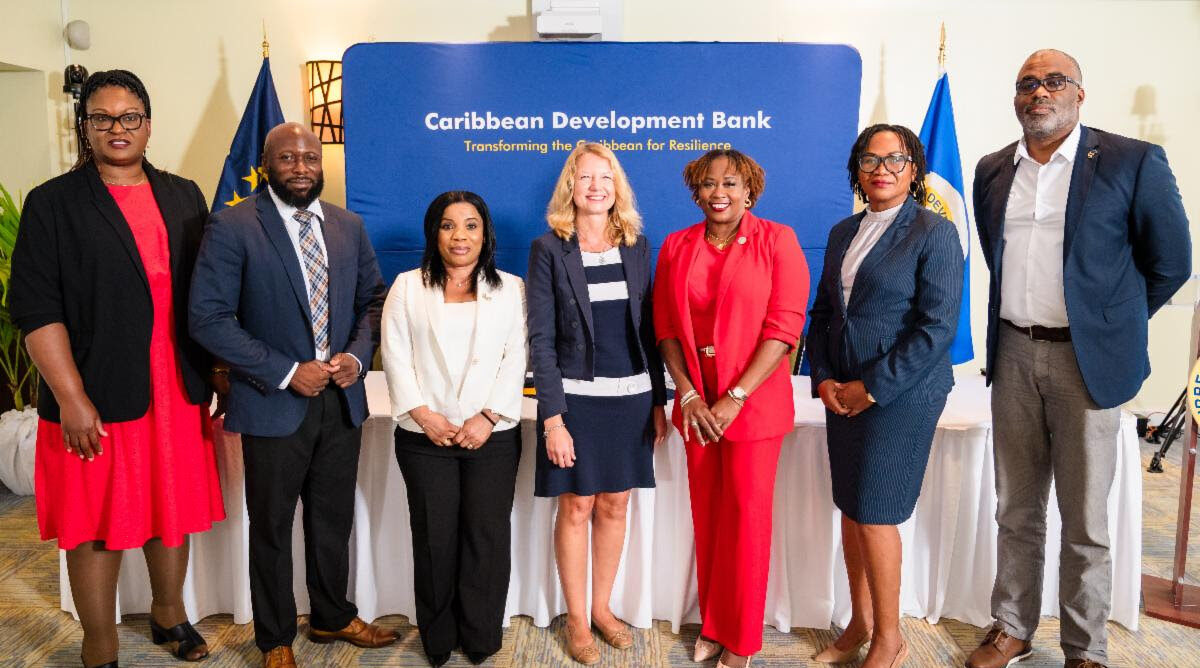
    After five years of targeted intervention across 15 Caribbean nations, an €8.7 million regional trade capacity building initiative, funded by the European Union (EU) and administered by the Caribbean Development Bank (CDB), has formally concluded, leaving behind measurable improvements to regional trade systems, institutional capabilities and global economic competitiveness.

    The programme merged two complementary frameworks: the European Development Fund’s Economic Partnership Agreement (EPA) initiative and the CARICOM Single Market and Economy (CSME) Standby Facility for Capacity Building, designed to address a longstanding gap between regional trade agreements and on-the-ground implementation. At a closing event held in Bridgetown, Barbados, stakeholders from participating governments, regional bodies and development partners gathered to celebrate the initiative’s outcomes and reflect on lessons learned for future collaborative projects.

    Over its operational lifespan, the programme delivered 27 separate targeted interventions across the Caribbean Forum (CARIFORUM) region, partnering with more than 100 local, national and regional institutions, and contributing over 11,000 hours of specialized technical assistance to build sustainable capacity. Each participating nation received more than €350,000 in combined grant financing and technical support, focused on priority areas including trade facilitation, export expansion and value chain development, technical and vocational skills training, quality infrastructure improvement, and the alignment of domestic food safety and certification standards with global requirements.

    Lisa Harding, Division Chief of CDB’s Private Sector Division, emphasized that the programme’s success grew from intentional collaboration, hands-on on-location support, and investment in long-term institutional strengthening rather than one-off policy changes. Results, she noted, are already visible across core economic sectors including trade, agriculture, skills development and export growth. “This programme reinforces a lesson we know well: Transformation does not come from agreements alone. It comes from implementation, capable institutions, and sustained partnerships,” Harding told attendees at the closing ceremony.

    Paula Byer, Acting Director of Foreign Trade at Barbados’ Ministry of Foreign Affairs and Foreign Trade, highlighted that the programme’s priorities align directly with the needs of small, vulnerable Caribbean economies, as well as Barbados’ own national development strategy and commitment to deeper regional integration. While trade agreements open new market access, Byer explained, nations must first build the institutional capacity and competitive muscle to capitalize on those opportunities. “MSMEs are the backbone of our regional economies, yet they face the greatest barriers in international trade,” she noted. A more integrated CARIFORUM economy, she added, allows Caribbean nations to pool collective resources, expand cross-border production networks, and compete more effectively in global markets, while long-term partnerships with the EU remain critical to advancing export diversification and sustainable, inclusive growth across the region.

    Chiara Tardivo, Team Leader for Economics and Trade at the EU-Caribbean Partnership, echoed that sentiment, expressing the EU’s continued commitment to Caribbean regional development and satisfaction with the programme’s concrete, verifiable outcomes across all participating countries. CARIFORUM Director-General Alexis Downes-Amsterdam further emphasized that market access alone cannot deliver broad-based economic gains. For small Caribbean economies to convert trade opportunities into tangible market presence and long-term growth, she explained, sustained investment in financing, targeted technical assistance, and ongoing institutional strengthening are non-negotiable.

    CDB officials confirmed that the programme’s interventions have laid a robust foundational framework for building more resilient, competitive national and regional economies across the Caribbean, positioning participating nations to better pursue their long-term development priorities in an increasingly interconnected global trading system.

  • Oliver Benoit to headline new UK international residency programme

    Oliver Benoit to headline new UK international residency programme

    UK-based international arts organization Coreset has announced Grenadian contemporary artist Oliver Benoit as the first participant in its brand-new International Residency Programme, an initiative designed to bridge Caribbean artistic expression and broader UK and global creative conversations at a critical moment for decolonial discourse in the arts.

    Headquartered in Newark, UK, Coreset has kicked off its ambitious new program by selecting one of the most impactful Caribbean artists working in the contemporary space. Benoit’s creative practice is built around a rich, multi-layered visual vocabulary that brings together traditional pigment, text, and a range of repurposed materials – from crushed brick and hessian to recycled newsprint – creating dynamic, thought-provoking tension across his canvases. His abstract compositions operate as both sites of conceptual excavation and physical construction, grappling with the tangled interconnected histories of slavery, colonialism, revolutionary struggle, and global migration.

    At the heart of Benoit’s decades-long practice is a consistent, unflinching decolonial inquiry: how collective histories are retained, hidden, and brought back to public consciousness. His paintings work simultaneously as archival documents and critical interventions, spaces where fragmented narratives coexist without forcing a neat, predefined narrative closure. Ordinary, everyday materials are reimagined as carriers of cultural memory, upending traditional hierarchies of artistic value and expanding widely held definitions of what constitutes a monument and what meaning it can hold, both within Caribbean contexts and across the global art landscape.

    The residency is scheduled to launch in June 2026, when Benoit will travel to the UK for an extended period of focused research, new work creation, and cross-cultural creative exchange. Beyond dedicated studio time to develop new pieces, the program will structure a full calendar of professional networking opportunities, curated introductions to leading gallerists, independent curators, and major institutional partners, designed to create long-term opportunities for cross-border collaboration, expanded visibility, and sustained connection between Benoit and UK-based artistic peers and networks.

    The residency will conclude with a public exhibition of all new work developed during Benoit’s stay, opening in mid-July 2026. This showcase will mark the first time this evolving body of work has been presented to a UK audience.

    During his time in the program, Benoit will advance the next phase of his ongoing series *The Path of Fragments*, deepening his longstanding engagement with archival research and site-responsive creative practice. For Benoit, physical place becomes an embedded part of the artistic process, directly shaping both the tangible structure and conceptual direction of each new work.

    Reflecting on the opportunity to join Coreset’s inaugural residency, Benoit shared: “My practice investigates the quiet endurance of materials that hold suppressed or fragmented histories of Grenada, particularly in the aftermath of the Grenadian Revolution. Through layering, concealment and revelation, I allow partial narratives to coexist — without seeking historical closure. This residency offers a critical space for sustained research and experimentation, and for considering how memory operates not only within Grenada but across broader diasporic and post-revolutionary contexts.”

    Rebecca Blackwood, Founder and Director of Coreset, emphasized the timeliness of selecting Benoit for the inaugural spot: “Launching our International Residency Programme with Oliver feels both urgent and necessary. His work holds a rare balance — intellectually rigorous, materially inventive and emotionally resonant. At Coreset, we are interested in practices that do more than reflect the world; they reframe it.”

    Jenni Francis, a leading cultural strategist who works with arts institutions across the UK, US, and Caribbean, added her perspective on the selection: “Oliver Benoit is one of the most significant Caribbean artists working today. His practice holds complexity without resolution, grounded in material intelligence and historical depth. Rooted in the Caribbean, his work sits firmly within urgent global conversations on memory, power and decolonisation.”

    Beyond showcasing Benoit’s work, the inaugural residency lays a strong foundational framework for Coreset’s ongoing international programming, creating a model for connecting artists, ideas, and audiences across geographic divides and cementing the organization’s role as a critical platform for international, process-led contemporary artistic practice.

    Benoit brings an extensive academic and professional background to the residency: he holds a PhD in Sociology from Brandeis University and an MFA from the TransArt Institute in partnership with Plymouth University. His previous exhibition credits include representing Grenada at the Venice Biennale and Expo 2020 Dubai, alongside solo and group shows across the Caribbean, Europe, and the United States.

  • Grenadian General Insurance celebrates 35 years of service

    Grenadian General Insurance celebrates 35 years of service

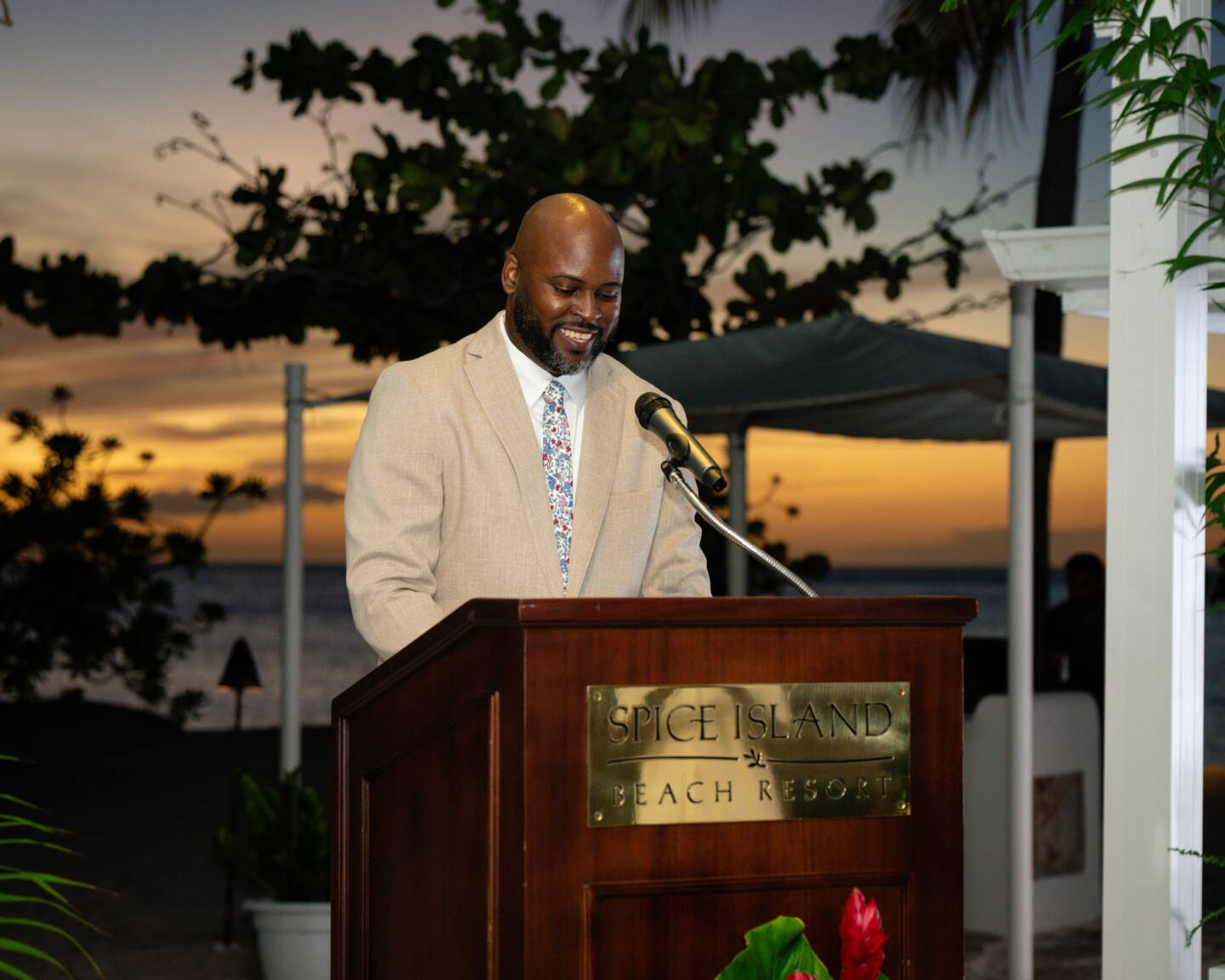
    On April 30, 2026, one of Grenada’s most enduring homegrown insurance providers, Grenadian General Insurance Company Limited, gathered industry leaders, government officials, loyal clients, dedicated employees, and key partners at the iconic Spice Island Beach Resort for a special “Toast to 35” Anniversary Cocktail Event, celebrating a major 35-year corporate milestone.

    For more than three decades, Grenadian General Insurance has anchored local economic security by providing coverage for residential properties, commercial enterprises, personal vehicles, and household livelihoods across the island. Over that time, the firm has cultivated a strong regional reputation rooted in three core values: consistent reliability, transparent fairness, and client-first care. This anniversary evening was designed not only to honor the company’s accumulated achievements over 35 years but also to publicly reaffirm its long-term commitment to serving the Grenadian people into the future.

    In his opening address to attendees, General Manager Kevon La Barrie reflected on the company’s humble origins and gradual growth, crediting the mutually beneficial relationships the firm has built across Grenada for its decades-long success. “Our longevity is not the result of accident or good fortune alone,” La Barrie noted. “It is built on the unwavering trust and confidence our policyholders have placed in us, the relentless dedication of every member of our team, and our consistent commitment to showing up for customers when they need us most.” He also outlined the company’s ongoing evolution, highlighting recent investments in modernized digital systems and expanded service offerings designed to improve convenience for its growing client base.

    A centerpiece of the evening’s formal program was a special Milestone Staff Award, created to recognize the longstanding contributions of tenured employees who have helped steer the company to success. The inaugural award was presented to Mignonette Hall, honoring her decades of professionalism and commitment to the firm’s mission. The event also paid tribute to all past and current team members, whose collective work has transformed Grenadian General Insurance into one of the nation’s most respected and established insurance institutions. Longstanding corporate clients were also recognized for their years of partnership, highlighting the cross-sector collaboration that has supported the company’s growth.

    Grenada’s Prime Minister, the Honourable Dickon Mitchell, delivered special guest remarks at the event, officially acknowledging the outsize impact Grenadian General Insurance has had on national development. Mitchell praised the firm for strengthening local business confidence and bolstering Grenada’s overall economic resilience over 35 years of operation. Following the Prime Minister’s address, all attendees joined in the ceremonial “Signature Toast to 35,” raising their glasses to celebrate the company’s past progress and toast to its future ambitions.

    As Grenadian General Insurance enters its 36th year of operation and embarks on its next chapter of growth, company leadership confirmed the firm will remain focused on three core priorities: elevating the standard of customer service across all lines of coverage, embracing digital and operational innovation to meet evolving client needs, and upholding its foundational mission of protecting what matters most to Grenadian individuals, families, and businesses.