
Haiti’s Prime Minister Alix Didier Fils-Aimé is set to lead a high-ranking government delegation on an official working visit to Rome and the Holy See from May 8 to 11, 2026, the Prime Minister’s Office has officially announced. This four-day mission marks a key step in Haiti’s ongoing push to deepen diplomatic ties with the Vatican and expand collaboration with its global network of international partners. It also underscores the Haitian government’s public commitment to strengthening joint work across humanitarian action, social progress, and long-term sustainable development initiatives for the country. The Vatican has formally confirmed that it will host the Haitian prime minister on May 9, 2026, as part of the scheduled itinerary. A core component of the visit’s Vatican program is an invitation extended by Cardinal Pietro Parolin for Fils-Aimé to take part in a special “spiritual mobilization” gathering and a Mass dedicated to peace in Haiti, both set to be held at St. Peter’s Basilica. While strengthening bilateral diplomatic relations is a central goal of the trip, the official government statement does not explicitly confirm whether Fils-Aimé will hold a private audience with Pope Francis. It does, however, confirm that the prime minister will hold discussions with the highest levels of the Vatican’s governing hierarchy. Beyond his engagements in the Vatican, Fils-Aimé will also hold a series of high-level diplomatic meetings with leadership representatives of major international organizations based in Rome during his stay in the Italian capital. These closed-door and public discussions are expected to center on Haiti’s most pressing national priorities, the Haitian government’s ongoing work to restore political and social stability across the country, and new opportunities for international solidarity and partnership that deliver tangible benefits to the Haitian people. In its official announcement, the Haitian government emphasized that the mission reaffirms its commitment to pursuing an proactive, dialogue-centered diplomatic agenda that prioritizes cooperation and delivers concrete solutions to the complex challenges currently facing the Caribbean nation.
作者: admin
-

Beyond Politics: Eluide Miller’s Full-circle Journey to City Hall
BELIZE CITY – May 6, 2026 – In a municipality often dominated by divisive, difficult headlines, rising Belize City political leader Eluide Miller is crafting a different narrative of public service, one rooted in purpose rather than political opportunism. At just 29 years old, the newly installed Deputy Mayor has gone from being a young student in Port Loyola’s neighborhood classrooms to sitting in the leadership wing of City Hall, working to lift up the same community that gave him his start. For Miller, this role is far more than a political title: it is the completion of a lifelong full-circle journey.
During a recent reflective visit to the sites that shaped his early years, Miller stepped back through the doors of Port Loyola Preschool – the very learning space where his educational journey began. Accompanied by his brother Kris, the 29-year-old leader said the return reminded him of the humble origins that continue to guide his policy and leadership choices today. “I wanted to do a stop in today to leave some treats for the other students who will pass through,” Miller explained of the visit.
He also made a quick stop at Saint John’s Vianney Catholic School, the primary school where he completed most of his elementary education. Recounting his uneven school path, Miller noted: “I did infant two, standard one, here. Went to PG, do standard two and three, came back here, did four and went to Corozal and did five and six.” These scattered days in Port Loyola’s neighborhood schools built the foundational values that drive his public service today.
Now, as Belize City’s second-highest ranking municipal official, Miller has grown both personally and professionally, building on the academic foundation he earned at the University of Belize (UB). Dr. Vincent Palacio, UB’s current president and Miller’s former academic advisor, offered high praise for the young leader’s early track record of service. “He became the president of our student government association not only for our Belize City Campus but from all the other campuses. And by virtue of this he became a trustee on the board of trustees. This is the highest authority for the University of Belize. So he looked out for the people he served and himself. And not only that, he was a sports man,” Palacio shared.
Even with the demanding full-time schedule that comes with serving as Deputy Mayor, Miller prioritizes staying connected to colleagues and maintaining personal wellness. Daily cycling is his go-to routine, a habit he shares with Belize City Councilor Kaya Cattouse, who has worked alongside Miller for multiple terms. Cattouse credits Miller with building unprecedented cohesion among the city’s council members. “Over the years I have been working with him, I have seen him to take the team of councilors we have to another level. This is my second term at the Belize City Council and this is the most cohesive we have been as a group and I would attribute that to Eluide becoming the deputy mayor and being the glue that holds us today,” Cattouse said.
Walking the halls of City Hall, Miller pauses to honor the leaders who held office before him, stopping to point out a portrait wall of past mayors that includes Belizean political icon George Price, who served as mayor from 1956 to 1962. Beyond the titles, the policy debates, and the daily work of municipal governance, Miller says his most important role is being a father to his soon-to-be two-year-old daughter. That relationship, he says, keeps him grounded in the long-term impact of his work. “It is a daily reminder of the importance of the work that I do, because the work that we do here at the council as a team really shapes the city, but also a Belize that my family, your family, and all the residents will have to live in for generations to come,” Miller explained.
Miller’s rise through the municipal ranks was not overnight. He cut his teeth as a City Hall intern before earning a council seat in 2024, and he has already shared that he aspires to one day hold the position of Belize City Mayor. For the young leader, his entire journey is meant to serve as an inspiration for other young Belizeans growing up in Port Loyola and across the city: that staying rooted in community can lead to meaningful change, even in the messy world of politics. This report was compiled from original on-the-ground reporting by Paul Lopez for News Five.
-
Backyard Farming Becomes Lifeline for Belizean Families
Against a backdrop of steeply rising global food costs that have put severe financial strain on household budgets across small developing nations, Belize has seen a quiet grassroots movement take root: ordinary citizens are turning even the smallest patches of urban backyard space into productive home gardens, cutting grocery expenses and reclaiming food security one seed at a time. What began as a practical coping mechanism for ballooning market prices has grown into a community-wide shift that empowers people to take control of their food supply, regardless of how little land they have available.
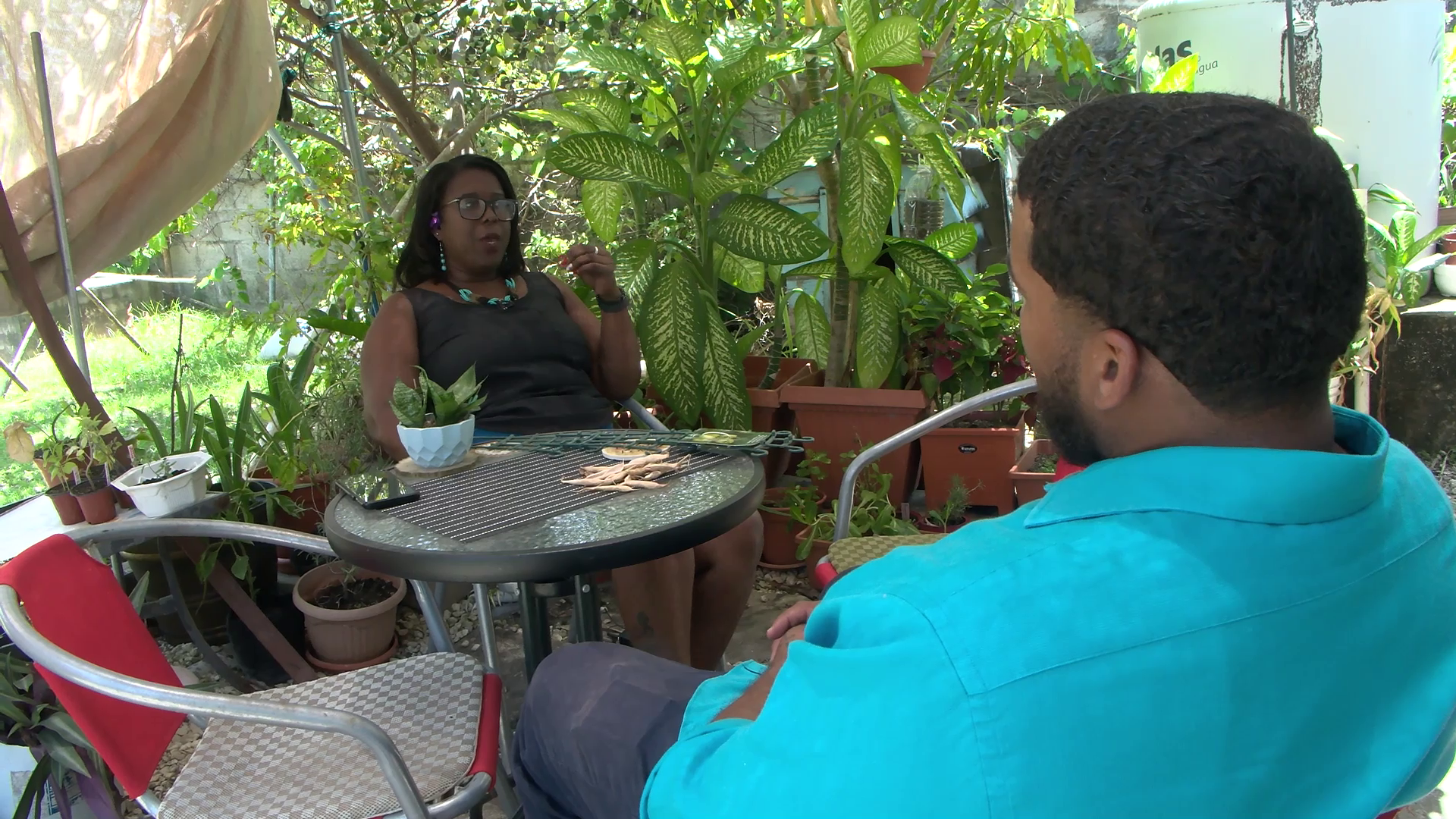
In the densely populated coastal neighborhood of Buttonwood Bay in Belize City, long-time resident Michelle Sampson has transformed her modest backyard into a thriving, diverse urban farm that supplies nearly all of her family’s fresh produce. Ten years ago, Sampson launched her garden as a way to process personal grief after a major loss; today, her small plot boasts five varieties of tomatoes, leafy lettuce, sweet bell peppers, bananas, plantains, strawberries, raspberries, grapes, rosemary, basil and cabbage, all growing in the limited space of a suburban residential yard.
Sampson says the garden has drastically cut her monthly grocery bill, eliminating the need to buy the most expensive fresh produce at local markets. She also wants to dispel the common myth that growing your own food requires large plots of land or natural gardening talent. Even renters with no permanent yard can grow produce in containers on verandahs, she notes, and anyone can start small with just one plant to test their skills. “If you keep saying, oh I can’t grow this, I don’t have a green thumb, you will never know what you can do,” Sampson explained in an on-site interview. “You can start with one tomato plant. I have friends that grow them in pots on the verandah if you are renting. You can always take them with you. You have a space on the side, you can just do one little plot.”
The movement to embrace small-scale home food production is not limited to adult home gardeners. At Belize’s Sadie Vernon High School, students are already learning the skills to launch their own backyard growing systems, building a campus aquaponics project that combines vegetable cultivation with freshwater fish farming in a compact, self-sustaining cycle. Students Joselin Sanchez and Mildreth Gonzalez manage the system under the guidance of their teacher Malaak Middleton, monitoring growth, maintaining water quality, and tracking the project’s progress as part of their coursework.
The small aquaponics setup already produces a steady supply of white cucumber, cabbage, peppers, and edible fish, all grown organically by the students. Sanchez notes that the cyclical, self-reproducing nature of aquaponics makes it an ideal long-term solution for households struggling with high food costs, helping families cut hundreds of dollars in annual grocery expenses. For Gonzalez, the project has added a layer of personal satisfaction that goes beyond cost savings: “I have actually eaten the white cucumber that is really delicious. And it feels good, because we grow it and it’s our achievement and we eat it and it is good.”
Middleton says the project is designed to inspire the next generation to embrace home food growing as a lifelong practical skill, hoping the experience will add lasting value to her students’ lives and encourage them to share their knowledge with their families and wider communities. “Teachers serve as an inspiration and I am hoping that I have served as one in these kids’ life,” Middleton said. “I am hoping this brings value to their life and in turn the community.”
While Sampson’s garden grew from personal loss and the high school project began as an educational initiative, both examples illustrate the same core truth: most of the fresh produce that households regularly purchase at the market can be grown at home, even in tiny urban spaces. As food prices continue to strain household budgets across Belize, this grassroots movement of backyard farming has proven to be an accessible, empowering lifeline that puts food security back in the hands of individual families and communities. Reporting for News Five, Paul Lopez contributed to this report.
-

Agric Show Draws 37,800+ as Interest in Farming Grows
Belize’s largest annual agricultural industry gathering is staging a striking recovery, as shifting public and economic focus toward sustainable domestic farming drives record turnout for the 2026 National Agriculture and Trade Show. Held across four days from April 30 to May 3 in the capital city of Belmopan, the 2026 event drew more than 37,800 attendees – a jump of nearly 6,000 visitors compared to the 2025 edition. This sharp uptick in foot traffic marks a clear turning point for Belize’s agriculture sector, signaling growing public and commercial momentum behind domestic food production and climate-forward farming innovation.
The growth extended far beyond just visitor numbers. The total count of participating vendors and exhibition booths rose 13% year-over-year, representing the largest single-year expansion the event has seen in the past four years. This expansion reflects growing interest from producers, agri-tech suppliers, and small-scale farmers looking to showcase their work and connect with consumers and buyers.
Beyond agricultural demonstrations and trade discussions, the event integrated robust cultural programming that drew large crowds. One of the most popular attractions, the Cabalgata horseback parade, grew dramatically from only 34 participating riders in 2025 to 156 riders in 2026, with live musical bands and decorative floats adding to the festive, community-focused atmosphere of the showcase.
Agriculture Minister Rodwell Ferguson opened the event and highlighted the collective effort behind its success, crediting participating farmers, dedicated event organizers, and cross-sector public-private partners for pulling off the record-breaking gathering. In his remarks, Ferguson also emphasized that even as the sector grows, continued investment in innovative farming practices remains critical to addressing ongoing climate challenges that threaten Belize’s agricultural output and long-term food security.
As attendance and participation numbers climb, so too does national attention on the future of Belize’s core agricultural industry. The record turnout at this year’s showcase makes clear that farming is once again emerging as a central priority for communities, policymakers, and consumers across the country.
-
Belize Turns a Childhood Game ‘Chalupa’ into a Climate Tool
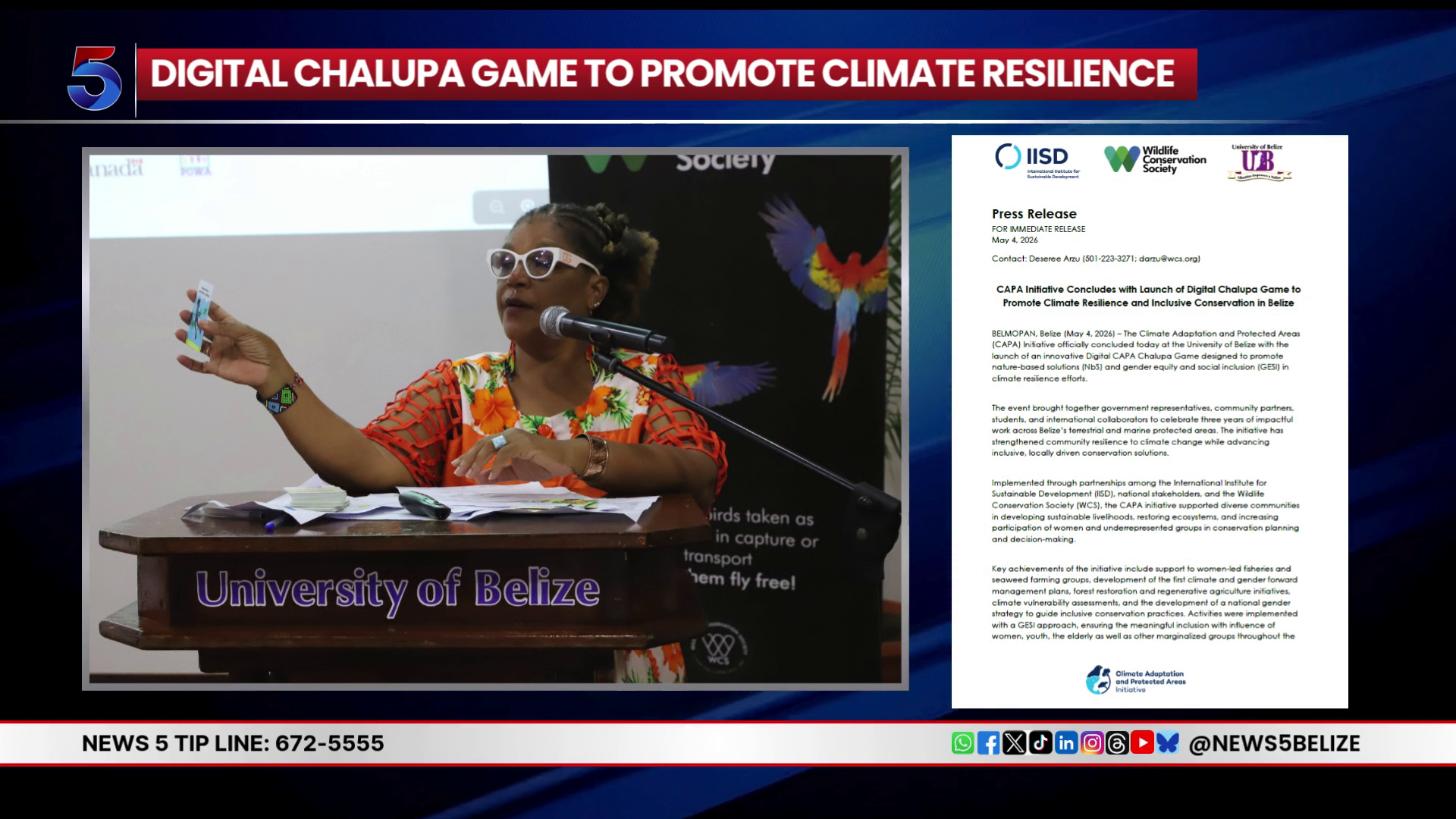
When one thinks of pairing local cultural traditions with global climate action, few would imagine a centuries-old childhood game taking center stage. But that is exactly what Belize has accomplished, wrapping critical lessons about conservation and climate resilience in a familiar, accessible format that resonates with audiences from primary school classrooms to local community centers. This innovative project marks the culmination of three years of collaborative work under the Climate Adaptation and Protected Areas (CAPA) Initiative, which wrapped up its formal programming in May 2026 with the launch of the digital chalupa game at the University of Belize.
Chalupa, a long-beloved traditional pastime across Belize, was not chosen at random. The initiative’s planners deliberately centered local culture to make complex, often intimidating climate topics approachable for people of all ages and backgrounds. What began as a community-focused adaptation effort has grown into a cross-generational educational tool that extends Belize’s climate messaging far beyond the borders of the country’s protected areas.
Over its three years of operation, the CAPA Initiative prioritized inclusive, community-led climate action rather than top-down policy planning. Core to its mission was lifting underrepresented voices—including women, youth, and marginalized groups that have historically been excluded from conservation and climate decision-making processes. This commitment to inclusion yielded tangible, on-the-ground results across Belize’s protected area network: targeted support for women-led small-scale fisheries and sustainable seaweed farming operations, large-scale native forest restoration projects, training and resources for regenerative agricultural practices, and the development of groundbreaking new management frameworks that integrate both climate resilience and gender equity. Beyond these local projects, the initiative’s work has also shaped national conservation policy, building momentum for a nationwide shift toward more inclusive, community-centered environmental stewardship.
Now, with the formal CAPA program coming to a close, organizers are ensuring its legacy endures through the digital chalupa game. Unlike dry academic textbooks or dense policy reports, the interactive digital tool turns lessons about climate adaptation and conservation into engaging play, making it accessible for students learning at home and educational groups across the globe. For the next generation of Belizean climate leaders, the game acts as both an entry point to environmental action and a celebration of local cultural identity.
Though the three-year CAPA Initiative has concluded its formal programming, its impact will continue to ripple through Belize’s communities and ecosystems. Stronger, more inclusive local governance, restored natural habitats, and a simple cultural game turned powerful educational tool ensure that the initiative’s mission will live on for years to come, proving that creative, culture-centered approaches to climate action can deliver lasting change.
-

Digicel Haiti and CANAL+ join forces to revolutionize streaming
In a move set to reshape Haiti’s digital entertainment landscape, leading telecommunications provider Digicel Haiti and global entertainment giant CANAL+ have announced a transformative strategic partnership designed to expand sustainable access to premium streaming content across the country. Announced on May 7, 2026, the collaboration represents a watershed moment for Haiti’s growing streaming industry, with the two firms targeting an enhanced, more reliable, and widely accessible digital viewing experience for Haitian consumers.
Under the terms of the new agreement, Digicel Haiti subscribers on four existing packages – Access, Évasion, Évasion+, and Tout CANAL – will gain access to custom-tailored data plans built exclusively for streaming CANAL+ content through the provider’s official mobile application. This integration means users can enjoy CANAL+’s full catalog, which includes hit international series, blockbuster films, live professional sports, and exclusive original programming, anytime and anywhere across Haiti’s national coverage area.
Haiti has seen a steady, sustained rise in consumer demand for on-demand digital content in recent years, as more Haitians turn to streaming for entertainment and information. This partnership directly addresses a key gap in the local market: the need for high-performance, consistent connectivity that matches evolving consumer viewing habits. Digicel Haiti brings to the table its well-established reputation for extensive network coverage and robust signal strength across the country, while CANAL+ contributes its decades of global expertise as a leading provider of premium entertainment content. Together, the partners aim to deliver a seamless, high-quality streaming experience that does not force consumers to choose between accessibility and content quality.
“This collaboration is a clear demonstration of our ongoing commitment to elevating the digital experience for every Digicel customer in Haiti,” explained Jean-Philippe Brun, General Manager of Digicel Haiti, in a statement following the partnership announcement. “By combining our network infrastructure with CANAL+’s industry-leading content library, we are making premium entertainment far more accessible, while delivering data plans that are specifically optimized for consistent streaming.”
Beyond the immediate integrated data and content offering, the partnership lays critical groundwork for future collaboration between the two companies. Down the line, consumers can expect new bundled service packages, subscriber-only promotions, and innovative streaming features tailored to the Haitian market. Both firms share a core long-term goal: to democratize access to high-quality digital premium entertainment for as many Haitians as possible, unlocking new opportunities for the country’s growing digital economy.
-

Forensics expert details discovery of Samara Bristol’s body
As the high-profile murder trial of Roger Delisle Sealy unfolds before Supreme Court Justice Laurie-Ann Smith-Bovell and a 12-member jury, a top forensic investigator has laid out chilling, detailed findings from the case that have become central to the prosecution’s argument.
Sergeant Mervin Grace, a veteran forensic scenes of crime officer, took the witness stand this week to recount his investigation into the November 2021 death of Samara Bristol, whose body was found in remote, bushy terrain in the Mangrove district of St Thomas. On November 21, 2021, when Grace arrived at the scene, he located Bristol’s remains 86 feet from an unpaved cart road, positioned face down in thick vegetation.
Along the narrow footpath leading to the body, Grace discovered scattered strands of synthetic hair that matched the hair the deceased wore. What he found on the body itself painted a grim picture: a rope tied to Bristol’s right ankle, with a segment of metal fastened to the rope. A gold-toned anklet rested on her left ankle, a matching gold bracelet on her left wrist, two rings on her left ring finger, and a gold necklace around her neck. Two nose rings were recovered from beneath her heavily disfigured face. Most notably, Grace confirmed that Bristol’s skull was fractured and split open, a fatal injury that has been a key focus of the trial.
Sealy, a resident of Airy Cot, St Thomas, stands accused of murdering Bristol sometime between November 16 and November 21, 2021. Before detailing the body recovery, Grace walked the court through an earlier site visit he conducted on November 17, 2021, to the shared Airy Cot home of Bristol’s mother Samantha and the accused. What he found there was extensive structural damage from a suspicious blaze. The kitchen, living room, and dining room had suffered direct heat and fire destruction, while bedrooms and bathrooms were left heavily damaged by smoke and water used to extinguish the fire.
After a thorough examination of the fire site, Grace concluded that the blaze originated on a three-seat sofa in the home’s living room. While pinpointing the exact source of ignition remained undetermined, the forensic officer classified the fire as incendiary — meaning it was intentionally set by human action in an area where a fire had no logical reason to start.
Grace also noted that he found potential traces of blood on the home’s exterior roadway, an insect screen covering a window, and an interior floor, collecting swabs of the substance for DNA testing. Later that same day, investigators were led to a black-and-yellow motor lorry that had been hidden in a bushy area well off a main road in Vaucluse. After the lorry was moved to District ‘E’ Speightstown Police Station, Grace collected swab samples from the vehicle’s cargo tray for forensic testing.
The following day, Grace traveled to a private residence in Halls Village, St James, to conduct a forensic sweep. There, he collected a doormat and a single pair of socks as evidence. Investigators also turned over to Grace a set of clothing and footwear belonging to the accused: a T-shirt, pants, and boots, all of which were taken into custody for testing.
The prosecution is being led by Acting Deputy Director of Public Prosecutions Alliston Seale SC, joined by State Counsel Paul Prescod. Sealy is represented by defence counsel Sian Lange. The trial is scheduled to resume on Thursday, with more witnesses expected to take the stand as proceedings continue.
-
Children are Paying the Price for Online Negligence
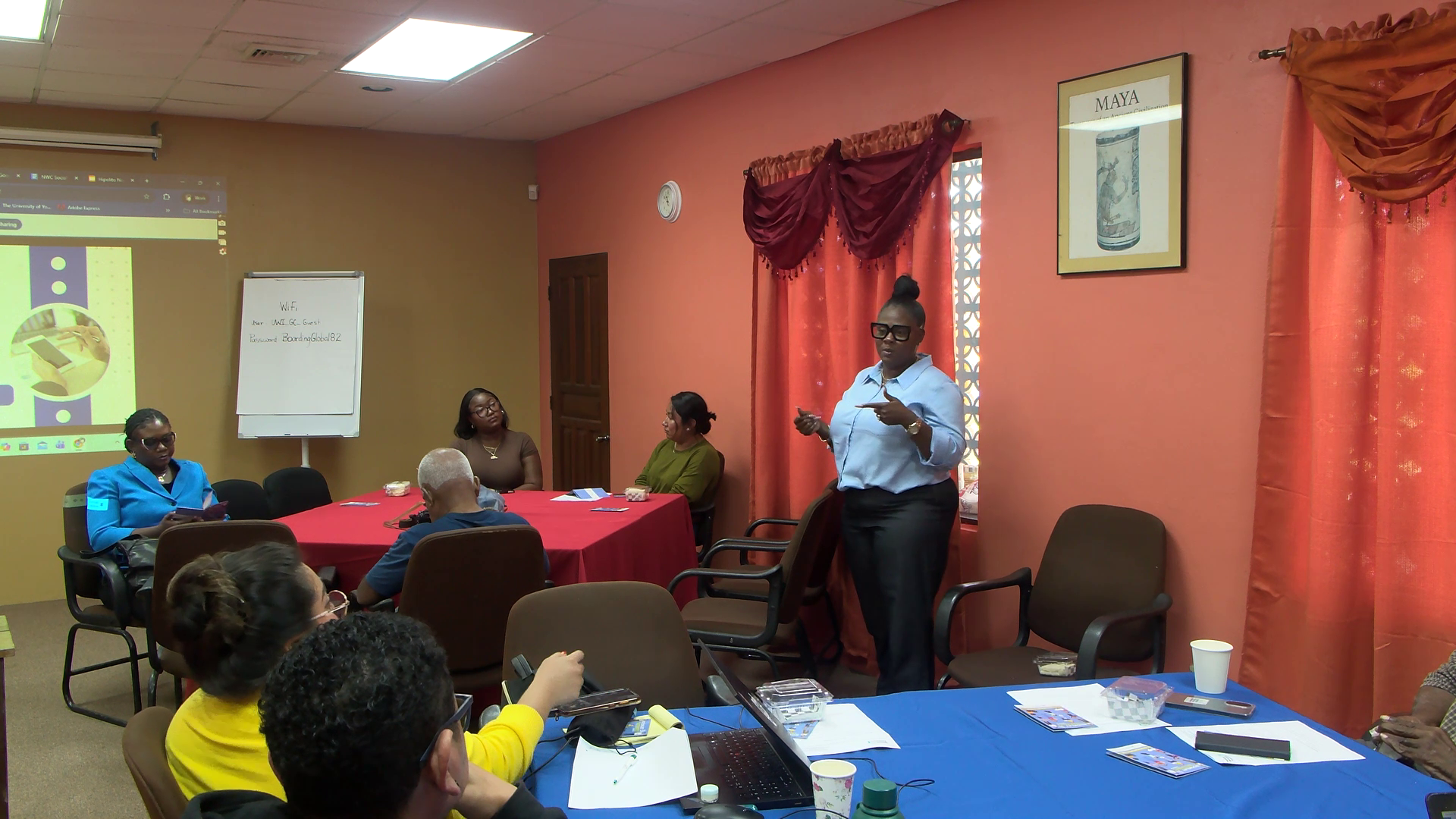
In an era defined by rapid social media expansion, where engagement-driven algorithms prioritize shocking, viral content over responsible publishing, child welfare advocates in Belize are sounding the alarm over the irreversible harm careless online sharing of children’s information inflicts on young people. Scheduled for May 6, 2026, a collaborative workshop led by the National Commission for Families and Children (NCFC) brought together media outlets, independent online news page operators, and social media content creators to address the growing crisis of unregulated sharing of minors’ personal data, images, and sensitive case details.
Shakira Sutherland, executive director of the NCFC, opened the workshop by outlining the core risk at hand: too often, outlets and unregulated independent content creators post unrestricted details of children’s lives—including their full names, ages, residential locations, and identifiable imagery—that have no place on public digital platforms. While traditional media outlets have historically collaborated with the NCFC to implement child protection safeguards, Sutherland emphasized that unregulated independent social media news pages, most commonly hosted on Facebook, have become the primary source of harmful content dissemination. These platforms frequently spread inaccurate information, publish identifiable footage of vulnerable children, and allow harmful viral comment threads to fester, creating damage that extends far beyond the initial post.
“This information can erode a child’s self-image, and cause long-term harm to their emotional, mental, and even physical well-being,” Sutherland explained. “That is why we are calling on every person that shares public content online to pause and think through the impact before hitting post.”
Ganesha Smith, acting director of Belize’s Community Rehabilitation Department, who works directly with youth that have encountered the justice system, expanded on these risks, highlighting the particularly damaging impact of sensationalized media coverage of children in conflict with the law or child abuse victims. Smith explained that sensationalized framing of youth incidents does more than embarrass minors—it locks them into a permanent public negative identity that is extremely difficult to escape. This persistent labeling often pushes vulnerable youth to fall deeper into harmful patterns of behavior, rather than supporting their rehabilitation.
Smith noted that derogatory commentary and repeated sharing of a minor’s case across platforms like Instagram, Facebook, and TikTok normalizes harmful narratives. Over time, these narratives become internalized by the youth themselves, leading to higher rates of repeat legal encounters and a regression away from positive behavioral change. She added that harmful, unfair narratives are pervasive regardless of whether a child is a victim of abuse or an offender in a criminal case: too often, coverage frames child abuse victims as responsible for their own harm, and youth offenders as inherently defiant, rather than acknowledging the complex systemic and personal factors that lead to these incidents. The workshop’s core goal, Smith said, is to shift this cultural narrative and change the content-sharing mindset that prioritizes viral engagement over child safety.
Crucially, the workshop’s message did not call for complete media silence on stories involving children. Instead, organizers emphasized that permanent digital footprints created by careless online publishing stay with children for decades, long after the general public has moved on from the original story. By encouraging intentional, child-first content decisions, advocates hope to reduce the long-term harm that unregulated online sharing inflicts on Belize’s most vulnerable young population.
-

Elder abandonment crisis looms, senator warns
On Wednesday, Barbados’ Health Minister sounded the alarm over a rapidly escalating “crisis of elder abandonment”, as sweeping new draft legislation was brought to the Senate to impose binding legal duties on relatives and reinforce state protections for the country’s aging senior population. Senator Lisa Cummins, who also serves as leader of government business in the upper legislative chamber, used the second reading debate of the Older Persons Care and Protection Bill to urge a nationwide cultural reckoning, arguing that the crisis extends far beyond gaps in regulation to a gradual erosion of intergenerational empathy.
Cummins painted a grim, unflinching portrait of a growing trend: the same generation that laid the foundation for modern Barbados is increasingly being forgotten, left to reside indefinitely in hospital wards and community care facilities cut off from contact with the children and families they raised. The crisis comes at a demographic turning point for the small island nation: the national median age has climbed to 42.5 years, and the country’s death rate now outpaces its birth rate, transforming what was once a private family care burden into a pressing national emergency.
Opening her remarks to the Senate, Cummins appealed directly to Barbadian families, pointing out that for thousands of abandoned elders, hospital nurses and doctors have stepped into the role of surrogate family. She emphasized that abandonment is not merely a physical act of leaving a senior in a care facility; it inflicts deep emotional and psychological harm, as elders are left with the painful awareness that their loved ones have no interest in checking in, bringing favorite foods, or even carving out 30 minutes of free time to visit.
Cummins drew on firsthand observations from her recent tours of the island’s Queen Elizabeth Hospital and Psychiatric Hospital to illustrate the scale of the crisis. She detailed a troubling trend she labeled the “cruel to be kind” phenomenon, where family members intentionally drop off elderly relatives at hospital accident and emergency departments, knowing they will receive safe care but intentionally abdicating their own long-term care responsibilities. What is most distressing, she added, is the total absence of contact after admission: when she asked medical staff how many families visit their elders admitted for long-term care, the overwhelming answer was that most never show up at all.
“From the Queen Elizabeth Hospital to the Psychiatric Hospital, there is no family engagement,” Cummins lamented. “In our district hospitals, whether it is St Lucy or St Philip, family members not only are leaving them there, but they’re not coming back even to visit them. There’s something fundamentally wrong in Barbados with that. These are our elders. These are our older persons.”
The Older Persons Care and Protection Bill has been framed as a robust legal framework that will shift the Barbadian government’s role from passive tolerance of neglect to active safeguarding of seniors. For the first time in Barbadian legal history, the bill explicitly recognizes elderly people as rights-holders, redefining respect and care from discretionary acts of kindness to enforceable legal entitlements. The legislation seeks to break the long-standing culture of silence around domestic elder neglect by introducing mandatory reporting requirements, granting broad investigative powers to state authorities, and imposing enforceable penalties for anyone found to have abused or exploited vulnerable seniors.
Beyond addressing physical abuse and neglect, the bill targets non-physical harms including financial exploitation—most notably the widespread practice of cashing elderly seniors’ pension checks while leaving them to be cared for in state facilities—psychological manipulation, and the deliberate withholding of necessary medical care. Cummins also noted that the legislation will introduce consistent regulation for the fast-growing private residential care industry, requiring both state-owned and private facilities to meet a strict “gold standard” for comfortable, home-like environments with proper amenities including air conditioning.
Despite these sweeping legal changes, Cummins was open about the clear limitations of legislation alone. No amount of legal reform, she argued, can replace the fundamental care and connection that comes from families and local communities. She pointed to everyday examples of normalized ageism across Barbadian society, from able-bodied young people refusing to give up seats on public transit to drivers taking disabled parking spots for quick, unneeded trips.
“Legislation can punish abuse, it can regulate facilities, it can create duties and responsibilities… but legislation on its own will not create care,” Cummins told the Senate. “Legislation on its own will not provide for our elderly. We must still take responsibility for teaching our families respect and care for our elderly. It must be taught, it must be reinforced, and it must be socially expected.”
The proposed bill forms just one part of a broader whole-of-society government strategy to address population aging, which is also tied to ongoing mental health system reforms and new workplace flexibility policies designed to help working-age people balance caregiving responsibilities with employment. The overarching goal is to build a sustainable support system for an aging population that does not leave the shrinking working-age population facing financial and personal ruin.
Closing her address, Cummins challenged all Barbadians to confront the crisis within their own communities, noting that the “builders of our nation” deserve far more than just a hospital bed—they deserve the fundamental dignity of being remembered by the families they built. “This bill applies to all of us who want change, because change begins with us,” she said. “Let the answer be clear for all of us. Let us focus on the rights of our elderly. Let us ensure that we enforce this bill in our homes and in our society.”
-
Basketball Federation Hands Over $20K In Equipment to Districts
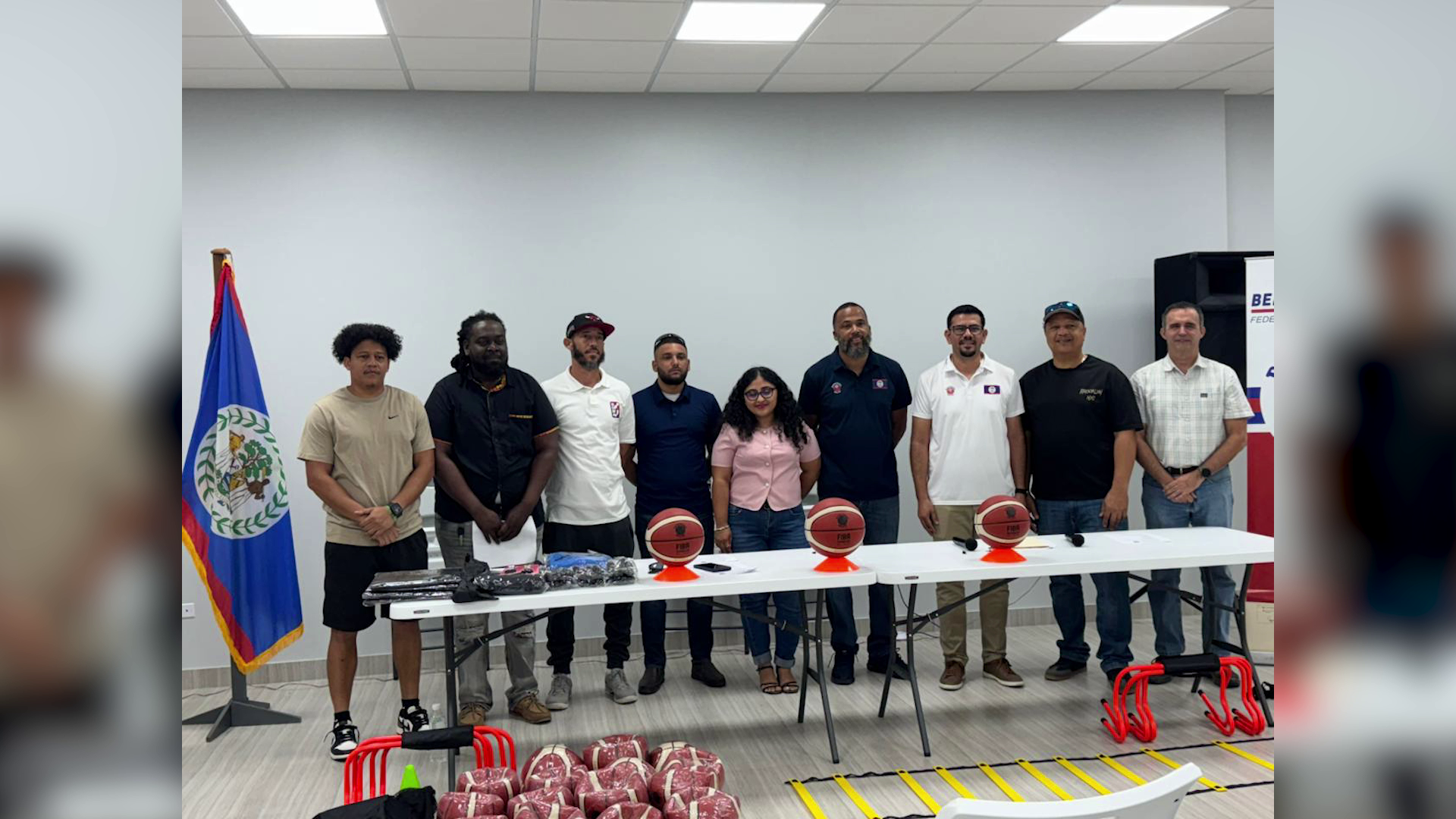
On May 6, 2026, a landmark step to expand community basketball across Belize came to fruition, as the Belize Basketball Federation completed the distribution of $20,000 worth of new sports equipment to local district associations. The initiative marks the end of a four-year strategic planning process aimed at democratizing access to the sport and nurturing athletic talent beyond Belize’s urban center.
Federation President Jacob Leslie explained that the project grew from a clear observation the leadership made when it took office four years ago: the existing elite development pathway was concentrated almost exclusively in Belize City. The Belize Bank Bulldogs program, the country’s previous flagship development initiative, held just one training session per week in the capital, yet still produced 70 to 80 percent of Belize’s current semi-professional and elite basketball players. Recognizing the untapped potential of young athletes in rural and regional districts, Leslie’s team set out to replicate that program’s success across every corner of the country.
The biggest barrier to scaling the model was a lack of basic equipment, Leslie noted. To solve this, the federation applied for and secured a $20,000 grant from the Belize Olympic Committee. Rather than sourcing supplies from the United States or neighboring Central American countries, the organization opted to order gear from Chinese suppliers, allowing them to stretch the grant further and purchase a far larger volume of equipment than would have been possible otherwise. This cost-saving choice maximized the initiative’s impact at the grassroots level.
To ensure the new equipment directly benefits young players rather than being misused, every district association signed a formal memorandum of understanding (MOU) with the national federation. The agreement holds local associations accountable for delivering structured development programming, including age-group-specific summer camps with set participation targets. The equipment is explicitly designated for youth use and sport development, with clear standards that associations must meet to remain in good standing with the federation.
The long-term vision for the initiative is transformative: to create an even playing field where every young Belizean, regardless of which district they call home, has access to the tools and training needed to pursue basketball. Leslie’s goal is to fully equip every district association, support every aspiring young player, and build a clear, accessible pathway that connects neighborhood community courts to elite national and international competition. For thousands of young Belizeans with athletic dreams, the initiative delivers more than just new basketballs—it opens the door to life-changing opportunity.