作者: admin

  • OECS Marks 45th Anniversary with Geneva Celebration

    OECS Marks 45th Anniversary with Geneva Celebration

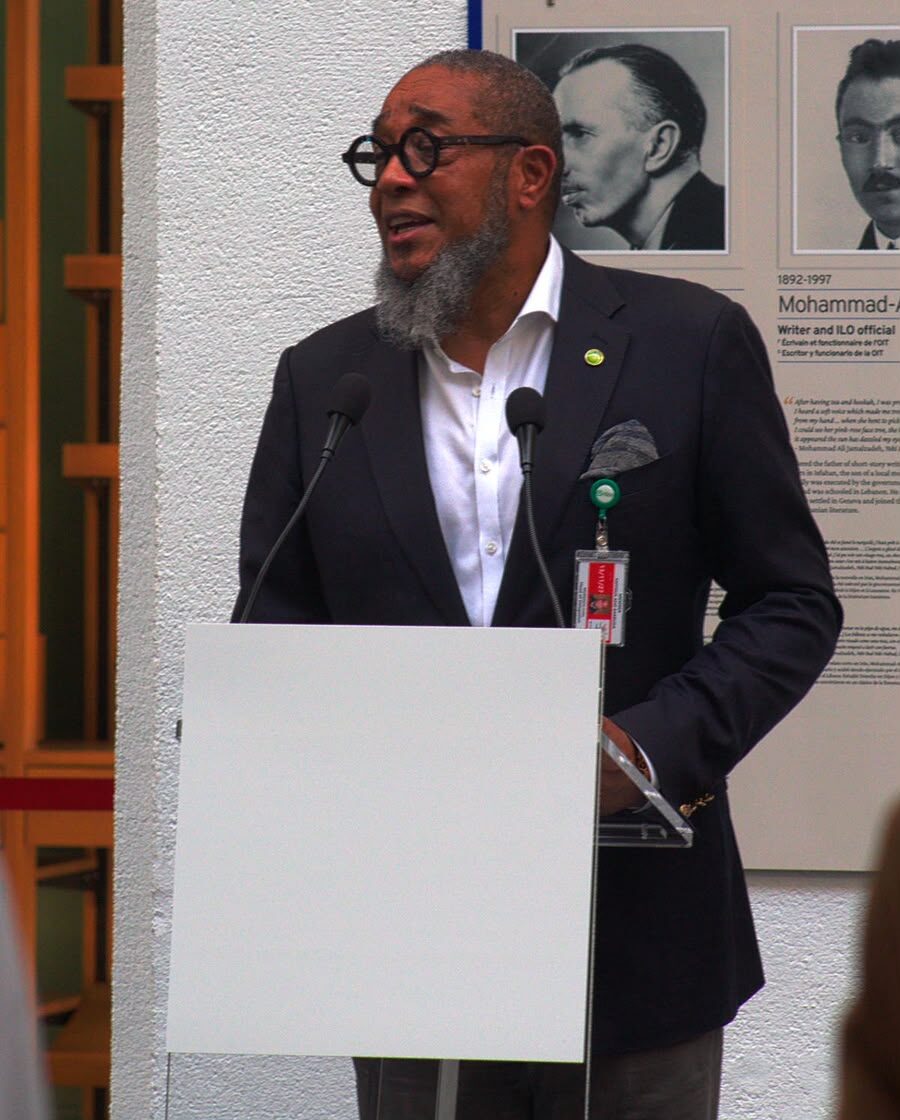
    On June 19, just one day after the annual observance of OECS Day, the Permanent Delegation of the Organisation of Eastern Caribbean States (OECS) to Geneva hosted a celebratory reception at the WTO Headquarters’ Atrium to mark the bloc’s 45th year of existence. The event was far more than a ceremonial gathering—it served as a tribute to four and a half decades of coordinated progress, while also highlighting the vibrant cultural identity that unites the Eastern Caribbean region.

    Attendees, including high-ranking diplomats from member and non-member states, representatives of OECS’s long-standing international partner organizations, and members of the Caribbean diaspora community based in Geneva, gathered to reflect on the bloc’s journey and reaffirm their commitment to continued collective cooperation. To infuse the celebration with authentic Caribbean culture, organizers tapped two talented artists from Antigua and Barbuda: acclaimed pannist Khan Cordice, who previously wowed audiences as the lead performer at the 44th OECS anniversary pan music recital, and keyboardist Khadijah Simon. Cordice’s dynamic steelpan performance captivated the entire room, showcasing the distinctive musical heritage that has become a cultural calling card for the Caribbean.

    Beyond the celebration, the event also highlighted the critical role of the OECS Permanent Delegation in Geneva, which was established in 2005 to address a long-standing gap in the OECS’s institutional presence at the World Trade Organization. Prior to the delegation’s founding, the Caribbean bloc lacked a permanent, effective voice in WTO processes, putting it at a disadvantage in global trade negotiations that shape the economic prospects of its small island member states. Today, the delegation carries out core functions that include monitoring ongoing trade policy developments, analyzing how global trade shifts impact OECS members, publishing detailed reports for bloc leadership, and submitting policy proposals to WTO committees and governing councils to advance the collective interests of Eastern Caribbean nations.

  • European Union Ambassador Fiona Ramsey Presents Credentials to OECS Director General

    European Union Ambassador Fiona Ramsey Presents Credentials to OECS Director General

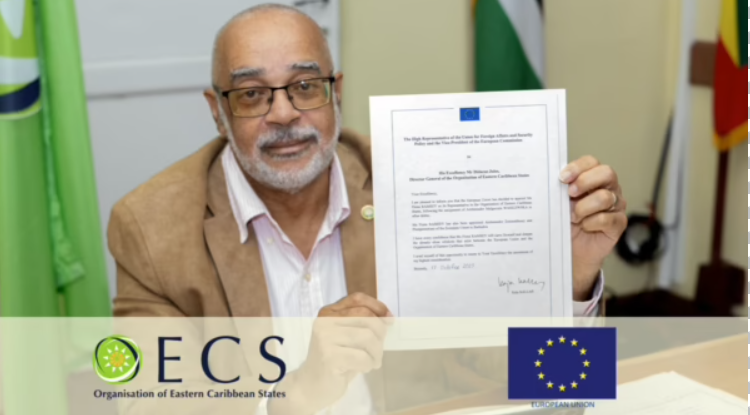
    On July 2, 2026, a landmark virtual credential presentation ceremony marked a new chapter in the long-standing partnership between the European Union (EU) and the Organisation of Eastern Caribbean States (OECS). During the event, Her Excellency Fiona Ramsey, the EU’s newly appointed Ambassador to Barbados and the Eastern Caribbean, formally submitted her Letter of Credence to OECS Director General Dr. Didacus Jules, publicly reaffirming the EU’s unwavering long-term commitment to three core pillars of collaboration: regional integration, sustainable development, and strategic cooperation with the OECS.

    Opening the official proceedings, Dr. Jules extended a warm welcome to Ambassador Ramsey, offering his congratulations on her new appointment and taking the opportunity to underscore the depth of the multi-decade partnership between the two blocs. Reflecting on the foundations of their relationship, Dr. Jules emphasized that the EU has consistently stood as one of the OECS’ most reliable and enduring development partners. “Ours is a relationship built on mutual respect, shared values, and a common commitment to sustainable development, democracy, multilateralism, and the well-being of our people,” he noted.

    In response, Ambassador Ramsey commended the OECS for its 40-plus years of work advancing regional integration and collective solidarity across its 11 member states. She went on to highlight the unique geographic and geopolitical ties that bind Europe and the Caribbean, pushing back against the framing of the EU as a distant transatlantic partner. “Europe is not just a partner across the Atlantic,” Ramsey explained. “Europe is also part of the Caribbean through the French territories of Martinique and Guadeloupe and the overseas countries and territories in the region. We share the same maritime space, the same neighbourhood, and many of the same practical challenges. Close cooperation between the European Union and the OECS is therefore both natural and essential.”

    Ambassador Ramsey also conveyed formal greetings from two of the EU’s top leaders: European Council President António Luís Santos da Costa and European Commission President Ursula von der Leyen. She reiterated the EU’s ongoing commitment to expanding ties with Caribbean regional bodies through the bloc’s flagship Global Gateway Investment Agenda, a major infrastructure and development initiative designed to boost connectivity and sustainable growth across partner regions.

    Following the formal credential ceremony, Ambassador Ramsey and Dr. Jules held a closed-door working discussion focused on expanding the strategic partnership between the two organizations. Their conversation centered on eight key priority areas for deepened collaboration: climate adaptation and resilience, expanded access to renewable energy, sustainable ocean governance, inclusive digital transformation, expanded educational exchanges, support for homegrown innovation, accelerated regional integration efforts, and strategic infrastructure development. Both sides expressed optimism that the new ambassador’s tenure will bring tangible progress and shared benefits for citizens across the Eastern Caribbean and the European Union alike.

  • Meat Master Serves Up Its Response

    Meat Master Serves Up Its Response

    In the wake of an explosive investigative report published by local outlet News Five that shone a light on more than $435,000 in government payments to Belizean meat supplier Meat Master over just two months, the company has broken its silence with an official public statement pushing back against criticism and defending its business dealings with Belize’s Ministry of Defense.

    News Five’s initial reporting raised multiple red flags about the transactions, prompting widespread public discussion over potential conflicts of interest and procurement irregularities. In its response, Meat Master claims that much of the recent media coverage and public discourse surrounding its contracts with the Belize Defence Force and Belize Coast Guard contains factual inaccuracies, and it is now stepping forward to share what it frames as the complete, correct record of its operations.

    Founded and formally registered in 2022, Meat Master outlines in its statement that its core mission is the production and distribution of fresh, smoked, and processed meat products for domestic clients. The company says it has poured substantial capital and labor into building its operations from the ground up, and forcefully rejects one of the most persistent public claims linked to the contract: that it has hidden financial or ownership ties to the Briceño family. The statement explicitly reads, “At no point has there been ties to the Briceño family; not as part owners of the business nor as owners of the property.”

    On the topic of how the company secured the lucrative defense contract, Meat Master emphasizes that it was selected following a competitive open tender process held by the Belizean government in April 2026. The company confirms it submitted all required bidding documentation, satisfied every formal procurement mandate set out by regulators, and says that every invoice submitted to the defense forces accurately matches the volume and value of meat products delivered.

    Framing itself as a homegrown small business, the company notes that its standing in the local market has been earned through years of consistent work, premium product quality, and reliable professional service. “As a local Belizean business, our reputation has been built on hard work, quality products, and professional service. We remain committed to conducting our business with integrity and transparency,” the statement adds.

    Meat Master closed its response by calling on all media outlets operating in the country to verify all claims before publishing, warning that unfounded inaccurate reporting risks inflicting irreversible unfair harm not just to the company’s brand, but also to its dozens of employees and their families who rely on the business for their livelihoods.

    Despite pushing back against general claims of impropriety, the company’s statement notably avoids directly responding to the specific irregularities highlighted in News Five’s investigation. It makes no mention of 54 separate invoices processed between April and May 2026, each of which carried a value just under the $10,000 mandatory review threshold – a common red flag for procurement splitting to avoid oversight. Additionally, the company offers no explanation for why 35 of those invoices, which together total more than $300,000, were all cleared for payment on a single business day, a highly unusual practice that has fueled further public questions about the contracting process.

  • Derde helft WK 2026: Atlas Leeuwen jagen op geschiedenis, Franse favorieten klaar voor strijd

    Derde helft WK 2026: Atlas Leeuwen jagen op geschiedenis, Franse favorieten klaar voor strijd

    Beneath bright, clear skies at Boston Stadium on Thursday, July 9, one of the most highly anticipated matches of the 2026 FIFA World Cup is set to unfold: a quarterfinal showdown between defending champion France and surprise contender Morocco that promises to deliver a clash for the ages. France is chasing its third World Cup title, led by a devastating attacking trio headlined by global superstar Kylian Mbappé, while Morocco – nicknamed the Atlas Lions – is determined to keep its extraordinary tournament run alive and cement its status as a legitimate title contender. This fixture is far more than just another knockout game: it is a battle between established European soccer royalty and unstoppable emerging African talent, brimming with passion, ambition, historical weight and national pride.

    As two-time World Cup winners and 2022 runners-up, France enters this match as the undisputed tournament favorite. Through five matches so far in 2026, Les Bleus have claimed five wins, netting 14 goals while conceding just two, showcasing a near-perfect balance of defensive solidity and attacking flair. Mbappé, the team’s talisman, has already notched seven goals in the tournament, and he is backed by a dynamic supporting cast of playmakers including Ousmane Dembélé, Michael Olise and Bradley Barcola. This attacking unit is widely regarded as the most dangerous and feared offense in the entire 2026 competition. Even for a squad of France’s caliber, however, every step toward the trophy is a grueling test – especially against an opponent as unexpectedly strong as Morocco.

    Morocco is no longer the surprising underdog that captured global attention when it became the first African and Arab nation to reach a World Cup semifinal in 2022. The Atlas Lions have undergone an extraordinary transformation in the four years since that history-making run. Fresh off winning the 2025 Africa Cup of Nations and carrying a 34-match unbeaten streak into Thursday’s quarterfinal, Morocco has evolved into a serious title contender. The squad plays organized, physical soccer that is particularly deadly on counterattacks, led by creative playmaker Brahim Diaz, who has notched four assists so far in the tournament. Unfortunately for Morocco, star goalscorer Ismael Saibari will miss the match through injury, but the team remains resolute in its goal to pull off another upset and write new chapters of soccer history.

    Both teams navigated challenging paths to reach the quarterfinal stage. France dominated Group I, earning wins over Norway, Senegal and Iraq, before cruising to a 3-0 round of 16 victory over Sweden and grinding out a hard-fought win over Paraguay in the second knockout round. Morocco finished second in Group C, claiming impressive wins over Scotland and Haiti, holding powerhouse Brazil to a stunning draw, then eliminating the Netherlands in a penalty shootout and beating Canada 3-0 in the knockout rounds. Under head coach Mohamed Ouahbi, the team has grown into a force to be reckoned with. “We are no longer a surprise – we are a real force,” Ouahbi says of his squad’s rise.

    Off the pitch, the match also adds a personal subplot: Morocco captain Achraf Hakimi and France’s Mbappé are former Paris Saint-Germain teammates and close friends off the field, but both have made clear they will leave everything on the pitch to deliver victory for their nations.

    The two sides last faced off in the 2022 World Cup semifinal, where France earned a 2-0 win to advance to the final. Thursday’s rematch carries far more stakes this time around: Morocco has evolved into a far more complete and dangerous squad since that 2022 meeting, and is hungry to prove its rise is no fluke.

    The winner of this Boston quarterfinal will advance to the semifinal, scheduled for July 14 in Dallas, where they will face either Spain or Belgium, with a spot in the World Cup final increasingly within reach. This clash is more than 90 minutes of soccer: it is a meeting of legacy and ambition, of established power and rising talent, of experience and relentless fighting spirit. Boston is bracing for an unforgettable night where dreams can come true and new soccer legends are set to be born.

  • Tense exchange at closing CARICOM briefing over alleged US boat strike

    Tense exchange at closing CARICOM briefing over alleged US boat strike

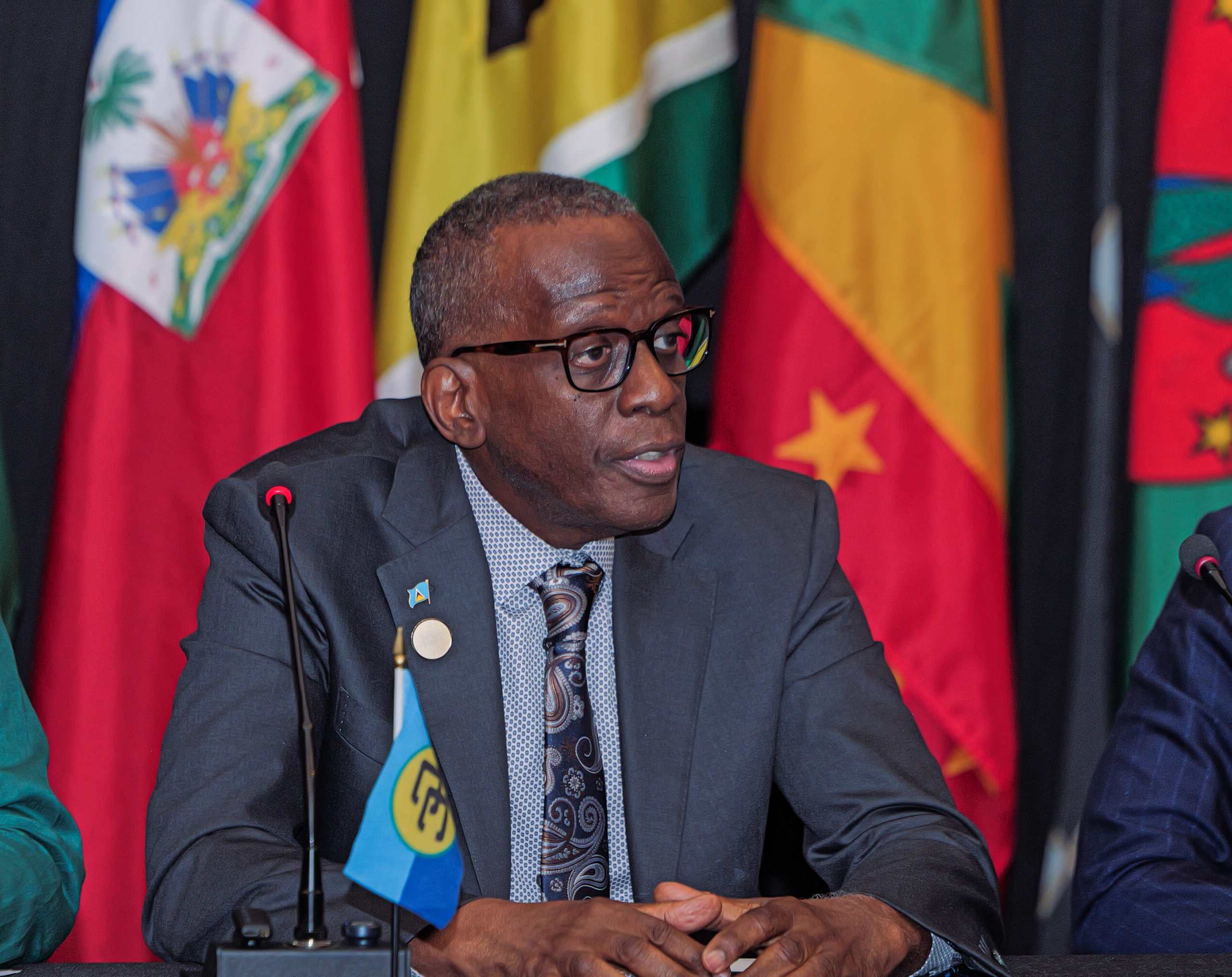
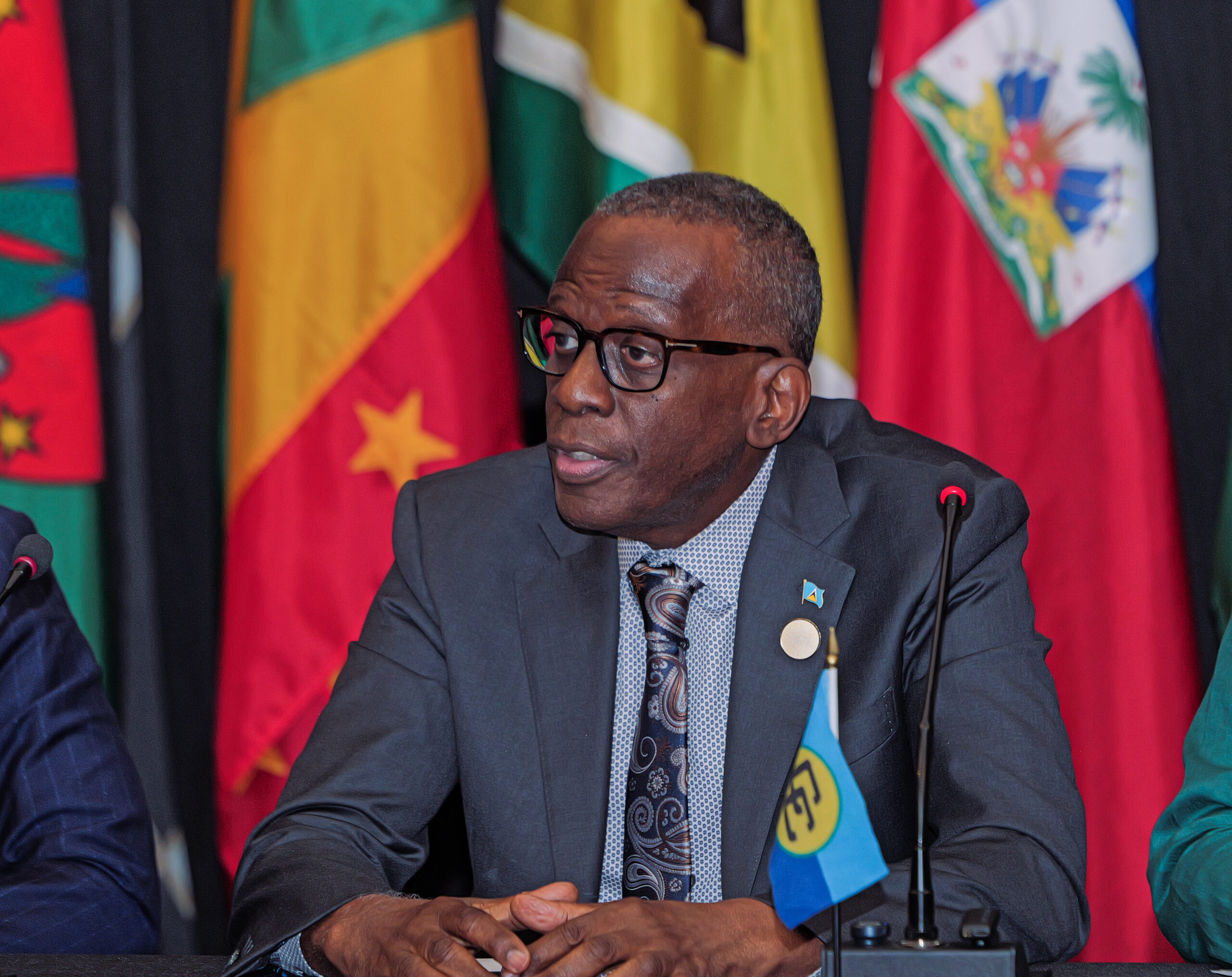
    As curtains closed on the 51st Caribbean Community (CARICOM) Heads of Government Meeting, a pressing question about the unexplained disappearance of Saint Lucian fisherman Ricky Joseph became the focal point of the closing press conference. Newly sworn-in CARICOM Chairman and Saint Lucia Prime Minister Philip J. Pierre found himself on the defensive, fielding pointed questions from Al Jazeera reporters who had spent the preceding week on the island investigating Joseph’s February disappearance.

    Joseph’s family holds the unconfirmed theory that the fisherman was killed in an American lethal strike carried out in regional waters earlier this year. To date, no physical evidence has emerged to corroborate this claim, and with Joseph’s remains still undiscovered, local law enforcement continues to categorize the incident as an active missing persons case.

    When pressed by reporters to outline what accountability would look like for Joseph’s family if the allegations of a U.S. strike were ultimately proven true, Pierre emphasized that the national government remains deeply troubled by the case, but has yet to receive any official confirmation of the circumstances surrounding Joseph’s disappearance. “We are very concerned about the loss of life for anybody. We’ve requested information from the United States, and we’ve not gotten any information as to what happened,” Pierre stated during the exchange.

    He added that without concrete evidence confirming Joseph’s death, regional law enforcement agencies have no legal alternative to continuing the missing persons probe, noting that “our own law enforcement is trying its best to decipher what happened.”

    The press conference exchange grew increasingly tense when reporters brought up the Joseph family’s public claims that they have received almost no direct communication or outreach from the Saint Lucian government since the fisherman went missing. Pierre forcefully pushed back against accusations that authorities had ignored the family’s suffering. “These families are our people. They are my people, so I’m very concerned about them. I’m sure more than you… After this week, you’re going to be leaving; I’m here with them,” he told reporters.

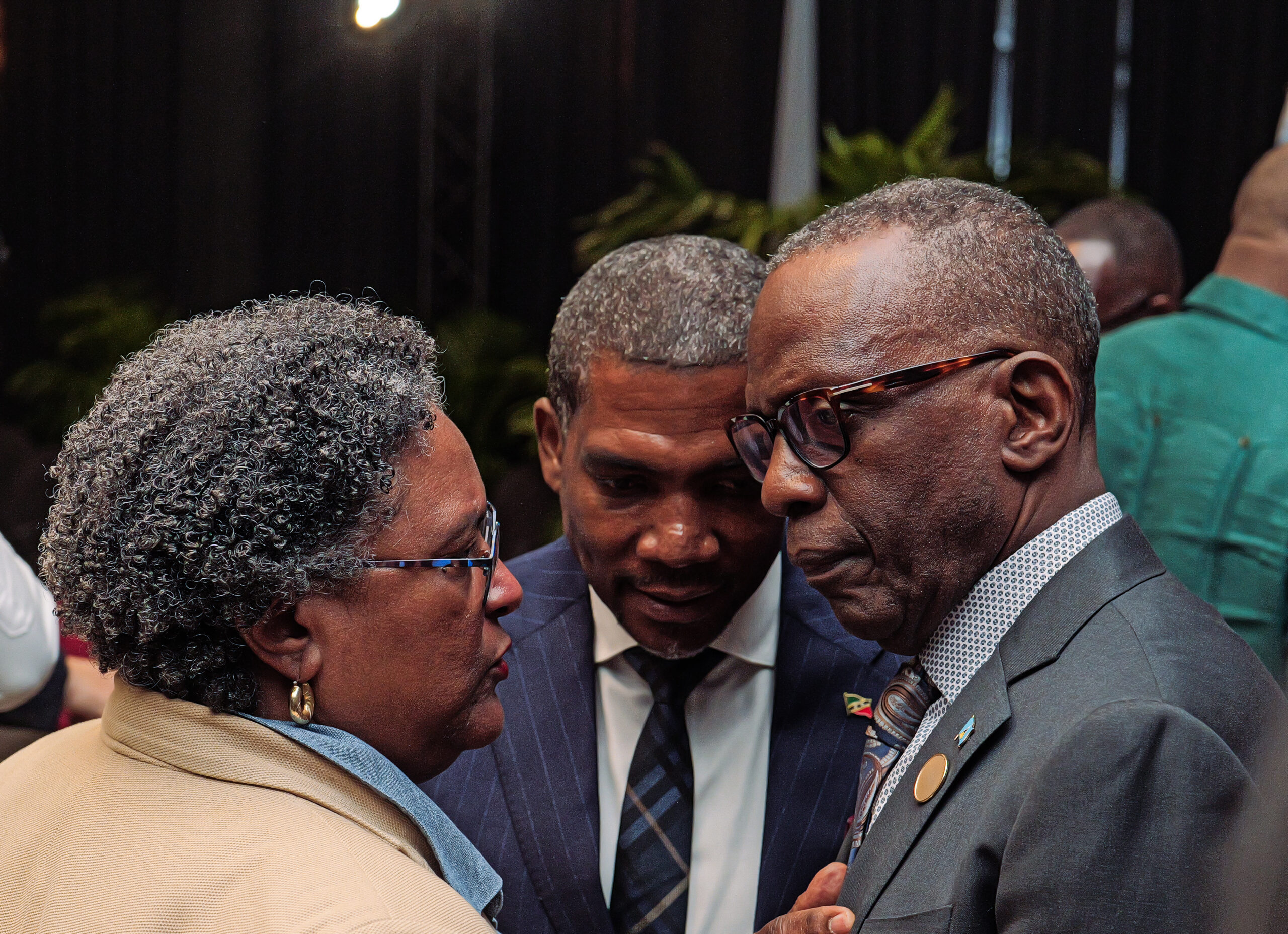
    Tensions eased as the conversation shifted from Joseph’s disappearance to a broader, more consequential question: whether the United States should be permitted to conduct lethal strikes targeting suspected criminal actors within the sovereign territory of CARICOM member states. When the question was opened to regional leaders in attendance, Barbados Prime Minister Mia Mottley weighed in, acknowledging the tangled web of legal and geopolitical complexities that surround such cross-border military operations, while drawing a clear moral line on the issue.

    “Morally, I would prefer not to see it,” Mottley stated. While she recognized that international law outlines provisions for proportionate military action under specific, limited circumstances, she stressed that Barbados — and the CARICOM bloc more broadly — has consistently prioritized diplomatic, peaceful resolutions over violent intervention. “Barbados always believes that there are better ways to deal with things rather than through the loss of life, whether it is the war in Gaza, whether it is internal conflict elsewhere,” she added.

  • Tense exchange at closing CARICOM briefing over alleged US boat strike

    Tense exchange at closing CARICOM briefing over alleged US boat strike

    As the 51st CARICOM Heads of Government Meeting drew to a close in Saint Lucia, a pressing local issue with far-reaching geopolitical implications overshadowed the final official press briefing: the unexplained disappearance of local fisherman Ricky Joseph. The newly inaugurated CARICOM Chairman, Saint Lucia’s own Prime Minister Philip J. Pierre, faced sharp, persistent questions from Al Jazeera journalists, who had spent a full week embedded in the country investigating the case.

    Joseph vanished in February, and his family has advanced the troubling claim that he was killed in an unacknowledged U.S. military strike. To date, no concrete evidence has emerged to corroborate the allegation, and no remains have been recovered, leaving local law enforcement to formally classify the case as an active missing person investigation.

    Pressed to outline what accountability would look like for Joseph’s family if the claims of a U.S. strike were ultimately proven true, Pierre emphasized that the Saint Lucian government has maintained consistent concern for the case, but still lacks official confirmation of the circumstances surrounding Joseph’s disappearance. “We are very concerned about the loss of life for anybody. We’ve requested information from the United States, and we’ve not gotten any information as to what happened,” Pierre stated. He added that without physical evidence confirming Joseph’s death, domestic law enforcement agencies have no legal option other than to continue their active inquiry, noting that local investigators are working exhaustively to unpack the details of the incident.

    Tensions rose in the press room when Pierre was confronted with the Joseph family’s accusation that they have received almost no direct communication or support from the national government since the fisherman went missing. Rejecting outright any claims of official indifference, Pierre pushed back firmly: “These families are our people. They are my people, so I’m very concerned about them. I’m sure more than you… After this week, you’re going to be leaving; I’m here with them.”

    Once the conversation shifted from Joseph’s specific disappearance to the broader, contentious question of whether foreign powers like the United States should be permitted to carry out lethal targeted strikes against suspected criminal targets on CARICOM territory, the atmosphere in the briefing room softened. The question was opened to attending regional leaders, and Barbados Prime Minister Mia Mottley offered a clear, measured response that acknowledged the tangled legal and geopolitical complexities of such operations while stating her unambiguous moral position.

    “Morally, I would prefer not to see it,” Mottley said. While she recognized that international law allows for proportional military action under limited, specific circumstances, she emphasized that Barbados and its leadership have a long-standing, consistent policy of prioritizing peaceful diplomatic solutions over violent intervention. “Barbados always believes that there are better ways to deal with things rather than through the loss of life, whether it is the war in Gaza, whether it is internal conflict elsewhere,” she added.

  • UPP presses government to release contracts for major infrastructure projects

    UPP presses government to release contracts for major infrastructure projects

    The main opposition United Progressive Party (UPP) of Dominica has issued a formal challenge to the ruling administration, demanding the immediate public release of full contractual documents for three of the island nation’s largest ongoing infrastructure projects. In an official statement released July 7, 2026, UPP leader Joshua Francis framed the call for disclosure as a critical step to boost governmental accountability and rebuild public trust in national development initiatives.

    The three projects at the center of the demand collectively represent hundreds of millions of dollars in foreign and domestic investment, and are expected to reshape Dominica’s economic trajectory, environmental landscape, and long-term public finances for coming generations. They include a new international airport, being developed by a partnership between Montreal Management Consultants (MMC) and China Railway No. 5 Engineering Group (CR5); a mountain cable car project awarded to Austria’s Doppelmayr Group in collaboration with local firm ABL Holdings; and the Cabrits Marina resort development, led by Range Developments, with a yet-unidentified international operator set to take over management once construction is complete.

    While the Skerrit government has repeatedly shared public updates on construction timelines and touted the expected tourism and job growth benefits of the projects, UPP argues that all core details of the binding contractual agreements have been deliberately kept hidden from the Dominican public and national legislature. The opposition says this lack of openness has fueled widespread public suspicion of secretive “sweetheart deals” that could prioritize private developer interests over the public good, with no parliamentary oversight to guard against mismanagement of national assets and public funds.

    According to the UPP statement, Dominican citizens hold a fundamental right to access a full range of unredacted contract details: the exact financial obligations the government has committed to under each deal, any tax concessions, sovereign guarantees or other favorable terms granted to developers, the full documentation of the procurement process used to award the multi-million contracts, whether independent cost-benefit analyses were completed before approval, the binding performance standards and penalty clauses for contractors, and a full accounting of long-term fiscal risks for the state.

    “Transparency is not an obstacle to development—it is the foundation of public trust,” the party said in its statement.

    The UPP has laid out four clear demands for the government: publish unredacted full contracts and all subsequent amendments for the three projects, release complete records of the procurement processes for each award, share detailed public and parliamentary reports that outline full project financing, binding contractual obligations and long-term public liabilities, and establish a permanent policy of proactive disclosure for all future large-scale public infrastructure contracts.

    Party leaders were careful to clarify that the request for transparency does not amount to opposition to the projects themselves. The UPP says it fully supports sustainable national development, but only when that development is rooted in the principles of transparency, accountability, and rule of law.

    “The people of Dominica deserve more than announcements and ceremonial groundbreaking events. They deserve access to the agreements that will shape the country’s future and determine how public resources are managed,” the statement read.

    Concluding its address, the party emphasized: “Good governance demands openness. Democracy demands accountability.” The UPP reaffirmed its longstanding commitment to protecting the rights and interests of all Dominican citizens, and will continue pushing for greater integrity and openness across all branches of government.

  • US-Iran Ceasefire Falters as New Strikes Escalate Middle East Tensions

    US-Iran Ceasefire Falters as New Strikes Escalate Middle East Tensions

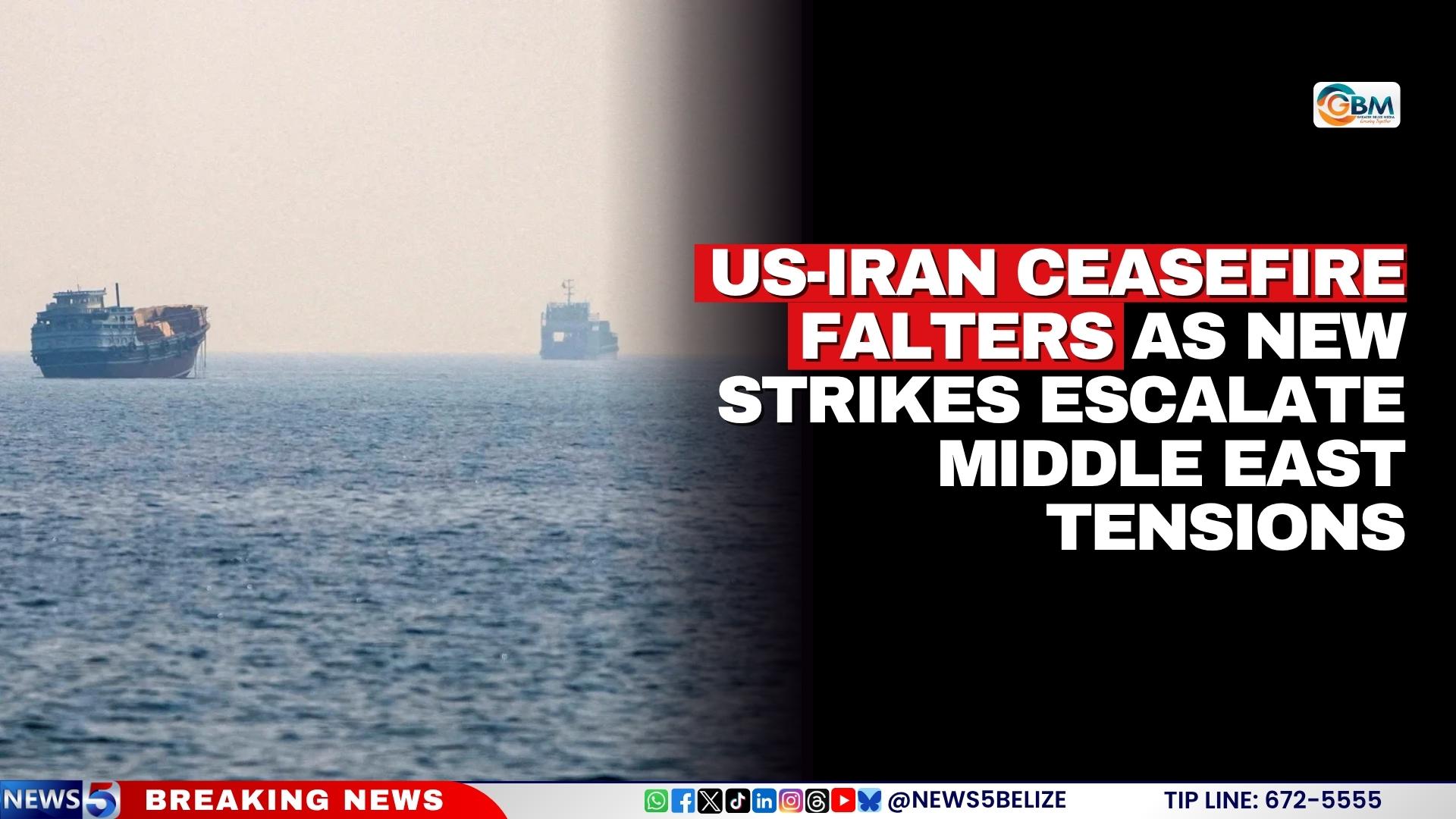
    Just days after the United States and Iran reached a fragile truce aimed at de-escalating months of open hostilities, the ceasefire has all but collapsed following a wave of new mutual strikes that have sent tensions across the Middle East soaring once again.

    Iranian officials confirmed Thursday that U.S. military forces carried out fresh airstrikes on targets in the southern coastal province of Bushehr, hitting sites located near the country’s Bushehr Nuclear Power Plant and a key commercial fishing port. While Washington has not yet publicly verified these latest attacks, U.S. Central Command previously acknowledged launching overnight strikes on roughly 90 Iranian targets along the country’s Persian Gulf coastline just hours before.

    In a swift retaliatory move, Iran’s Islamic Revolutionary Guard Corps (IRGC) announced it had fired 10 ballistic missiles at a major U.S. military installation located in neighboring Jordan. Jordanian government officials later corroborated the incident, confirming the missiles entered Jordanian airspace before being intercepted and destroyed by the country’s air defense systems. No casualties or infrastructure damage were reported on Jordanian soil following the exchange.

    The resumption of large-scale hostilities comes barely one week after U.S. and Iranian negotiators, mediated by third-party states, announced a ceasefire agreement designed to end weeks of cross-border strikes and tit-for-tat attacks. Both sides have since traded accusations of violating the truce terms, with each blaming the other for intentionally undermining efforts to restore regional stability.

    Beyond direct military confrontation, the renewed violence has already disrupted critical global energy infrastructure. The Strait of Hormuz, the world’s most important oil chokepoint through which roughly 20% of global oil supplies pass daily, has seen a sharp slowdown in commercial maritime shipping due to heightened military activity and threats of traffic restrictions. In a parallel development, Iranian authorities have reportedly moved to ramp up crude oil exports from Kharg Island, the country’s primary oil export terminal, amid the market uncertainty.

    Even as fighting continues, diplomatic efforts to pull the two sides back from the brink are already underway. Pakistan and Qatar, the two states that mediated the original ceasefire talks between Washington and Tehran, have reactivated backchannels to restart negotiations. Pakistan’s Ministry of Foreign Affairs issued an urgent public call for de-escalation this week, noting “there is no alternative to continued engagement, dialogue and diplomacy to achieve shared goal of peace in the region.”

    The latest escalation also unfolds against a sensitive domestic backdrop in Iran: the country is currently in the national mourning period for former Supreme Leader Ali Khamenei, with final funeral ceremonies scheduled this week. Regional observers are closely monitoring the events for any public appearance by Khamenei’s newly appointed successor, Mojtaba Khamenei, as political analysts assess how the leadership transition may shape Iran’s future foreign policy trajectory amid the ongoing crisis.

  • Barbados ‘happy’ with free movement, Grenada and Saint Lucia may join

    Barbados ‘happy’ with free movement, Grenada and Saint Lucia may join

    At the closing press conference of the 51st CARICOM Heads of Government Meeting, Barbados Prime Minister Mia Mottley offered an optimistic update on the regional bloc’s free movement of people initiative, sharing that the program’s early implementation has exceeded expectations and attracted new interest from additional member states.

    Last October, Barbados joined three other CARICOM nations — Belize, Dominica, and St. Vincent and the Grenadines — as the first group to launch the full free movement arrangement under the Revised Treaty of Chaguaramas. Contrary to pre-launch fears that the policy would trigger a sudden, overwhelming surge of migration across participating borders, Mottley confirmed that fewer than 1,000 people have utilized the program to date, directly dispelling those widespread concerns.

    Data from the initiative shows the majority of skilled workers moving under the framework have relocated to Barbados, a trend Mottley says aligns perfectly with the country’s core motivations for joining the initiative in the first place. Barbados has long struggled with a structural skills deficit driven by its small domestic population, which has limited the pool of specialized talent available to local industries. Joining the free movement regime was a deliberate strategy to close that gap, Mottley explained.

    Beyond the positive early results, Mottley announced that the initiative is now gaining new momentum among other CARICOM members. Grenada has officially submitted a formal letter requesting to join the arrangement, while Saint Lucia has publicly signaled its clear interest in moving through the accession process to participate in the future.

    Drawing a parallel to CARICOM’s own gradual growth since its founding in 1974, Mottley noted that regional integration efforts naturally expand in incremental waves. When the bloc launched, it counted just four founding members, and additional nations have joined gradually over the decades to reach its current size. She expects the free movement regime will follow the same incremental growth trajectory, even as some advocates push for faster expansion. For her part, Mottley emphasized that Barbados remains satisfied with the progress made so far, and confident in the long-term success of the regional integration project.

  • Major Jones Says BDF Soldiers Are Being Shortchanged

    Major Jones Says BDF Soldiers Are Being Shortchanged

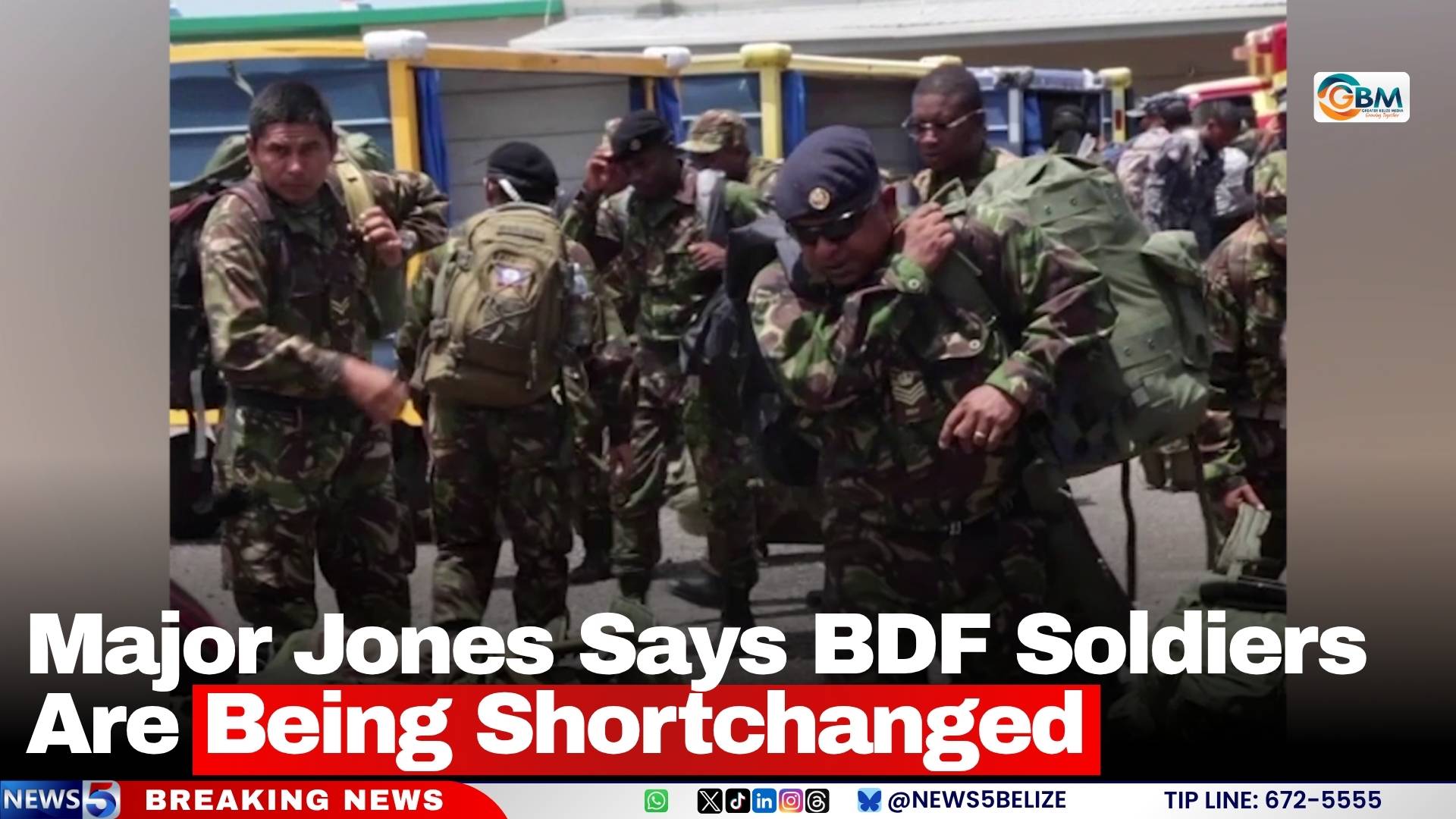
    In a blunt rebuke of the Belize Defence Force’s institutional management, retired Major Lloyd Jones has raised serious alarms about unfair treatment of active-duty soldiers, pointing to problematic military ration provision as evidence of deeper systemic rot within the country’s defense establishment. Speaking to local outlet News Five in comments published July 9, 2026, Jones argued that active service members are being sidelined as an afterthought in budget and resource priorities, with a stark discrepancy between public funds allocated for soldier rations and the actual food that ends up being served to troops. According to Jones, this gap points to unaccounted “leakages” that siphon resources away at every step of the supply chain.

    “What happens is that it starts at the top as we are seeing now, which is the troubling part for me,” Jones explained. “But all along the supply chain, starting with the ministry and for every door it enters, the ration gets smaller and smaller.” The retired major emphasized that the chasm between total spending on rations and the final portion served to soldiers exposes fundamental flaws in how the defense system is run. While Jones stopped short of formally accusing any individual of explicit corruption or illegal wrongdoing, he warned that problematic practices at the most senior levels of leadership create a cultural ripple effect that distorts behavior across the entire supply chain.

    “If people see people at the top ‘feeding’, then when it reach their level they also feel like I should get a little too,” Jones said. “And then it finally reaches the plate of the soldiers and he is wondering, what happened here.” Beyond the ration controversy, Jones also slammed what he frames as a widespread lack of respect and appreciation for the work of BDF members, noting that dozens of skilled, capable service members have resigned from the force in recent years out of mounting frustration over poor working conditions and unaddressed grievances. Most provocatively, Jones openly questioned whether two senior cabinet officials — Florencio Marin Jr. and Oscar Mira, the heads of the relevant defense-linked ministries — still retain the public confidence necessary to effectively lead their portfolios.

    Marin and Mira have already been placed on administrative leave from their posts as of the time of Jones’ comments, though no official explanation for their leave has been released in the correspondence covered by the reporting. In an official response to Jones’ allegations, Francis Usher, Chief Executive Officer of the Ministry of Defence, pushed back on the retired major’s grim assessment while acknowledging his long professional history with the force. “I think that Major Jones is a very experienced individual. I think he is more than capable of drawing his own conclusions,” Usher stated. “I would not go as far as saying that, but I do understand his position, and he is free to make his opinion.” The exchange has reignited public debate over transparency, resource management, and leadership accountability within Belize’s national defense institutions, with calls emerging for an independent audit of military ration spending to resolve the conflicting claims.