作者: admin

  • NaRRA brings heat to the Senate

    NaRRA brings heat to the Senate

    Long stereotyped as the more measured, low-temperature chamber of Jamaica’s bicameral parliament, the Senate transformed into a charged political battlefield on Friday, as sharp ideological clashes erupted over the deeply contentious National Reconstruction and Resilience Authority (NaRRA) Bill. The legislation, which the ruling government is pushing to fast-track in the wake of last October’s catastrophic Category 5 Hurricane Melissa, has split the upper house along partisan lines, pitting demands for urgent disaster recovery against warnings of unchecked executive overreach.

    On one side, government senators frame the NaRRA Bill as a critical, transformative intervention to address the unprecedented devastation left by the storm, which damaged or destroyed infrastructure equal to 56% of Jamaica’s entire annual gross domestic product. On the other, opposition lawmakers have launched a relentless campaign against the legislation, arguing that it concentrates dangerous levels of power in the executive branch, erodes critical oversight safeguards, and sets the stage for future constitutional crises similar to past controversial government policies.

    The most heated exchanges of the day centered on the opposition’s demand that the bill be referred to a joint select committee for expanded cross-party scrutiny and public consultation. Opposition leaders argue that any legislation of this magnitude, which will reshape how post-disaster recovery is governed for years, requires broad input from civil society and communities before it can be signed into law. Government senators have rejected these calls as unworkable, arguing that the urgent timeline of post-disaster reconstruction—paired with the impending start of a new Atlantic hurricane season—leaves no room for months of delay that a lengthy consultation process would bring.

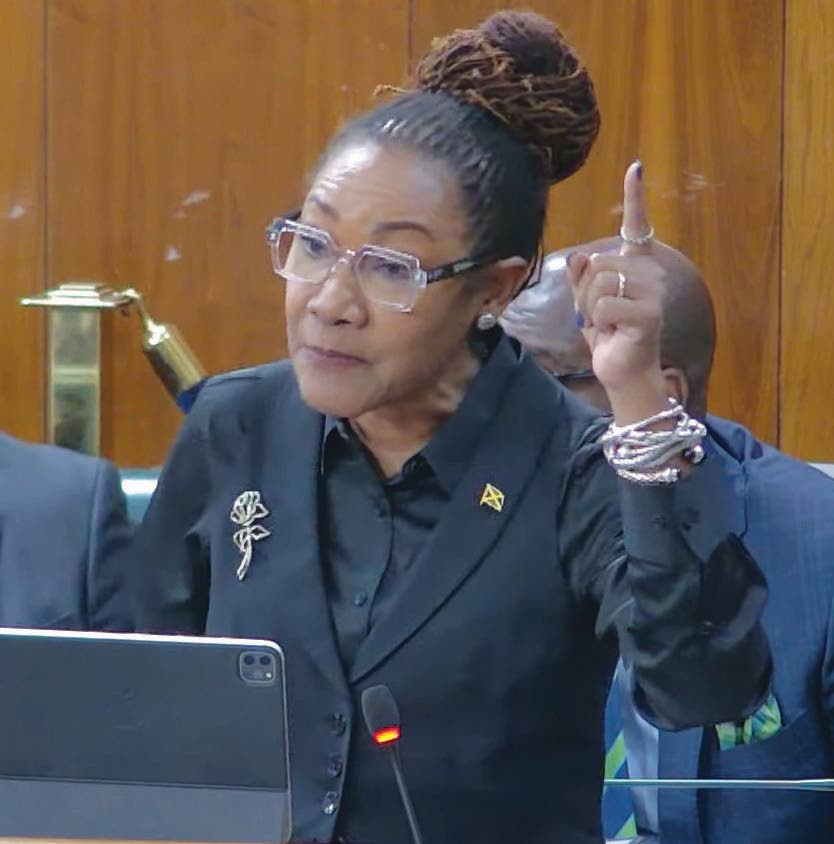
    Leader of Opposition Business in the Senate Donna Scott-Mottley led the charge against the bill, drawing a direct parallel between the NaRRA legislation and the polarizing National Identification and Registration Act (NIDS), which was ultimately struck down in whole or in part by Jamaica’s Constitutional Court over constitutional violations. Scott-Mottley warned that the government is repeating a dangerous pattern of rushing sweeping, high-stakes legislation through parliament despite widespread pushback from civil society groups and the opposition, while refusing to accommodate amendments or address legitimate concerns.

    She stressed that Jamaicans have every reason to fear granting broad, unaccountable powers to a new standalone authority, particularly given the administration’s history of facing successful constitutional challenges to major legislation. Scott-Mottley also directly refuted the government’s core argument that extraordinary new powers are needed to speed up recovery, pointing out that six months after Hurricane Melissa, thousands of impacted residents are still living in inadequate temporary housing, including converted school buildings, despite the existence of existing state disaster response agencies.

    “Did you need a NaRRA to help the people from Westmoreland? Did you fail to help the people from Westmoreland because you had no NaRRA?” Scott-Mottley asked during her speech. “You have people who have just been removed from shelters into surroundings which are far from adequate. You have people who live in a school — hanging out their clothes on a line, and indeed cohabit in the school — because the school has become their home. That is how you deal with people? That is how you handle people who are suffering? And then come to tell me that a strategic investment has people at the heart when for six months they are driving down in St Elizabeth that they say don’t look any different from the day the hurricane hit.”

    Government senators pushed back aggressively against these criticisms, rejecting claims that the bill lacks sufficient accountability guardrails and reiterating that the scale of destruction from Hurricane Melissa demands unprecedented urgency and decisive executive action. Senator Abka Fitz-Henley argued that Jamaica simply cannot afford to drag its feet on reconstruction, noting that at the current pace of standard government capital spending, it would take 25 years to fully repair all damage from the storm.

    Fitz-Henley also pushed back against claims the bill opens the door to corruption, arguing that many of the civil society groups leading criticism of the legislation are secretly aligned with the opposition People’s National Party (PNP) and engaging in selective partisan outrage. Government Senator Kavan Gayle echoed this defense of the decision to bypass a joint select committee, noting that the formal consultation process would require weeks of waiting for submissions, scheduling hearings, and building consensus—time Jamaica does not have as it enters the peak of the annual Atlantic hurricane season.

    Opposition Senator Cleveland Tomlinson countered that speed cannot come at the cost of constitutional checks and balances, warning that the bill grants sweeping authority to a single minister to override existing regulatory bodies without requiring public gazetting, parliamentary reporting, or any formal public record of the action. He also criticized provisions that exempt approved NaRRA projects from key parts of the Public Investment Management System, arguing that the lack of oversight is a deliberate choice that creates an open invitation to mismanagement and graft. “Speed without scrutiny is not efficiency — it is an invitation to waste,” Tomlinson said.

    In an emotional address to the chamber, Government Senator Rosemarie Bennett-Cooper urged lawmakers not to lose sight of the ongoing human cost of Hurricane Melissa, which she said continues to impact thousands of Jamaican families long after the storm passed. “Long after the winds subsided and the floodwaters receded, what remains are not simply damaged buildings and broken infrastructure; what remains are the faces of Jamaicans who are trying to make sense of loss,” Bennett-Cooper said. She also sought to reassure the public that the bill does not seek to dismantle existing development laws or bypass all required regulatory approvals for reconstruction projects.

    Friday’s debate in the Senate marks the latest flashpoint in what has become one of the most divisive legislative fights in Jamaica in recent memory. The debate comes one week after chaotic, overnight scenes in the House of Representatives during consideration of the same bill, highlighting how deeply partisan the proposal has become. If passed, the NaRRA Bill would create a centralized authority tasked with coordinating all post-Hurricane Melissa reconstruction work and streamlining approval for major infrastructure and recovery investment projects across the island.

  • ‘We felt appreciated’

    ‘We felt appreciated’

    PORT MARIA, Jamaica — What shaped up to be a low-key, uneventful Teachers’ Day for staff at Port Maria Infant School transformed into a lifelong memory after an unexpected invitation from the Sandals Foundation landed in their inbox.

    The Port Maria team joined more than 150 fellow educators pulled from 49 different primary, infant, and basic schools across Jamaica’s St Ann and St Mary parishes for a day on the open water. The fully complimentary boat cruise treated attending teachers to a full day of lively music, freshly prepared local cuisine, and casual connection with peers who understand the unique demands of the education profession.

    For Port Maria Infant School, no official Teachers’ Day activities had been arranged ahead of the celebration, making the surprise invitation even more meaningful. “We had nothing planned,” shared Doraine Murphy, the school’s guidance counsellor. “So, when Sandals called we were overjoyed to be a part of the celebration. We are grateful to Sandals Ocho Rios for making our day really special.”

    Organizers noted that venue capacity limitations prevented every interested educator from claiming a spot on the cruise, but attendees agreed the outing was a welcome, long-overdue respite from the daily pressures of teaching.

    “It was beautiful. For once we weren’t thinking about lesson plans. We danced, we laughed, we felt appreciated. That matters,” said Hyeillia Clarke-Coke, a veteran educator who attended the event.

    Lyndsay Isaacs, regional public relations manager for Sandals Ocho Rios, emphasized that the event grew from the organization’s long-standing commitment to recognizing the contributions of local education workers. In comments to the Jamaica Observer, Isaacs explained the core motivation behind the gesture: “Teachers are amazing. We see the work that they are doing in the classroom every day. If there is a little thing that we can do for them to show appreciation then we are happy to do it.”

    Alongside Port Maria Infant School, a wide range of regional institutions had representatives in attendance. The full list of participating schools includes New Orange Hill Primary, Bamboo Basic, Union Basic, Golden Grove Basic, Lewisburgh Primary, Bethany Primary, Albion Mountain Primary, Mount Zion Primary, Ocho Rios High, Pineapple Basic, Stewart Town Basic, Wellington Four Square Basic, Village Primary, Parry Town Primary and Infant, Zoe Care Bear, Boscobel Primary, and Gibraltar Primary.

  • ‘He makes us feel safe’

    ‘He makes us feel safe’

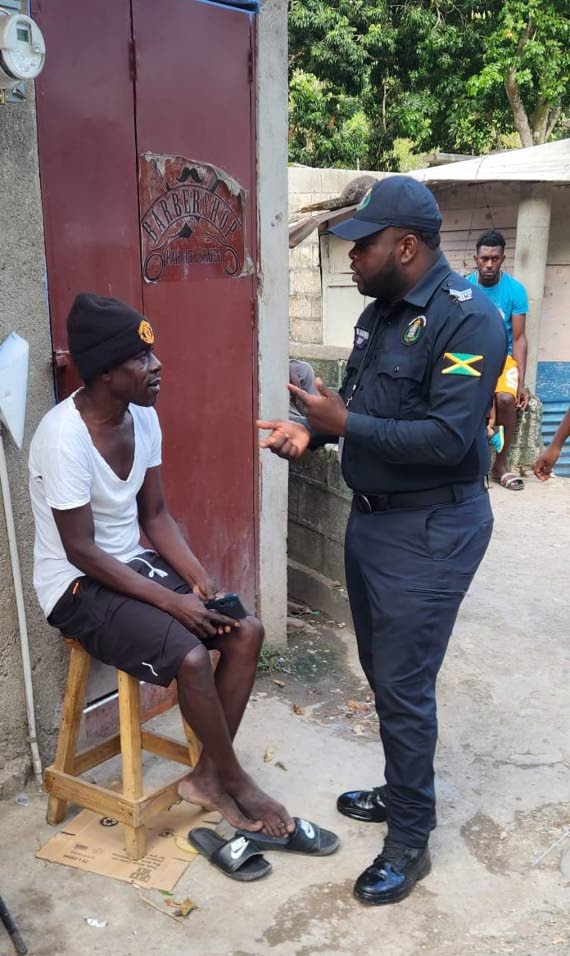
    ANNOTTO BAY, St Mary — Across this quiet coastal Jamaican community, one uniformed officer is far more than a law enforcement official to local residents. For more than seven years, Constable Marlon Garriques has embedded himself into the fabric of daily life in Annotto Bay, earning a reputation as a trusted mediator, mentor, and friend to people across all generations. His commitment to bridging gaps between police and residents has recently earned him a well-deserved promotion within Zone Two of the Jamaica Constabulary Force’s (JCF) Community Safety and Security Branch (CSSB).

    Raised in St Catherine, Garriques grew up following in the footsteps of his father, who also served as a police officer. That upbringing shaped his core philosophy of policing: that officers do not just police a community—they become part of it. Armed with a degree from the Jamaica Theological Seminary, Garriques brought a unique, empathetic perspective to his role when he joined the JCF 14 years ago, and he still carries the same enthusiasm for his work today with no regrets about his career choice.

    His career path began with a one-year posting to the traffic department in Port Maria, followed by a four-year tenure at Prospect Police Station. In 2016, he was transferred to Annotto Bay Police Station, where his signature community-centered approach began to flourish. Unlike traditional policing models that rely primarily on response to crime, Garriques built his practice on proactive connection: he walks neighborhood streets regularly, learns every resident’s name, and intervenes to defuse minor disputes before they can escalate into violence.

    Local residents say this hands-on approach has transformed how they experience safety in Annotto Bay. “If there’s a disagreement between neighbors, he’s the first person we call,” explained local shopkeeper Beryl, who has known Garriques for years. “If the local school is hosting a sports day or a community event, he’s there volunteering. Just knowing we have an officer we can reach out to any time makes us feel far safer than any patrol car ever could.”

    For the young people of Annotto Bay, many of whom grew up surrounded by gang activity and limited economic opportunity, Garriques has served as a stabilizing “big brother” in uniform. Through regular check-ins and targeted mentorship, he has guided dozens of at-risk youth away from criminal pathways and into vocational skills training that helps them build stable careers. A 22-year-old local resident, who requested anonymity to speak freely, called Garriques the reason he is now employed and on the right track. “He didn’t just talk at us about avoiding trouble,” the young man explained. “He helped us get into training, checked in on us regularly, and showed us there was another way forward.”

    Garriques’ work is part of a broader shift in Jamaican policing led by the CSSB, which prioritizes community engagement to reduce violence in historically high-crime areas. Local business leaders have praised the branch’s approach, crediting the model with turning once violence-plagued neighborhoods into safer, more connected spaces for work and life.

    Reflecting on his recent promotion, Garriques called his posting to Annotto Bay nothing short of divine intervention. “These communities don’t just need enforcement—they need presence,” he said. “We’ve made real progress, but our work isn’t done. We’re going to keep pushing for more intervention, more prevention, and more opportunities to build trust that makes every resident safer.”

    Today, Garriques continues his work across southeast St Mary, leading outreach sessions in local schools and showing up for the community that has come to see him as one of their own.

  • Rose Hall set to bloom

    Rose Hall set to bloom

    Along the quiet outskirts of Montego Bay in St James, Jamaica, a transformative wave of tourism and infrastructure development is reshaping the coastal community of Rose Hall, with local leaders drawing comparisons to the explosive growth that turned St Ann’s Drax Hall into one of the island’s most dynamic economic hubs in recent years.

  • NHT ignites imagination

    NHT ignites imagination

    An annual literacy-focused initiative, Read Across Jamaica Day, received meaningful participation this year from the National Housing Trust (NHT), one of the island’s leading public housing institutions. As part of the trust’s engagement with the campaign, Neil Miller, Senior General Manager for Corporate Services at the NHT, stepped into the classroom of Amy Bailey Basic School to connect with early learners through the power of the written word.

    During his visit, Miller shared the children’s book *Zachary The Parakeet*, a work created by Jamaican author Shana Darien, with the assembled students. The interactive reading session was far more than a simple recreational activity: organizers framed the event as a purpose-driven effort to highlight the transformative impact of storytelling on childhood development. Through engaging narratives, young participants have their innate creativity sparked, helping them explore new worlds and ideas beyond their daily surroundings. Beyond imagination, regular storytelling and read-aloud activities also help nurture greater confidence in young children, giving them space to build comfort with language and communication. Most importantly, these experiences encourage early learners to recognize the power of their own ideas, showing them how far their unique voices can take them as they grow and develop.

  • Storm-proof homes

    Storm-proof homes

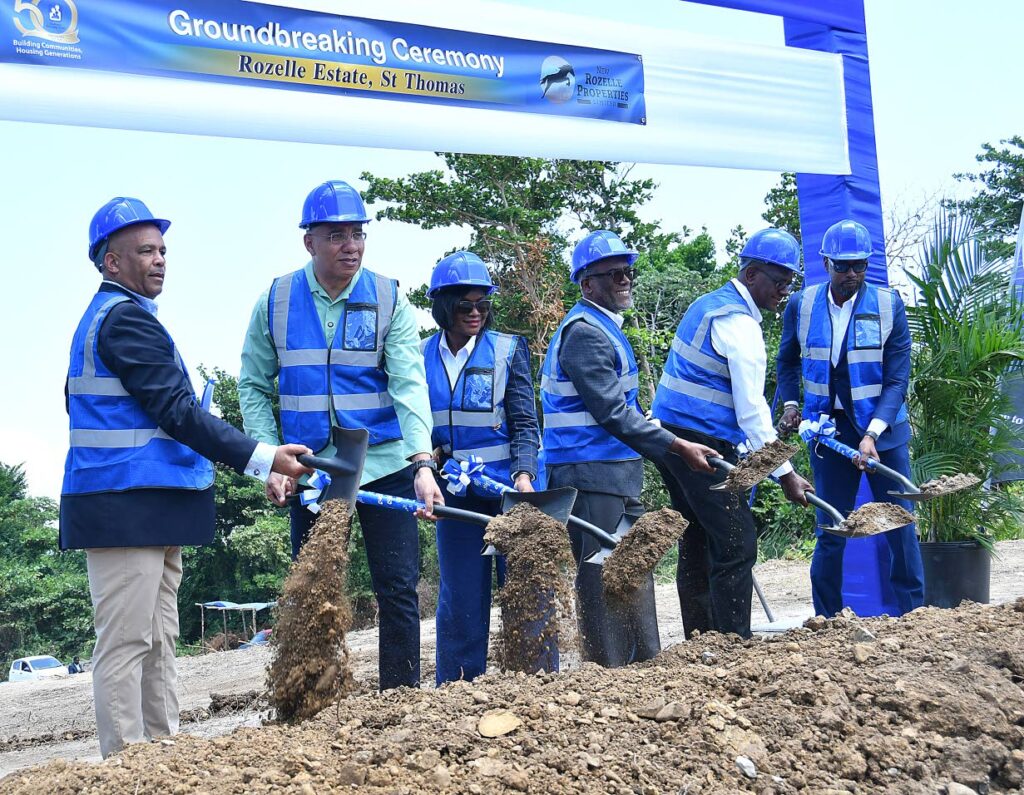
    As Jamaica counts down to the 2026 Atlantic Hurricane Season, with the devastating scars of October 2025’s Category 5 Hurricane Melissa still unhealed for thousands of residents, Prime Minister Dr. Andrew Holness has issued a clear mandate for climate resilience at the groundbreaking of one of the island’s largest new residential developments in recent years.

    The $9-billion Rozelle Estate scheme, a partnership between private developer New Rozelle Properties and the state-run National Housing Trust (NHT), will bring more than 800 new homes to the coastal parish of St. Thomas. Speaking at Friday’s ceremony, Holness stressed that resilience against extreme weather must be baked into every phase of the project’s design and construction, rather than treated as an afterthought.

    “Sea breezes that cool this area can turn deadly violent during a major hurricane,” Holness told attendees, which included NHT chairman Linval Freeman, NHT managing director Martin Miller, and New Rozelle Properties chairman John Sinclair. “We require these homes to be engineered to withstand a Category 5 storm. That is the core priority of this administration: building resilience into every part of our national infrastructure.”

    The government’s intensified focus on climate-resilient construction comes in direct response to the destruction caused by Melissa, one of the most powerful Atlantic hurricanes on record, which tore through Jamaica’s south-western and north-western regions six months prior. While restoration work has progressed steadily, thousands of Jamaicans are yet to fully rebuild their lives and homes, with the 2026 hurricane season set to officially open on June 1.

    Holness pointed to a key lesson from Melissa’s destruction: not all structures failed. Many homes, even those with relatively modest hip and timber roof designs, emerged unscathed thanks to intentional, robust construction practices. He urged the Rozelle Estate developer to exceed minimum building code requirements, so that even after a Category 5 storm, homeowners would only need to clear debris rather than rebuild their entire lives.

    “Instead of meeting just the threshold design standard, go above it,” Holness said. “That way, when a storm passes, all a homeowner has to do is sweep away fallen leaves and trees, and they are back to normal life.”

    The project is being delivered under the NHT’s innovative guaranteed purchase programme, a policy designed to de-risk residential development for private builders. Under the framework, the state housing agency will purchase 660 of the 800-plus units at a pre-agreed price, providing developers with upfront capital to launch construction and guaranteed demand to reduce sales risk once the project is complete. The remaining units will be sold at the developer’s discretion. Holness called the programme a major success and urged other developers eyeing projects in St Thomas to take advantage of the scheme.

    Holness also used the groundbreaking ceremony to promote the newly established National Reconstruction and Resilience Authority (NaRRA), a government body created in response to Hurricane Melissa to coordinate post-disaster recovery and streamline resilience-focused development across Jamaica. Parliament approved the legislation establishing NaRRA just two weeks prior, with a mandate to not only organize disaster rebuilding but also speed up approval for large public and private projects that align with national economic recovery and resilience goals.

    At the heart of NaRRA’s mandate is the Facilitated Acceleration of Strategic Transformation (FAST) Programme, a fast-track approval pathway for qualifying projects. Holness noted that the Rozelle Estate application was first submitted three years ago, an unnecessarily long wait that delayed the project’s launch. The FAST Programme is designed to eliminate such delays for resilience-aligned projects, he explained, cutting through bureaucratic red tape so developments do not spend years stuck in the approval pipeline.

    To qualify for fast-track consideration through FAST, projects must meet a minimum investment threshold of US$15 million – a requirement Rozelle Estate easily meets with its $9-billion price tag. Holness invited all eligible developers and investors working on resilience-focused strategic projects to apply to NaRRA for accelerated approval.

    Looking beyond the Rozelle Estate development, Holness outlined an ambitious vision for expanded housing growth across St Thomas, which benefits from its close proximity to the Kingston Metropolitan Area, improved road access, available vacant land, and recently completed water infrastructure upgrades. While local Member of Parliament James Robertson projected 5,000 new homes would be built in the parish over the next three years, Holness said that number could double to 10,000, driven by growing interest from private landowners and developers partnering with the NHT.

    “As we break ground here today, we are not just laying foundations for new houses and new communities,” Holness said. “We are planting opportunities that will bear fruit for Jamaican families for generations. Most importantly, we are delivering dignified housing: every Jamaican deserves their own piece of ‘The Rock’, no matter how big or small.”

  • Mom of Three Shot Dead at Da Buzz Lounge

    Mom of Three Shot Dead at Da Buzz Lounge

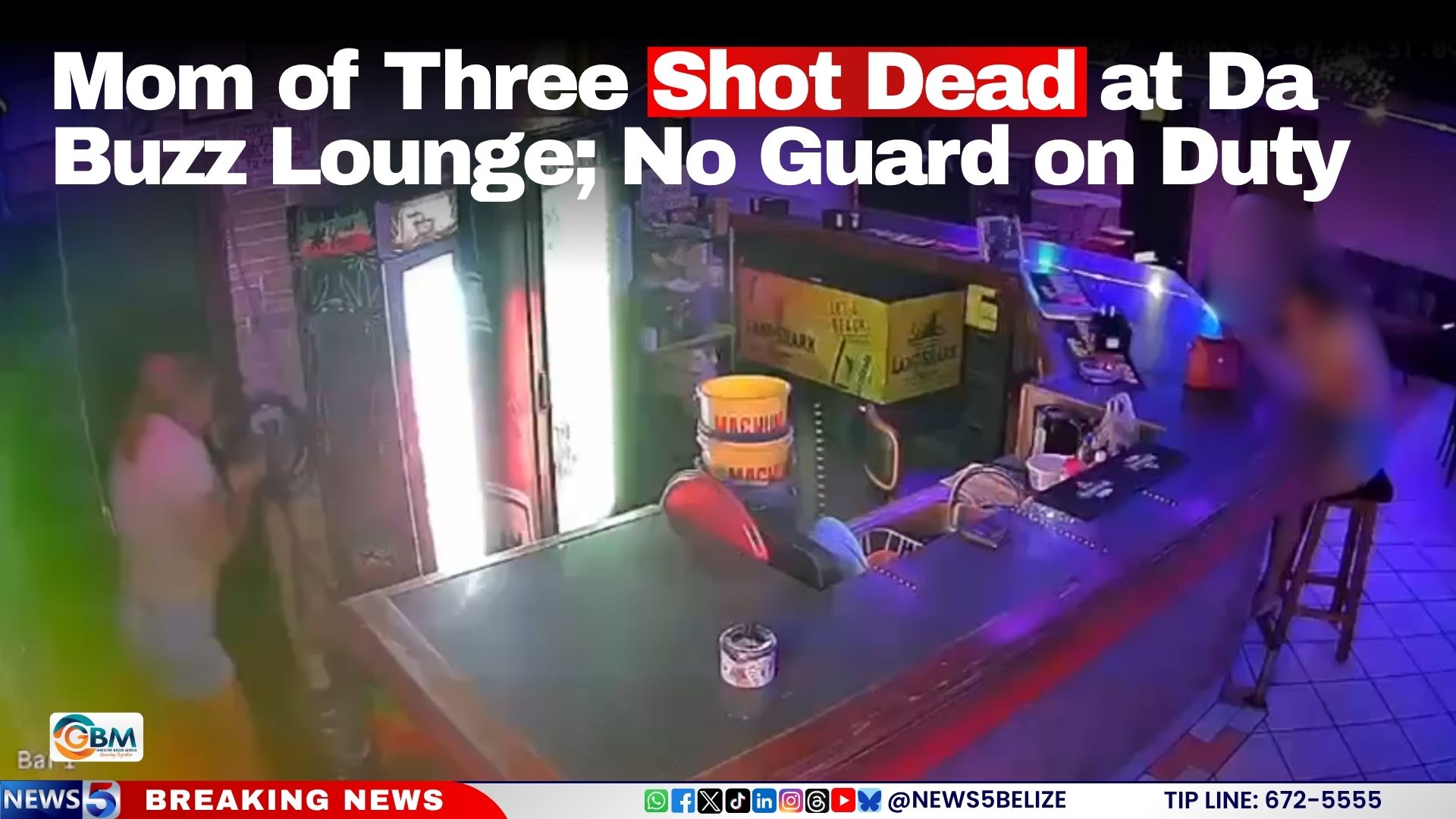
    A shocking act of violence has left a community in Belize reeling after a 34-year-old mother of three was gunned down in a public lounge Thursday evening, in an attack that also wounded two other employees. Authorities confirmed that the incident unfolded at Da Buzz Lounge, located along the Phillip Goldson Highway in Ladyville, at a moment when the venue’s scheduled security guard had not yet arrived for his shift.

    Surveillance camera footage from the venue captured the full sequence of the attack, which began at approximately 6:30 p.m. The footage shows Salma Raquel Orellana Funez, the victim, at the venue’s bar when a male suspect entered the building. The suspect, described by witnesses as wearing a white shirt, black pants and a white bucket cap, approached Funez directly. The two exchanged a few brief words before the suspect drew a hidden firearm and opened fire on Funez, killing her almost instantly. According to official police reports, after shooting Funez, the gunman turned his weapon on two other female staff members working inside the lounge, firing multiple rounds in their direction before fleeing the scene.

    The two injured workers have been identified as 26-year-old waitress Shayanta Williams and 32-year-old bartender Cardova Neal. Both women were rushed to the local hospital for emergency treatment for their gunshot wounds. Police have since confirmed that as of the latest update, both remain hospitalized but are listed in stable condition, with their injuries not considered life-threatening.

    Funez was transported to the Karl Heusner Memorial Hospital (KHMH) following the attack, but medical personnel were unable to save her. She was officially pronounced dead at 9:16 p.m. that same evening, leaving behind three young children.

    In a public statement released to social media and local news outlets on Friday morning, leadership at Da Buzz Lounge confirmed the critical security gap that preceded the attack: the contracted security officer assigned to the venue that day had not yet arrived for his shift when the gunman entered. The management also paid tribute to their fallen employee, describing Funez as far more than a staff member. “She was a cherished member of our Da Buzz family,” the statement read, adding that the entire team was reeling from the unexpected violence. “The events that unfolded were completely unexpected and have left all of us devastated and searching for understanding in the face of such heartbreaking violence,” the statement continued.

    In the wake of the tragedy, Da Buzz Lounge has announced it will remain closed for the rest of the weekend to allow staff to process the loss and cooperate with the ongoing investigation. As of the latest update, the suspect remains at large, with no arrests made in connection with the shooting. The case is currently being handled by Detective Constable Nestor Cardenas, who is leading the police investigation into the attack.

  • Farmer, 61, fined for marijuana

    Farmer, 61, fined for marijuana

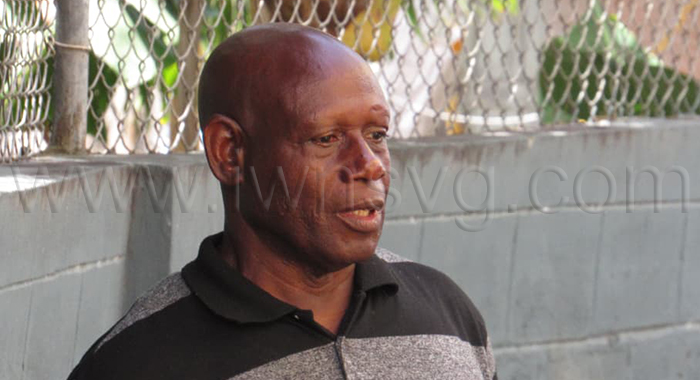
    A 61-year-old small-scale farmer from Barrouallie has avoided jail time after pleading guilty to a marijuana possession charge in a St. Vincent court, receiving a steep fine instead of a custodial sentence. Andy Reece admitted to the charge of possession with intent to supply a controlled substance before Chief Magistrate Colin John at the Serious Offences Court this Thursday. The case traces back to April 21, when police at the Barrouallie Station received an anonymous tip about Reece’s illicit activity, prompting officers to secure a formal search warrant for his residence.

    When law enforcement officers arrived at the property, they were greeted by Doritha Solomon, who informed the team that Reece was not present at the time. After officers disclosed that they were conducting a search for illegal firearms, ammunition, and controlled drugs, Solomon granted the team permission to proceed with the search, noting that only she and her granddaughter were staying in the home at that point.

    During a search of Reece’s personal bedroom, conducted with Solomon present as a witness, officers first discovered a plastic bag holding suspected cannabis hidden inside a storage container. A further search of the space turned up additional amounts of the drug, stashed inside a tub and bucket tucked under the bed. When confronted with the illicit find, Solomon immediately denied any ownership of the drugs, leading officers to take her into custody on suspicion of drug possession and transport both her and the seized evidence to the Barrouallie Police Station. The total weight of the confiscated marijuana was recorded at 8,034 grammes, equal to roughly 17.7 pounds.

    Roughly an hour and 20 minutes after the search concluded, Reece voluntarily presented himself at the police station and claimed full responsibility for the seized cannabis. Police followed formal procedure, cautioning Reece before conducting an interview in the presence of Justice of the Peace Nash. In his official caution statement, Reece claimed the drugs were for his own personal use rather than for distribution to other buyers, saying: “The drug belongs to me. Me just get it to smoke, not to sell.”

    Grant Connell, Reece’s legal representative, presented several mitigating arguments to the court ahead of sentencing. Connell highlighted that this marked Reece’s first criminal conviction, emphasized that his client voluntarily came forward to take responsibility for the drugs, and entered a guilty plea at the earliest possible opportunity. The attorney also told the court that Reece had relied on illegal marijuana cultivation to support his family financially for the past 40 years, and formally requested that the court issue a non-custodial sentence rather than prison time.

    After weighing both the mitigating circumstances presented by the defense and the aggravating factors of the case, the court initially calculated a total fine of EC$3,320. When Connell informed the judge that Reece only had EC$3,000 available to pay immediately, Chief Magistrate John adjusted the fine to EC$3,000, ordering that the sum be paid right away. The sentence also includes a backup penalty of one year in prison if the fine is not paid. Beyond the fine, the magistrate ordered that the storage containers seized in the search be returned, and that the entire cache of marijuana be destroyed.

  • Guyana-Venezuela boundary awarded unanimously

    Guyana-Venezuela boundary awarded unanimously

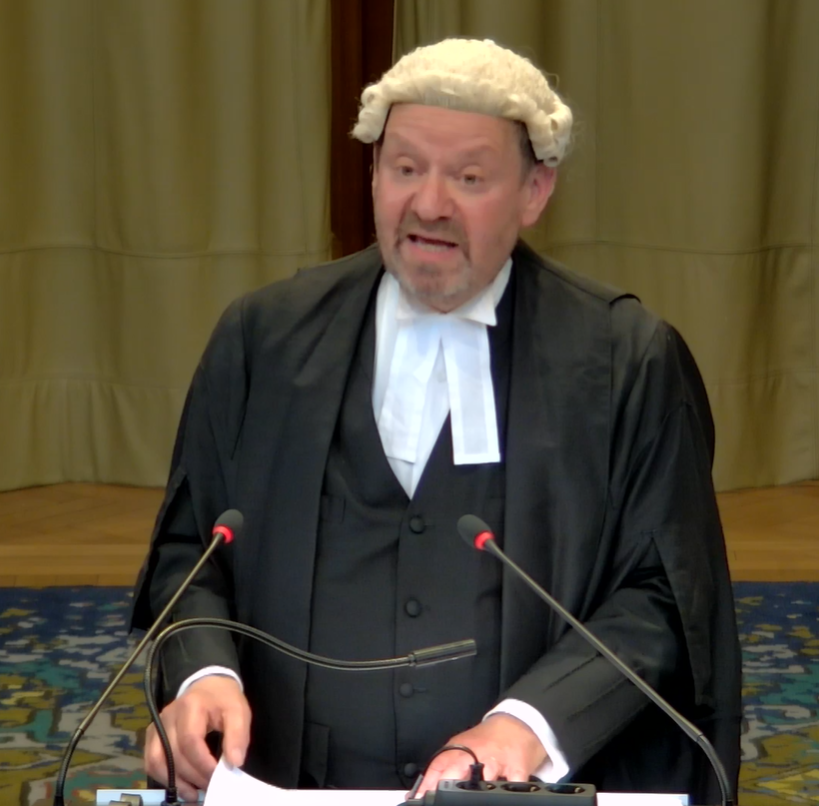
    On Friday, May 8, 2026, legal representatives for Guyana presented the country’s formal defense of the 1899 Arbitral Tribunal border award before the International Court of Justice (ICJ), the United Nations’ highest judicial body based in The Hague, pushing back against Venezuela’s claims that the historic ruling was illegitimate.

    The decades-long territorial dispute between Guyana and Venezuela centers on the 1899 award, which established the land boundary between the two nations and granted what is now Guyana control over the disputed Essequibo region. Venezuela has long challenged the ruling, arguing that tribunal president Friedrich Martens colluded with British representatives to secure an outcome that favored the United Kingdom, then the colonial ruler of British Guiana. In the current round of proceedings, Caracas has released new documentary excerpts that it claims back up these allegations of foul play.

    Presenting Guyana’s second round of oral arguments, international law scholar Alain Pelet addressed Venezuela’s core criticism that the 1899 tribunal failed to include formal reasoning for its final decision. Pelet explained that while including explanatory reasoning for arbitral rulings is standard today, such a requirement was not mandatory in 1899. He confirmed that, with only one minor exception, all arbitrators unanimously signed the final award text after Martens led closed-door negotiations to build consensus. Pelet also referenced the tribunal’s original mandate, which tasked the panel with determining which territories lawfully belonged to the Netherlands and Spain respectively at the time Great Britain acquired the colony of British Guiana.

    Fellow legal representative Philippe Sands further refuted Venezuela’s claims of coercion and improper influence by Martens. Sands emphasized that there is no credible evidence to back up assertions that Martens used threats or overstepped his authority to force an outcome favorable to Britain. Even when taking at face value the controversial Mallet Prevost memorandum – the primary document Venezuela relies on to back its collusion claims – Sands noted the text only describes Martens’ efforts to encourage arbitrators to reach a unified ruling, warning that a split majority decision might be less favorable to all parties. He added that Venezuela publicly accepted the 1899 award for more than 60 years, and that Martens’ push for consensus was an act of pragmatic wisdom: had arbitrators failed to reach a unified agreement, Sands argued, Great Britain would have likely laid claim to even more territory, an outcome Martens sought to avoid.

    Sands accused Venezuela of leveraging the decades-old memorandum to stoke anti-colonial sentiment for modern political gain. He issued a stark warning about the global ramifications if the ICJ rules in Venezuela’s favor and invalidates the 1899 award and the 1905 follow-up treaty. Such a ruling, he argued, would not only put Guyana at risk of domination by its far larger neighbor, but would also set a dangerous precedent that could open the door to challenges for every colonial-era border settlement and arbitral award around the world. This outcome, Sands warned, would rekindle widespread territorial instability and erase the long-standing international norm that decades-old boundary settlements are final and binding.

    Completing Guyana’s arguments, professor Nilüfer Oral added that historical evidence confirms Great Britain strictly abided by the 1899 boundary for the entire colonial period, never attempting to cross the line or seize additional territory. In fact, Oral noted, the award achieved one of Venezuela’s core original goals: it permanently halted the westward expansion of British settlement into territory claimed by Caracas.

    The case was originally brought to the ICJ by Guyana eight years ago. Guyana’s Ministry of Foreign Affairs confirmed last Thursday that the court is expected to issue its final ruling by the end of 2026, though anonymous diplomatic sources suggest the decision could be delayed until early 2027.

  • DAA confirms nominations ahead of May 23 elections as executive process moves forwards

    DAA confirms nominations ahead of May 23 elections as executive process moves forwards

    The leadership transition process for the Dominica Athletics Association (DAA) is progressing steadily, with returning officer Tania Burnett completing the verification of all executive candidate nominations ahead of the body’s upcoming Annual General Meeting.

    By the 5:00 PM deadline on Wednesday, May 6, 2026, all submitted nominations for DAA’s executive council positions had undergone thorough review, and every candidate that made the final slate met all of the association’s eligibility requirements. The full list of validated candidates was officially announced via a DAA press statement.

    Brendan Williams is the sole nominee for the presidency, while Walson Pacquette has been put forward for vice president. Phillip White is nominated to serve as secretary general, with Felicien Antoine standing for assistant secretary/treasurer, Jermasha Mellow for treasurer, and Judy Larocque for public relations officer.

    This full slate of executive candidates will face formal confirmation through the scheduled election process, which will be held during the DAA Annual General Meeting on Saturday, May 23, 2026. The gathering is set to kick off at 10:00 AM local time at the Dominica Olympic Committee Conference Room.

    However, the DAA has clarified that not all leadership positions within the association will be finalized during the May 23 AGM. In alignment with Section 14.1 of the DAA Constitution, four specific representative roles – School Representative, Club Representative, Male Athlete Representative, and Female Athlete Representative – will not be filled at the annual meeting.

    Instead, election for these grassroots representative positions will be conducted at a Special General Meeting, which is mandated to convene within four weeks after the AGM concludes. The association noted that further logistical details, including the date, time, and venue for the Special General Meeting, will be released to members and the public in the coming weeks after the AGM is held.