作者: admin

  • PE teachers get coaching boost

    PE teachers get coaching boost

    A new cohort of 32 physical education teachers and coaches has completed the regionally focused Caribbean Coaching and Certification Program, emerging with enhanced skills and credentials to advance athletic development across Barbados and the broader Caribbean. The official graduation ceremony was held Tuesday at the headquarters of the Barbados Olympic Association (BOA), where leaders from both the BOA and partner institution Erdiston Teacher’s Training College celebrated the graduates’ achievement and outlined the far-reaching impact of their work.

    BOA President Sandra Osbourne opened the formal proceedings by extending gratitude to Erdiston Teacher’s Training College for its collaborative partnership, emphasizing the shared mission of nurturing the next generation of Caribbean youth. Osbourne framed the partnership and the program itself as a living embodiment of core Olympian principles, highlighting the inherently symbiotic relationship between sports and education. “Olympism is far more than competitive sport—it is a philosophy of life that blends athletic practice with culture and learning,” Osbourne explained. “Our work centers on leveraging sport as a tool to advance the harmonious, holistic development of all people, aligned with that foundational philosophy.”

    Outlining the growing momentum of national and regional coaching certification efforts in Barbados, Osbourne shared that this group of 32 (comprising 22 male and 10 female education professionals) marks what organizers hope will be the first of many cohorts drawn from the country’s teaching workforce. The graduation follows closely on the completion of a larger group of 120 coaches who graduated one month prior through a combined initiative of the National Coaching Certification Program and this regional Caribbean-focused effort.

    Dr. Colin Cumberbatch, Principal of Erdiston Teacher’s Training College, called the milestone a source of great pride for both the institution and the Caribbean sports community. Addressing the graduates directly, Cumberbatch noted that their newly earned certification is a public testament to their dedication, self-discipline, and drive to grow into high-impact physical educators that shape young lives. He stressed that the responsibility of today’s coaches and PE teachers extends far beyond teaching athletic skills: “You serve as the guardians of fair play, clean sport, and safe, inclusive environments free from harm or abuse. This role cannot be overvalued in our current sporting landscape.”

    Cumberbatch urged graduates to view their certification not as a final achievement, but as a foundational stepping stone to transformative work across every sector of sports. Whether graduates go on to work in school systems, elite athletic programs, local community outreach, or regional and international competitive circuits, he said their impact will depend not just on the knowledge they gained, but on their integrity, commitment, and willingness to share what they have learned with others.

    Speaking on behalf of the entire graduating cohort, Renaldo Gilkes reflected that the program offered a transformative, eye-opening learning experience that challenged his existing approaches to coaching. Echoing a quote from American industrialist Henry Ford, Gilkes noted that growth depends on continuous learning: anyone who stops learning, whether they are 20 or 80 years old, is stagnant, while those who keep learning remain engaged and youthful. Unlike the sport-specific training he had previously completed for his focus area of football, Gilkes explained that the Caribbean Coaching Certification Program provided a broad, cross-cutting foundation that applies to all athletic disciplines.

    Gilkes also shared the cohort’s collective commitment to shifting outdated public perceptions of physical education, which he said is still often sidelined as a secondary priority in many Caribbean communities. “We are committed to changing that narrative,” he said. “Physical education will be recognized as the beacon it is: a driver of educational transformation and social advancement across our region.” Closing his remarks, Gilkes cited an ancient Chinese proverb to underscore the long-term impact of the work: short-term planning yields short-term gains, but investing in education creates lasting, generational change that benefits communities for a lifetime.

  • OnlyFans tracker estimates Saint Lucians spent $450,000 on platform in 2025

    OnlyFans tracker estimates Saint Lucians spent $450,000 on platform in 2025

    A new annual report from independent adult content platform tracker OnlyGuider has revealed shifting consumer habits in the Caribbean, with growing demand for paid digital adult content reflected in rising subscription spending across the region, including a steady year-over-year increase in Saint Lucia.

    The *OnlyFans Wrapped 2025* report, which analyzes spending patterns through data collected from OnlyFans affiliate networks, estimates that users in Saint Lucia spent approximately $166,000 USD, equal to just over EC$450,000, on the platform in 2024. OnlyGuider categorizes Saint Lucia alongside all other North and South American and Caribbean territories in its Americas regional ranking.

    When adjusted for population size, Saint Lucia lands in the middle of regional and Caribbean rankings. It placed 20th out of all measured countries and territories in the Americas on per 10,000 people spending, with an estimated $9,224 USD per 10,000 residents. Among 14 ranked Caribbean nations, the island held the 8th position, putting it firmly in the mid-range of regional per capita spending.

    Barbados took the top spot for per capita spending in the region, recording an estimated $20,082.95 USD per 10,000 people for a total annual spend of roughly $560,000 USD. Saint Kitts and Nevis followed closely behind with a per 10,000 person spending figure of $19,390.44 USD. Antigua and Barbuda ranked third among the region’s highest per capita spenders at $14,246.03 USD, with Trinidad and Tobago just a short distance away at $11,218.75 USD per 10,000 people.

    While per capita rankings point to small island nations leading in per-person spending, Jamaica far outpaced all other English-speaking Caribbean countries in total annual spending, with an estimated total spend of $2.9 million USD on the platform.

    The report also highlights a dramatic acceleration of demand in several smaller Caribbean states. Dominica recorded the steepest year-over-year growth in total spending, with an increase of more than 254% compared to 2023. Grenada followed with a 194% annual jump in spending, while Saint Lucia saw a more modest but still steady 7.31% year-over-year rise. These double- and triple-digit growth figures point to a rapidly expanding consumer base for paid digital adult content across smaller island economies in the region.

    OnlyGuider, which operates as a dedicated search engine tracking activity across adult content platforms, emphasizes that the published estimates should be interpreted with caution. The figures are not official audited revenue data from OnlyFans itself, and are instead derived from aggregated data collected through the platform’s affiliate network systems.

  • Stremming Hormuz: Zeelieden vast in een uitzichtloze situatie

    Stremming Hormuz: Zeelieden vast in een uitzichtloze situatie

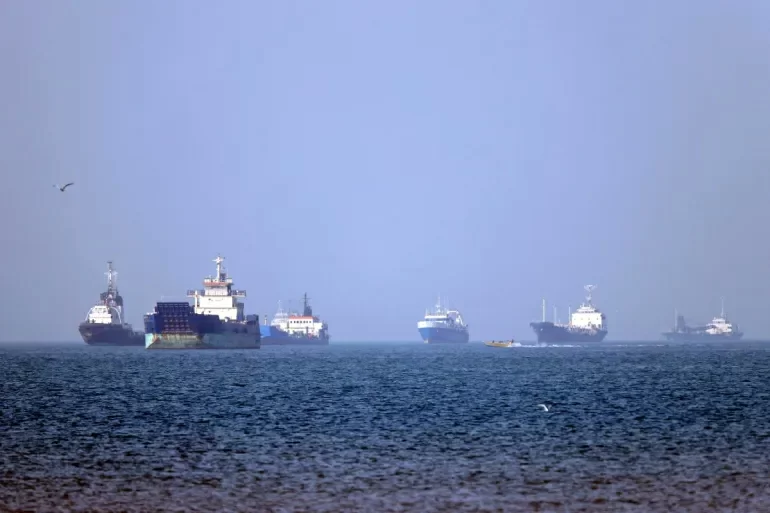
    Nearly 10 weeks have passed since Indian seafarer Anish found himself confined to a docked vessel in an Iranian port, a random twist of fate that turned him into an unintended eyewitness to the escalating open conflict between Iran and the United States. Arriving just days before former U.S. President Donald Trump launched Operation Epic Fury on February 28, Anish and his crew have been trapped in the high-risk waters of the Strait of Hormuz ever since.

    “We experience everything here firsthand: the war, the flying rockets,” Anish shared, speaking under a pseudonym to protect his safety. “Our minds are completely frayed by the constant uncertainty.”

    While a small number of his fellow crew members managed to coordinate an overland escape back to their home countries via the 44-kilometer land border between Iran and Armenia, hundreds like Anish remain stranded. The biggest barrier holding them back is unpaid wages: issues with corrupt Indian intermediaries that manage their salaries, paired with Iranian officials refusing to release the necessary funds for border crossing, have left them with no means to leave.

    Anish survives on simple, repetitive meals of potatoes, onions, tomatoes and flatbread. He has received reports that other stranded vessels in the area are already running critically low on food and clean drinking water.

    Anish’s ordeal is far from an isolated case. International maritime organizations estimate that roughly 20,000 seafarers have been trapped globally since Iran effectively closed the Strait of Hormuz in response to coordinated U.S. and Israeli strikes on Iranian territory. Before the outbreak of active conflict, the strategic waterway was one of the world’s most critical commercial shipping arteries, carrying roughly one-fifth of the world’s total oil and gas supplies, and one-third of global seaborne fertilizer trade.

    Though a fragile ceasefire was announced on April 7, repeated attacks in and around the strait have kept commercial shipping traffic at a near-complete standstill. The U.S. Navy recently announced it has intercepted and responded to multiple attacks on its vessels from Iranian missiles, drones and small fast-attack craft. For its part, Iran says its actions are a defensive response to U.S. strikes on an oil tanker in its territorial waters, and accuses Washington of violating the fragile ceasefire by carrying out bombings on civilian infrastructure.

    In a contradictory move, Iran has offered safe passage to commercial vessels in exchange for payment, but still carries out intermittent strikes on merchant shipping. Since mid-April, the U.S. has further tightened its blockade on Iranian ports, designed to disrupt Iran’s oil exports and cut off its access to foreign currency.

    Maritime experts warn that attacks on civilian vessels are growing more frequent, putting civilian crew members in extreme danger. The United Nations estimates that at least 10 seafarers have been killed since the conflict began; Iranian labor unions report that 44 seafarers and port workers have died within Iranian territory alone.

    For trapped crews, daily life is defined by unrelenting fear. Stephen Cotton, spokesperson for the International Transport Workers’ Federation (ITF), describes the situation as a “constant heightened state of terror.”

    “Military units board civilian ships like it’s the 17th century,” Cotton said. “But these are just ordinary working people just trying to do their jobs and get home to their families.”

    The ITF and other maritime advocacy groups draw a clear divide between large international shipping firms, which typically provide stranded crews with hazard pay and emergency support, and smaller, unregulated operators that often ignore international labor rules. Many small operators leave crews without access to basic supplies and cut off access to earned wages.

    The crisis is compounded by the fact that most foreign seafarers working in Iranian ports are hired through unlicensed intermediaries that do not meet international labor standards. While international law caps consecutive service on a vessel at 12 months, the ongoing closure of the strait has made repatriation impossible for thousands, forcing them to extend their tours indefinitely.

    John Bradford, a former U.S. Navy officer and maritime security analyst, highlighted the far-reaching social toll of the crisis. “Vessels cannot sail, repatriation flights are completely disrupted,” Bradford explained. “Many seafarers are forced to stay far longer than their contracts required, thousands of miles from their families, in an environment that grows more stressful by the day.”

    The mental health of trapped seafarers has suffered dramatically as a result. Steven Jones, founder of the Seafarer Happiness Index, reports that overall seafarer well-being has dropped by roughly 5% since the outbreak of the conflict. Trapped crews regularly report seeing drones and missiles flying near their vessels, and live in constant fear of a direct attack.

    “One captain told me he had to brief his entire crew on how to evacuate and where to jump overboard if the ship came under attack,” Jones said.

    Despite a U.S. announcement of a planned initiative to escort stranded vessels out of the strait, the program was suspended less than 48 hours after it was announced to make space for ongoing peace negotiations.

    Even if the strait were fully reopened tomorrow, global trade would take weeks to return to pre-conflict levels. Damage to port infrastructure, overflowing storage facilities, and a massive backlog of exports have created logjams that will take months to resolve. Compounding these risks are naval mines laid by Iran in the strait’s waters, which have made any navigation extremely dangerous. U.S. maritime experts say Iran deployed large numbers of mines but has failed to keep accurate records of their locations, so clearing the waterway could take anywhere from weeks to months.

    The International Maritime Organization is currently developing an emergency evacuation plan for stranded crews, but emphasizes that all conflict parties must halt attacks to make large-scale evacuation possible. Beyond the physical danger of being trapped in a conflict zone, seafarers also face the crippling uncertainty of not knowing when they will receive their earned pay. Anish has now waited nine months for his salary, and has no guarantee he will ever receive the money he is owed. His current contract is set to expire on May 20, but he has no information about whether he will be paid after that date.

    “Maybe I’ll get my salary then, maybe I won’t,” Anish said.

  • Construction Worker Murdered in Belize City

    Construction Worker Murdered in Belize City

    Belize City is reeling from two back-to-back fatal shootings that occurred within a two-hour window on the evening of May 8, 2026, leaving a construction worker and a bartender dead and putting fresh pressure on local law enforcement to curb violent crime in the urban center.

    The second and most recent attack claimed the life of 29-year-old Jamal Samuels, a local construction worker. According to initial reports from the Belize Police Department, Samuels was relaxing in an outdoor gathering with a group of other men at the address 24 Cet Site when the violence unfolded. A dark-colored vehicle pulled up abruptly in front of the residential yard, and three masked individuals clad entirely in dark clothing exited the car, opening fire on the group before making a quick getaway in the same vehicle.

    Samuels was hit multiple times by gunfire in the attack. Bystanders rushed the injured man to the country’s main public healthcare facility, Karl Heusner Memorial Hospital (KHMH), but medical teams were unable to save him. He was officially pronounced dead at the scene at 8:30 p.m. that same night. Following the shooting, Scenes of Crime Technician Medina attended to the Cet Site location, collecting critical forensic evidence including spent bullet casings and DNA samples from blood found at the scene to help investigators identify the perpetrators.

    This killing came less than two hours after another fatal shooting in a different part of the Belize District. Salma Raquel Orellana Funez, a bartender and mother of three, was gunned down at Da Buzz Lounge, an establishment located along the Phillip Goldson Highway. To date, law enforcement has not found any concrete evidence linking the two separate attacks, but on-the-ground sources in the community tell local media that an ongoing internal feud between factions in the Cet Site neighborhood may be the underlying motive for Samuels’ killing.

    As of Friday morning, no suspects have been taken into custody in connection with either shooting. The Belize Police Department has confirmed that it will share a full update on the ongoing investigations with local media outlets later in the day, as community leaders call for renewed action to address rising violent crime in the capital city.

  • US Awaits ‘Serious Offer’ From Iran as Fighting Continues

    US Awaits ‘Serious Offer’ From Iran as Fighting Continues

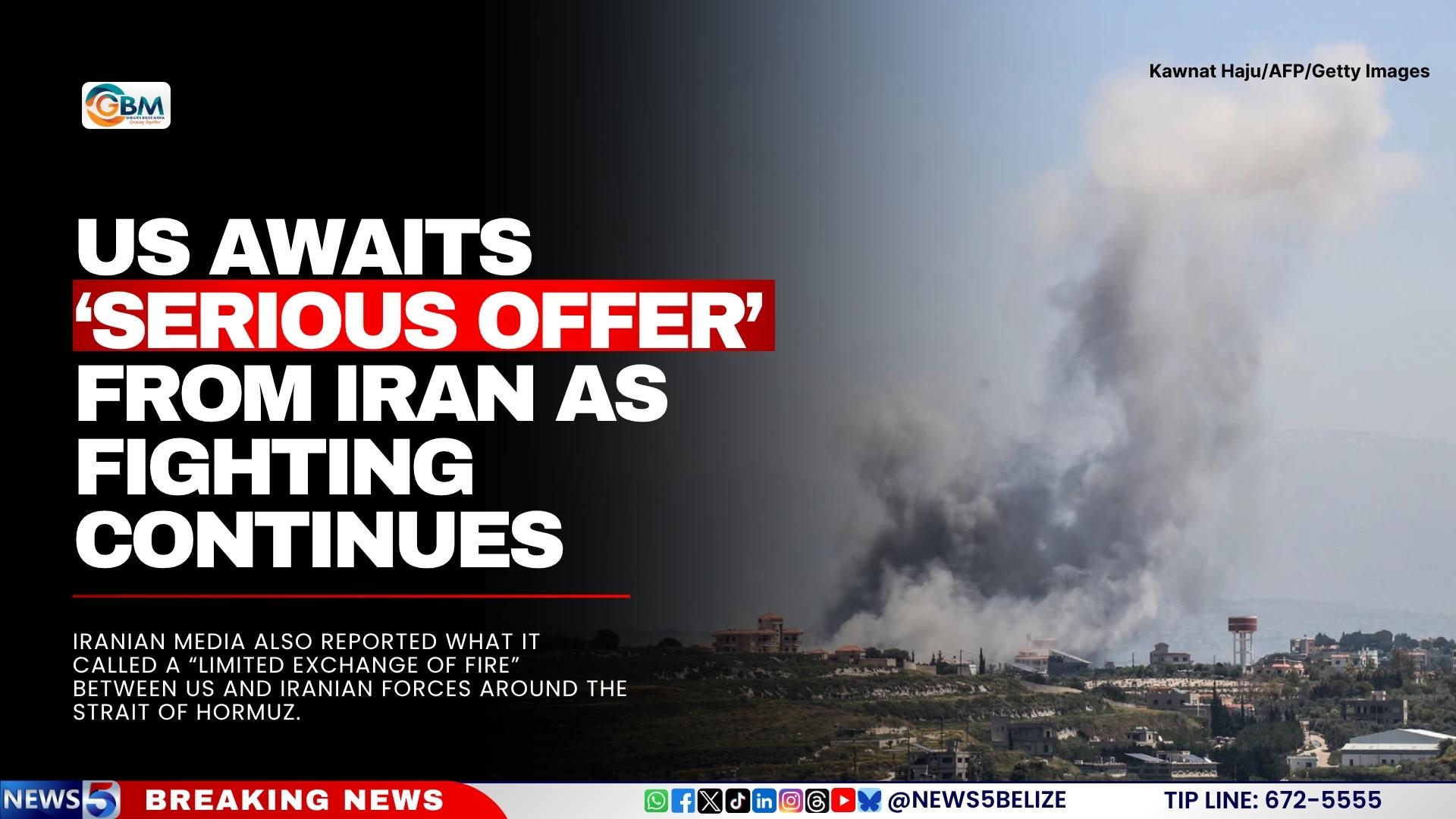
    As cross-border fire exchanges continue to roil the Strait of Hormuz and surrounding waters, the United States is waiting for a formal response from Tehran to a diplomatic proposal crafted to de-escalate the ongoing regional crisis, multiple US sources confirmed to CNN on May 8, 2026.

    US Secretary of State Marco Rubio stated Friday that Washington is pressing for what he called a “serious offer” from Iranian officials that would unlock tangible progress in negotiations aimed at ending the conflict. This push for diplomatic progress comes even as open fighting continues, contradicting claims from US President Donald Trump that a ceasefire between the two nations remains in place.

    Hours before the diplomatic push, US Central Command confirmed that American military forces intercepted and disabled two Iranian-flagged oil tankers that attempted to break a US naval blockade off the coast of the Gulf of Oman. According to US military statements, Navy fighter jets carried out precision airstrikes targeting the vessels’ smokestacks to disable their propulsion systems, successfully blocking the tankers from reaching Iranian port facilities. There has been no immediate report of crew casualties from the strikes.

    Tehran has already strongly condemned the interception, with state-run Iranian media acknowledging that a “limited exchange of fire” between US and Iranian forces played out across the Strait of Hormuz on Friday morning. Local witness accounts confirm sustained gunfire and loud explosions echoed across the waterway for multiple hours during the clash. Iranian officials have labeled the latest US military action a “reckless military adventure” that deliberately targets civilian maritime infrastructure and intentionally escalates tensions in the already volatile Persian Gulf region.

    Beyond the direct clashes between Washington and Tehran, the crisis is now spilling across the broader Middle East and pushing the region closer to a full-scale regional war. In the United Arab Emirates, local authorities confirmed three civilians were injured in a new wave of attacks linked to pro-Iranian militant groups, marking the first reported civilian casualties linked to the crisis outside the primary conflict zone in recent days.

    In southern Lebanon, the spillover has already turned deadly: Lebanese officials reported Friday that Israeli airstrikes on southern communities killed at least 10 people and destroyed large swathes of farmland and agricultural infrastructure, a critical source of livelihood for local residents. The Iran-backed militant group Hezbollah quickly claimed responsibility for multiple retaliatory strikes targeting Israeli military positions along the shared border, amplifying fears that the confrontation between the US and Iran will draw in more regional powers and expand into a wider conflict.

    The instability has also already begun to ripple through global markets, with economists warning that persistent disruptions to shipping traffic through the Strait of Hormuz — a chokepoint through which roughly 20% of the world’s daily oil supplies pass — are driving up global energy and fuel prices. Higher energy costs are in turn pushing up prices for basic consumer goods across dozens of developed and developing economies, placing new financial strain on households already grappling with post-pandemic cost-of-living challenges.

    Right now, the eyes of the international community remain fixed on Tehran, waiting to see whether the Iranian government will deliver the substantive response Washington has demanded. All sides are watching closely to see if diplomacy can reverse the current trajectory of escalating violence and head off a catastrophic regional war that would send shockwaves across the global economy.

  • SLFA launches U14 boys tournament

    SLFA launches U14 boys tournament

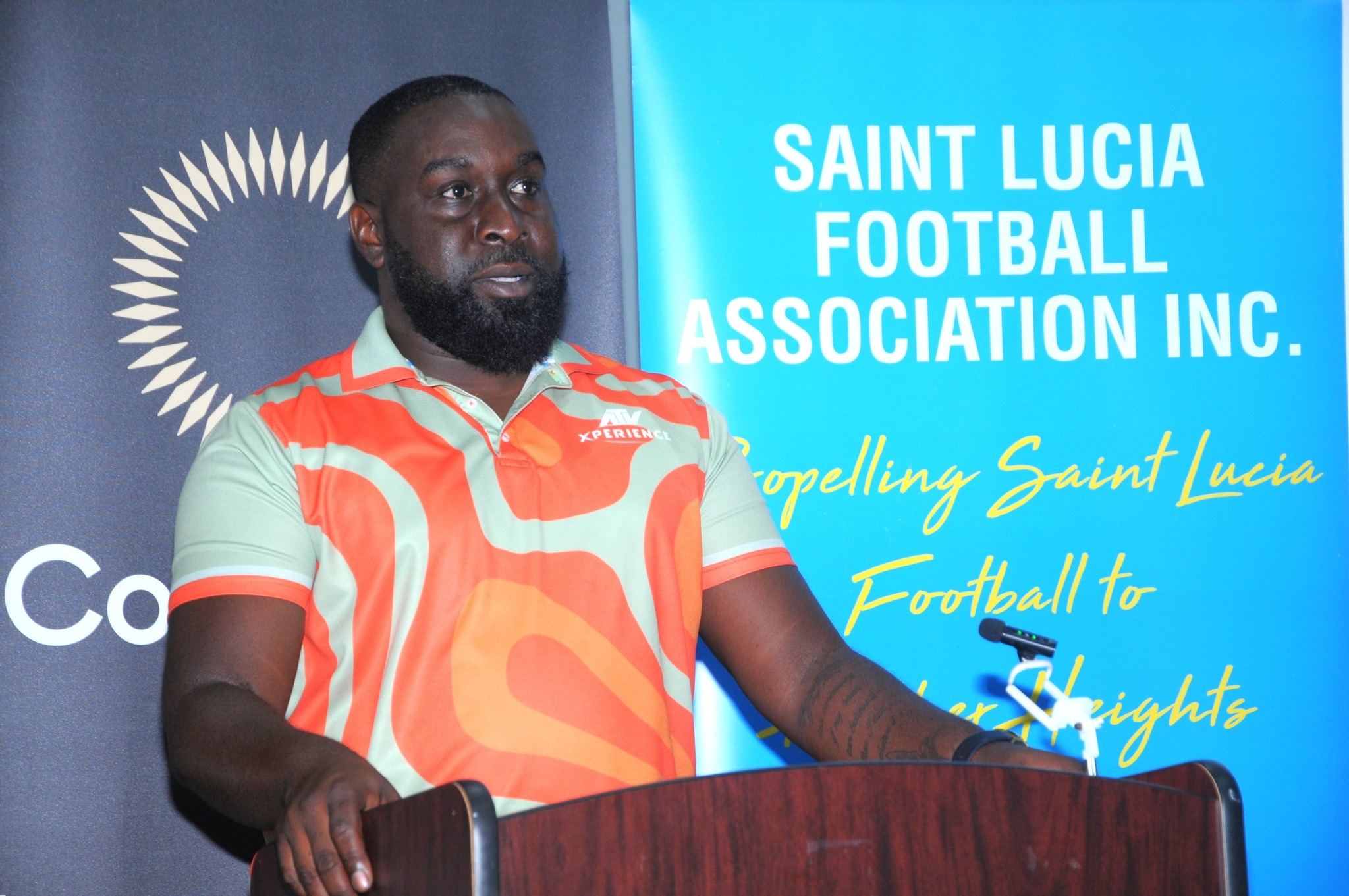
    Youth football development in Saint Lucia has taken a major step forward this week, as the Saint Lucia Football Association Inc. (SLFA) formally kicked off its new Under-14 Boys Tournament, a competition designed to unearth local talent and build a competitive national squad for the 2026 Caribbean Football Union (CFU) Under-14 Boys Challenge.

    The official launch event was held Tuesday at SLFA headquarters in La Clery, Castries, with play set to get underway on May 17 across two dedicated match venues. In total, more than 200 young male players from across the island will take part in the tournament, with all 19 of SLFA’s affiliate leagues confirming their participation. Over 130 total matches are scheduled throughout the competition, which will operate under a zonal round-robin structure for the group stage: 10 teams from the northern part of the island will compete at the Corinth Playing Field, while nine southern-based squads will play their matches at the Philip Marcellin Grounds.

    SLFA president Lyndon Cooper used the launch to frame the new tournament as a key pillar of the association’s long-term youth development strategy for both male and female players across all age groups. Currently, the association is already hosting an active Under-12 Boys competition, and the addition of the Under-14 tournament creates a structured, continuous development pathway for emerging young talent. “This isn’t just a one-off competition,” Cooper explained. “Our core goal is to identify standout players, transition graduates from the Under-12 division into the older age group, and build a deep talent pool that we can select our national Under-14 squad from.”

    Cooper went on to note that the 2026 CFU Under-14 Challenge, which will be hosted by the Guyana Football Federation this coming July, represents a transformative opportunity for participating players and coaching staff alike to gain valuable international experience. Beyond the 2026 regional tournament, the SLFA has already mapped out development plans for future age-group competitions, with preparations underway for an Under-15 regional event in 2027 and an Under-17 tournament in 2028. To ensure sustained improvement in youth player performance, Cooper announced a new certification requirement that will take effect in 2027: all coaches leading Under-14, Under-17, and Under-20 teams will be required to hold an official SLFA coaching certification, a rule designed to lift overall coaching standards across the island.

    Two former national players, well-known Saint Lucia football figures Earl “Ball Hog” Jean and Stuart Charles-Fevrier, were in attendance at the launch, and have been tapped to serve as scouts for the national Under-14 squad, assessing player performance throughout the domestic tournament. The competition also secured backing from two key local corporate sponsors: ATV Experience, represented at the event by Jamal Cyril, and Baywalk Shopping Mall, represented by Tracy Ernest Eugene.

    Cyril commended the SLFA for its consistent investment in grassroots youth football, noting that structured domestic competition is the first critical step for young players aiming to build professional careers in the sport. Currently, the 2026 iteration of the SLFA Under-12 Boys Tournament is ongoing at the SLFA Technical Centre in Grande Riviere, Dennery, where defending champions Mabouya Valley are chasing a third consecutive consecutive final appearance. “Football is the world’s biggest sport, and it can open doors to lifelong careers for young people,” Cyril said. “This tournament gives them that first chance to showcase their potential.”

    Eugene addressed a common misconception about corporate support for local sports in Saint Lucia, noting that private sector partners are eager to back initiatives that deliver measurable development and progress. “Many people say corporate Saint Lucia doesn’t want to support sports, but that’s not the case,” she explained. “We just want to see consistent growth and tangible results. As the SLFA continues to deliver that development, we will continue to see more support from businesses across the island.” She added that future progress in youth football development will unlock additional financial backing from sponsors including Baywalk Shopping Mall and ATV Experience.

  • Guyana appeals to ICJ for “clear”, final, binding judgement to avoid Venezuela from continuing Essequibo claim

    Guyana appeals to ICJ for “clear”, final, binding judgement to avoid Venezuela from continuing Essequibo claim

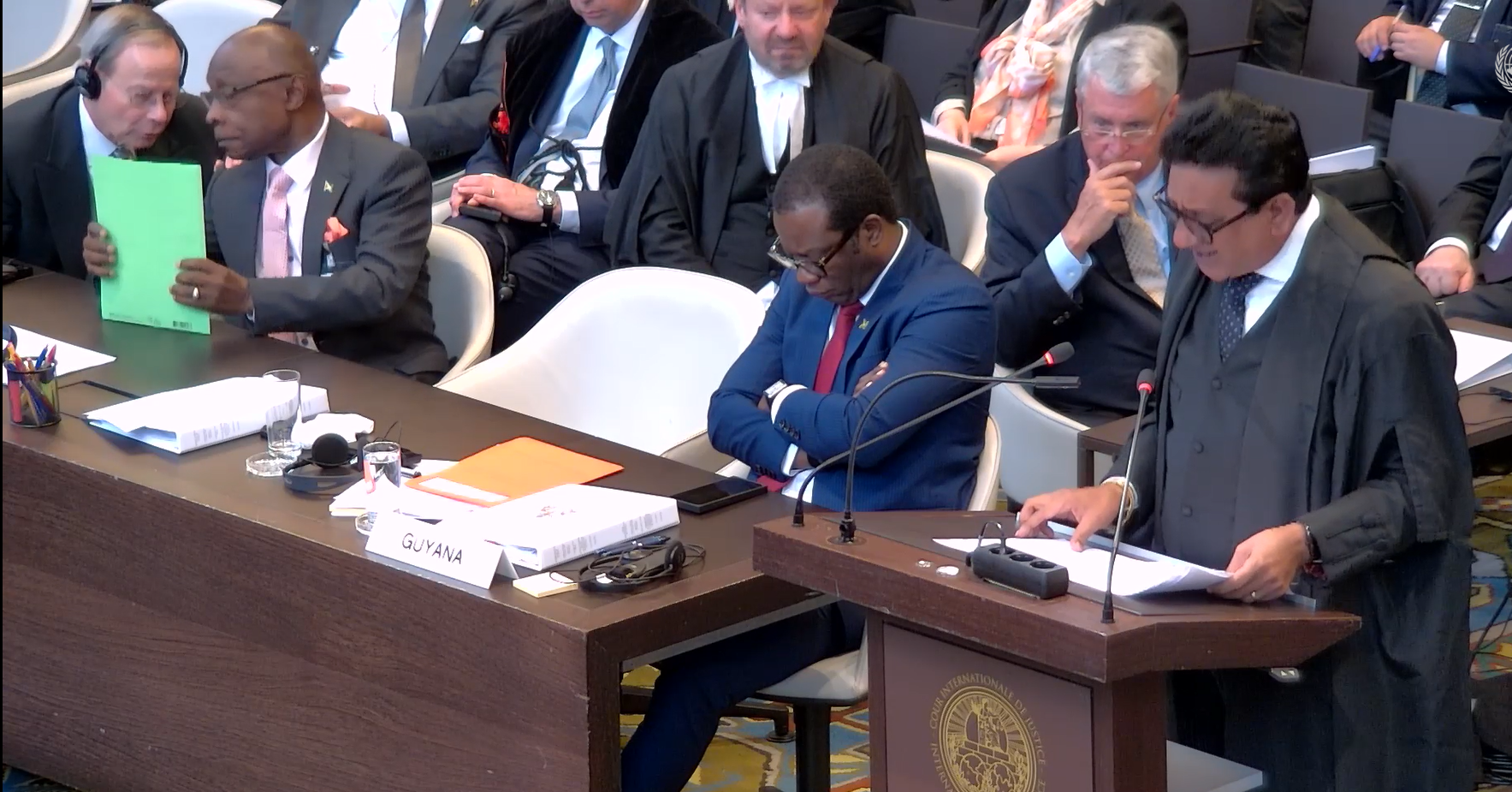
    On Friday, 8 May 2026, Guyana presented its penultimate and closing oral arguments before the United Nations’ highest judicial body, the International Court of Justice (ICJ) based in The Hague, Netherlands, pushing for a definitive resolution to its decades-long territorial dispute with neighboring Venezuela.

    Guyanese officials expressed cautious optimism that the ICJ will formally uphold the legal validity of the 1899 Arbitral Award, the document that originally established the full land boundary between the two South American nations. Attorney General Anil Nandlall emphasized that any vague or qualified ruling from the court would create an opening for Venezuela to perpetuate its territorial claims against large portions of Guyana’s sovereign land.

    “It is essential that the court’s judgment directly, explicitly and unambiguously affirms the validity of the 1899 award in its integrity and the boundary which it established, and elucidates the ineluctable legal consequences which flow therefrom,” Nandlall told the court. “Any ambiguity or qualification in the court’s judgment will inevitably be seized upon by Venezuela as a basis for continuing to lay vast swaths of Guyana’s sovereign territory.”

    Carl Greenidge, Guyana’s designated agent to the ICJ, wrapped up the country’s oral arguments by laying out a series of specific demands for the court’s final ruling. Most notably, Greenidge called on the ICJ to order Venezuela to withdraw its military forces from Ankoko Island, a territory legally recognized as part of Guyana under the 1899 award that has been occupied by Venezuelan troops since 1966.

    Greenidge asked the court to issue a valid, binding judgment confirming that the boundary set out in the 1899 award and a 1905 supplementary agreement stands as the official international border between the two countries. Under this framework, he added, the court should explicitly confirm Guyana’s full sovereignty over all territory falling on its side of the border, and formally obligate Venezuela to respect that sovereignty and territorial integrity.

    Citing Venezuela’s repeated failure to comply with two previous ICJ provisional orders issued on 1 December 2023 and 1 May 2025, Greenidge pressed the court to include mandatory enforcement measures in its final ruling. Beyond the withdrawal from Ankoko Island, he asked the ICJ to require Venezuela to abandon all claims of sovereignty over any Guyanese territory as defined by the 1899 award, and to refrain from any actions that violate Guyana’s sovereign rights.

    Greenidge reiterated Guyana’s legal demand that Venezuela revoke all domestic measures that assert control over claimed Guyanese territory, including national laws, executive decrees, and administrative actions that purport to annex or administer land under Guyanese sovereignty. Specifically, he called for the repeal of Venezuelan legislation that purports to absorb Guyana’s Essequibo Region into Venezuelan territory and extend Venezuelan legislative, executive, and judicial jurisdiction over the area.

    Greenidge also demanded that Venezuela dissolve all state entities created to exercise control over claimed Guyanese territory, most prominently the Venezuelan High Commission for the Defense of Guayana-Esequiba, along with all related executive, legislative, and administrative agencies. He added that Venezuela should be ordered to end social welfare programs and ongoing population censuses targeting the Essequibo region, as well as halt all military activities carried out to advance Venezuela’s territorial claims.

    In a final demand, Greenidge stated the court should require Venezuela to stop public claims and state educational curricula that frame the 1899 Arbitral Award as invalid or fraudulent, and that portray Venezuela as having been wrongfully deprived of the Essequibo Region. Venezuela would also be required to revise all official national maps that incorrectly depict any part of Guyana’s territory as Venezuelan territory, and remove all incorrect materials from public institutions, Greenidge said.

    Venezuela is scheduled to present its final oral arguments in the case next Monday, bringing the public phase of the historic proceeding to a close before the ICJ begins deliberations to issue its final binding ruling.

  • STATEMENT: The president of the Dominica Red Cross Society on World Red Cross and Red Crescent Day 2026

    STATEMENT: The president of the Dominica Red Cross Society on World Red Cross and Red Crescent Day 2026

    ROSEAU, DOMINICA – As the global community prepares to mark 2026 World Red Cross and Red Crescent Day, Reginald Winston, President of the Dominica Red Cross Society, has delivered a stirring call for collective solidarity rooted in the 2026 global theme “United in Humanity”, addressing rising division and attacks on humanitarian volunteers worldwide.\n\nIn his official statement marking the annual observance, Winston drew attention to a growing global crisis: the marginalization and violent targeting of people across divides, including the volunteer humanitarian workers who dedicate their time to serving public good. These harmful acts, he emphasized, deepen rifts within already fractured communities and put life-saving humanitarian work at greater risk for everyone involved.\n\nWinston stressed that the 2026 theme is far more than a symbolic slogan—it is a core conviction shaped by the founding fundamental principles of the International Red Cross and Red Crescent Movement. He offered a poignant reframing of the movement’s work: volunteers are not just detached service providers, but neighbors, friends, and family members to the communities they serve. Meanwhile, the people who rely on Red Cross support are not statistics or faceless victims, they are fellow human beings deserving of dignity. By centering shared humanity, Winston explained, the movement closes the artificial gap between those who give aid and those who need it, erasing the unhelpful divide of “us” and “them”.\n\nTo ground this vision in local action, Winston pointed to the Dominica Red Cross’s response to recent severe flooding across the island. Throughout the emergency response, the organization’s local volunteers put shared humanity into practice, embodying the close proximity to communities that has long been a defining strength of the Red Cross movement.\n\nWinston shared the firsthand testimony of a flood beneficiary from Dominica’s Kalinago territory, whose words capture the impact of the organization’s work. The woman recounted moments of overwhelming despair after the disaster, when she felt entirely invisible to the outside world. She and her family extended profound gratitude to the Dominica Red Cross, highlighting one volunteer in particular who extended extraordinary kindness: that volunteer recognized her humanity at a time she felt forgotten, bringing a comfort to her spirit that cannot be put into words.\n\n“We, the less privileged, or poor, or displaced, who are unable to help ourselves, who sit quietly and wait, are still there,” she said. Closing her message, she expressed hope that the Red Cross will remain a steadfast beacon of hope for every community across Dominica, particularly for those living in the island’s hardest-to-reach areas.\n\nReflecting on her testimony, Winston said her words say more than any organizational leader could. He closed by urging all Dominica Red Cross volunteers to continue demonstrating courage and radical humanity in their work, centering care for individual people and upholding the core principles of the movement through action. He emphasized that all volunteers share the profound privilege of serving their fellow human beings.\n\nFinally, Winston extended wishes of a happy World Red Cross and Red Crescent Day to all volunteers, supporters, and partners across the globe.

  • Opposition Senator Thame accuses gov’t of ‘autocratic tendencies’

    Opposition Senator Thame accuses gov’t of ‘autocratic tendencies’

    KINGSTON, Jamaica — On Friday, opposition Senator Dr. Maziki Thame launched a scathing attack against ruling Jamaica Labour Party government senators, accusing the administration of consistently embracing autocratic governing practices and systematically sidelining the fundamental rights of Jamaican citizens.

    Thame delivered her fiery remarks during parliamentary debate on the National Reconstruction and Resilience Authority (NaRRA) Bill, a piece of emergency recovery legislation that ultimately passed along strict party lines. The bill creates NaRRA, a centralized government body tasked with leading large-scale reconstruction efforts across the island after Hurricane Melissa caused an estimated $12.2 billion USD in damage last October.

    From the outset, civil society organizations, faith-based church groups, and the parliamentary opposition have pushed for explicit accountability and oversight mechanisms to be embedded in the legislation. Critics say the government has largely dismissed their repeated calls for amendments and failed to address key concerns raised in formal submissions.

    During her address, Thame warned that the government’s handling of the NaRRA Bill marks a dangerous break from the country’s constitutional principles of checks and balances. “The Government claims they consult, but there is no clear evidence they are actually listening to the Jamaican people on this bill,” she told parliament.

    She specifically called attention to a second joint submission from two prominent advocacy groups, Jamaicans for Justice (JFJ) and the Jamaica Environment Trust (JET), which confirmed that none of their core concerns had been resolved by the administration. Thame emphasized that opposition lawmakers in the House of Representatives have repeatedly flagged that the bill grants unprecedented, unchecked authority to the new reconstruction agency, concentrating power far beyond what is appropriate for a democratic government.

    “This approach to the NaRRA Bill is not an isolated incident—it is part of a broader pattern by this government to concentrate power in the executive branch and steer Jamaica toward autocratic rule,” Thame argued. She pointed to the expanded “super ministry” structure within the Office of the Prime Minister as one clear example of this power grab.

    She noted that these authoritarian tendencies have been visible from the prime minister’s early career, recalling the 2013 controversy when he required then-opposition senators to sign undated resignation letters as a condition of taking their seats. In 2015, the Supreme Court ultimately ruled that the prime minister’s demand was unconstitutional and legally void.

    “It is unacceptable that Jamaican citizens have repeatedly been forced to take the government to court to defend rights that should be automatically protected under our constitution,” Thame said. She reminded lawmakers of a string of recent court rulings that have struck down government legislation and actions as unconstitutional. Most notably, the 2019 National Identification System (NIDS) legislation was overturned after legal challenges proved it violated citizens’ right to privacy and other fundamental freedoms.

    Just this year, in 2025, the courts ruled that the government’s repeated use of national states of emergency (SOEs) between 2018 and 2023 was unconstitutional. Rather than accepting the ruling, the administration immediately announced plans to appeal the decision. Thame highlighted the human cost of the extended SOE policy, pointing to cases like that of Rushane Clarke, who was awarded millions in compensation after being held in lengthy detention without ever being formally charged.

    She also referenced the Supreme Court case brought by Everton Douglas and four other detainees, which found that their months-long detention without trial under a SOE was unlawful and unconstitutional, violating their right to liberty and the constitutional principle of separation of powers. Once again, Thame noted, the government appealed the ruling that vindicated the detainees’ rights. “What kind of government would appeal a ruling that upholds the basic constitutional rights of its own people?” Thame asked.

    She went on to criticize the prime minister’s own rhetoric, claiming he has repeatedly threatened Jamaican citizens with violent language, including warnings that critics would “meet your judge or your maker.” Thame added that the current authoritarian shift is also reflected in the sharp rise in police killings recorded starting in 2024, and the government’s response to a recent court ruling on mining rights in the Dry Harbour Mountain/Bengal region.

    In that case, the court ruled in favor of protecting communities’ right to a healthy environment, yet the government has again moved to appeal the decision. “What kind of government would appeal a ruling that defends the people’s right to a healthy environment?” Thame questioned.

    She closed by reaffirming that the joint submission from JET and JFJ details critical gaps in human rights protections, transparent governance, accountability, and rule of law safeguards that remain unaddressed in the final version of the NaRRA Bill.

  • Man City beat Brentford to close gap on leaders Arsenal

    Man City beat Brentford to close gap on leaders Arsenal

    MANCHESTER, United Kingdom – In a high-stakes Premier League clash at the Etihad Stadium on Saturday, Jeremy Doku delivered a match-winning performance that propelled Manchester City to a crucial 3-0 win over Brentford, keeping Pep Guardiola’s side’s faint title ambitions on track.

    For the opening 60 minutes of the fixture, Brentford’s organized defensive structure successfully shut down Manchester City’s attacking threats, leaving the reigning contenders struggling to carve out clear goal-scoring opportunities. The game nearly got off to a disastrous start for City when goalkeeper Gianluigi Donnarumma fumbled a long throw-in from Michael Kayode, only for a last-ditch clearance to prevent an own goal that would have put Brentford ahead. This sloppy mistake summed up City’s flat first-half display: Erling Haaland missed two golden close-range chances, first heading a Doku cross over the bar from just six yards out, then seeing a point-blank blast saved by Brentford keeper Caoimhin Kelleher, with Nathan Ake failing to convert the rebound. Tensions boiled over briefly when Bernardo Silva escaped with just a yellow card after lashing out at Brentford’s Nathan Collins.

    City’s lethargy carried into the early stages of the second half, with Donnarumma forced to make a key save to deny Igor Thiago’s low driven effort. Recognizing his side needed a spark, Guardiola turned to his bench, introducing Omar Marmoush and Phil Foden to inject fresh energy into the attack – a tactical shift that paid immediate dividends.

    Doku, who had already notched two stunning curlers in City’s recent 3-3 draw with Everton, broke the deadlock in the 60th minute to end Brentford’s resilient resistance. After his first attempt was blocked by a defender, the Belgian winger collected the loose rebound and curled a spectacular strike into the top corner from the left edge of the penalty area, marking his fourth goal in three consecutive games. Moments later, Foden came close to doubling City’s lead, but Kelleher produced another sharp save to keep the scoreline level.

    Brentford still threatened on the break, with forward Kevin Schade’s penalty appeal following contact from Matheus Nunes turned away by the referee. It was Haaland who eventually settled City’s fraying nerves in the 75th minute, notching his 26th league goal of the season with a clever close-range backheel after his initial attempt was blocked. In stoppage time, Marmoush put the finishing touches on the win with a composed finish inside the box, rounding out the 3-0 scoreline.

    The critical three points cut Arsenal’s lead at the top of the table to just two points, shifting pressure straight back onto Mikel Arteta’s Gunners, who face 17th-placed West Ham United on Sunday. City’s title bid had been dealt a major blow earlier this week when a late 3-3 draw at Everton handed the advantage to Arsenal, but Guardiola’s side have now forced the title race to go down to the final wire. Following this weekend’s fixtures, City will hold one game in hand over league leaders Arsenal. If Arsenal win their three remaining matches against West Ham, Burnley and Crystal Palace, they will secure their first top-flight title in 22 years, regardless of City’s results. Up next for Guardiola’s side is a home fixture against Crystal Palace on Wednesday, before they shift focus to the FA Cup final against Chelsea, scheduled for May 16. The result also tightened the gap in goal difference: City now trail Arsenal by just one, keeping every possible advantage in play heading into the final stretch of the season.