作者: admin

  • News : Zapping…

    News : Zapping…

    In the week ending July 10, 2026, Haiti has seen a series of interconnected developments spanning law enforcement, labor, sports, and international diplomacy that paint a mixed picture of progress and ongoing challenge across the Caribbean nation.

    On the front of anti-narcotics enforcement, joint teams from the Haitian National Police (PNH)’s Bureau for Combating Drug Trafficking (BLTS) and the PNH Coast Guard carried out a landmark destruction operation in Regnier, a town located in Chantal commune within Haiti’s South Department. The teams destroyed a total of nearly 4.85 metric tons of marijuana (officially recorded at 4,842.6964 kg) alongside 57.2 kilograms of cocaine, all seized during a multi-year series of anti-drug operations launched in 2017 targeting trafficking networks in southern Haiti. The operation marks one of the largest drug destruction efforts in the region in recent years, signaling sustained pressure on criminal drug rings operating across the country’s southern corridor.

    In Port-au-Prince, labor unrest broke out Friday when employees of Haiti’s National Ambulance Center (CAN) gathered outside the agency’s headquarters to demonstrate against unresolved working conditions and months of unpaid wages. Protesters set fire to tires to draw attention to their grievances, reporting that dozens of staff have gone months without pay, with some owed back wages stretching back more than 10 months. Workers also cited the failure of the institution to finalize formal employment contracts as a core barrier to regular salary disbursement, placing critical emergency medical services at risk of disruption amid already strained public infrastructure.

    In a separate anti-crime operation in the Pèlerin 5 neighborhood of Pétion-ville, the PNH announced it had fully dismantled a criminal gang responsible for a string of kidnappings and home invasions across multiple residential communities in the Port-au-Prince metropolitan area. In a rare development exposing institutional corruption linked to organized crime, serving police inspector Rubenson Elce, a member of the 18th graduating class of the national police academy, was taken into custody on charges of gang affiliation and complicity in the group’s criminal activities.

    In international sports, Haiti’s men’s national basketball team earned a historic first win in the FIBA AmeriCup 2029 Caribbean Pre-Qualifiers Group B, defeating Grenada by a final score of 89-70. The result comes after a lopsided opening-round loss to Barbados (68-91) that left the Haitian side at the bottom of the five-team group, currently holding fourth place. The team is set to face back-to-back matches over the weekend of July 11-12, first taking on Saint Vincent and the Grenadines at midday on July 11, before facing off against the Cayman Islands on the afternoon of July 12.

    In national football news, the Haitian Football Federation (FHF) has confirmed that current Grenadiers head coach Sébastien Migné will remain in his post through the end of his current contract, which is scheduled to expire in December 2026. FHF leadership opted against an early termination of Migné’s contract, stating that they would honor existing contractual obligations before opening discussions on the national team’s long-term leadership. Through the remainder of his tenure, Migné will lead the squad through the upcoming CONCACAF Nations League tournament, scheduled to run from September 21 to October 6, 2026.

    On the diplomatic front, a high-level meeting between United Nations agencies focused on advancing peacebuilding and development efforts in Haiti took place in Port-au-Prince on July 9. UNESCO’s resident representative in Haiti, Eric Voli Bi, hosted Daniela Kroslak, UN Under-Secretary-General and Head of Mission of the UN Support Office in Haiti (BANUH), for an official courtesy visit. The two leaders aligned on shared UN system priorities in the country, and discussed plans to expand collaborative cooperation to bolster Haitian national efforts to build lasting peace, advance inclusive sustainable development, strengthen social cohesion, and boost community resilience amid ongoing instability.

  • Noodzaak comité-generaal steeds meer ter discussie na geheime vergadering

    Noodzaak comité-generaal steeds meer ter discussie na geheime vergadering

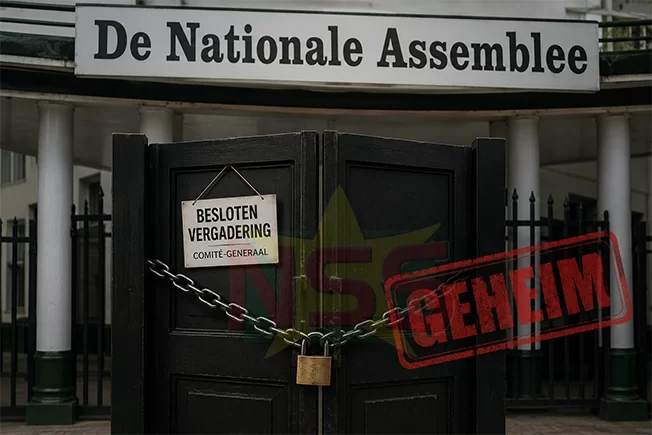
    A closed-door committee of the whole meeting of Suriname’s National Assembly, convened to discuss the disappearance of confiscated mercury from the Geyersvlijt police station, has ignited a fundamental debate over the appropriate boundaries of parliamentary secrecy in the South American nation.

    Multiple assembly members who participated in the confidential session told reporters that no information shared during the meeting had not already been made public prior to the gathering. This revelation has thrown not just the necessity of holding a closed-door meeting on this topic into question, but also cast renewed scrutiny on the use of the committee of the whole as an exceptional parliamentary tool, which is only supposed to be deployed for uniquely sensitive matters.

    The Surinamese government had explicitly pushed for the matter to be handled in a closed committee of the whole, arguing that sensitive details could not be aired in a public parliamentary session. Multiple political factions had already stated ahead of the meeting that members would assess whether secrecy was actually justified after reviewing the content, with a plan to switch the session to public if no confidential information was confirmed. However, no such transition ever took place.

    Ultimately, only the mercury disappearance case was addressed during the July 9 meeting. Three other high-priority topics on the agenda — mass fish die-offs, the disappearance of four kilograms of gold from state-owned miner Grassalco, and the work of the national Anti-Corruption Unit — were never taken up, after the meeting adjourned early following a suspension.

    According to multiple sources, a narrative corroborated by statements from sitting assembly members, no names of suspects or implicated police officers were mentioned during the discussion of the mercury case, nor was there any mention of arrested police personnel. The only new detail shared was that a Guyanese suspect, who originally smuggled the mercury into Suriname, was only referred to by his initials. The smuggling case itself had already been closed prior to the meeting: the mercury was originally seized at the Burnside police station in Coronie, and the foreign suspect resolved the case out of court. The closed committee only addressed the subsequent disappearance of the already-confiscated mercury from the Geyersvlijt police post.

    NDP parliamentarian Ebu Jones walked out of the meeting in protest, saying he could not justify the secrecy because no information was shared that would put national security or any other major public interest at risk if discussed openly. NPS party leader Jerrel Pawiroredjo also confirmed to local outlet Starnieuws that he heard no details during the closed session that Justice and Police Minister Harish Monorath had not already stated publicly.

    In contrast, NDP party leader Rabin Parmessar offered a differing assessment of the meeting in comments to Radio ABC. While he could not discuss the specific content of the session due to secrecy rules, Parmessar insisted the minister did share details that could not have been aired in public. He argued the meeting covered extremely urgent security matters tied to active ongoing investigations, noting that the minister would not have been able to elaborate on certain issues in an open setting, while the closed-door format allowed assembly members to ask critical questions that could never be raised publicly. He emphasized that active investigations by the Public Prosecution Service must not be undermined, explaining: When cases are still under investigation, practical and strategic reasons prevent us from going into detail on every aspect. If we did, the investigation would stall.

    Even so, Parmessar acknowledged that many people would remain unsatisfied with how the meeting unfolded, given that only one of the four scheduled topics was addressed before adjournment. He declined to answer specific questions about whether the meeting included the names of influential figures or politicians, citing the binding secrecy rules that apply to the committee of the whole.

    VHP party leader Asiskumar Gajadien has pushed back on the use of the closed session, arguing that public transparency is not a privilege, but a fundamental democratic principle. He noted that Surinamese society has a right to know how its elected representatives hold the government to account, and how public officials answer for matters of general public interest.

    The VHP participated in the July 9 meeting, which was called by the National Assembly speaker at the government’s request, because members expected there would be compelling circumstances that justified a closed-door hearing. “However, practice has proven otherwise,” Gajadien said. “Only one of the scheduled topics was discussed, and during that discussion, no information was presented that justified the closed status of the committee of the whole. On the contrary, all the information shared could have been discussed in a public session without any objection.”

    Gajadien also criticized that after it became clear secrecy was unnecessary, there was no willingness to lift the closed-door rule and continue the meeting or the agenda item in public. “This means a major opportunity to live up to the principles of transparency, openness and public accountability was missed,” he said.

    The VHP leader has drawn a principled conclusion from the incident: he announced that going forward, his party will no longer participate in any committee of the whole meetings unless convincing proof is provided in advance that a closed-door session is genuinely necessary for compelling legal reasons. “A committee of the whole must never be the default option; it is an exceptional parliamentary instrument that should only be used in exceptional circumstances,” Gajadien said.

    In the wake of the meeting, conflicting statements from participating members, the early adjournment, and divided opinions on the need for secrecy have left a fundamental question unanswered. The core issue is not the specific content of the closed discussion — which remains bound by secrecy rules — but whether the public was justly excluded from an open parliamentary debate on the matter.

    Openness is the default standard for any parliamentary democracy, and the committee of the whole is only supposed to be an exception for situations where public discussion would genuinely harm national security, active investigations, or other major legal interests. This places a clear responsibility on both the government and the National Assembly to provide convincing justification for why members of the public are excluded from a public hearing.

    When multiple participating parliamentarians say no new non-public information was shared during the meeting, while others cite confidential security details that they cannot clarify due to secrecy rules, the justification for the closed session will remain a subject of ongoing public debate. The core question that lingers after the committee of the whole meeting is not what was discussed behind closed doors, but whether secrecy was actually necessary in this case. That question extends far beyond the mercury disappearance case, touching on the openness of the entire parliamentary process and public trust in Suriname’s democratic rule of law.

  • SVG records 3 killings in 10 days as man gunned down in Glen

    SVG records 3 killings in 10 days as man gunned down in Glen

    The Caribbean nation of St. Vincent and the Grenadines is grappling with a fresh wave of violent crime after a third fatal shooting this month pushed the country’s 2025 homicide count to 23. The most recent victim, 31-year-old Sandre Matthias, was gunned down late Friday near a local minimart in the Glen community of East St. George.

    First responders were alerted to the scene by witnesses just after 8 p.m. local time, but arriving officers found Matthias, an adult male resident of the area, already unresponsive. He was pronounced dead at the scene, and official identification was released by authorities over the weekend.

    The killing marks the third violent death recorded in the country in the first week of July, putting St. Vincent and the Grenadines on track to remain far below last year’s total homicide count of 40 – which itself was a 14-victim drop from 2023’s full-year total. Even with the downward trend in overall annual violence, the recent string of back-to-back killings has put renewed pressure on local law enforcement, who are already working to solve two other recent high-profile murders.

    Earlier the same day Matthias was killed, police issued a public appeal for information to help track down the person or people responsible for the strangulation death of Lida Lewis, an 84-year-old local farmer. Lewis was killed at her property in Peruvian Vale on July 2, just two days after another fatal shooting that claimed the life of 49-year-old Gayron Jackson. Jackson was shot multiple times on July 1 while traveling through Mt. Young, outside Georgetown, on his way to the mountain interior to purchase coconuts, and died at the scene before emergency services could arrive.

    Authorities have not yet released any information about potential motives or persons of interest in Matthias’s killing, and are urging any members of the public who were in the Glen area near the minimart Friday night with relevant information to contact the Major Investigation Taskforce anonymously through the country’s independent crime tipline.

  • FLASH : 4.0 earthquake in the North-West

    FLASH : 4.0 earthquake in the North-West

    A moderate 4.0-magnitude earthquake rattled offshore waters near Haiti’s northwest coast in the early hours of Saturday, July 11, 2026, according to preliminary seismic data. The tremor was recorded at 12:10:54 a.m. local time, following a Friday night onset that put the seismic event within the window between July 10 and 11.

    Geographic positioning places the earthquake’s epicenter 18 kilometers north of Jean Rabel, a coastal town in Haiti’s North-West Department. Coordinates for the epicenter mark it at 20.03 degrees north latitude and 73.20 degrees west longitude, placing it 31 kilometers northeast of another northwest coastal hub, Môle Saint-Nicolas, 23 kilometers west of Tortue Island, and roughly 109 kilometers northwest of Cap-Haitien, the largest city in Haiti’s northern department. Seismic analysts estimate the hypocenter of the quake sits at a relatively shallow depth of 5 kilometers below the ocean floor.

    In the immediate aftermath of the seismic activity, Haiti’s Directorate of Civil Protection (DPC) confirmed that as of the latest update, no reports of human casualties, physical injuries, or structural damage have been linked to the earthquake. The moderate intensity of the tremor, paired with its offshore location, is thought to have limited potential for widespread harm to coastal communities in the affected region.

  • Robbers attack Venezuelans in Sparendaam

    Robbers attack Venezuelans in Sparendaam

    A violent pre-dawn robbery left two Venezuelan travelers without their motorcycle in Sparendaam, a community along Guyana’s East Coast Demerara, local law enforcement confirmed. The assault took place around 4:00 a.m. on Friday, according to an official statement released by the Guyana Police Force, and no suspects have been taken into custody as of the latest update.

    Investigative records show the stolen two-wheeler is registered to a 22-year-old Venezuelan man who is a current resident of the Sparendaam area. Witness accounts passed along to police outline that the two victims were en route to the younger victim’s home when two unknown men riding a second motorcycle intercepted them.

    Law enforcement officials detailed the sequence of the attack in their statement: One of the two assailants, who was openly carrying a cutlass, got off their motorcycle and stepped forward to confront the pair. One of the victims attempted to fight back against the blade-wielding attacker, engaging in a brief physical scuffle. Despite the victim’s resistance, the armed suspect ultimately managed to seize the victims’ motorcycle, while his accomplice remained with the pair’s original getway vehicle.

    After stealing the victims’ bike, both suspects fled the scene, traveling eastward on both the stolen motorcycle and their own. As of the latest police update on 10 July 2026, the manhunt for the two attackers is ongoing, with investigators working to recover the stolen vehicle and identify the perpetrators.

  • Tour of the Haiti’s Minister of the Environment in the South-East (video)

    Tour of the Haiti’s Minister of the Environment in the South-East (video)

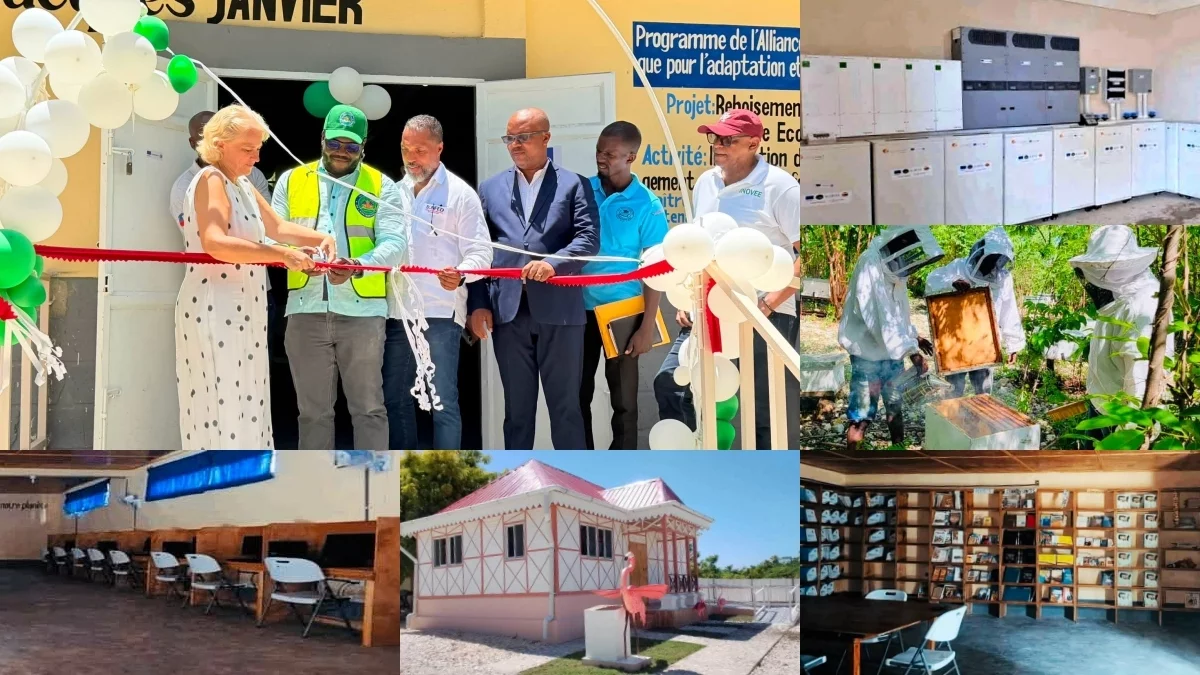
    Between July 7 and 9, 2026, Haiti’s Minister of Environment Valéry Fils-Aimé led an official inspection and inauguration tour across the South-East department, stopping in the key coastal municipalities of Jacmel and Belle-Anse. The visit marked the completion of several community-focused climate adaptation projects developed under the Global Alliance against Climate Change Plus (GCCA+) initiative, a program designed to boost local resilience to worsening climate impacts across vulnerable nations.

    Accompanying Minister Fils-Aimé on the tour were high-level stakeholders including Hélène Roos, Ambassador of the European Union to Haiti, and Charles Jean-Jacques, National Authorizing Officer for the European Development Fund (EDF) in Haiti, which provides core financing for the initiative.

    The completed projects deliver long-term benefits across environmental protection, education and economic development. First, the delegation inaugurated a new Governance Office and Herbarium at the Lagon des Huîtres National Natural Park, one of Haiti’s most ecologically significant protected areas. These new facilities will strengthen park management capacity, support conservation research and better safeguard the region’s unique biodiversity.

    In a nod to connecting environmental action to community education, the tour also marked the reopening of the renovated library at Calixte Numa Rabel High School, alongside a new fully solar-powered computer lab equipped with 17 internet-connected devices. The off-grid solar system solves longstanding unreliable electricity access issues, giving students consistent access to digital learning tools that were previously out of reach for most in the region.

    The final major infrastructure inauguration was the fully rehabilitated Communal Maritime Fishing Center in Belle-Anse, outfitted with a new solar-powered cold storage room. The facility will revolutionize local fishing operations by extending the shelf life of caught seafood, cutting post-harvest waste that has long eaten into fishermen’s profits, boosting local household incomes and laying the groundwork for sustainable growth of Haiti’s blue economy.

    Beyond physical infrastructure, the GCCA+ program has already delivered transformative social and environmental results by supporting livelihood transitions for local workers. Twenty-one charcoal producers, who previously relied on deforestation for their income, have been retrained and reorganized into three independent beekeeper groups. Three dedicated beekeeping stations have been established to produce organic honey, creating a steady alternative income stream while reducing pressure on Haiti’s threatened forest ecosystems. This dual-focus approach advances both biodiversity conservation and improved living standards for communities in Belle-Anse.

    During opening remarks, Minister Fils-Aimé highlighted the success of the cross-sector partnership, emphasizing that all completed projects are first and foremost investments in the well-being of Haitian communities. Closing out the visit to Belle-Anse, Ambassador Roos reiterated the core vision guiding the collaboration: that meaningful climate resilience can only be built through shared effort between local communities, national government authorities, and strong international partnerships.

  • APNU defends weak response to Ali’s land acquisition, other issues

    APNU defends weak response to Ali’s land acquisition, other issues

    As public anger simmers across Guyana over a high-profile land scandal involving President Irfaan Ali, the country’s largest opposition bloc, A Partnership for National Unity (APNU) led by the People’s National Congress Reform, has moved to address growing accusations that it has offered a lackluster response to the controversy, pushing leadership for the probe to the smaller opposition party that first broke the story.

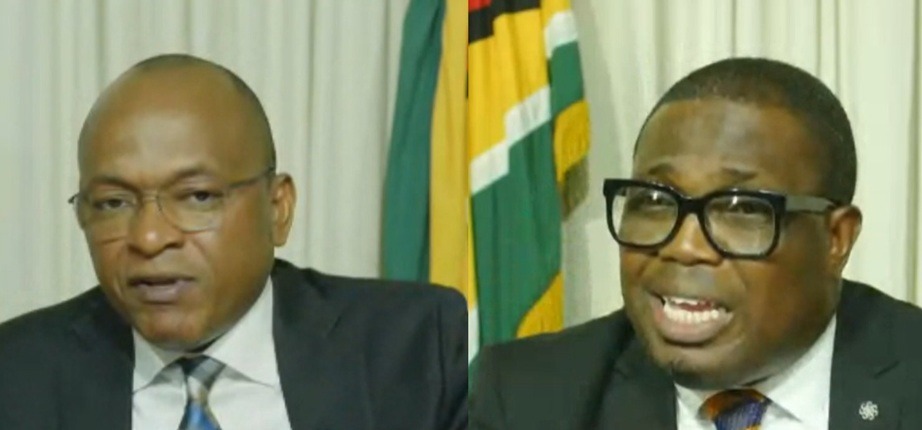
    In public comments delivered Friday, two senior APNU parliamentarians, Dr. Dexter Todd and Sherod Duncan, acknowledged that widespread public outrage has erupted over the President’s acquisition of acreage for his private commercial farm, which has dominated national headlines in recent weeks. Dr. Todd argued that based on widespread conversations and discourse across Guyana’s social media platforms, the entire situation is unacceptable for most citizens. He added that the President has failed to answer dozens of outstanding questions about the deal, and called on Ali to step down temporarily to clear the way for a full, independent investigation into the transaction. “There is a very large segment of the population that is deeply outraged by what has unfolded here. I believe that includes nearly all Guyanese,” Todd stated.

    Duncan expanded on the criticism, noting that while ordinary Guyanese citizens often wait 15 years or longer to secure a small plot of residential or agricultural land, the President moved ahead to acquire the large holding, which he has developed into a working farm for poultry, livestock, and high-value commercial crops. Duncan emphasized that the public anger over the issue is not manufactured by opposition parties, noting “We don’t have to stir up any kind of feeling or anger in people. It just comes naturally to the fore.”

    Despite that sharp criticism, Duncan sought to deflect pressure for APNU to lead a robust campaign on the issue, pointing out that the smaller opposition party We Invest in Nationhood (WIN) was the first group to bring the allegations to public attention. As the largest opposition party represented in Guyana’s parliament, WIN has taken the lead on the issue, Duncan said, and APNU intends to let WIN set the initial pace for a full, comprehensive response. “It is WIN that raised this issue and we’d love to see them continue on this one,” he said, while adding that APNU retains its own set of political tools that it is willing to deploy to secure the full transparency the public demands.

    President Ali has pushed back against the most severe allegations, disputing opposition claims by WIN leader Azruddin Mohamed that the farm, located near Long Creek along the Linden-Soesdyke Highway, spans 150 acres. Ali has confirmed the holding is less than 75 acres, but has declined to provide an exact measurement. He has also stated that any profits generated by the farm are being reinvested back into the agricultural project, and has denied abusing his office to secure special treatment for the development.

    Records show Ali obtained an undisclosed loan through the domestic banking system to develop the farm, and that he has submitted all required asset disclosures to Guyana’s Integrity Commission, as required by law. To date, however, he has rejected repeated calls to release full, detailed public information about the land acquisition and farm operations.

    Dr. Todd rejected claims that APNU has limited its response to mere rhetoric, noting that within days of the scandal breaking, the bloc convened its 12-member parliamentary caucus to map out a legislative and political strategy for action in the National Assembly. He explained that APNU’s parliamentary leader Dr. Terrence Campbell has proposed a sweeping review of the Integrity Commission’s disclosure powers, and that the bloc is currently drafting new legislation to address gaps in existing law that enabled this controversy and to target systemic corruption across government. “You must not expect that it’s just cheap talk. We are prepared to mobilize. We are prepared to coordinate with all Guyanese and we are prepared to put this government under more pressure,” Todd said, while acknowledging that the approach requires careful organization, strategic planning, and intentional timing. The bloc intends to expand the scope of its campaign beyond the President’s land deal to tackle broader corruption issues across the administration.

    Todd added that APNU expects the ruling People’s Progressive Party/Civic (PPPC) to ignore its demand for Ali’s temporary resignation, so the bloc plans to next engage the international community and rally allied stakeholders to support its call for a full investigation. He argued that an independent probe is non-negotiable because the President himself holds ultimate oversight responsibility for Guyana’s lands portfolio and signs off on all major land leases. “You can’t have a thorough investigation by the same President who has the same powers and oversees largely and is responsible for Lands and Survey,” he said. Under Guyana’s constitution, the President is granted legal immunity from criminal and civil court action during their time in office, and retains that protection after leaving office.

    Pressed on widespread public sentiment that street protests are needed to respond to the scandal, and that APNU has been uncharacteristically muted on the issue, Todd argued that public frustration actually points to a broader recognition of political dynamics. He noted that many people are also asking why WIN, the party that broke the story, has not organized street action. Echoing long-held positions from APNU leader Aubrey Norton, Todd pushed back on the idea that protests only count if they are held on public streets. “our protests- I think we have learnt this more in-depth from good leadership…And we have recognised that protesting is not only at the level of the streets,” he said.

  • Antigua and Barbuda to Be Represented on CARICOM Reparations Mission to UK

    Antigua and Barbuda to Be Represented on CARICOM Reparations Mission to UK

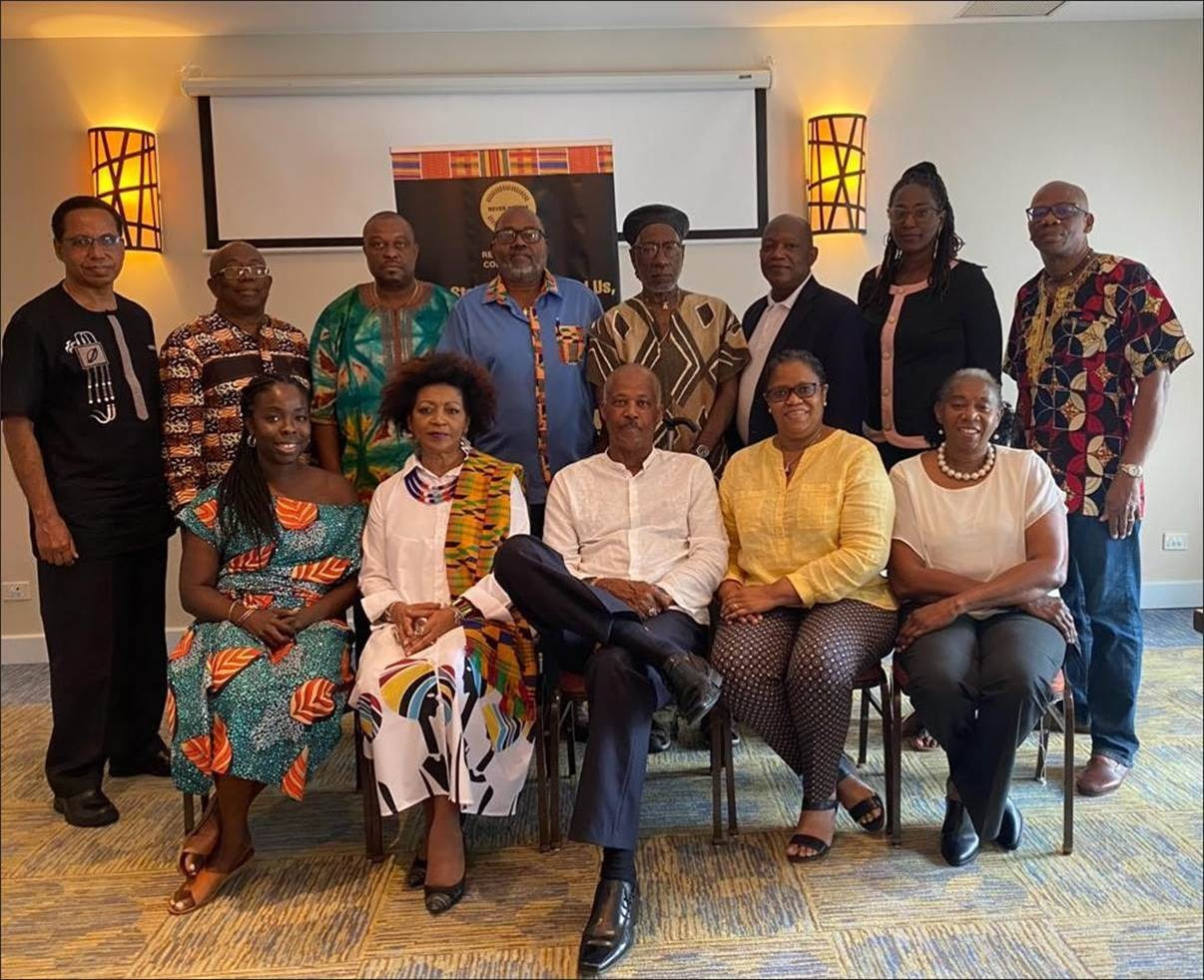
    In mid-July 2026, an official delegation from the CARICOM Reparations Commission (CRC) will travel to the United Kingdom, launching a week of high-level advocacy to advance the global cause of reparatory justice for the transatlantic slave trade and centuries of chattel enslavement. The mission, hosted by the Institute of Commonwealth Studies at the University of London’s School of Advanced Study, centers on strengthening cross-border strategic partnerships, expanding public education programs, and deepening civil society alignment around the global reparations agenda.

    The delegation brings together the most prominent leaders in the international reparations movement. It is led by CRC Chairman Professor Sir Hilary Beckles, and includes vice chairs Dorbrene O’Marde (Antigua and Barbuda Reparations Support Commission), Eric Phillips (Guyana Reparations Committee), and Professor Verene Shepherd, who also serves as Vice Chair of the UN Committee on the Elimination of Racial Discrimination. Rounding out the delegation are Barbados Ambassador to CARICOM David Comissong and Dr. Ron Daniels, Convenor of the U.S.-based National African Reparations Commission.

    This UK visit comes at a watershed moment for the global reparations movement, with a series of landmark institutional developments clearing a path for more aggressive collective action, all ahead of the 2026 Commonwealth Heads of Government Meeting (CHOGM) hosted by Antigua and Barbuda later this year. In March 2026, the UN General Assembly adopted a historic resolution led by Ghana that formally designated the transatlantic trafficking of enslaved Africans and chattel enslavement as the “gravest crime against humanity.” One month later in June, Ghana brought together heads of state, multilateral institution representatives, legal scholars, and civil society leaders at a High-Level Consultative Conference on Reparations in Accra. That gathering was widely described as a “historic turning point for Africans and People of African descent,” producing a shared framework to coordinate global reparatory justice efforts.

    Just ahead of the London delegation’s visit, CARICOM heads of government finalized and approved an updated version of the *CARICOM Ten Point Plan for Reparatory Justice: A Manifesto for the Coming Enlightenment*. First adopted in 2014 and last revised in 2018, this new iteration frames reparations as an urgent “global human rights imperative” and integrates decades of new historical research and shifting global political dynamics to strengthen the region’s advocacy.

    To ensure transparency and keep global media and stakeholders informed, the CRC has called on journalists to attend an official public briefing scheduled for July 14, 2026, held in Room 261 of University of London’s Senate House. The briefing will also be offered via virtual participation on Zoom, with pre-joined requested 10 minutes ahead of the 2:00 PM BST start time to accommodate attendees across multiple time zones. Access details for virtual attendees are published on CARICOM’s official website.

    This visit marks only the second official collective visit by the CRC to the UK, and its full itinerary includes three key engagements beyond the media briefing: a closed-door meeting with CARICOM and African Union high commissioners and ambassadors based in the UK; a public roundtable discussion hosted at the Institute of Commonwealth Studies; and a formal panel presentation at the UK Parliament, organized by MP Bell Ribeiro Addy, chair of the All Party Parliamentary Group on Afrikan Reparations (APPG-AR).

    Established at the 34th CARICOM Heads of Government Meeting in 2013, the CRC has spent the last 12 years leading the global revitalization of the reparations movement through consistent advocacy, public education, and scholarly collaboration. Through conferences, symposia, public lectures, and peer-reviewed publications, the commission has worked to expand public understanding of both the historical harms and ongoing intergenerational impacts of more than 300 years of chattel enslavement across the Caribbean. Its collaborative work has generated new research on underdiscussed topics ranging from the foundational role of slavery in the development of modern Western banking to the links between historical enslavement and current high rates of intergenerational trauma and non-communicable diseases like hypertension across Caribbean communities.

    The CRC’s UK outreach comes as new polling reveals dramatic gaps in British public knowledge of the country’s role in the transatlantic slave trade, alongside growing public support for reparative action. A 2025 poll of more than 2,000 UK adults, commissioned by The Repair Campaign, found that 85% of respondents had no idea Britain forcibly transported more than 3 million enslaved Africans to Caribbean plantations, and 89% were unaware that chattel slavery operated in the British Caribbean for more than 300 years. Despite these knowledge gaps, support for action is growing: 63% of UK adults now back a formal government apology from Britain to Caribbean nations and the descendants of enslaved people, a 4% increase from 2024 levels. Support for financial reparations also rose 4% year-over-year, reaching 40% of all respondents.

    The CRC’s London visit builds on significant progress CARICOM made within the Commonwealth in 2024. At the 2024 CHOGM held in Apia, Samoa, Commonwealth heads of government signed on to communiqué language that formally recognized transatlantic slavery and the trafficking of enslaved Africans as crimes against humanity, and agreed that “the time has come for a meaningful, truthful and respectful conversation towards forging a common future based on equity.”

    All updates from the delegation’s London mission will be published in real time on the official CARICOM website and shared via the commission’s public WhatsApp community. Full information on the CRC and the newly updated Ten Point Plan is available via the official links published on CARICOM’s online platforms. The visit underscores the commission’s long-standing commitment to building global alliances, advancing demands for historical accountability, and advancing the socio-economic transformation needed to redress the harms of chattel slavery.

  • Technology : Towards an energy revolution in rural areas

    Technology : Towards an energy revolution in rural areas

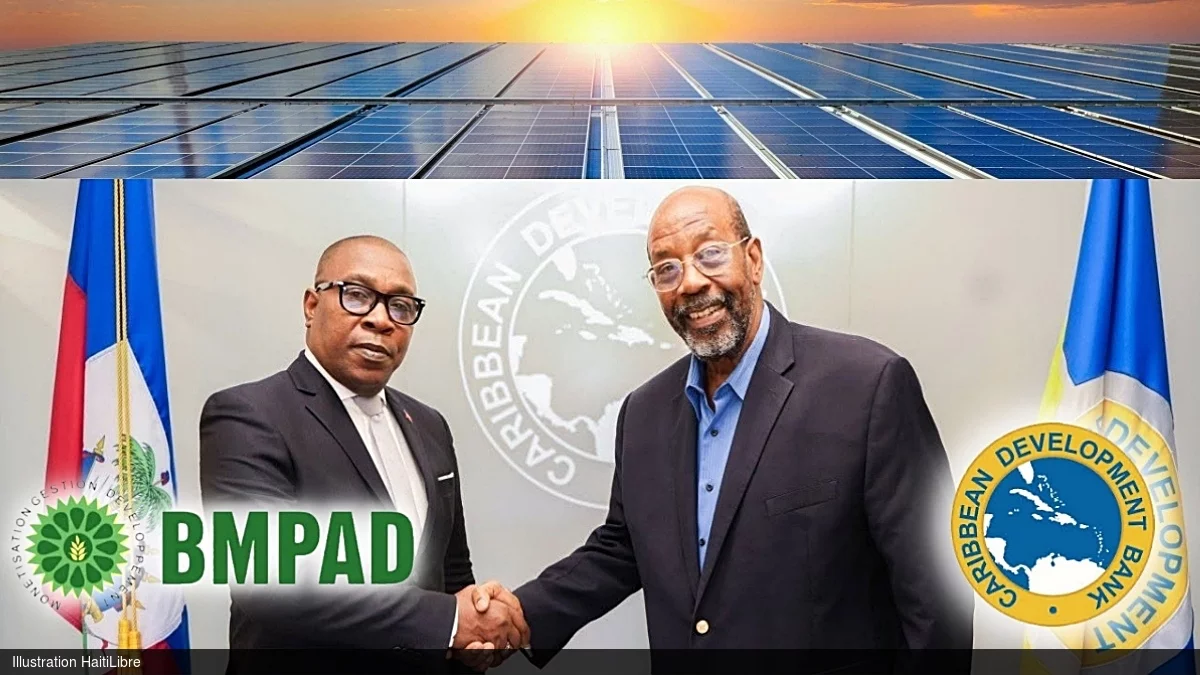
    Haiti is poised to deliver a long-overdue energy transformation to its underserved rural communities, as the country’s Office for Monetization of Development Assistance Programs (BMPAD) has launched formal partnership discussions with the Caribbean Development Bank (CDB) to advance a ground-breaking solar electrification project.

    In a landmark first working session, BMPAD Director General Me Stevenson Jacques Thimoléon laid out the details of the Solar Electrification Program for Essential Public Services (PESPE), an initiative designed to expand sustainable, reliable electricity access to Haiti’s most energy-poor rural regions. This meeting marks a critical milestone in BMPAD’s strategy to build international collaboration around renewable energy projects that strengthen core public services for rural Haitians.

    At the core of PESPE is a plan to install stand-alone photovoltaic solar systems at three types of key public facilities located in communes and communal sections with the least consistent access to grid electricity: public primary and secondary schools, community health centers, and local sub-stations of the Haitian National Police (PNH). The overarching goal of the project is not only to expand energy access, but also to reduce stark territorial disparities between urban and rural areas by delivering higher-quality public services to populations that have long been overlooked.

    To ensure efficient, coordinated delivery, PESPE will be led by BMPAD with active participation from a cross-sector coalition of Haitian government institutions, including the Ministry of Planning and External Cooperation (MPCE), the Ministry of National Education and Professional Training (MENFP), the Ministry of Public Health and Population (MSPP), the National Institute of Professional Training (INFP), and the Haitian National Police itself. BMPAD is also actively seeking additional technical and financial partners to support full implementation of the initiative, with the inter-agency governance structure designed to deliver coordinated, efficient, and long-lasting outcomes.

    The initiative aligns directly with the Haitian government’s national sustainable development priorities. If all required co-financing from national and international partners is secured, PESPE will draw on a total investment pool of $45 million USD over a 36-month implementation period. As a critical first step to test the model, BMPAD is prioritizing launching a 12-month pilot project that will validate the technical, social, and financial viability of the program before it is scaled up nationwide.

    Beyond just installing solar panels on public buildings, the program includes holistic capacity-building components to ensure long-term sustainability. Local technicians will receive specialized training to maintain the solar installations, community-level management committees will be established to oversee ongoing operations, and the project will position renewable energy as a core driver of inclusive local economic development.

    When fully deployed, PESPE is projected to deliver electricity to 500 rural schools, 300 rural health centers, and 200 PNH rural sub-stations. The far-reaching impacts of this access will include improved learning environments for hundreds of thousands of Haitian students, stronger quality of primary health care for rural communities, reliable cold chain storage to preserve life-saving vaccines at local clinics and dispensaries, and increased operational capacity for law enforcement working to keep rural communities safe.

    Through this initial engagement with the Caribbean Development Bank, BMPAD has reaffirmed its commitment to diversifying its network of technical and financial partners to deliver high-impact economic and social projects. By centering renewable energy as a lever for sustainable development, the initiative seeks to strengthen public services and close the persistent equity gap between Haiti’s urban and rural areas.

    This first formal contact between the two institutions has opened promising pathways for long-term collaboration, with the immediate goal of mobilizing the resources needed to launch the pilot project. That pilot will serve as a foundation for a national program that has the potential to permanently transform access to essential public services and accelerate inclusive development for Haiti’s rural communities.

  • Panton Leads Anti-Corruption March Through Belize City

    Panton Leads Anti-Corruption March Through Belize City

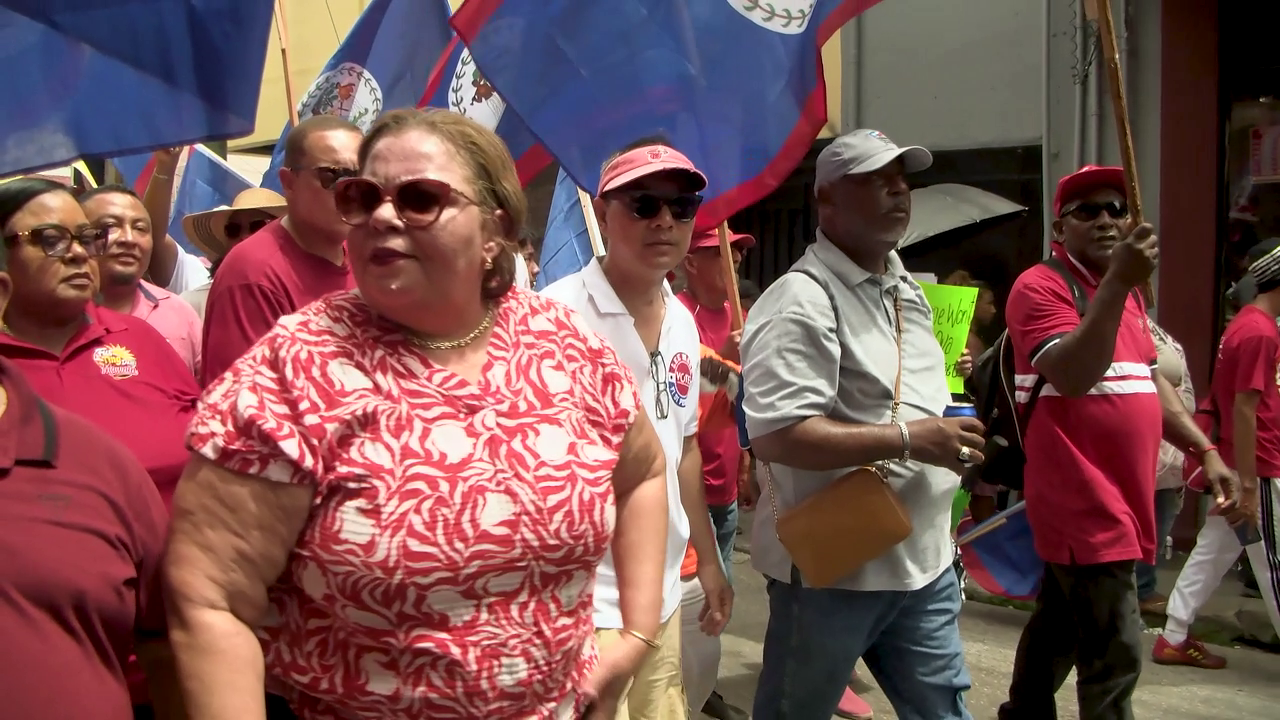
    On July 10, 2026, Belize’s main opposition political bloc, the United Democratic Party (UDP), organized a large anti-corruption march through the streets of Belize City that concluded at Battlefield Park, channeling mounting public anger over systemic graft, skyrocketing living costs, and broken election promises from the ruling People’s United Party (PUP) administration.

    While UDP leader Tracy Panton claimed the march drew 2,000 participants – a figure she says was corroborated by police crowd estimates – on-the-ground reporting from local outlet News Five places attendance closer to 500. Despite the dispute over crowd size, the demonstration highlighted deep and cross-regional dissatisfaction with the current government’s performance, drawing participants and party hopefuls from districts across the country including Punta Gorda, Dangriga, and Belmopan.

    In a notable departure from some past opposition actions, the protest remained entirely peaceful, a result of explicit instructions from UDP leadership to avoid unrest. Longtime party activist Brian “Yellow Man” Audinett confirmed to reporters that organizers had mandated nonviolence, though he added that a harder line could follow if the ruling government refused to address public grievances.

    Interviews with marchers revealed a broad spectrum of frustrations extending beyond corruption. Many attendees called out stark inequalities in the justice system, pointing out that low-level offenders face jail time for minor offenses while officials accused of stealing millions face no consequences. Others detailed the crippling impact of rising costs of basic goods, from gas and utility bills to groceries including poultry. Multiple participants also criticized incumbent representatives for failing to deliver on infrastructure and development pledges made during election campaigns. Several speakers emphasized that the demonstration was not merely a partisan exercise, but a cross-party movement for accountability, noting that corruption harms all Belizeans regardless of political affiliation.

    UDP officials used the rally as a platform to lay out specific demands for reform. Councilor aspirant Phillip Willoughy called on the government to formally legislate compliance with the United Nations Convention Against Corruption (UNCAC), arguing that formal adoption of the international framework is the only meaningful step to curb graft in the country. Other UDP political candidates framed the protest as the first major public pushback against what they describe as an exponential increase in corruption and nepotism under the current administration, with Belmopan mayoral aspirant Richie Galvez noting that taking to the streets is a critical way for the opposition to demonstrate public support for change.

    Following the march to Battlefield Park, Panton told reporters that the turnout reflected a breaking point for the Belizean public. “The truth is, people have had enough, like we really have had enough,” she said, framing the event as the start of a sustained campaign to hold the ruling government accountable. Ruling party officials did not issue an immediate response to the demonstration. This report is adapted from on-the-ground reporting by Paul Lopez for News Five.