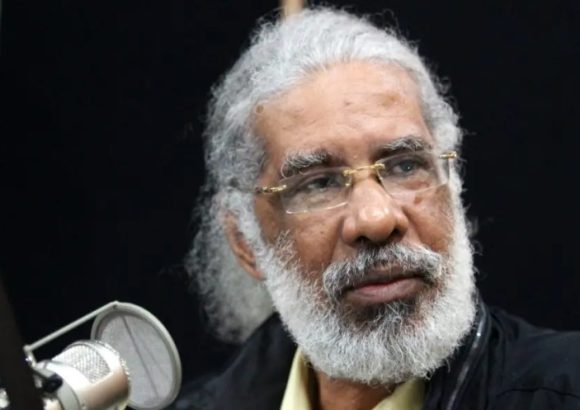
In the capital city of the Dominican Republic, Santo Domingo, the head of one of the nation’s largest public transportation organizations has issued a stark warning that a fare increase for riders across the greater metropolitan area may be unavoidable in the coming weeks. Juan Hubieres, president of the National Federation of New Transportation Option (Fenatrano), stated that his organization has repeatedly intervened to block affiliated drivers from raising fares over the past several months, even as global and domestic fuel costs have climbed steadily. But growing financial strain on independent transport operators has pushed the union to the edge, he said, and leadership may soon lose the ability to hold back price hikes. For months, Fenatrano has chosen to absorb inflated fuel costs rather than pass extra expenses to commuters, who already grapple with rising daily living costs across the country. Now, however, that buffer has been exhausted, Hubieres explained, as independent operators continue to see their profit margins shrink against elevated fuel expenses. Beyond just blaming global market trends, Hubieres levied sharp criticism at the Dominican government’s current fuel regulatory framework, claiming that domestic fuel prices are marked far higher than the average price seen on global commodity markets. To avoid passing costs onto everyday passengers, the union leader laid out a series of clear policy demands for national authorities. First, Hubieres called for the government to expand the existing Bonogás subsidy program, which provides financial support to public transport drivers to offset fuel costs. Second, he pushed officials to follow through on long-overdue pension commitments to retired workers in the transportation sector, a promise that has remained unfulfilled for years. Beyond sector-specific demands, Hubieres also called for broader economic policy reforms to ease pressure on working- and middle-class Dominicans. He urged the government to reduce the overall tax burden for low- and middle-income households, and proposed reallocating the tax burden to large corporate and mining entities that currently benefit from heavily subsidized fuel. Reversing current subsidies for large actors and applying new taxes to their fuel use, he argued, would generate enough government revenue to offset cuts to working-class taxes and fund expanded support for public transportation. Hubieres closed by warning that unaddressed economic pressure across critical sectors like public transport will not just lead to higher fares for commuters – it will also fuel growing social discontent across the country. He reiterated that Fenatrano will continue pressing authorities to implement targeted measures to cut operating costs for public transport operators, to protect both drivers and riders from the impact of soaring fuel prices.
作者: admin
-
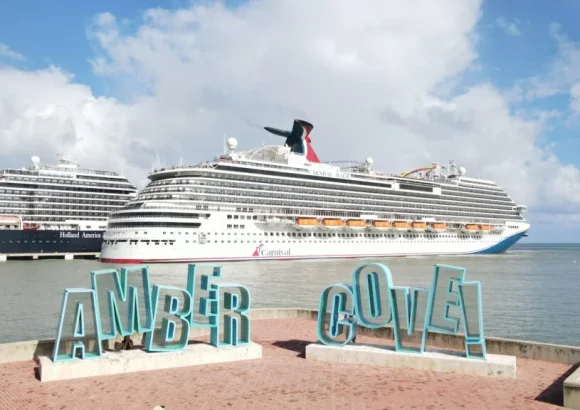
Carnival, Royal Caribbean and Norwegian account for over 84% of cruise passengers in the Dominican Republic
The Caribbean cruise sector continues to evolve, and the Dominican Republic has released new tourism data showing steady incremental growth in cruise arrivals during the first six months of 2026. Official figures from the nation’s tourism authorities confirm that 1,653,129 cruise passengers passed through Dominican ports between January and June, marking a 1.36% year-over-year increase. This growth was supported by 482 scheduled ship calls distributed across the country’s eight commercial cruise ports, which serve as key entry points for international maritime travelers.
The bulk of cruise traffic to the Dominican Republic is concentrated among three major global cruise operators, which together handle more than 84% of all cruise passenger arrivals to the nation. Carnival Corporation, one of the world’s largest cruise groups, retained its position as the leading operator in the Dominican market with 751,17 passengers, accounting for 45.5% of total arrivals. However, the company reported a 7.4% year-over-year drop in passenger volume following the opening of its new private cruise destination, Celebration Key, in the Bahamas. This operational shift has redirected a portion of Carnival’s sailings away from the Dominican Republic, creating ripple effects across local port operations.
The most visible impact of this shift has been at Amber Cove, one of the Dominican Republic’s major cruise ports, which recorded a nearly 16% decline in arrivals compared to the first half of 2025. In contrast, Taíno Bay, another leading Dominican cruise facility located near Amber Cove, has solidified its status as the country’s busiest cruise port for the second consecutive year. The port welcomed 693,369 passengers in H1 2026, capturing traffic diverted from other regional stops and benefiting from ongoing investments in port infrastructure.
Among the big three operators, Royal Caribbean Group delivered the strongest performance, posting a 34% year-over-year increase in passenger volume that brought 344,966 travelers to Dominican ports. The company’s robust growth is directly tied to its strategic expansion of operations in the Dominican Republic, as it looks to capitalize on growing demand for Caribbean cruise itineraries that include stops at the nation’s ports and attractions. Meanwhile, Norwegian Cruise Line continued its pattern of steady growth in the Dominican market, carrying 293,102 passengers in the first half of 2026, a modest 3.1% increase from the same period last year.
Over the past four years, a total of 22 international cruise lines have launched operations in the Dominican Republic, a trend that underscores the nation’s rising profile as a core stop on Caribbean cruise itineraries. Industry analysts note that while the minor overall growth and shifting traffic patterns reflect broader adjustments to regional cruise routes, the long-term trajectory for the Dominican Republic’s cruise sector remains positive as more operators add the country to their schedules.
-

Defense minister reaffirms Dominican commitment to fighting transnational crime
Against the backdrop of rising transnational security threats stretching across the Western Hemisphere, defense leaders from more than 30 nations gathered in the historic Andean city of Cusco, Peru, for the XVII Conference of Defense Ministers of the Americas, where top Dominican military official Lieutenant General Carlos Antonio Fernández Onofre cemented his country’s unwavering dedication to countering transnational organized crime.
In his keynote address to the assembly of regional defense heads, Fernández Onofre, who serves as the Dominican Republic’s Defense Minister, emphasized that fragmented national efforts are no match for sophisticated cross-border criminal networks that erode public safety and undermine democratic stability across the region. He called for deeper, more coordinated regional collaboration to counter these groups, arguing that shared threats demand collective, unified action.
Beyond traditional criminal challenges, the Dominican defense chief also drew attention to fast-evolving digital security risks, urging member nations to prioritize the expansion of collective cyber defense infrastructure and boost reciprocal intelligence sharing agreements. These steps, he noted, are critical to mitigating the growing frequency and severity of cyberattacks that target government institutions, critical infrastructure, and private citizens across the Americas.
By the close of the multi-day conference, participating representatives formalized their shared commitment to hemispheric security through the signing of the Cusco Declaration. This landmark framework sets out clear guidelines for expanded joint action to tackle a range of persistent cross-border threats, including maritime drug trafficking, illegal unregulated mining, and illicit arms trafficking. The declaration also embededs provisions to uphold international human rights standards and strengthen collaboration between regional defense institutions.
On the sidelines of the conference, Fernández Onofre also highlighted the Dominican Republic’s growing capacity for regional humanitarian action, showcasing the country’s upcoming Operation Quisqueya Solidaria 2026. He pointed to the Dominican Republic’s rapid, large-scale humanitarian response to the devastating 2025 earthquakes in Venezuela as a tangible example of the nation’s ability to deploy emergency disaster relief quickly, demonstrating its commitment to regional solidarity during times of crisis.
-

Baha Men musician among victims as mother mourns her gifted son
For 27-year-old Mateo Winder, the ritual of checking in with his mother after every trip was as steady as the beat of a drum he played. It was a family tradition he had followed for years: send a message when he departed, and follow up with a call once he landed safely. On that fateful Friday, that simple routine became the final goodbye.
When Winder boarded a Flamingo Air small charter plane bound for North Andros, alongside other members of the local group Da Pond Band, his last text to his mother Ronella Hinsey was just one word: “Leaving.” Today, that single message is all she has left of her son, one of 10 people killed when the aircraft crashed shortly before landing at San Andros Airport. The band had been traveling to the island to perform at a scheduled regatta event.
Hinsey, a police inspector stationed in Abaco for work, first got the chilling hint of disaster when her mother called with early reports of the crash. Immediately, she reached out to Winder via WhatsApp, begging him to confirm he had landed unharmed. The message never went through. What followed was hours of agonizing, frantic searching for answers, as she called every authority, relative and contact she could think of to untangle what had happened.
For a brief, torturous moment, Hinsey allowed herself to hope. An aviation official who checked the passenger list told her Winder’s name did not appear on the manifest. “Okay, Lord, he’s not on it,” she remembered thinking, relief flooding her. That hope crumbled quickly into devastating dread, as calls went unanswered and contacts near the crash site avoided sharing the truth. When her brother, who had traveled to the crash site at her request, stopped picking up her calls, Hinsey knew. She had lost her son.
In the days since the crash, the grieving mother — who also serves as a gospel minister — has opened up about the quiet premonition that haunted her all week before the accident. “All that week, I just kept hearing or seeing something happening to my son and him being hurt, and he actually died,” she said. “I started praying and cancelling what I saw, and pleading the blood of Jesus over him and reading God’s word that he should not die but live to declare the works of the Lord.”
Even in her overwhelming grief, Hinsey says she has not questioned her faith. “I didn’t ask the Lord why, because I don’t want to question God, because He knows why everything happens,” she said. “Human understanding, we won’t understand it.” Instead, she has prayed that her son’s death will not be meaningless. “I told the Lord, if that is your will, you know everything before it happens. And I said, if that is your will, then so be it. But I want my son’s death, I want him to get glory out of it. I don’t want him to die in vain.”
Winder, who never married and had no children, built his entire life around three pillars: his faith, his family, and his music. A musical prodigy from toddlerhood, he began “playing” at two and a half years old, beating rhythms on his mother’s hairbrush and comb at the foot of her bed. By adulthood, he was a multi-instrumental talent, skilled on drums, keyboard, guitar, bass, and saxophone, and a gifted vocalist to boot. He performed regularly with both Da Pond Band and the Grammy Award-winning Baha Men, and ran his own successful business renting musical and entertainment equipment across New Providence.
Isaiah Taylor, leader of the Baha Men, called Winder like a son to him, recalling that the young musician had just joined the group for a performance in Milwaukee as their keyboard player shortly before the crash. “This is absolutely a big blow,” Taylor said. “It’s a big, big, big blow to the industry.”
In the wake of the tragedy, Taylor is issuing a urgent warning to fellow musicians who travel to small island events for performances: prioritize safety over a quick paycheck. “I will warn all of these musicians: do not be comfortable to jump on these charters to go to regatta to make a couple of dollars. Safety comes first. Make sure know what you’re flying, who you’re flying with,” he urged. Taylor added that he has avoided flying on small charters since a terrifying trip in the 1980s, and warned performers to consider the weight of their gear when boarding small aircraft. “If you are doing it, don’t put no kind of equipment on the plane, the little plane that you’re flying on. Because every piece of equipment that you would put on that plane also carries weight, and the plane can only lift with so much weight.”
To date, Bahamian authorities have not released any information on the cause of the crash, nor have they indicated that excess load played a role in the disaster. For Hinsey, Winder was far more than a talented musician — he was a warm, loving light who could turn anyone’s bad day around with a joke and a smile. “He was always smiling and if anybody had a bad day, he would come there and he would make you laugh,” she said.
For years, the pre-trip check-in was a guarantee: Winder would leave, arrive, and call home. This time, the “Leaving” message came. The return call never will.
-
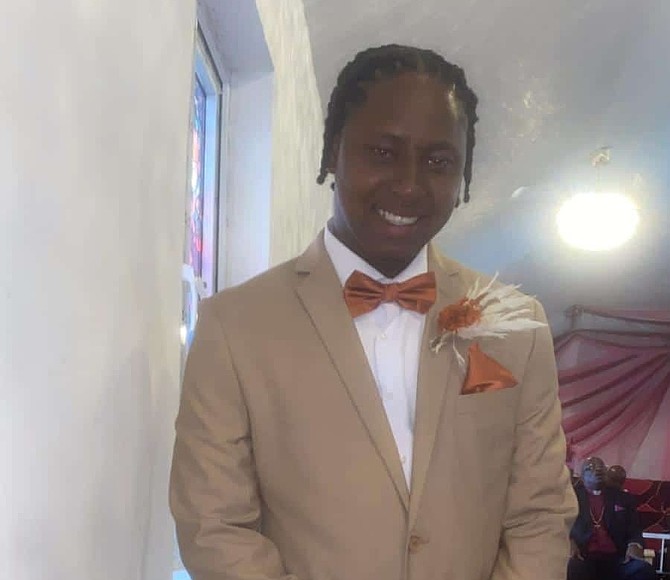
Victim’s final call to family before dying in Andros crash
For seven months, the Rolle family had counted down the days to Macaro Rolle’s long-awaited return home to Andros. The 24-year-old certified lifeguard, who worked at the remote Ocean Cay resort, had navigated a multi-legged journey – a boat ride to Bimini, a connecting flight to New Providence, and a final charter flight on Flamingo Air bound for San Andros Airport – to get back to the loved ones he had not seen in half a year. His father waited at the airport arrivals gate to greet him; what unfolded on Friday would instead leave the family shattered by a preventable loss, they say.
Anthony Rolle, Macaro’s brother, was working at a location opposite the airport when a resident from their Nicholls Town community ran to deliver the devastating news: a small plane had crashed just off the runway. A second aircraft that had been trailing the Flamingo Air flight confirmed the passenger list, and within minutes, Anthony, their father, and other family members launched a desperate search for the wreckage.
Thick black smoke billowing from the crash site near the end of the runway was visible from the family’s starting point, but blocked rural roads cut off direct access. The delay would cost Macaro his life, his family says. As they fought to clear a path toward the wreckage, the injured young man managed to place a desperate phone call to his relatives from the charred aircraft.
In that final, heart-wrenching call, Macaro sounded initially strong, pleading for his family to reach him quickly. “Daddy, Daddy, please hurry up, come for me, Daddy. Y’all hurry up, come,” he told them, according to Anthony. He stayed on the line, describing the terrifying final moments of the flight – telling his family the aircraft had begun shaking violently and uncontrollably before impacting the ground – right up until the family could see the wreckage. When Anthony called out to him that they had arrived, the line went abruptly dead.
By the time the family fought through blocked roads and reached Macaro, roughly two hours after the crash, he could barely respond. When Anthony called his name, the only reply was a faint, almost inaudible hum. Macaro had sustained catastrophic full-body burns in the crash: all his clothing had burned away, and his skin was badly damaged from head to toe.
The family carried Macaro out of the brush in his father’s pickup truck and rushed him to the local clinic, where the small on-island medical team did everything they could to stabilize him. But the remote island lacked the specialized burn care Macaro needed, requiring an air ambulance to evacuate him to a larger facility in North Andros. For another two hours, the family waited for the emergency aircraft to arrive.
Macaro’s fight ended roughly 20 minutes before the air ambulance touched down. “They land after he already died,” Anthony said. The family believes that if emergency response had been faster, and if on-island medical access had been more robust, their brother would still be alive today. “The doctor tried all he could,” Anthony noted, but limited resources on Andros could not overcome the long delays in reaching care.
The tragedy has been compounded by the quiet plans Macaro had made for this trip: he had been building his own three-bedroom home on Andros, waiting for contractors to finish installing windows and doors ahead of his move-in. He never got the chance to step across the threshold of the home he built.
Remembered by his family as a warm, loving man deeply devoted to his faith, Macaro wove prayer into every small part of his daily routine. “Before Macaro eat or drink or answer his phone or leave outside, he have to pray before he do that,” Anthony said. “So if you can’t wait until he finish praying, you could leave him.” The family says they have no doubt that he said a prayer before boarding the flight that would take him home for the final time. Now, their once-joyful homecoming preparations have turned into funeral arrangements, leaving their parents distraught and the entire family grieving a life cut tragically short.
-

Family and friends mourn DJ Fresh after fatal crash
On an Independence Day that began with a spiritual deliverance service at Nassau’s Metropolitan Baptist Church, Bishop Elton Major’s life was forever altered when his congregation gathered outside his office with devastating news. A small passenger plane had crashed near San Andros Airport in North Andros, Bahamas, and the bishop’s adopted son, 34-year-old Melvin Henfield — a beloved musician and ordained minister known across the entertainment industry as DJ Fresh — was believed to be on board.
Bishop Major immediately tried to reach Henfield, who he had raised from the age of 13 after the young boy’s mother entrusted him to the bishop’s care. When there was no answer, a wave of dread washed over him; even during performances or busy work meetings, Henfield always made time to send a quick message promising to return the call. Knowing Henfield often traveled to Andros for gigs with his brother Ken, Bishop Major reached out to him next, holding out hope that his son had already arrived at his destination safely.
For a brief window, that hope held. Initial speculation suggested one person on the Flamingo Air aircraft had survived the crash, lifting the family’s spirits only to dash them moments later. When Ken finally called to confirm the worst — “We lose Melvin” — Bishop Major was left so numb with shock that he injured his foot and did not even notice he was bleeding until after the fact. “That’s how numb I was. I still have a problem coping with that,” he told reporters. “It don’t feel real to me, but it’ll never be the same.”
For Bishop Major, the crash was not just the loss of a well-known local public figure. It was the loss of the son he had fed, educated, and guided into adulthood, teaching him life’s small but critical lessons: how to tie a necktie, how to drive, how to weigh major life decisions. Henfield never knew his biological father, but he fully integrated into the Major family, becoming a beloved son and brother to the bishop’s biological children. “To meet him, to know him, is to love him,” Bishop Major said of his son. “Kind, caring, very compassionate, trusting. If he tell you something, he can do it. Might not do it right away, but he gonna get it done.” Henfield’s mother passed away five years ago, leaving the bishop as his closest surviving family member.
Christal “Peachy” Mackey, owner of Nassau’s women-only Peach Fit Studios and one of Henfield’s closest friends, shared her own story of grief and shattered hope in the hours after the crash. The pair had forged an unbreakable bond over two years, bound by shared loss: Mackey had lost her father years earlier, while Henfield had lost his mother, turning Mother’s Day and Father’s Day into quiet occasions for mutual mourning. When Mackey was forced to jump from her moving car after it caught fire a few months prior, Henfield stayed by her bedside every day throughout her recovery, a reflection of the unconditional loyalty that defined their relationship.
Like Henfield, Mackey shared a deep fear of flying, especially on small propeller aircraft common for inter-island travel in the Bahamas. They established a quiet ritual before any flight: they would pray together before departure, and check in immediately after landing to confirm they were safe. The day of the crash, Henfield called her from the airport as he prepared to board. “I’m about to board, make sure pray and I’ll call you as soon as I reach, but it shouldn’t be long because it’s just a 15 minute flight,” he told her. The call never came.
When Mackey realized her earlier message to Henfield had not gone through and news broke of the crash, panic quickly set in. At first she brushed off the worry, knowing his entertainment work often kept him busy for hours, but as details of the crash spread, she became physically ill with anxiety, pulling off the road to wait for news at her sister’s business. Initial reports suggested one survivor, and for a few moments, Mackey allowed herself to hope it was Henfield. She began planning to nurse him through recovery, just as he had done for her after her car fire. “I never been so excited to just cater to someone,” she said. “They say he has some burns, but what is burns to me? Absolutely nothing.” But that hope was short-lived; minutes later, she overheard her sister confirming Henfield had not survived, and her grief came flooding back.
Mackey recalled a prior incident that underscored just how intense Henfield’s fear of flying was: on an earlier Bahamasair flight, he demanded the plane be evacuated after hearing reports of pre-departure mechanical issues, refusing to stay on board even when crew told him opening the door would require hours of delays and regulatory paperwork. The entire plane was eventually evacuated, just as he demanded. “We have some people that do not like plane, and he didn’t,” she said. “He did not like plane at all.” Still, she finds small comfort in knowing he prayed before boarding the fateful flight, just as their ritual required. Henfield, she remembered, was an exceptional father, a loyal friend, a man of deep faith, and a presence that could light up any room he entered.
Henfield was one of 10 people who lost their lives in the Independence Day crash near San Andros Airport, a tragedy that has left the Bahamas’ tight-knit entertainment and faith communities grappling with the loss of one of their most beloved members.
-

Grieving father recalls paying for son’s fatal flight to Andros
On a day meant to celebrate national independence in the Bahamas, a devastating plane crash outside San Andros Airport turned a family’s long-awaited celebration into unthinkable tragedy, leaving one father grappling with overwhelming grief over the loss of his teenage son.
Sixteen-year-old Nicholas Oliver Jr., a student at CV Bethel Senior High School, was one of 10 people killed when a Flamingo Air aircraft crashed shortly before landing on July 10. For the quiet, kind, mannerly teen with a gift for playing drums, the trip was supposed to be his first chance to experience Andros’ famous regatta festival, where he was set to reunite with his mother, sister and extended family members who had gathered for the event.
It was Nicholas’ father, Nicholas Oliver Sr., a mechanic originally from Andros, who paid the $120 airfare to make his son’s dream trip a reality. The pair had originally planned to travel to the island together by boat the day after Nicholas originally wanted to leave, but the teenager was eager to arrive early so he would not miss any of the regatta weekend’s festivities. Wanting nothing more than to see his son happy, Oliver Sr. paid for the short 15-minute flight from New Providence, while he planned to follow by boat the next day. That meeting would never happen.
Within hours of handing over the cash to a Flamingo Air representative Oliver Sr. described as appearing to be a pilot, the grieving father found himself standing at the edge of the crash site, staring at smoldering wreckage and brush still burning where his son lost his life.
In an interview with the Tribune, Oliver Sr. choked back tears as he described the crippling pain of his loss, tormented by the thought that the money he spent to give his son a happy experience had instead put him on the doomed flight. “I give him my $120 to kill my son,” he cried. “In the space of couple minutes you gone and take my money and gone kill my son, bro. Kill my baby.”
Compounding the family’s agony in the chaotic hours after the crash was a confusing error: Oliver Sr. said he watched a Flamingo Air employee write his son’s name on the passenger list, but Nicholas’ name did not appear on the initial official passenger manifest shared with the public. The uncertainty left relatives scrambling for answers as they waited to confirm Nicholas’ fate, extending the family’s suffering.
Oliver Sr., whose work as a mechanic takes him across the Bahamas’ Family Islands, makes a point to spend as much time with his son as possible whenever he is in New Providence, where Nicholas lived with his mother, who relocated there from Abaco after Hurricane Dorian destroyed her home. Today, he is haunted by the images he saw at the crash site that he cannot erase, even when he closes his eyes. “I can’t sleep,” he said, weeping. “I seeing all the bush on fire in my flashes.” A man who does not normally drink alcohol, he said he has even considered turning to rum to quiet his racing mind long enough to rest. “I was there, I see him burn,” he said tearfully. “They burn him up.”
As investigations into the crash continue, the tragedy stands as a devastating reminder of how a brief, routine trip meant for celebration can turn into irreversible loss in a matter of minutes, leaving a grieving family to pick up the pieces of a future that will never be the same.
-
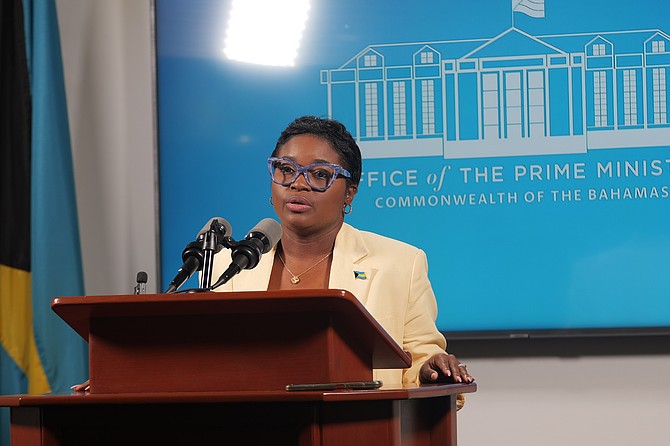
Government to break ground on LNG terminal today
The Bahamian government is set to launch a transformative step for the nation’s energy sector on Thursday, holding the long-awaited groundbreaking ceremony for the new liquefied natural gas (LNG) terminal on New Providence. This kickoff comes just days after a crippling island-wide power outage last Sunday exposed the critical vulnerabilities of the country’s aging electricity infrastructure, making the modernization project far more urgent than before.
Energy, Utilities and Aviation Minister JoBeth Coleby-Davis officially announced the ceremony this Thursday, framing the LNG terminal as a cornerstone of the government’s sweeping energy reform agenda. The overarching goals of this initiative are threefold: boost power supply reliability, cut national fuel expenditures, and bring down household electricity bills for Bahamian consumers.
The recent full island blackout served as a stark reminder of the risks inherent in upgrading a decades-old power network while still relying on it to serve the entire population. In her address, Coleby-Davis broke down the role LNG will play in the country’s future energy system, explaining that LNG – natural gas cooled to liquid form for safe transport to The Bahamas – will be regasified on-site and used to generate power. Unlike the heavy fuel oil and diesel currently relied upon by the nation’s generators, natural gas burns far cleaner, producing significantly lower greenhouse gas and pollutant emissions, and requires far less ongoing maintenance of generation equipment.
Economic benefits are a core draw of the transition. Ministry projections estimate that shifting to LNG will generate up to $100 million in annual fuel cost savings for the system, savings that will be passed directly to consumers through reductions in the fuel portion of their electricity bills. The transition will also allow Bahamas Power and Light, the national utility, to cut its dependence on expensive temporary rental power generation, freeing up capital to invest in permanent, long-lasting grid infrastructure upgrades.
The LNG terminal is not a standalone solution: it forms the backbone of a fully diversified national energy portfolio that will pair 172 megawatts of LNG-powered generation with utility-scale solar farms, utility-scale battery energy storage systems, fully upgraded substations, and modernized transmission infrastructure. “This balanced energy portfolio gives us greater reliability, greater resilience, lower emissions and stronger energy security,” Coleby-Davis noted.
Development of complementary renewable energy projects is already well underway, the minister confirmed. Utility-scale solar developments on New Providence have secured required land parcels, construction is progressing on schedule, and the first utility solar power is expected to connect to the grid and start delivering electricity in March 2027. Parallel upgrades to the island’s transmission and distribution network are also moving forward, with new substations, intelligent switching systems, and digital control technologies being installed across the grid. Final system testing for these distribution upgrades is on track to wrap up by the end of July this year.
Coleby-Davis acknowledged the complexity of the undertaking, comparing the ongoing grid upgrade process to renovating a home while still living in it. “We are rebuilding our electricity system while continuing to provide electricity to an entire nation,” she said. “It is complex and challenging, but it is necessary.”
Bahamian consumers can expect to begin seeing tangible benefits from the full suite of energy reforms by 2025, with lower fuel costs, cleaner power generation, and a far more resilient and reliable power network. The Clifton Pier LNG terminal is just one component of the government’s national energy reform plan, which also extends to the Family Islands, where new renewable energy and hybrid power projects are being developed to improve reliability and cut electricity costs across the entire archipelago.
-

President Abinader celebrates 59th birthday with private Mass at National Palace
Santo Domingo, Dominican Republic – Dominican Republic President Luis Abinader celebrated his 59th birthday on Sunday in a quiet, faith-centered gathering, hosting a private Mass at the San Rafael Chapel located within the National Palace. The intimate ceremony brought together a small group of the president’s closest family members, top-ranking government leaders, and long-time personal associates, marking the occasion with reflection rather than extravagant celebration.
Throughout the service, Abinader opened with gratitude toward God for granting him continued good health, before turning to reaffirm his core promise to the Dominican people: that he will remain dedicated to advancing the nation’s development, strengthening widespread social peace, and fostering a culture of tolerance across all sectors of Dominican society. He explained his choice to host the religious ceremony at the National Palace specifically, noting that the location allowed him to gather the public servants who stand alongside him to address the nation’s pressing challenges, unifying their purpose through shared faith.
In personal reflections shared during the event, the president recalled the humble birthday traditions of his family upbringing, emphasizing that large, extravagant celebrations have never been a core part of his family’s culture. He also opened up about his daily spiritual routine, explaining that dedicated morning and evening prayer is a long-held personal practice that helps ground his decision-making as head of state and keeps him focused on the weighty responsibilities of governing the Dominican Republic.
A roster of high-profile Dominican political figures joined the president for the celebration, including Vice President Raquel Peña, former President Hipólito Mejía, former Vice President Milagros Ortiz Bosch, Senate President Ricardo de los Santos, and First Lady Raquel Arbaje, alongside other extended family members and senior administration officials.
The Mass itself was led by Monsignor Tomás Morel, who led the congregation in special prayers for Abinader’s continued good health and effective leadership. Monsignor Morel also offered words of encouragement to the president, urging him to remain steadfast in his service to the Dominican people even as the nation confronts ongoing difficulties in the years ahead.
-
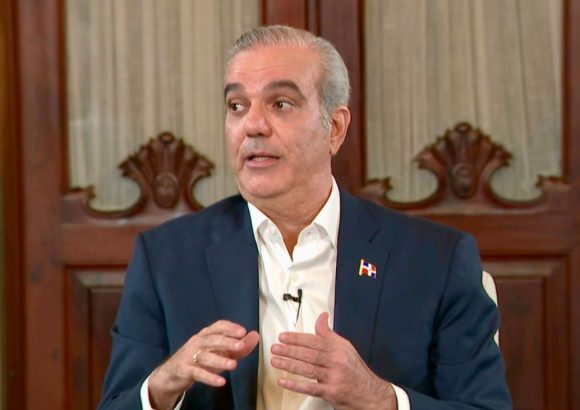
Abinader highlights Dominican economy’s strength and protection of the middle class
In Santo Domingo, Dominican Republic President Luis Abinader has laid out his administration’s strategic economic approach, prioritizing protection for middle-class and vulnerable households while shoring up the country’s macroeconomic stability in the face of ongoing global economic headwinds.
During a recent public interview, Abinader pushed back against calls for sweeping nationwide tax reform, arguing that current global economic volatility creates unfavorable conditions for such a major policy overhaul. Instead, he pointed to the government’s existing Anti-Crisis Plan as a targeted framework that prioritizes the financial well-being of the vast majority of Dominican taxpayers.
Under the plan, Abinader explained, salary indexation will be implemented to bolster the purchasing power of middle-class workers, while adjustments to tax policy are intentionally focused on high-earning individuals making more than 400,000 Dominican pesos (RD$) per month and large corporations. This tiered approach, he noted, ensures that the burden of fiscal adjustment does not fall on working and low-income households.
Addressing recent public confusion over changes to tax withholding for self-employed professionals, Abinader clarified that the increased withholding is not a new tax levy. Rather, it represents an advance payment on income tax obligations that will be credited back to qualifying workers when they file their annual tax returns.
The president acknowledged that persistent global inflation has squeezed household budgets across the Dominican Republic, but he highlighted that the government has already taken action to offset these pressures: the national minimum wage has been raised to a level that outpaces current inflation, helping to maintain workers’ purchasing power amid rising costs.
Looking at the broader Dominican economy, Abinader expressed confidence in its ongoing resilience, citing multiple strong pillars that support sustained growth. These include a booming tourism sector, robust output from the country’s free trade zones, a recovering construction industry, growing exports, steady inflows of remittances from Dominican workers abroad, and consistent foreign direct investment (FDI).
He highlighted that the Dominican Republic attracted more than US$5 billion in foreign direct investment in 2023, a figure that underscores international investor confidence in the country’s economic trajectory. Abinader projected that FDI inflows will grow even further in 2024, a trend that will continue to strengthen the Dominican peso and reinforce the country’s overall macroeconomic stability.