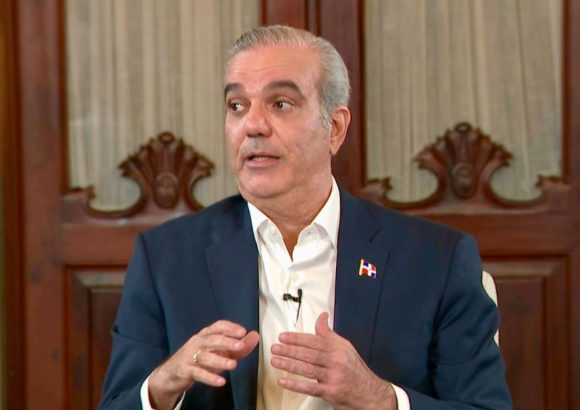
In Santo Domingo, Dominican Republic President Luis Abinader has laid out his administration’s strategic economic approach, prioritizing protection for middle-class and vulnerable households while shoring up the country’s macroeconomic stability in the face of ongoing global economic headwinds.
During a recent public interview, Abinader pushed back against calls for sweeping nationwide tax reform, arguing that current global economic volatility creates unfavorable conditions for such a major policy overhaul. Instead, he pointed to the government’s existing Anti-Crisis Plan as a targeted framework that prioritizes the financial well-being of the vast majority of Dominican taxpayers.
Under the plan, Abinader explained, salary indexation will be implemented to bolster the purchasing power of middle-class workers, while adjustments to tax policy are intentionally focused on high-earning individuals making more than 400,000 Dominican pesos (RD$) per month and large corporations. This tiered approach, he noted, ensures that the burden of fiscal adjustment does not fall on working and low-income households.
Addressing recent public confusion over changes to tax withholding for self-employed professionals, Abinader clarified that the increased withholding is not a new tax levy. Rather, it represents an advance payment on income tax obligations that will be credited back to qualifying workers when they file their annual tax returns.
The president acknowledged that persistent global inflation has squeezed household budgets across the Dominican Republic, but he highlighted that the government has already taken action to offset these pressures: the national minimum wage has been raised to a level that outpaces current inflation, helping to maintain workers’ purchasing power amid rising costs.
Looking at the broader Dominican economy, Abinader expressed confidence in its ongoing resilience, citing multiple strong pillars that support sustained growth. These include a booming tourism sector, robust output from the country’s free trade zones, a recovering construction industry, growing exports, steady inflows of remittances from Dominican workers abroad, and consistent foreign direct investment (FDI).
He highlighted that the Dominican Republic attracted more than US$5 billion in foreign direct investment in 2023, a figure that underscores international investor confidence in the country’s economic trajectory. Abinader projected that FDI inflows will grow even further in 2024, a trend that will continue to strengthen the Dominican peso and reinforce the country’s overall macroeconomic stability.