作者: admin

  • St. Kitts Grill Fest launches first regional BBQ Competition during Restaurant Week – WIC News

    St. Kitts Grill Fest launches first regional BBQ Competition during Restaurant Week – WIC News

    Caribbean barbecue culture is stepping into the regional spotlight this month, as St. Kitts prepares to host the inaugural edition of the St. Kitts Grill Fest Regional BBQ Competition, a highlight of the 10th anniversary celebration of St. Kitts and Nevis Restaurant Week.

    Scheduled to run from 1:00 PM to 9:00 PM on Saturday, July 18 at St. Kitts’ scenic Frigate Bay Lawn, the landmark competition brings together top grill masters from four Caribbean nations beyond the host islands: Anguilla, Barbados and Grenada, all vying for a single overall champion title. Organizers teased the historic event in a promotional Facebook post, asking: “One Title. Five Islands. Who will take the crown?”

    This 2026 iteration of the grill fest expands beyond St. Kitts’ long-running local barbecue contest to create the first regional showcase of Caribbean grilling technique, with five distinct competitive categories for participants. Joining returning staple categories chicken, lobster, pork, and fish is a brand-new 2026 addition: baby back ribs, adding an extra layer of challenge and variety for competitors and attendees.

    To build anticipation ahead of the event, organizers have rolled out a promotional video series dubbed “Firing Up the Grill,” with the first two episodes already released to the public. Behind the scenes, the event has secured key industry support: St. Kitts Marriott Resort and The Royal Beach Casino serves as the official accommodation sponsor, with organizers noting that the sponsorship has been “essential to bringing the experience to life and ensuring a seamless, welcoming stay behind the scenes.”

    Beyond the competitive grilling action, the one-day festival is designed to cater to attendees of all ages. A dedicated kids’ zone will keep younger guests entertained, while the event will also feature a full roster of additional attractions including a cash bar, independent food and beverage vendors, craft displays from local Caribbean artisans, continuous live musical and cultural entertainment, and attendee giveaways throughout the day.

    Anticipation has been building rapidly across social media, with Caribbean food and barbecue fans already expressing their excitement for the competition. One Facebook commenter summed up the mood, writing: “this gonna be super fun competition.. St. Kitts all the way.”

  • Padarath’s security tightened

    Padarath’s security tightened

    A shocking plot to assassinate sitting Trinidad and Tobago Public Utilities Minister Barry Padarath has prompted authorities to ramp up his personal protection, after a detained gang member confessed to police that a former government minister offered him $250,000 to carry out the killing. The heightened security detail now includes specialized protection from the Trinidad and Tobago Police Service (TTPS) Special Branch, a unit tasked with high-risk security assignments for public officials. The full details of the plot have emerged from a sworn statement given to investigators at the Carenage Police Station, dated December 4, 2025, by the suspect who is currently in police custody on unrelated criminal charges.

    According to redacted excerpts of the statement obtained by the Sunday Express, the alleged plot was first set in motion in November 2025. The gang member told investigators he was searching for a high-paying job through a relative, who connected him to a former government minister that owned a local club in McBean. When the suspect approached the ex-minister asking about work, complaining that other connected figures were securing large government contracts, the former official offered him a far more dangerous opportunity: a $250,000 payment to eliminate Padarath, whom the ex-minister criticized as overly outspoken.

    In the confession, the suspect quoted the former minister as saying he would provide all the logistical support needed for the attack, including firearms, vehicles, and detailed information on Padarath’s schedule and locations. The former minister also instructed the suspect to recruit additional accomplices and warned him to keep the plot completely secret. To solidify the agreement, the ex-minister reportedly handed the suspect an upfront payment of $3,000, calling it a “sweetener” to secure his cooperation and pressured him to complete the assassination as quickly as possible.

    When questioned by investigators, the suspect confirmed he understood the phrase “get rid of” Padarath meant killing him, noting the former minister made a throat-slitting gesture to clarify his intent. The ex-minister also described Padarath to the hitman as a talkative, slim Indo-Trinidadian government minister in the current UNC administration, adding that the minister “talks too much” and “had to go.”

    The suspect told police he had never previously accepted a contract killing, though he admitted to carrying out smaller acts of violence for his relative, including assault, intimidation, and needle injection to threaten targets. He added that the relative connected him to the plot because he assumed the suspect had prior experience with violent criminal work. When told of the $250,000 payout, the suspect said he immediately thought the former minister must be insane, calling the offer to kill a sitting sitting government minister shocking even to him.

    Beyond the assassination plot, the suspect also made additional allegations against the former minister, claiming the official runs a large criminal network that traffics cocaine from Colombia and smuggles firearms from both the United States and Colombia through the Port of Point Lisas, with ties to multiple gangs across Trinidad and Tobago. He also named another associate of the former minister who he says manages the drug and weapons smuggling operations.

    The suspect explained he chose to confess to the plot while in custody because he feared for his life outside of detention. He claimed the criminal network has corrupt police officers on its payroll at multiple stations across the country, describing the operation as a well-organized “big organization” that would target him if he spoke publicly about the plot while free. As a result of the confirmed plot, authorities have moved quickly to expand Padarath’s security to neutralize the threat to the sitting minister’s life.

  • Balisier House case could test unexplained wealth laws

    Balisier House case could test unexplained wealth laws

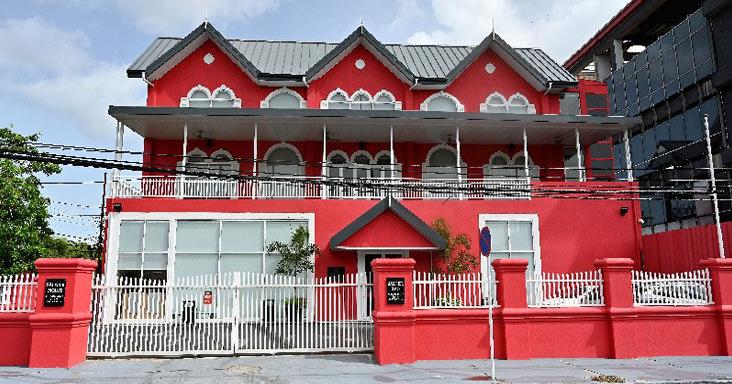
    A high-profile case centered on the construction of the People’s National Movement (PNM)’s multimillion-dollar Port of Spain headquarters, Balisier House, is poised to become a groundbreaking precedent for Trinidad and Tobago’s relatively new unexplained wealth legislation, marking the first documented application of the law in legal proceedings involving a major political party. This assessment comes from attorney Saira Lakhan, who shared her analysis in a WhatsApp response to inquiries from the Sunday Express, following a recent High Court ruling granting an order compelling the PNM to disclose full details of the funding that supported the building’s development. High Court Justice Margaret Mohammed issued the compulsory disclosure order, opening the door for what legal experts say will be a defining moment for the nation’s anti-illicit wealth framework.

    Lakhan emphasized that the case gives domestic courts an unrivaled opportunity to clarify the boundaries and operational mechanics of a law that has only been on Trinidad and Tobago’s books for a few years. “What makes the Balisier House matter unique is that, to the best of my knowledge, this marks the first reported use of the country’s unexplained wealth legislation in proceedings that directly involve a political party,” Lakhan explained.

    Beyond its status as a first-of-its-kind political case, Lakhan noted the proceedings will produce much-needed judicial clarity on how the legislation applies to political party-linked assets, resolving lingering uncertainties around core questions including formal ownership structures, de facto control of assets, identification of eligible respondents in such cases, and the scope of financial disclosure required under the law.

    Crucially, Lakhan cautioned that the court’s approval of this preliminary order does not equate to a formal finding of illegal activity or proof that the funds used to build Balisier House were obtained through unlawful means. “A Preliminary Unexplained Wealth Order is not a final ruling of criminal misconduct, nor does it constitute a definitive determination that the property in question was acquired with funds from illegal sources,” she clarified.

    This case is not the first time Trinidad and Tobago’s courts have examined the country’s unexplained wealth framework. Prior high-stakes proceedings involving multiple individuals — including David and Kendra Neeranjan, and several parties connected to the estate of Sheldon Spring — led to a major review of the legislation by the Court of Appeal in 2023. Those cases ultimately advanced to the Judicial Committee of the Privy Council, which delivered its binding judgment in *Richard Taylor, Assistant Superintendent of Police v Natalie Natasha Spring and another* on April 29, 2026.

    In that ruling, the Privy Council addressed key foundational questions for the legislation: the standard of evidence required to establish reasonable suspicion of unlawful wealth, whether law enforcement can rely on investigations conducted before the law came into effect, and whether a Preliminary Unexplained Wealth Order can be issued against the estate of a deceased person. The appellate body dismissed the appeal and upheld the Court of Appeal’s original ruling. Lakhan explained that the judgment confirms reasonable suspicion required under the act can draw on pre-legislation investigations, so long as the suspicion remains active at the time the application is filed.

    Lakhan also pointed to lessons from jurisdictions like the United Kingdom, which has more experience with unexplained wealth regimes, that can guide Trinidad and Tobago as authorities expand their use of these anti-corruption tools. “One of the clearest takeaways from international experience is that legislation by itself is not enough. Its effectiveness hinges on the quality of underlying investigations, the specialized expertise of the legal and investigative professionals involved, and the fairness and independence of the judicial process,” she said.

    Unexplained wealth probes regularly involve tangled cross-border financial transactions, complex corporate structures, opaque beneficial ownership arrangements, and assets held through shell companies, trusts, nominee holders or third parties, Lakhan noted. As a result, these investigations demand specialized skills from investigators, forensic accountants, legal counsel and other trained professionals.

    “For the legislation to work effectively and retain public trust, every application must be backed by thorough investigation and sufficient credible evidence,” she added. As use of the law becomes more common, Lakhan argued that greater transparency will be critical to maintaining public confidence. She proposed that authorities consider publishing regular aggregated statistics on the volume of applications filed, the number of preliminary and final orders granted, the total value of assets recovered through the framework, and the final outcomes of all proceedings.

    Lakhan stressed that public trust in the unexplained wealth regime will rise or fall based on consistent, impartial application of the law — particularly in high-stakes cases with political implications. “Public confidence depends on both the reality and the perception that the legislation is applied consistently and independently, regardless of the political affiliation, social standing or influence of any person or entity involved,” she said.

    She further clarified that unexplained wealth legislation should be understood as one component of a broader national framework to combat money laundering, organized crime and the illegal accumulation of assets. It is not intended to replace thorough criminal investigations, respect for due process, or formal criminal prosecution in cases where evidence supports criminal charges.

    When asked whether the decision to hire a UK King’s Counsel signals the unusual complexity of these cases, Lakhan noted that Trinidad and Tobago’s still-evolving unexplained wealth legal framework often requires specialized outside expertise as the law develops. The use of international counsel should be evaluated based on the specific legal issues at hand, and is not an extraordinary practice: both the state, private clients and other entities regularly retain overseas legal professionals depending on the unique circumstances of a given case.

    “The hiring of King’s Counsel or other external legal counsel is not inherently unusual,” Lakhan said. She explained that the selection of counsel is shaped by a range of practical factors, including the nature of the proceedings, the specific experience and expertise required for the novel or complex legal questions at hand, the availability of qualified counsel, the composition of the broader legal team, and cost considerations.

    Lakhan concluded that unexplained wealth law remains a developing area of practice in Trinidad and Tobago. The governing legislation, the Civil Asset Recovery and Management and Unexplained Wealth Act No. 8 of 2019, has already been reviewed by both the domestic Court of Appeal and the Privy Council, a fact that underscores the ongoing evolution of legal standards for these proceedings.

  • ‘The lies ruined my life’

    ‘The lies ruined my life’

    More than a decade after being swept up in a high-profile 2011 anti-crime dragnet that he claims was a politically fabricated frame-up, a 60-year-old Trinidadian man is still demanding official compensation for the irreversible damage done to his reputation, livelihood and family bonds.

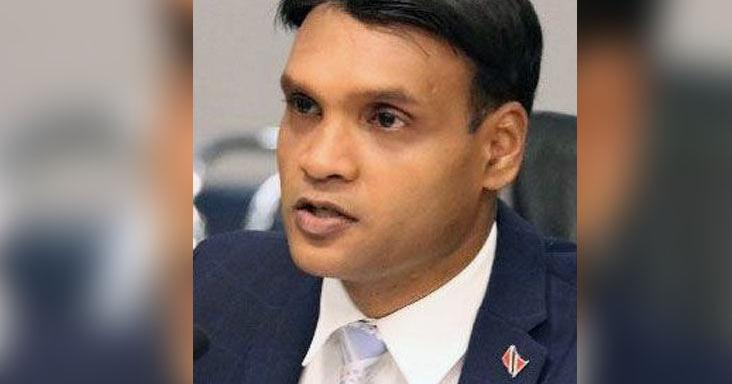
    Ashmeed Mohammed, who now runs a small chicken processing operation and maintains a small farm in the rural community of Rio Claro, is one of approximately 17 Muslim men detained in August 2011 over unsubstantiated claims that they had plotted to assassinate then-Prime Minister Kamla Persad-Bissessar, her Attorney General Anand Ramlogan, and multiple sitting cabinet ministers. The false plot was the core justification the ruling United National Congress (UNC) government used to impose a nationwide state of emergency that lasted from August 21 to December 5 that year, a move framed as a aggressive response to rising violent crime at a time when the opposition People’s National Movement (PNM) was heavily criticizing the administration for failing to address public safety concerns.

    Mohammed says the entire assassination plot narrative was invented from thin air to shore up the UNC’s political standing, with local Muslim communities deliberately targeted to create the illusion of decisive action against a major national threat. He points to what he calls a deeply suspicious coincidence: the date the government claimed the plot was scheduled to launch was exactly the day authorities carried out the coordinated arrests. At the time of his arrest, Mohammed was running a successful import business out of La Romaine, supplying cooking oil to local Chinese restaurants along with event rental equipment like tents, tables and chairs. He was arrested immediately after leaving a bank, where he had just processed a wire transfer to China for an incoming shipment. Police surrounded him with drawn weapons, detaining him on initial claims of illegal weapons and drug possession.

    Over the course of his two-week detention, Mohammed says authorities never presented a shred of evidence linking him to any criminal activity, nor did any senior official question him about the alleged assassination plot. It was not until three days after his arrest that a police officer at the Santa Rosa detention center privately informed him he was being held on treason charges connected to the purported plot. The officer even acknowledged that many people within law enforcement already suspected the government had manufactured the entire scheme, asking Mohammed to keep their conversation confidential.

    He told the *Sunday Express* via WhatsApp that he had no prior connection to 80% of the other men arrested alongside him. Only a handful were familiar acquaintances from his local mosque, including the late Ashmeed Choate, who later died in Syria. Other high-profile detainees named by Mohammed, including David “Buffy” Milliard and Selwyn “Robocop” Alexis, were people he had only heard of before the arrest, never met.

    The aftermath of the unfounded allegations destroyed Mohammed’s life piece by piece. Even though he was never charged or convicted of any crime, all of his domestic and international bank accounts were immediately shut down, forcing him to abandon his import business entirely. He describes the experience as both religious targeting of Muslim residents and deliberate economic ruin.

    The damage extended far beyond his career, fracturing his entire family. Even some immediate relatives cut off contact with him after his release, many out of fear that police would monitor their homes if they associated with him. Others, he says, were die-hard political loyalists of the UNC who fully accepted the government’s false narrative and believed he genuinely planned to harm party leadership. Mohammed, who even had a personal and business relationship with a sitting UNC cabinet minister at the time of his arrest—their wives were both connected to the local Chinese community, and the pair socialized regularly—says this political blind spot affects hardline supporters of both major Trinidadian parties, acting as a form of brainwashing that stops voters from acknowledging wrongdoing by their preferred group. Ironically, the minister Mohammed was supposedly part of a plot to kill was the same official he had counted as a personal friend. When Mohammed sought an explanation from him days after his release, the minister flew into a rage and dismissed him out of hand; now that the minister is out of office, Mohammed says he greets him with friendly hugs whenever they meet.

    Unable to face the constant stigma and public scrutiny in La Romaine, Mohammed retreated to rural Rio Claro, where he has kept a low profile ever since. He has spent hundreds of thousands of Trinidadian dollars on legal efforts to secure compensation from the state, but all attempts have failed. Looking back, he says he and the other exonorated detainees made a mistake by pursuing the case through the courts rather than pushing aggressively for an out-of-court settlement, adding that he believes the government once offered a settlement that the group failed to negotiate properly.

    Now that the UNC has returned to national power, Mohammed says the administration has a moral obligation to redress the injustice it committed. For his part, he says he would accept a grant of state land to expand his current farming business as fair compensation, arguing that after more than a decade of harm, the government can even resolve the matter off the official record if it chooses. “The lies told by the government left a lasting stain on my name and my life,” he says. “All I want now is what is fair for me and my family, who have paid this price alongside me.”

  • Autopsy reveals  girl, 14, beaten  and strangled

    Autopsy reveals girl, 14, beaten and strangled

    A Trinidadian community has been shaken by the tragic death of 14-year-old Andrea Francis, a young teenager with dreams of becoming a hairdresser, whose death was initially ruled a suspected suicide before an autopsy uncovered she was killed via blunt force trauma and strangulation. The teen’s father, Andy Francis, has spoken out publicly to express his horror at the official findings and deny any involvement in his daughter’s death, while authorities confirm the homicide investigation remains ongoing with no suspects detained to date.

    Andrea’s story unfolded against a backdrop of joyful excitement: the 14-year-old had recently sat her Secondary Entrance Assessment (SEA) exams in May 2026, and just two days before her body was discovered on July 4, she received results confirming she had earned a spot at her top-choice institution, Cunupia Secondary School. Described by her father as a friendly, jolly teen who loved singing and dancing, Andrea had been thrilled by her acceptance and was already looking forward to starting the new school term. She had also grieved deeply for her mother, who passed away from medical complications in Guyana just nine months earlier in October 2025.

    On the night of July 3, Andrea went to bed around 9 p.m. in her family’s home at Phyllis Lane Extension, Enterprise, sharing a room with her older sister Arielle, who slept in a separate bed. The following morning at approximately 10:30 a.m., Arielle found Andrea unresponsive in her bed. Initial police assessments did not find visible marks of violence or any suspicious signs on the teen’s body or in her bedroom, leading to early assumptions that her death was a suicide. Andy Francis told local reporters in the days after her death that Andrea had been her usual happy, normal self in her final days, with no indication anything was wrong.

    A formal autopsy was conducted by pathologist Dr. Hubert Daisley on the Friday following Andrea’s death. The examination revealed the true cause of death: a combination of manual strangulation, blunt force trauma to the skull and right eye, and aspiration pneumonitis, confirming Andrea was murdered. In a striking twist, Andy Francis told the *Sunday Express* he learned of the homicide finding not from police or medical officials, but from a random social media post he saw while scrolling at around 11:30 a.m. that same day.

    Francis told reporters that authorities never officially shared the autopsy results or cause of death with him directly. He explained that he visited the San Fernando General Hospital, where the procedure was scheduled, three times that week—on the Monday, Wednesday, and Friday following his daughter’s death. On the day of the autopsy, he told reporters he waited at the hospital until after 3 p.m., when officials only told him the procedure was complete, no cause of death had been determined, and police would continue the investigation. He also pushed back hard against any insinuation of his involvement, saying, “To tell you the truth, I never beat my daughter or anything. The night before, no other time. Look my next daughter here. I have witness in the place here. Nobody never beat her Andrea Francis.”

    To date, Francis says the only contact he has had from investigators is a single phone call from an officer who came to the neighborhood to collect security camera footage from nearby homes, with no formal discussion of the case or notification that he is considered a suspect. Still, Francis acknowledged that the lack of communication from authorities leads him to believe he is being treated as a person of interest: “Well, it looking so to me ’cause nobody ain’t really talking to me. They just doing their thing.”

    Reached for comment by the *Express*, a senior homicide official confirmed that no arrests have been made in the case as of the latest updates. The official added that the investigation is active and that detectives are continuing to pursue all leads to identify and apprehend the person responsible for Andrea’s death.

  • PNM fights back

    PNM fights back

    A high-stakes legal conflict has broken out in Trinidad and Tobago, centered on the funding of the People’s National Movement’s (PNM) new party headquarters, Balisier House, located in Port of Spain’s Tranquillity Street. The clash began after High Court Judge Margaret Mohammed granted a court order on Friday that compels the PNM to disclose the sources of funding behind the multimillion-dollar construction project, a move the ruling political party has decried as a politically motivated attack.

    The court order stems from an ongoing investigation by the Trinidad and Tobago Police Service (TTPS). In July 2026, Police Commissioner Allister Guevarro appointed acting Assistant Commissioner Ramdath Phillip to lead the probe, and subsequently authorized Phillip to file an application for a Preliminary Unexplained Wealth Order (PUWO) under the 2019 Civil Asset Recovery and Management and Unexplained Wealth Act, Section 58(1). The application names PNM trustees as the first respondent and the PNM, represented by its general secretary, as the second. The Commissioner of Police is represented by a high-profile legal team including King’s Counsel Anthony Peto and junior counsel Thomas Cleaver of London’s Blackstone Chambers, with local attorney Dayadai Harripaul acting as instructing counsel.

    In an affidavit supporting the application, Phillip referenced a report from UK-based international consultants Berkeley Research Group (UK) Ltd, commissioned by the Office of the Attorney General. The report estimates the total completed construction cost of Balisier House will reach roughly TT$118.4 million, with around TT$73.272 million of work already finished. Phillip stated that investigators have not been able to identify any legitimate source of PNM income large enough to fund a project of this scale, prompting the request for the court order.

    Responding to the public revelation of the court order, PNM chairman Marvin Gonzales issued a scathing three-page media statement announcing that the party has assembled its own full legal team to challenge the order, and will pursue every available legal remedy to protect the party and its members. As of the statement’s release, Gonzales confirmed the PNM had not received official correspondence or formal service of the High Court order from any state body, in line with court rules that give police seven days from the order’s granting to complete service.

    Gonzales rejected the claims laid out in the police application, dismissing the cost estimates as “grossly exaggerated” and denying any wrongdoing in the project’s funding. He explained that the PNM has owned the land and original Balisier House structure for more than 65 years, and the current redevelopment was never conducted or funded in secret. For over 15 years, Gonzales said, the party has raised funds for the project through open, legal means: official party events, public fundraising appeals, and voluntary donations from thousands of party members, supporters, and backers who view the headquarters as a key democratic institution for Trinidad and Tobago.

    The PNM chairman framed the entire investigation as the latest step in a coordinated smear campaign orchestrated by the incumbent ruling United National Congress (UNC). He claimed the effort first began with unsubstantiated public attacks, then escalated when UNC lawmakers abused parliamentary privilege to make unproven allegations under legislative immunity. Gonzales accused the TTPS of cooperating with a political witch hunt, noting that it was the PNM that originally introduced campaign finance reform legislation in Trinidad and Tobago – a bill the UNC refused to support.

    “Today, the very same political party that rejected campaign finance reform and has been at the centre of well-documented corruption, political kickback and bid-rigging scandals now seeks to cast suspicion on the lawful fundraising activities of the People’s National Movement,” Gonzales said. He accused the UNC government of prioritizing partisan attacks over pressing national issues including economic stagnation, rising crime, unemployment, and gaps in healthcare and education, arguing the administration is weaponizing state institutions to target its main political opposition.

    Gonzales warned that the case fits a growing, dangerous pattern of state-sponsored political intimidation over the UNC’s 14 months in office. He claimed the ruling party has increasingly sought to silence political dissent, using state bodies to collect personal information on opposition figures that could be misused for partisan gain. He called the misuse of state power a threat to all Trinidad and Tobago citizens, regardless of political affiliation, and reaffirmed the PNM’s commitment to defending not only its own legacy but the constitutional democratic rights of all citizens.

    In closing, Gonzales expressed confidence in the eventual outcome of the legal battle: “We remain confident that truth will prevail over propaganda, justice will prevail over political persecution and democracy will prevail over tyranny.”

  • China evacueert meer dan 1,7 miljoen terwijl tyfoon Bavi landt en regio teistert

    China evacueert meer dan 1,7 miljoen terwijl tyfoon Bavi landt en regio teistert

    East Asia is grappling with widespread damage and displacement after powerful Typhoon Bavi made its way across the region, leaving dozens dead, missing and millions displaced over recent days. The storm first carved a path through the Philippines before brushing northern Taiwan, slamming into eastern China, and triggering emergency responses across multiple countries and territories.

    By Saturday, Chinese authorities had evacuated more than 1.7 million people ahead of Bavi’s expected landfall in the coastal province of Zhejiang, where the storm eventually came ashore on July 12 in the city of Yuhuan, packing maximum sustained wind speeds of up to 144 kilometers per hour near its center. In the days leading up to landfall, forecasters captured dramatic imagery of massive waves crashing into Wenling’s coastline on July 10, offering a stark preview of the storm’s impending force. After moving past northern Taiwan on Saturday evening, Bavi tracked northwest inland, bringing with it the threat of catastrophic flooding and wind damage.

    Massive pre-emptive safety measures were rolled out across eastern China to mitigate risk. Beyond Zhejiang, surrounding regions including Fujian Province and the major metropolis of Shanghai also activated emergency protocols. Around 34,000 Shanghai residents living in high-risk coastal and flood-prone areas were relocated, while more than 17,000 trained rescue workers were placed on standby across Fujian. The China National Meteorological Center issued an orange typhoon alert — the second-highest warning level in the country’s alert system — and rolled out the first red heavy rain warning of 2026, signaling extreme flood danger.

    Transportation across the region came to a near-standstill as hundreds of commercial flights were canceled and sections of China’s high-speed rail network suspended operations to protect passenger safety. To support emergency response and recovery, China’s central government has allocated 40 million yuan, equivalent to roughly $5.9 million USD, for disaster relief and response efforts in Zhejiang and Fujian. Hundreds of schools and ferry services across both provinces were also shuttered to keep residents out of harm’s way. Bavi marks the second major typhoon to impact China in just over a week, following Tropical Storm Maysak that made landfall in southern China on July 3.

    The storm’s deadliest impact so far has been recorded in the Philippines, where Bavi amplified seasonal monsoon rains to trigger catastrophic landslides across the country’s southern regions. Official reports confirm at least 17 deaths: 10 people were killed in a single landslide that hit a village in Malapatan, Sarangani Province, with three more still listed as missing. A separate landslide in Calanogas, Lanao del Sur, killed five people and left six others unaccounted for, while two additional people drowned in flash floods in Bukidnon Province. More than 11,000 displaced residents have taken shelter in 77 emergency evacuation centers across the southern Philippines.

    Taiwan also bore the brunt of Bavi’s force, as the storm brought torrential rain and fierce wind to the island. By Saturday evening, local health authorities had recorded at least 113 injuries, most linked to slippery road conditions and motorcycle accidents. Over 14,200 people were evacuated from high-risk areas, including communities in the eastern county of Hualien and the central city of Taichung. Schools and government offices across most of the island remained closed during the storm’s passage.

    Further north, Japanese authorities issued urgent warnings for the country’s southern island chain, centered on Okinawa Prefecture. Officials warned residents to prepare for extreme high waves, powerful gusts, and storm surges, as the storm forced the cancellation of more than 200 domestic and international flights. Islands including Ishigaki have already recorded heavy rainfall and sustained strong winds as Bavi passes through the region.

  • Derde helft WK 2026: Argentinië na ‘reddingsboei’ Embolo, naar halve finales

    Derde helft WK 2026: Argentinië na ‘reddingsboei’ Embolo, naar halve finales

    Reigning world champions Argentina have kept their title defense campaign on track with a convincing 3-1 extra-time victory over a resilient Swiss side at Kansas City Stadium, booking their place in the tournament’s semi-finals where they will face England. Led by star talisman Lionel Messi – who has already notched eight goals throughout this edition of the competition – Lionel Scaloni’s side executed a disciplined, clinical performance to end Switzerland’s historic run at the event.

    Switzerland, who had never advanced beyond the quarter-final stage in the tournament’s history, got off to a bright start, pressing Argentina deep into their own half in the opening exchanges. Once the defending champions managed to push out of their defensive third, however, they carved out clear scoring chances almost immediately. In the 10th minute, Messi delivered a pinpoint corner onto the head of Alexis Mac Allister, who nodded the ball past Swiss goalkeeper Gregor Kobel to open the scoring for Argentina.

    Switzerland’s first attempt on goal came 10 minutes later from Djibril Sow, but his tame effort failed to trouble Argentine keeper Emiliano Martínez. After Mac Allister’s opener, the tempo of the match dropped considerably. Argentina dropped deep to defend their narrow lead, with players going down dramatically under minimal contact to win free kicks and break up Swiss momentum, a tactic that earned consistent favor from the match referee. Switzerland threw everything forward to find an equalizer, but repeatedly ran into a packed Argentine penalty area. Lacking pace and penetration in their attacking build-up, they could not break through the organized defense before half time, leaving the score 1-0 at the break.

    The pattern of play remained unchanged after the restart: Switzerland dominated possession in the opposing half, while Argentina sat back and hit on the break when opportunities arose. In the 50th minute, Dan Ndoye missed a golden opportunity to draw Switzerland level, failing to convert a perfectly weighted through ball from Breel Embolo past Emiliano Martínez. A full hour into the match, Embolo saw his headed effort comfortably saved by the Argentine keeper, and 15 minutes later, Ndoye came close again only to be denied by a sharp save from Martínez. A minute after that, Martínez was called into action once more to block a long-range effort from Granit Xhaka, but Switzerland finally found their equalizer in the 67th minute: Ndoye tucked a diagonal finish into the net from a Ricardo Rodríguez assist, leveling the score at 1-1.

    With Switzerland gaining full momentum, a controversial moment turned the tide of the match in the 70th minute. Embolo attempted to draw a yellow card for an Argentine opponent by going down easily under contact, but VAR used the new tournament rule covering “mistaken identity” to issue Embolo a second yellow card, sending him off and giving Argentina a numerical advantage that the defending champions quickly capitalized on.

    In stoppage time at the end of regular play, Messi tried to finish the match with a spectacular long-range strike, but his effort drifted just wide of the post. Shortly before the final whistle, Lisandro Martínez also saw a spectacular bicycle kick attempt go off target, forcing the match into extra time.

    Argentinia pushed for a quick winning goal in extra time, but the Swiss defense held firm in the early stages. Substitute Thiago Almada came inches away from scoring in the 95th minute, when his shot fizzed just past the post. Messi also forced a free kick in a dangerous area, but the Swiss defensive wall blocked his effort. The decisive goal finally came in the 112th minute, when Julián Álvarez fired a spectacular long-range strike past Kobel to put Argentina ahead 2-1. After Xhaka gave away possession late in the second half of extra time, another substitute, Lautaro Martínez, scored to confirm the 3-1 final score, sealing Argentina’s place in the semi-finals alongside England.

  • APNU proposes Integrity Act amendment to allow for disclosure of asset declarations

    APNU proposes Integrity Act amendment to allow for disclosure of asset declarations

    As public debate continues to swirl around President Irfaan Ali’s technology-focused agricultural project along the Linden-Soesdyke Highway, Guyana’s main opposition bloc A Partnership for National Unity (APNU) has tabled a legislative proposal to amend the country’s Integrity Act, mandating public release of asset declaration summaries for the President, cabinet ministers and other senior public officials.

    In a formal letter submitted to Clerk of the National Assembly Sherlock Isaacs alongside the draft bill, APNU parliamentary leader Dr. Terrence Campbell outlined that the proposed reform is designed to reinforce transparency, accountability and public trust in government. The amendment would require the Integrity Commission to publish summaries of statutory asset declarations held by top elected and executive officeholders, while retaining confidentiality for sensitive information that does not require public disclosure. Under the plan, these summaries would be officially circulated via the country’s Official Gazette.

    Campbell argued that any lawmaker or political party that rejects the broad framework of the bill would send a clear signal they have something to conceal from the Guyanese public. “I want the public to know that anybody who does not support this generally — there might be some changes that they may require — but anybody in Parliament, any parliamentarian, any party that does not support this, has something to hide,” Campbell stated in a public address accompanying the bill.

    Drawing on a regional precedent, Campbell noted that Jamaica’s Integrity Commission already publishes asset declaration summaries for the country’s Prime Minister and Opposition Leader, and proposed extending the same level of transparency to a broad range of senior positions across Guyana’s public sector. The bill would require public summaries for positions including parliamentary secretaries, permanent secretaries, the commissioners of Land Surveys, Geology and Mines, and Forestry, the Commissioner of Police, Deputy Commissioner of Police, chairs and managing directors of state agencies and state-owned corporations, as well as municipal mayors and deputy mayors.

    If the National Assembly declines to convene to debate the proposed amendment, Campbell has called on President Ali and leaders of all parliamentary parties to set an immediate example by voluntarily publishing their full 2025 asset declarations. The opposition leader also offered to lead by example, confirming he would release his own complete asset declaration first thing Monday morning if a cross-party agreement to do so is reached.

    The legislative push comes amid ongoing public uncertainty over the size and financing of President Ali’s Long Creek farm project. Campbell acknowledged that he had prior knowledge of the President’s agricultural venture, but had no idea it spanned as much as 150 acres — a figure first claimed by Opposition Leader Azruddin Mohamed. President Ali has only stated the holding is smaller than 75 acres, refusing to release an exact acreage, and no independent, documented verification of the property’s size has been made public to date.

    President Ali has thus far rejected calls to release public financial records for his business, which includes poultry and livestock operations. He has maintained that he funded the farm through commercial bank lending, that all required asset disclosures have been submitted to the Integrity Commission, and that he has never used his presidential authority to secure improper favors or preferential treatment for the venture. Campbell also confirmed that he has no knowledge of the Integrity Commission launching a formal investigation into the assets submitted by senior officeholders to date.

  • Zapping Haiti of July 12, 2026

    Zapping Haiti of July 12, 2026

    On July 12, 2026, multiple updates across sports, diplomacy, politics, culture, social welfare and infrastructure have emerged from Haiti, covering a range of key developments for the Caribbean nation.

    In international basketball competition, Haiti’s men’s national team has marked a historic milestone in the FIBA AmeriCup 2029 Caribbean Pre-Qualifiers. Playing in Group B, the squad secured a dominant 100-66 victory over Saint Vincent and the Grenadines, marking their second win of the qualifying campaign. This result propelled Haiti from fourth place in the group standings following an earlier match against Grenada up to second position, behind current group leaders Barbados. Haiti’s final group stage match is scheduled for later this same day, July 12, 2026, kicking off at 3:00 PM local time against the Cayman Islands.

    In diplomatic news, Haiti’s ambassador to the Bahamas, Dern Jovens Bonhomme, extended official greetings to the Bahamian people to mark the 53rd anniversary of the country’s independence, which was celebrated on July 10. On behalf of the Haitian government and public, Bonhomme conveyed sincere wishes for lasting peace, shared prosperity, ongoing progress and continued success for the Commonwealth of The Bahamas. “Happy 53rd Independence Day to the people of The Bahamas, the Government of the Commonwealth of The Bahamas, and all our Bahamian brothers and sisters,” the message read.

    In political and security developments, Caribbean Community (CARICOM) will dispatch a high-level delegation to Haiti at the end of this month, following an official invitation from Haitian Prime Minister Alix Didier Fils-Aimé. The delegation will conduct an on-the-ground assessment of the complex security crisis Haiti currently faces, driven by widespread violence from armed criminal groups. During the visit, the prime Minister noted the delegation will also get a first-hand look at progress made in the country’s ongoing electoral process and national efforts to crack down on widespread insecurity.

    On the cultural front, beloved Haitian comedian and writer Joseph-Jacques Alexandre Ducasse, widely known by his stage name “Sejoe”, is currently on a performance tour across France. Haiti’s Consulate General in Paris welcomed the artist during his tour stop on July 11 and 12, 2026. Jean Jocelyn Petit, head of the consular mission, highlighted the significant cultural impact of the tour for Haiti’s diaspora community and Haitian citizens residing in France, and reaffirmed the consulate’s ongoing support for Haitian creative talent that represents the country with pride on the international stage.

    In social welfare improvements for the country’s prison system, Haiti’s Bureau of Human Rights (BDHH) recently completed a distribution of 250 new mattresses to incarcerated people at two prisons in the southern cities of Cayes and Jérémie. The handover was attended by the regional deputy director of Haiti’s national penitentiary administration and the government commissioner for the Court of First Instance of Cayes.

    Finally, in environmental infrastructure progress, local Haitian officials and project partners joined an Inter-American Development Bank (IDB) mission to northern Haiti to inspect the construction site of the new Mouchinette Integrated Solid Waste Management Center. The on-site visit allowed the delegation to review the current pace of construction, align all stakeholders on a shared vision for modern, sustainable waste management, and renew collective commitments to improving local environmental conditions. The $20 million facility, the first of its kind in Haiti, is being built by a Dominican construction firm with specialized expertise in solid waste management, and the full project cost is financed by the IDB.