作者: admin

  • SVG’s investment door ‘unlocked, … held wide open’ – Invest SVG Chair

    SVG’s investment door ‘unlocked, … held wide open’ – Invest SVG Chair

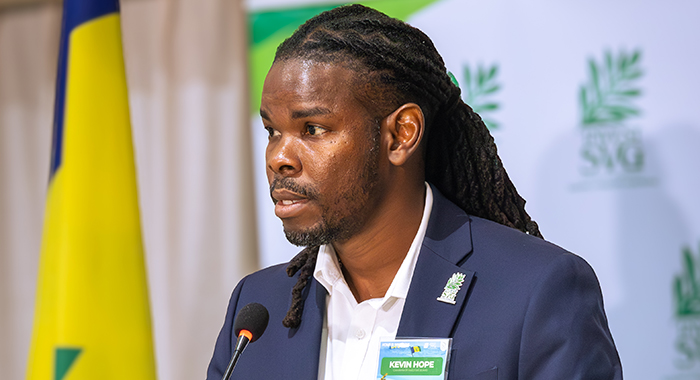
    During a recent diaspora outreach event held in the British Virgin Islands as part of the “Home is Where the Heart Is” tour, top St. Vincent and the Grenadines (SVG) economic official Kevin Hope delivered a landmark announcement that the Caribbean nation is enacting sweeping, systemic reforms to overhaul its investment climate, moving away from a long-standing reputation for bureaucratic gridlock to a transparent, rules-based environment designed to attract global and diaspora-backed investment.

    Hope, who serves as both Ambassador of Finance and Investment and Chairman of the Board of Invest SVG, acknowledged that for decades, the nation’s investment ecosystem has been held back by a reputation for closed doors and excessive red tape. Many potential investors from the global Vincentian diaspora, who recognized the abundant untapped potential of SVG’s natural resources, maritime assets, and skilled local workforce, ultimately walked away from opportunities due to the perceived complexity and inefficiency of bureaucratic processes. But this outdated narrative is no longer accurate, Hope emphasized, noting that the SVG government has repositioned ease of doing business as a top national strategic priority, with far-reaching changes already underway to reshape the nation’s legal, regulatory, and procedural landscape for investors.

    Unlike the previous policy framework that focused exclusively on attracting inward capital investment, the SVG government has adopted a new dual mandate that incorporates two additional core goals: promoting homegrown Vincentian products and services in global markets, and mobilizing the full range of resources held by the Vincentian diaspora around the world. Hope clarified that this focus on diaspora engagement extends far beyond soliciting financial investment; the nation is also eager to leverage the diverse knowledge, professional skills, and global experience that diaspora members have built over decades living and working abroad. As a diaspora member himself who returned to SVG after 25 years living overseas to contribute to national development, Hope offered himself as a tangible example of the open door the government now extends to global Vincentians.

    On the legislative front, the government is advancing a groundbreaking new St. Vincent and the Grenadines Investment Act, which will enshrine binding, legally enforceable protections for all investors. This legislation goes far beyond a symbolic policy statement: it codifies fair and equitable treatment, non-discrimination standards, and consistent, transparent procedural rules that apply equally to diaspora investors and foreign investors, guaranteeing the same high level of legal protection for all parties. The new framework replaces the vague, inconsistent requirements of the previous system with clear, predictable rules that give investors greater confidence to commit long-term capital to projects in SVG.

    In addition to legal reform, the SVG government is completely restructuring its investment incentive system, moving away from broad, one-size-fits-all blanket concessions that delivered little economic benefit to targeted, performance-based incentives that reward concrete, outcome-driven investment. These targeted incentives will be focused on the nation’s priority economic sectors, which include agriculture, tourism, the blue economy, and the cultural and creative industries, aligning private investment with national development goals.

    To address the most frustrating practical bottlenecks for new investors, the government has committed to cutting the timeline for new company registration dramatically. Prime Minister Godwin Friday, who also oversees private sector development policy, has made a public pledge to reduce the process of starting a new business from the current two months to just five business days. To systematically identify and eliminate remaining bureaucratic barriers, the government is assembling a cross-agency Business Investment Reform Team, which will bring together stakeholders from the Private Sector Development Unit, the Ministry of Foreign Affairs, and the Ministry of Finance to root out unnecessary red tape.

    A core piece of the practical reform agenda is the development of a new digital Business Gateway portal, which will allow investors to track permit applications and approval processes in real time. This digital platform will replace the outdated fragmented system that forced investors to navigate multiple separate government agencies in person, replacing it with a single digital window for all investor interactions with the state. For micro, small, and medium-sized enterprises, the government is also strengthening the support ecosystem through a partnership with the Centre for Enterprise Development, building specialized capacity in market research and intelligence to give investors the actionable data they need to make informed business decisions.

    Positioning Invest SVG as both a dedicated partner and advocate for investors throughout their entire journey in the country, Hope noted that the agency has trained specialized staff to support investors from initial application through long-term growth, ensuring that investors do not have to navigate the market alone. Closing his address to the BVI-based diaspora community, Hope emphasized that the reforms are not just symbolic: SVG is ready and waiting to welcome both the skills and capital of Vincentians living abroad, and it is time for the global diaspora to join the nation in building a more resilient, competitive St. Vincent and the Grenadines.


  • High maintenance and proud

    High maintenance and proud

    Against a global cultural backdrop where involuntary celibate (incel) communities are growing rapidly, where gendered norms still pressure women and girls to dim their own accomplishments to lift up men, and where far too many men derive their sense of power from putting women down, single-sex girls’ schools like Girls’ High School (GHS) are far more than a nice-to-have — they are a critical necessity for nurturing the next generation of female leaders.

    This defense comes in response to a recent opinion piece that criticized GHS as an institution that produces “high-maintenance girls” and relies excessively on constant fundraising. Let’s break down why that critique misses the full picture of what GHS actually delivers for its students and the broader community.

    Critics point to GHS’s frequent, often aggressive fundraising campaigns as evidence of unnecessary extravagance. But what these critics fail to acknowledge is that every dollar raised goes toward tangible, impactful opportunities for students that go far beyond the basic education funded by the government. Unlike the outdated narrative that frames girls’ school participation as little more than attending sports day parades and wearing themed spirit wear once a term, GHS offers a vast portfolio of enrichment programs that shape well-rounded, capable young women: from science research clubs and cultural preservation initiatives to community gardening projects, student-led leadership organizations, international exchange programs, and local community development projects. Most recently, a cohort of GHS students completed a transformative cultural exchange program in St. Kitts and Nevis — an experience that broadened their global perspective but would have been impossible without additional funding.

    None of these opportunities materialize on their own. The annual baseline funding provided by the Ministry of Education only covers core operational costs, leaving no room for the extra programs and student support that make GHS stand out. That is why fundraising is not a choice for the school — it is a requirement to deliver on its mission.

    In an interview with current GHS Headmistress Latoya Deroche-John, I learned of even more unseen, impactful work that fundraising makes possible, work that the public rarely hears about. Through the school’s Student Life initiative, funds raised go directly to supporting low-income, underprivileged students by covering basic essentials that many families struggle to afford: daily school breakfasts, prescription eyeglasses, school uniforms, and blouses. This quiet, consistent support is part of GHS’s everyday operation, a commitment to leaving no girl behind that many other schools across the region do not prioritize.

    Deroche-John also clarified a key policy shift that many outside of school administration do not understand. In the past, schools could access targeted project funding through a system called “the vote”, which allowed institutions to lobby for additional allocations for specific programs. That system is no longer in place, leaving schools to rely on their own resource generation to expand beyond core services. The Ministry of Education’s current annual school budget is modest at best: it covers only basic necessities and minimal operational support, falling far short of what is needed to sustain enrichment programs, maintain campus facilities, and meet the diverse everyday needs of the student body.

    This context makes clear: when GHS students, parents, and alumni are constantly organizing fundraisers, it is not because the school is frivolous or unnecessarily high-maintenance. It is because delivering excellence requires investment. Holistic student development costs money. Life-changing cultural exchanges cost money. Extracurricular clubs that build new skills cost money. Feeding food-insecure students costs money. Providing a low-income student with the eyeglasses they need to clearly see the whiteboard and keep up with their studies costs money.

    Critics did raise one fair, legitimate concern: what happens to girls from low-income families who cannot afford to contribute to these fundraising efforts? The good news is that GHS has long centered equity as a core value, operating under the principle that excellence should never be a privilege reserved only for wealthy students.

    From my own time as a GHS student, I can attest to this commitment. Students were encouraged to contribute what they could, even if it was just one dollar a day. Older students, alumnae, and community donors regularly step in to cover gaps for students who cannot contribute. If a student shows a willingness to participate and grow, the school finds a way to make that happen — no one is excluded because their family cannot pay.

    That is because GHS’s core expectation has never been just that students show up to class. The expectation is that every girl will achieve excellence. Under Deroche-John’s leadership, students are taught that they are not just learners — they are future stewards of society, called to lead, to outperform, and to claim space in fields that have long been dominated by men.

    And GHS’s track record speaks for itself. Alumnae of the school have gone on to hold roles as politicians, journalists, diplomats, doctors, nurses, small business owners, public servants, and leaders across every sector of society. GHS does not just teach students to pass exams — it emboldens young women to reject the cultural pressure to shrink themselves, to stand tall in a world that still too often tries to diminish women.

    So to the critics who call us high-maintenance: we own that label, and we are proud of it. At GHS, we teach girls to expect respect, expect dignity, expect excellence, and to believe they deserve the very best that life has to offer. And every single dollar raised to make that mission possible is more than worth it.

  • Sandy Bay man to pay for injuring hearing-, speech-impaired man

    Sandy Bay man to pay for injuring hearing-, speech-impaired man

    A 30-year-old resident of Sandy Bay has received a mixed court sentence including a bond, financial penalties, and mandated compensation after pleading guilty to a 2024 assault that left a 51-year-old disabled fellow villager with a facial laceration. The case concluded on April 4 at the Georgetown Magistrate’s Court, where defendant Rolston Hoyte appeared before presiding Magistrate Kaywana Jacobs for re-arraignment at the request of his defense attorney, Charmaine Walters. It was during this hearing that Hoyte changed his previous plea to a guilty plea, taking open responsibility for the violent incident.

    Before prosecution attorneys laid out the official facts of the case, Walters gave Hoyte the opportunity to address the court directly. In his statement, Hoyte acknowledged he was heavily intoxicated at the time of the attack and extended a direct apology to his victim, Henderson “Dummy” Browne, who lives with permanent hearing and speech impairments.

    The official case narrative, presented by Police Inspector Corlene Samuel, details the unprovoked attack that unfolded shortly after 5 a.m. on November 24, 2024. Browne was at the popular OTR Lounge Night Club in Sandy Bay, accompanied by family and other patrons, when he stepped outside the main building to the side of the venue. Hoyte approached Browne and asked him for a drink, which Browne declined. The rejection triggered an angry outburst from Hoyte, who immediately initiated a physical altercation with the disabled man. During the fight, Browne sustained a deep cut to the left side of his face from an unidentified object. Browne and his legal guardian subsequently filed a formal report with local law enforcement, and the case was assigned to Corporal 860 Cobbler for investigation.

    In her mitigation argument to the court, Walters emphasized Hoyte’s genuine remorse for his actions, his willingness to accept a guilty plea, and his young age as reasons to grant him leniency. She framed the incident as an out-of-character incident fueled by excessive alcohol consumption, telling the court “it was the rum bottle talking that night”, and requested the court hand down a sentence of a bond and fine rather than active prison time.

    However, Inspector Samuel pushed back on the request for leniency, noting that Hoyte has a prior criminal record and that this was not his first time facing a criminal charge. She confirmed that the attack was entirely unprovoked, but ultimately aligned with the defense on a request that Hoyte be placed on a bond and ordered to pay compensation to Browne, with the amount left to the magistrate’s discretion.

    After carefully weighing both the aggravating factors of the unprovoked attack on a disabled victim and Hoyte’s prior record, alongside mitigating factors including his guilty plea and expression of remorse, Magistrate Jacobs delivered her final sentence consistent with local sentencing guidelines. Though the court initially considered a prison term of two years and 11 months, Jacobs noted that Hoyte’s last prior conviction dated back to 2020, and none of his previous offenses were similar in nature to the current assault charge, justifying leniency. Upon examining the facial injury Browne sustained, Jacobs found the resulting scar is barely visible, but still ruled that the victim deserved compensation for the pain and suffering he endured.

    The final sentence ordered Hoyte to pay EC$2,000 in compensation to Browne by July 3, with a default sentence of 12 months in prison if the payment is not completed on time. Hoyte was also placed on a one-year bond in the amount of EC$1,000; if he violates the terms of the bond, he will be required to pay the full amount immediately or serve nine months in prison. Additionally, Hoyte was fined EC$300, due by July 3, with a three-month prison sentence for default. Closing the hearing, Jacobs told Hoyte explicitly that the sentence was intended as a second chance to reform his behavior.

  • Trump verwerpt Iraanse vredesvoorstellen; conflict en spanningen in Golfregio blijven hoog

    Trump verwerpt Iraanse vredesvoorstellen; conflict en spanningen in Golfregio blijven hoog

    After 10 weeks of open conflict between the United States and Iran, hopes for a swift diplomatic resolution have been dashed, leaving regional security and global energy markets on edge. On Sunday, former President Donald Trump flatly rejected Iran’s counterproposal to a U.S.-drafted peace framework, extending a standoff that has already inflicted widespread damage across the Middle East and disrupted one of the world’s most critical energy chokepoints.

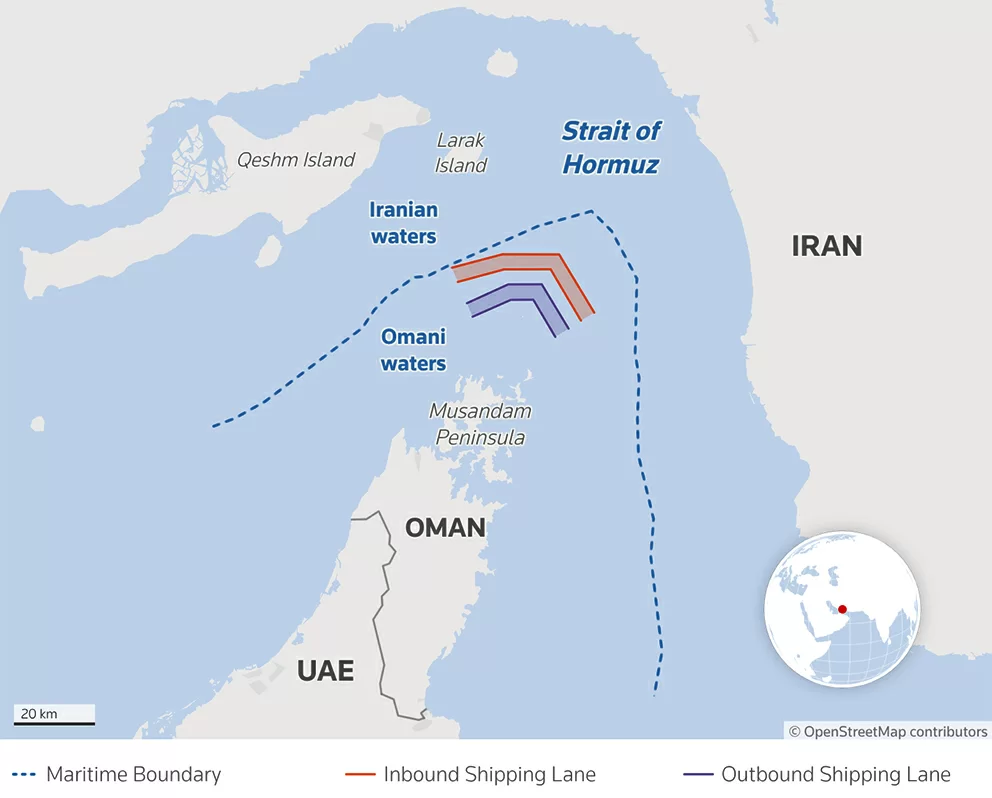
    The clash, which erupted in late February, has caused extensive harm to civilian and infrastructure across Iran and Lebanon, brought most commercial shipping through the Strait of Hormuz to a near-standstill, and pushed global energy prices sharply higher. The 21-mile waterway, which carried roughly one-fifth of the world’s total oil supply before the outbreak of hostilities, remains the conflict’s most globally impactful flashpoint.

    Iran tabled its counteroffer to the U.S. proposal earlier last week, on Wednesday. The Iranian plan centers on an immediate end to all hostilities across every front of the conflict, with specific priority given to de-escalation in Lebanon, and guarantees for unimpeded commercial navigation through the blockaded Strait of Hormuz. Key demands in the proposal include war damage reparations from the U.S., formal international recognition of Iran’s territorial sovereignty over the Strait, full lifting of U.S. economic blockades and long-running sanctions on Tehran, and an end to the U.S. ban on Iranian crude oil exports.

    Within hours of the proposal’s public release, Trump rejected the plan outright via social media, writing simply: “I do not like it – COMPLETELY UNACCEPTABLE.” Markets reacted instantly: global benchmark crude prices jumped $3 per barrel within minutes of the announcement, as traders priced in prolonged disruption to energy supplies.

    The original U.S. peace framework had called for an immediate ceasefire as a first step, with negotiations on thorny core disputes including Iran’s nuclear program to follow. According to anonymous sources familiar with the discussions, Iran has already signaled willingness to compromise on the nuclear front, offering to dilute most of its stockpile of highly enriched uranium and transfer the remaining supply to a neutral third country for safekeeping. Pakistan, which has served as the primary neutral mediator between Washington and Tehran, transmitted Iran’s full peace proposal to U.S. officials following its completion.

    Despite a month-old ceasefire that had brought several days of relative calm to the region, hostile drone activity was detected over multiple Gulf Cooperation Council states on Sunday, a stark reminder that the risk of renewed escalation remains acute. Even amid the standoff, small signs of limited de-escalation emerged this week: for the first time since the conflict began, a Qatari Energy-operated liquefied natural gas carrier, the Al Kharaitiyat, completed a safe transit of the Strait of Hormuz en route to Pakistan’s Port Qasim. Iran authorized the passage as a gesture of goodwill to Pakistan and Qatar, both of which have acted as mediators in the peace talks. Separately, Iran’s semi-official Tasnim News Agency reported Sunday that a Panamanian-flagged bulk carrier, which had been turned away when it attempted to transit the Strait on May 4, was finally permitted to pass through a corridor designated by Iranian military forces.

    Diplomatic pressure for a resolution is mounting as Trump prepares for an upcoming visit to China, as the ongoing conflict has already triggered a widespread global energy crunch that threatens to undermine fragile growth in the world economy. On Sunday, Trump acknowledged in a televised address that while Iran has suffered heavy military losses, it has not yet been fully defeated and hostilities are far from over. Israeli Prime Minister Benjamin Netanyahu echoed that assessment, noting that “additional work is required” to neutralize Iran’s nuclear program and ballistic missile program, adding that while diplomacy remains the preferred path forward, a military option remains on the table.

    For its part, Iran has shown no willingness to back down on its core demands. Iranian President Masoud Pezeshkian reiterated Sunday via social media that Iran “will never bend to the enemy” and will defend its national interests with unwavering resolve. In recent days, violence has actually intensified around the Strait of Hormuz even amid the ceasefire: there have been multiple reported incidents of intercepted drones over the United Arab Emirates, a drone attack on a cargo vessel in Qatari territorial waters, and active anti-aircraft operations in Kuwait. Fighting also continues unabated in southern Lebanon between Israeli forces and Iran-backed Hezbollah militias, despite a U.S.-brokered ceasefire reached on April 16. New peace talks between Israeli and Lebanese delegations are scheduled to kick off in Washington on May 14.

    Internationally, the Trump administration faces a lack of broad support for a unilateral military mission to reopen the Strait of Hormuz without a full peace agreement, with NATO allies uniformly hesitant to join such an operation. Domestically, Trump also faces growing pressure from opposition Democratic lawmakers, who are pushing legislation to force an immediate end to U.S. involvement in the conflict. Senate Armed Services Committee ranking member Jack Reed, the panel’s top Democrat, issued a scathing rebuke of the administration’s handling of the crisis Sunday, saying: “This situation has only been made worse by Trump’s own choices. Now he is desperately scrambling to find a way out.”

  • Cuban tobacco is also being rolled using solar energy

    Cuban tobacco is also being rolled using solar energy

    For a Cuban tobacco producer in the eastern province of Las Tunas, the shift to renewable energy is more than an environmental initiative — it is a lifeline for an industry with centuries of local heritage that has struggled with crippling power instability and economic headwinds in recent years.

    The Las Tunas Tobacco Collection, Processing, and Rolling Company (known locally by its Spanish acronym ABTT) now produces nearly 60 kilowatts of electricity through newly installed photovoltaic panels across its manufacturing facilities, which supply premium cigars for both domestic consumption and global export markets. While integrating renewable energy has been a core part of the company’s strategic roadmap for several years, the initiative was derailed for a period by persistent shortages of foreign currency, which blocked the purchase of critical equipment.

    Before the solar rollout, chronic unreliable grid power forced frequent work stoppages across ABTT’s production workshops. Those disruptions hit output hard: at the time the transition plan was launched, the firm produced just over 400,000 export-quality cigars and nearly 1.5 million units for domestic sale, with annual revenue losses from outages topping 26 million pesos.

    To address the crisis, parent group Tabacuba Business Group launched a full-scale energy transition across all core operations, starting with the Vidal Navas and Maniabón factories in Puerto Padre, which prioritize production for international export. Additional photovoltaic systems were added to select workshops at the Enrique Casals facility in Las Tunas municipality, another site focused on overseas sales.

    Building on the early success of these first installations, the Lázaro Peña plant in Jobabo — which supplies the domestic market — is set to bring two 6-kilowatt solar panel modules online in the coming period, a change designed to reshape the facility’s energy profile and protect its consistent production output. According to Carlos Betancourt Almaguer, Development Director at ABTT, additional photovoltaic infrastructure will be rolled out incrementally across remaining workshops in the province, while contracting for new systems is already underway for other key sites, including a central tobacco sorting center and the company’s main distribution warehouse.

    Beyond stabilizing production levels, Betancourt Almaguer noted that the shift has already improved workplace conditions for employees. Previously, unscheduled outages forced early shutdowns, cutting into workers’ daily wages. Now, staff arrive at the facility confident that production will proceed as planned, eliminating unexpected lost income.

    The solar transition is not limited to manufacturing: the company has partnered with the Agricultural Projects Company and the Ministry of Agriculture to install solar-powered irrigation systems in 18 new seedling houses across nine independent tobacco producers’ farms. This on-farm renewable infrastructure will ensure planting can be completed on the optimal schedule, boost crop yields, and add greater reliability to the annual tobacco growing campaign.

    For Las Tunas, a region with tobacco production roots stretching back to the 18th century, this widespread energy shift could mark the first step toward a broader industry recovery. After a revival of tobacco cultivation in 1993, the region saw rapid growth that cemented its status as one of Cuba’s top tobacco producing areas, hitting a peak in 2017 with a harvest of 1,276 tons of raw tobacco. In recent years, however, production has dropped sharply, with current annual output barely exceeding 100 tons. Industry leaders hope that resolving power instability through renewable energy will reverse that trend and restore the region’s historic standing in Cuban tobacco.

  • The Major still rides across his plains, on his Island

    The Major still rides across his plains, on his Island

    Some historical dates are etched permanently into the collective consciousness of a nation, and May 11 stands as one such milestone for Cuba. On this day in 1873, at just 31 years old, Cuban independence leader Ignacio Agramonte fell in battle — but 153 years later, Cubans, especially residents of his home province of Camagüey, insist he never truly stopped riding forward for his country.

    Looking back at Agramonte’s extraordinary choice in his young adulthood remains striking even in 2026. At 26, this newly married lawyer born into a privileged wealthy family walked away from every comfort and security life had given him to join a risky, uncertain war for Cuban independence. Many would have labeled his choice reckless, even foolish. But Agramonte held unshakable clarity about the moment he lived in: he knew his country needed him, and he stepped forward to confront the Spanish colonial empire of the era without hesitation.

    Agramonte’s legacy extends far beyond his reputation as a fearless military commander. Over his five years of fighting, he participated in more than 100 battles, but he was also a gifted thinker, lawyer, and committed constitutionalist. He drafted the first Constitution of the Republic in Arms, and he defended the abolition of slavery with the same fierce determination that led his charges against Spanish colonial forces. Even amid the chaos of war, he remained a devoted husband, writing tender, heartfelt letters to his wife Amalia that still move readers today: “Only for you, always for you.” For Agramonte, his commitment to his country never erased his love for his family — it was the foundation of his fight.

    For the people of Camagüey, Agramonte’s influence is woven into the identity of the region itself. To say one is from Camagüey is not just to state a place of birth; it is to embrace a set of values shaped by Agramonte’s example: honesty, dedication to education, and unpretentious courage. Today, that legacy is not locked away as a dusty museum relic or a static bronze monument. Instead, it acts as a mirror held up to modern Cuban youth, and it reflects Agramonte’s spirit in every young person working to move the country forward amid ongoing challenges, including decades of U.S. economic blockade.

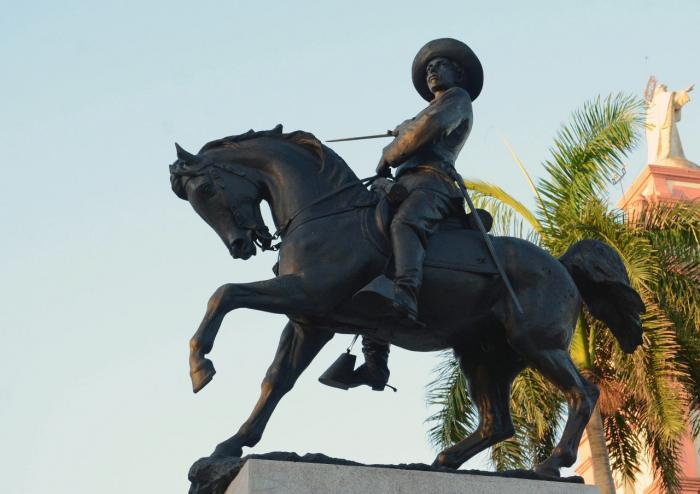
    The bronze equestrian statue of Agramonte that stands in Camagüey’s central park, sword raised and gaze fixed forward, is more than a memorial. It is a symbol of the legacy that lives on in contemporary Cubans: the students who show up to learn, the creators who build new opportunities, the workers who show up for their communities day after day. Agramonte does not demand modern Cubans follow his path to the battlefield; he calls on them to refuse indifference to injustice, and to fight today’s battles with intelligence and the same unwavering commitment he embodied 153 years ago.

    As Cubans mark this anniversary, they see Agramonte not as a figure of the past, but as a guardian of the present, and a blueprint for the future. Every time a resident of Camagüey walks past the statue and looks up, they see more than cold bronze: they see a young man who answered his country’s call without hesitation, and that same spirit lives on in every young Cuban who carries that legacy forward. As long as there are young Cubans with pride in their hearts, the strength to persist, and the tenderness to care for their communities, the Major will never have fallen. He continues to ride across the plains of his home island, leading the way forward.

  • Column: Moederdag – tussen hemel en modder

    Column: Moederdag – tussen hemel en modder

    Every year as Mother’s Day rolls around, political parties across the Netherlands twist themselves into elaborate contortions to craft flowery, flattering tributes to mothers everywhere. Rhetoric of praise, admiration, and respect fills public spaces, with endless highlights of maternal strength, relentless dedication, and quiet sacrifice laid out for all to see. But this year, those pretty words proved as hollow as water – literally, in communities across the country’s northern region.

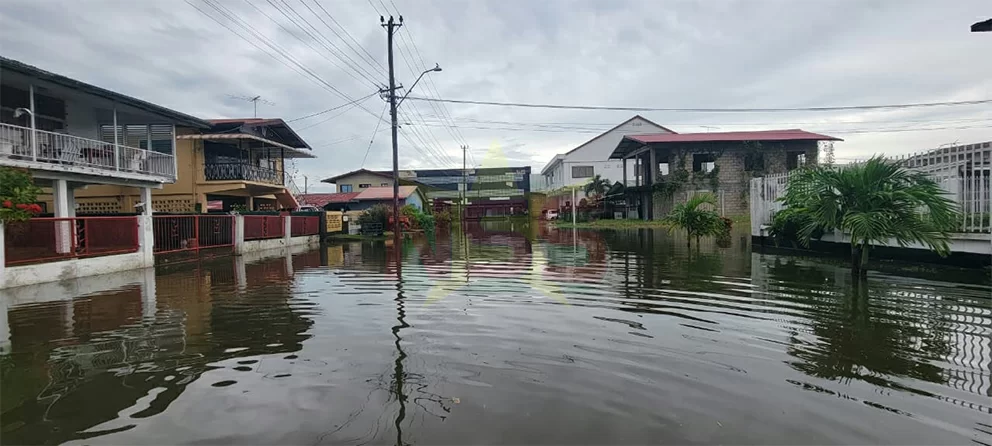
    Unrelenting rain poured through the entire night and most of the preceding day, leaving widespread street flooding that trapped thousands of residents in their homes, keeping them from traveling to visit their mothers for the holiday. Floodwaters reached knee-deep across residential neighborhoods, carrying a toxic slurry of casually discarded waste: plastic water bottles, splintered wood, food containers, aluminum beer cans, and all the everyday trash that communities so often dispose of carelessly. Drone footage captured the stark transformation clearly: where smooth asphalt once ran, murky brown floodwater now stretched as far as the eye could see, erasing the line between public streets and local canals in the northern part of the country.

    While local residents could only watch helplessly as floodwaters climbed, swallowing up yards and creeping into ground floors of homes, many local mothers who had spent days preparing small Mother’s Day ventures saw their hard work wash away alongside the flood. Bakers spent hours baking cakes and pastries to sell for the holiday, craft workers assembled handmade goods, and small vendors set up pop-up stalls along popular routes, all hoping to earn a little extra income for their own families. The rare potted plants that survived the deluge along Tourtonnelaan were the exception; most flower arrangements were completely submerged, turning the entire investment into a total failure. And even those vendors who managed to save their stock saw no customers, as flooding kept potential buyers trapped at home.

    This juxtaposition of empty celebratory rhetoric and harsh reality stretches far beyond the flooded streets of the Netherlands, however. Across the globe, millions of mothers face systemic violence, poverty, and conflict that make a celebratory Mother’s Day unthinkable.

    In Sudan, mothers and children are slowly dying from widespread starvation as conflict devastates food systems. In Gaza and Ukraine, mothers and daughters are killed in indiscriminate rocket and airstrikes. In war zones around the world, sexual violence against mothers and children is used as a deliberate weapon of war, targeting those who are most vulnerable. These are not abstract statistics: they are daily realities for millions of women who hold the role of mother.

    Can a mother trapped in besieged Gaza spare a thought for the commercialized celebration of Mother’s Day? Can a child who lost their mother in a bombing in Ukraine stop to plan a tribute to the parent they have buried? Can a mother in Pakistan who lost her son to a terrorist attack find any joy in a holiday celebrating maternal bonds? Do women living through unending civil war in Syria even allow themselves to dream of a quiet, safe day of celebration? And on Mother’s Day itself, how many mothers around the world still face the terror of domestic abuse behind closed doors?

    The answer is that all these realities are happening at the same time, right this second. While families in relatively safe, wealthy regions ate cake and watched floodwaters carry away ruined flower displays, other mothers across the globe were being buried, assaulted, or simply abandoned by the international community.

    Mother’s Day is a beautiful tradition for those fortunate enough to be able to set aside the world’s harsh problems for 24 hours. But it is a mistake to pretend that a single day of flattering rhetoric and social media posts can fix the deep inequities that leave the most vulnerable mothers behind. The mothers who need the most support, a shoulder to lean on, and systemic change are rarely the ones who get flowery public tributes from politicians.

    Instead, they get floodwaters that destroy their livelihoods, silence from global leaders, or nothing at all. That is not a celebration of motherhood. That is the unvarnished reality of how the world actually works. It is worth pausing to reflect on this truth before posting another polished, perfect tribute to motherhood online.

  • Geen zicht op oplossing voor ontwatering; landbouwers dreigen alles te verliezen

    Geen zicht op oplossing voor ontwatering; landbouwers dreigen alles te verliezen

    By May 11, widespread flooding has crippled parts of Paramaribo, Wanica and Saramacca in Suriname, leaving local farmers facing catastrophic, imminent losses as decades of mismanagement and flawed policy decisions have left the region’s critical Saramaccakanaal drainage system unable to handle extreme rainfall.

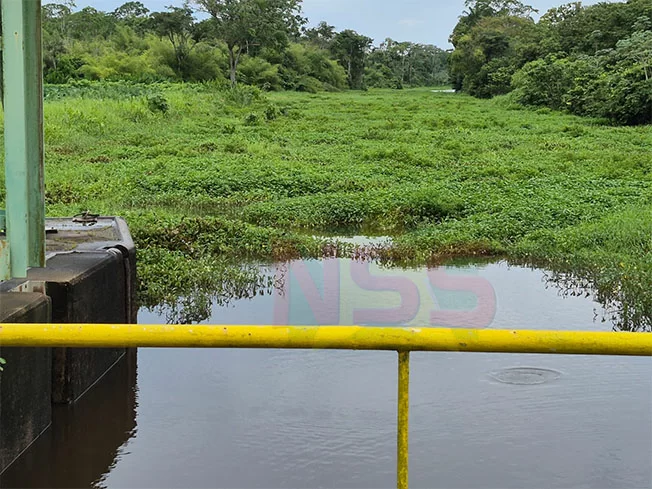
    The 25-kilometer Saramaccakanaal serves as the primary drainage artery for the low-lying coastal region, connecting the Suriname River to the Saramacca River and carrying excess water away from residential areas, infrastructure and thousands of hectares of agricultural land. Just two years after a major cleanup, the canal and its feeder canals are already choked with overgrown vegetation and illegally dumped waste, cutting their capacity dramatically. When paired with record high water levels in the Saramacca River driven by intense inland rainfall, the entire system has ground to a halt.

    The key sluice gate at Uitkijk/Creola, which relies on gravity to drain water from the canal into the river, cannot operate even at low tide. For the gate to function, the river’s water level must sit lower than the canal’s, but persistent heavy rainfall has left the two levels nearly identical, eliminating the elevation difference needed to move excess water out. A small, existing pumping station only serves a fraction of the Uitkijk polder, leaving the vast majority of the region with no active water removal. Feeder canals that are supposed to channel runoff into the main Saramaccakanaal are entirely overgrown, trapping water on roads, residential plots and farmland, with water levels showing almost no sign of dropping days after the worst rain passed.

    For local farmers, the situation has already devolved into a humanitarian and economic disaster. Entire crop plantations are submerged, and growers warn that most plants will rot and become a total loss within 24 hours if water is not drained immediately. Many farmers have carried outstanding loans to plant their seasonal crops, and widespread losses threaten numerous small and mid-sized operations with bankruptcy. Frustrations run high: farmers say they have warned successive national governments about the decaying drainage infrastructure, blocked canals, and insufficient capacity for decades, but their warnings have gone unanswered. “Successive governments have left farmers to fend for themselves,” many growers said bitterly.

    Technical experts and local politicians confirm that the current crisis is rooted in long-standing structural failures and bad decision-making on a major World Bank-funded drainage rehabilitation project. The $35 million project was supposed to upgrade the Saramaccakanaal system, but lawmaker and large-scale Saramacca farmer Mahinder Jogi, from the ruling VHP party, says planners ignored critical technical advice to install two large capacity pumping stations – one at Uitkijk on the Saramaccakanaal and one at the Suriname River end.

    Jogi explains that the Creola sluice was never designed to serve as the primary outlet for flood water; it was originally built to support shipping and provide water to agricultural areas during dry seasons. Without large pumping stations, the system cannot actively push water out into the river when the water levels are aligned, leaving the region completely vulnerable during extreme rain events. Jogi also alleged that project leaders ignored expert input to prioritize contracts that benefited a small group of insiders, failing to deliver the functional flood protection the region was promised.

    Independent engineering experts agree with this assessment. Ravi Patandin, an engineer with leading Surinamese engineering firm Ilaco, told reporters that the existing gravity-based system is already at its absolute limit during periods of extreme rainfall, which are becoming more frequent and intense due to climate change. Patandin noted that gravity drainage is only possible for a few short hours around low tide, and when river levels remain elevated even at low tide, no drainage can occur at all. He added that small pumping stations would make no meaningful difference in a crisis of this scale; to properly protect the region, pumping installations with a capacity of 20 to 30 cubic meters of water per second are required, matching the large-scale system that already protects the Wakay area in Nickerie.

    Ongoing rehabilitation work on five sluice gates and one navigation lock at the Suriname River end of the canal is not scheduled for completion until August or September 2026, meaning no relief can come from that project for months. The work, which launched in 2024, has been slowed by lengthy procurement, design, manufacturing and shipping processes for replacement parts, and one sluice is already completely out of service, worsening the current backlog. Workers are keeping as many existing drainage points operational as possible in the interim, but the capacity remains far too low to handle the current flood volume. Even when the rehabilitation is complete, it will only restore roughly 60 percent of the canal’s drainage capacity, and the problem will remain unresolved until the large pumping stations are added at Uitkijk and other critical points.

    Beyond infrastructure investment, experts say chronic under-maintenance and public non-compliance have made the crisis far worse. Even after the 2024 cleanup, the canal and feeder trenches have become choked with overgrown vegetation, and large volumes of household and construction waste are illegally dumped into the waterway, further blocking flow. Patandin emphasized that regular, consistent maintenance is non-negotiable to keep the system functional, and that local communities must also take responsibility to stop dumping waste into drainage channels.

    As climate change increases the frequency of intense, short-duration rain events, Suriname’s flat coastal region will remain extremely vulnerable to repeated catastrophic flooding unless the government implements long-term structural fixes. Experts warn that temporary patchwork measures will no longer be enough to protect communities and the critical agricultural sector: without expanded pumping capacity, fully functional sluices, and consistent long-term maintenance, flooding events will only grow more severe with each passing rainy season. Right now, losses are mounting by the day as floodwaters remain stagnant across thousands of hectares, leaving farmers waiting for a rescue that experts warn will not come for months.

  • Preparations for the parade on the occasion of Flag Day in Cap

    Preparations for the parade on the occasion of Flag Day in Cap

    As the northern Haitian city of Cap-Haïtien gears up for its annual Flag Day parade on May 18, local municipal authorities have announced targeted infrastructure work that will get underway next week. The Cap-Haïtien Municipal Administration confirmed Monday that starting the week of May 11, 2026, comprehensive repairs will be carried out along Espagnole Street, alternatively called Street L, stretching from 2nd L Street through to 22nd L Street.

    The project is being led by Haiti’s National Directorate of Drinking Water and Sanitation (DINEPA), as part of the agency’s broader mission to upgrade public infrastructure and expand access to quality basic services across the region. The upcoming repairs are timed to improve road conditions and public spaces ahead of the Flag Day procession, which draws hundreds of participants and spectators to the city’s streets each year.

    To keep the project on schedule and avoid disruptions, municipal officials have issued a series of requests to local residents and motorists. All community members who live or operate businesses in the affected corridor have been asked to clear all personal belongings and obstructions from sidewalks and public areas in the work zone. A specific parking ban has been put in place for the evenings of May 13 and 14, 2026, when construction crews will be carrying out critical phases of the work that require full access to the roadway.

    Officials have also reminded residents to avoid disposing of trash and waste in the work zone, as litter can slow construction progress and create safety hazards for technical teams. Municipal leaders emphasized that the success of the repair project depends entirely on broad civic cooperation from the local community, noting that citizen buy-in will allow construction crews to complete their work efficiently and without unnecessary delays.

    In closing, the Cap-Haïtien Municipal Administration extended its advance gratitude to the public for their patience, sense of civic responsibility, and cooperation ahead of the project. The work is expected to be completed in time for the Flag Day parade, leaving the corridor safer and more accessible for event attendees and local residents alike.

  • Haiti : Dismissal of the Director General of the Ministry for the Status of Women

    Haiti : Dismissal of the Director General of the Ministry for the Status of Women

    A leadership shakeup at Haiti’s Ministry for the Status of Women and Women’s Rights (MCFDF) has ignited widespread backlash from women’s advocacy groups across the country, after a veteran female senior official was ousted from the top administrative post and replaced by a male interim predecessor.

    The official removed from the role of Director General is Sandy François, a career public servant with 28 years of institutional experience at the ministry. François was first appointed to the director general position in July 2024 by former MCFDF Minister Marie Françoise Suzán, building on her decades of work advancing women’s rights within Haitian government structures.

    Taking her place is Hémanex Gonzague Désir, who previously filled the role on an interim basis for 18 months prior to François’ 2024 appointment. The decision to appoint a man to lead the government body dedicated exclusively to advancing women’s status and rights has drawn fierce condemnation from dozens of Haitian feminist organizations. Prominent groups including Platfòm Fanm Angaje pou Ayiti and Nègès Mawon were among the 14+ advocacy groups that released an official joint statement denouncing the move on May 9, 2026.

    In the statement, the coalition of rights groups argued that the personnel change represents a major step backward for gender parity in Haiti’s senior government ranks. The coalition emphasized that the reshuffle leaves Haitian women holding just 3 of the 18 available Director General positions across all national ministries — a figure that falls drastically short of both the 30% minimum gender quota for civil service leadership enshrined in the Haitian Constitution and the country’s constitutional guarantee of full gender equality.

    The personnel shift is part of a broader government-wide restructuring under Prime Minister Alix Didier Fils-Aimé, which has seen Director General positions replaced across multiple portfolios, including the Ministry of National Education and the Ministry of the Interior. To date, current MCFDF Minister Pedrica Saint-Jean has not released any public explanation for François’ dismissal, leaving the coalition of advocates to question the government’s motives.

    Critics argue that the unannounced removal of a widely respected female leader from the ministry tasked with protecting women’s rights exposes deep systemic patriarchy within Haiti’s governing institutions, with many suggesting the decision may be rooted in political motivations rather than institutional or performance concerns. The controversy has renewed pressure on the Fils-Aimé administration to address long-running gaps in gender representation across all levels of Haitian government.