作者: admin

  • Gopeesingh slams ‘mischief’

    Gopeesingh slams ‘mischief’

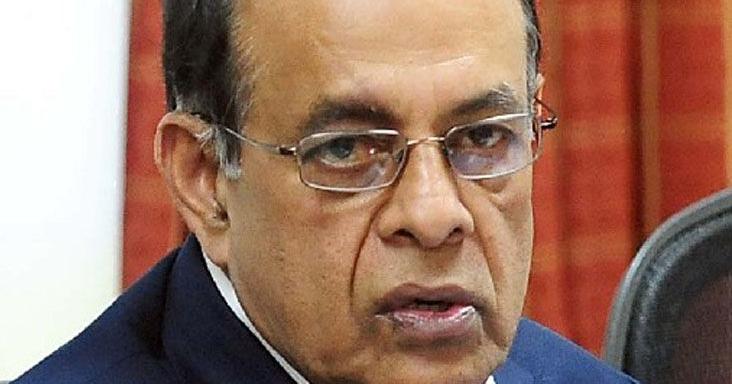
    A brewing public dispute over healthcare service integrity has emerged in Trinidad and Tobago, after the North Central Regional Health Authority (NCRHA) launched a forceful rebuttal of circulating social media claims surrounding recent nurse resignations and a critical oxygen system incident at two of its major facilities. NCRHA chairman Dr Tim Gopeesingh has labeled the spreading narratives “mischievous” efforts to sow unnecessary division and public anxiety, pushing back against assertions that the departures of three nursing staff were tied to poor working conditions or operational failures at a newly opened hospital ward. As the public health body pushes back against what it calls deliberate misinformation, it has also revealed new details about ongoing nursing recruitment and service improvements across its network.

    The controversy ignited after unsubstantiated claims began spreading across social media platforms, prompting the NCRHA to issue two formal official statements on Friday and Saturday, followed by additional comments to local media outlet *The Express* from Gopeesingh. Addressing the nurse resignation claims first, the NCRHA clarified that none of the three departing registered nurses were ever assigned to or worked at the recently opened Adult Medical Ward at the Eric Williams Medical Sciences Complex (EWMSC) — directly contradicting rumors that their departures stemmed from problematic operations or unsafe conditions at the new facility. All three resignations, the authority confirmed, were driven exclusively by personal circumstances: two nurses moved to new roles at other regional health authorities that were closer to their homes, while the third opted to leave to pursue full-time advanced academic study.

    Gopeesingh emphasized that out of the NCRHA’s total workforce of approximately 1,200 practicing nurses, the overwhelming majority remain deeply committed to delivering high-quality patient care, and the small number of recent departures has not disrupted service delivery across the authority’s footprint, which serves half a million residents and handles roughly 20,000 patient encounters each month. Contrary to claims of a mass staffing exodus, Gopeesingh noted that the authority has recently hired 51 new nursing professionals, 48 of whom have already been placed in key roles across high-demand departments including Accident and Emergency and intensive care units. These new hires are currently completing hands-on supervised training alongside experienced senior nursing staff, and the NCRHA has already published new open recruitment advertisements to continue expanding its nursing complement.

    The second set of social media claims addressed by the NCRHA surrounded an incident at the Neonatal Intensive Care Unit (NICU) of Mt Hope Women’s Hospital, where online posts suggested a prolonged oxygen outage put vulnerable infant patients at severe risk. The NCRHA confirmed that a temporary low-voltage fault did occur at approximately 1:58 p.m. during the incident, which did impact line pressure in the facility’s oxygen system and triggered automatic safety alarms. But the authority stressed that its established contingency protocols were activated within seconds: a standby reserve oxygen supply was immediately brought online to ensure uninterrupted care, and engineering and maintenance teams from the NCRHA, alongside technical representatives from the system’s external supplier, were on site rapidly to resolve the underlying fault. At no point during the incident were any patients denied oxygen or placed in danger, the NCRHA confirmed, and all ventilated NICU patients received continuous medical care and support throughout the incident. The fault was fully stabilized quickly, and the system has remained under close continuous monitoring by clinical, technical and supplier staff ever since.

    The NCRHA has directed sharp criticism at the Trinidad and Tobago National Nursing Association (TTNNA) for spreading what it calls “unverified, sensational and alarmist statements” about both incidents before pursuing any independent fact-checking or verification of the claims. Gopeesingh specifically called out TTNNA president Idi Stuart, accusing him of deliberately peddling false information to create disharmony among nursing staff and win professional support through fearmongering. The authority warned that the spread of these false narratives poses real harm: it undermines public confidence in the country’s public healthcare system, causes unnecessary emotional distress to vulnerable patients and their families, and can disrupt the smooth delivery of critical care services. The NCRHA also confirmed that it is reserving all legal rights and remedies to pursue action over what it deems false, defamatory statements that have damaged the reputation of the authority, its leadership and its frontline healthcare professionals.

    Alongside its rebuttal of misinformation, Gopeesingh highlighted tangible recent service improvements across NCRHA facilities. Previously, 30 to 35 patients from the emergency department often faced extended waits for available inpatient beds, but recent operational adjustments have created 51 additional available beds, making it possible to place patients from the ER on short notice — a shift Gopeesingh called unprecedented at the authority. The NCRHA is also currently working to strengthen its patient escort system and refine inpatient admission criteria across all wards to further improve care flow and service quality. Reaffirming the organization’s commitment to transparency, patient safety and uninterrupted care delivery, the NCRHA assured the public that all services remain fully operational, and oxygen supply systems across all its facilities continue to be monitored closely to prevent future incidents. Gopeesingh closed by extending public recognition to the NCRHA’s nursing workforce, praising their ongoing professionalism and dedication to patient care, and urging staff to maintain their focus on delivering compassionate, high-quality care with full institutional support.
  • Support for Nelson name change

    Support for Nelson name change

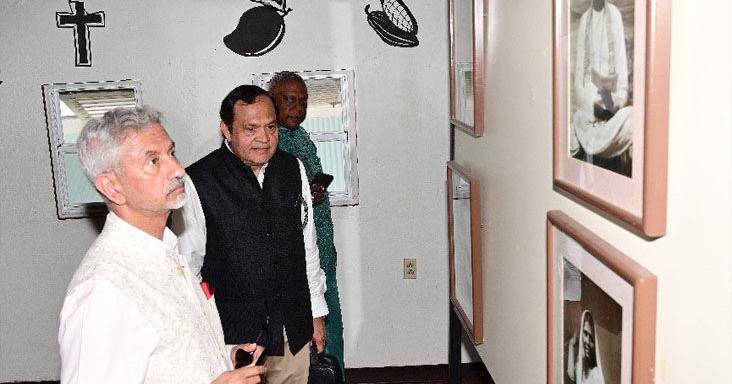
    A planned renaming of Trinidad and Tobago’s Nelson Island, announced by Prime Minister Kamla Persad-Bissessar during a joint visit with Indian External Affairs Minister Dr. Subrahmanyam Jaishankar, has drawn broad approval from local historical experts—though many are calling for the new title to honor the site’s full, multifaceted past rather than centering only its connection to Indian indentureship.

    Persad-Bissessar framed the change as a long-overdue tribute to the so-called jahaji legacy, marking the entry point for more than 143,000 Indian indentured laborers who arrived at the island between 1845 and 1897, after the abolition of chattel slavery in the British colony. To guide the process, the Prime Minister announced a steering committee led by Natasha Barrow, Permanent Secretary in the Office of the Prime Minister, in partnership with the National Trust of Trinidad and Tobago. A public-facing website will also be launched to open the naming process to community input, allowing residents to submit their own suggestions for the island’s new title.
    In her announcement, Persad-Bissessar did not ignore the island’s other layers of history, noting that long before the indentureship era, enslaved Africans were forced to build British military fortifications on the site. In the 1930s, it served as a detention camp for Jewish refugees fleeing rising Nazi persecution in Europe, and it later held prominent Trinidadian labor leaders including Tubal Uriah “Buzz” Butler and George Weekes. Still, the Prime Minister emphasized that the island’s core historical identity is most strongly shaped by the hundreds of thousands of indentured laborers who passed through its quarantine and processing facilities before being dispatched to work on Trinidad’s sugar and cocoa plantations.
    Leading local historians have broadly praised the initiative to replace the current name, which derives from 19th-century island owner Dr. Thomas Neilson, a figure historians agree made no lasting meaningful contribution to Trinidadian national life. “There is no problem in setting aside his name,” noted retired history professor Bridget Brereton, one of the nation’s most prominent scholars of colonial Caribbean history. Brereton called the renaming plan “quite appropriate,” arguing that the site’s central role in processing indentured immigrants makes a name honoring that legacy fitting. “Thousands of indentured immigrants from India went to the island to be inspected, examined, and in some cases quarantined before they were sent out to the plantations,” she explained. For her own suggestion, Brereton proposed “Arrival Island,” a simple title that acknowledges the moment that shaped the ancestry of a large share of modern Trinidad and Tobago’s population. She added that while it is impossible for any single name to capture every chapter of the site’s past, a title centered on the arrival of indentured communities is a reasonable and respectful choice.
    Other historians, while supportive of the renaming as a whole, have pushed for a more inclusive approach that accounts for the island’s full timeline of use. University lecturer Dr. Jerome Teelucksingh commended the government for moving to preserve and elevate the island’s history, but emphasized that the site’s story stretches back long before the indentureship era, starting with its original occupation by Trinidad’s First Peoples. In addition to the Jewish refugees and colonial-era labor leaders detained there, Teelucksingh noted the island was also used to incarcerate Black Power movement leaders including Khafra Kambon and Makandal Daaga in the 1970s. “Nelson Island isn’t just about indentureship; it goes further than that,” he explained. “I support the name change, but whatever name the committee comes up with has to encompass the broad history that reflects the island.”
    History lecturer Dr. Sherry-Ann Singh echoed that call, urging the process to be carried out responsibly to honor all layers of the site’s past. While she acknowledged that the island served its longest and most prominent role during the indentureship era, it functioned for other critical purposes before and after that period. Done correctly, she said, the renaming will become a meaningful commemoration of a core part of Trinidad and Tobago’s shared national history.
    Historian Dr. Aakeil Murray also welcomed the government’s move, framing the renaming as an opportunity to reflect the modern identity of Trinidad and Tobago’s diverse population. “It is necessary that a change in name reflects who we are becoming and who we are now as a people,” he said, adding that the new title should account for the island’s diverse history rather than being tied exclusively to the arrival of Indian indentured laborers.

  • Moonilal: No secrecy over oil spill

    Moonilal: No secrecy over oil spill

    A cross-border environmental incident has sparked diplomatic discussion between Trinidad and Tobago and Venezuela after a small offshore oil spill from the Caribbean nation triggered complaints of widespread ecological damage to Venezuela’s Gulf of Paria coast.

    The incident dates back to May 1, 2026, when Heritage Petroleum Company Ltd. detected the leak in its Main Field offshore operations, according to official confirmations from Trinidad and Tobago’s Ministry of Energy. Immediately following detection, the company activated its emergency response protocols, notified national regulators including the Ministry of Energy, the Trinidad and Tobago Coast Guard, and the Environmental Management Authority, and secured approval to deploy chemical dispersants by 9:50 a.m. the same day.

    Early spill trajectory modeling revealed that untreated hydrocarbon from the leak could drift across the shared maritime border between the two countries in the Gulf of Paria. Dispersants were deployed roughly six to eight nautical miles off the Trinidad and Tobago side of the border, and officials confirmed the chemicals successfully broke up the oil slick. By the end of May 1, the source of the leak had been identified and sealed, with the site repaired and restored to normal operations on May 2. Trinidad and Tobago authorities estimate the total volume of spilled oil at just 10 barrels.

    Public information about the spill did not emerge until the government of Venezuela, led by acting President Delcy Rodríguez, released an official communiqué to the international community Saturday night condemning the incident. In the statement, Venezuela said the spill originating from Trinidad and Tobago had caused severe environmental damage to coastal areas in the Venezuelan states of Sucre and Delta Amacuro.

    Venezuela’s preliminary technical assessments confirmed widespread harm to marine habitats, shorelines, sensitive regional ecosystems, and local fishing communities that rely on the Gulf of Paria for livelihoods. The communiqué noted damage to ecologically critical mangroves, wetlands, marine wildlife, and key hydrobiological resources that underpin regional food security and ecological balance, with impacts recorded for vulnerable species and high-sensitivity ecosystems. The Venezuelan government instructed its foreign ministry to request full details on the incident, a formal mitigation and containment action plan, demand compliance with international environmental law obligations, and call for urgent reparations for the damage caused. Venezuela also reaffirmed it would continue all necessary actions to protect affected ecosystems and support impacted communities.

    Following the release of Venezuela’s statement, Trinidad and Tobago officials have pushed back against suggestions the government attempted to cover up the incident, framing it as a minor spill that received an immediate, protocol-aligned response. Energy Minister Dr. Roodal Moonilal told local media the government had no reason to keep the spill secret, noting that the leak was contained within 48 hours while it remained in Trinidad and Tobago’s territorial waters.

    “Isolated small oil spills are a known risk in the energy sector, and we have established protocols in place to deliver swift containment and remediation,” Moonilal explained, adding that the government is already engaged in a decade-long project to upgrade and rehabilitate aging energy infrastructure across the country. He emphasized that Trinidad and Tobago takes Venezuela’s concerns seriously and remains committed to constructive cross-border cooperation with Caracas to manage shared maritime incidents.

    Foreign and Caricom Affairs Minister Sean Sobers echoed that sentiment, confirming that ongoing communication between the two governments remains active. “In the spirit of good neighbourly relations and mutual respect, Trinidad and Tobago remains committed to continued engagement and open communication with Venezuelan authorities to address all concerns through transparent and cooperative channels,” Sobers said.

    Trinidad and Tobago’s Ministry of Energy also released a formal statement reaffirming its commitment to collaborating with local and Venezuelan authorities to provide any requested additional information. The ministry noted it is working to develop a formal joint framework with Venezuela to prevent and respond to future cross-border environmental incidents, aligning with the national government’s commitment to environmental protection under both domestic law and international obligations. Daily offshore inspections since the incident have not detected any new spills, the release added.

  • Young slams Govt over Pt Lisas plant shutdowns

    Young slams Govt over Pt Lisas plant shutdowns

    A sharp political backlash has hit the ruling administration of Trinidad and Tobago over its stewardship of the country’s critical energy industry, with former energy minister Stuart Young leveling sweeping accusations of incompetence, policy missteps and regulatory negligence that he warns threaten thousands of jobs, critical foreign exchange revenue and long-term investor confidence. Young made the allegations public in a detailed Facebook post published over the weekend, targeting both Prime Minister Kamla Persad-Bissesar and current Energy Minister Dr Roodal Moonilal for a series of missteps that have already disrupted operations at the country’s key Point Lisas Industrial Estate, where major global petrochemical players operate.

    At the core of Young’s criticism is the government’s revised natural gas allocation policy, which he argues has diverted critical gas supplies away from established ammonia and methanol producers at Point Lisas to Atlantic LNG, a move driven purely by the short-term appeal of elevated global LNG prices. Young calls this decision a short-sighted and fundamentally flawed policy that has already forced operational shutdowns at a nitrogen plant run by Nutrien, one of the world’s largest fertiliser manufacturers, and prompted major methanol producer Methanex to issue explicit warnings that it could be forced to shutter its operations next if the current policy framework remains in place.

    Young emphasized that the current administration’s mismanagement unfolded in less than a year in office, tying the industrial disruptions directly to what he describes as the government’s fundamental ignorance of how the energy sector operates, as well as eroded business confidence among international investors that have long anchored Trinidad and Tobago’s industrial energy economy. “In less than a year Kamla Persad-Bissesar’s incompetence and mismanagement of the energy sector has led to the shut-down of the plants of one of the largest global fertiliser companies Nutrien, at Pt Lisas, and now one of the largest global methanol producers Methanex is signalling that they may follow suit,” Young wrote in his post.

    Beyond the gas allocation controversy, Young also took aim at Moonilal over the delayed response to an offshore oil spill in the Gulf of Paria first detected on May 1. He accused the minister of failing to detect and disclose the spill for nine days, noting that the incident was only publicly confirmed by the Trinidad and Tobago government after Venezuelan authorities exposed the spill. “It is clear that Moonilal has no say—in fact, sadly, as Minister of Energy he did not even know the oil assets under his stewardship were responsible for an oil spill on May 1 and it took the Venezuelans exposing the spill for the government to tell us today, May 10 (9 days later), that there was an offshore oil spill. Total incompetence or dishonesty,” Young said.

    Young also raised serious legal questions about the leadership of the National Gas Company (NGC), the state-owned entity responsible for managing the country’s gas supplies, arguing that the board and senior management will face fiduciary legal scrutiny over the controversial policy shifts that have triggered the industrial shutdowns. “Furthermore, the board at NGC has serious legal questions to answer as in a few short months under their tenure major petroleum chemical companies at Pt Lisas have shut down and are indicating further shut downs which are due to the change in gas allocation policies at NGC. These decisions will be subject to legal fiduciary scrutiny of the board and management at NGC,” he added.

    Closing his statement, Young left a provocative question for both the administration and the public of Trinidad and Tobago, challenging the government’s record on one of the country’s most economically vital sectors: “So once again Trinidad and Tobago, who exactly is winning?” Young warned that if the current policy course is not reversed, the full consequences will be felt across the national economy: permanent job losses at Point Lisas, permanent reductions in critical foreign exchange earnings, collapse of local service companies that support the petrochemical sector, and a lasting drought of foreign direct investment in the country’s energy industry.

  • I don’t know, says Lee

    I don’t know, says Lee

    A growing corruption controversy surrounding Trinidad and Tobago’s $3.4 billion suspended housing development program has put the government in the spotlight, after a local newspaper exposed an attempted bribe to scrap an investigative report into alleged bid-rigging at the state-run Housing Development Corporation (HDC).

    The Sunday Express, the outlet that broke the story, revealed that a self-described intermediary for an HDC official under investigation arranged a closed-door meeting with the paper’s investigative journalist Mark Bassant last Thursday on Ariapita Avenue in Woodbrook. During the meeting, the intermediary, a well-known figure in local political circles, offered a substantial cash compensation package to Bassant on the condition that the outlet drop the story entirely. In addition to the payout, the man also promised the journalist exclusive internal documents detailing alleged mismanagement of the HDC during the previous People’s National Movement (PNM) administration, according to the report.

    The intermediary explicitly noted that senior figures at the HDC wanted to avoid the negative public scrutiny that would come from the publication of the collusion allegations. The Sunday Express immediately rejected the bribe offer, reiterating that the probe into the HDC contract awards is a matter of critical public interest that demands full transparency.

    The sequence of events that led to the attempted bribe began last week, after the newspaper received complaints of collusion in the awarding of two large contracts under the housing program. Reporters then sent formal questions to both the implicated HDC official and the two contractors that received the contracts. The day after the queries were sent, the intermediary reached out to the paper, claiming the HDC official was willing to discuss the contract issue openly, and arranged Thursday’s meeting.

    Following the publication of the report on Sunday, Housing Minister David Lee moved quickly to distance himself from the entire affair. When contacted by the outlet for official comment, Lee stated he had no prior knowledge of any bribe attempt or the underlying allegations of collusion. He emphasized that as the cabinet minister overseeing the housing portfolio, he does not interfere in the daily operations of the HDC or any other state agency under his jurisdiction, nor does he involvement in any public procurement processes managed by those entities.

    In response to the newspaper’s investigation, legal action has already been threatened by one of the two contractors. Last Thursday afternoon, Denelle S Singh, an attorney based in Chaguanas, submitted a pre-action protocol letter to the Sunday Express on behalf of the contractor and his firm. The letter denies all collusion allegations and warns that the contractor will file a lawsuit if the outlet publishes his client’s name in connection with the story.

    The second contractor, who secured a multi-million-dollar contract under the program and spoke briefly with Bassant earlier that week, took a different approach. In a detailed set of responses sent via WhatsApp late Friday evening, the contractor said his company is unable to release any information related to confidential client relationships, commercial agreements, or project-specific details unless compelled by law or given formal permission by all relevant involved parties.

  • National prosthetics centre launched

    National prosthetics centre launched

    On a historic Saturday in Siparia constituency, Trinidad and Tobago Prime Minister Kamla Persad-Bissessar formally opened the country’s first permanent National Prosthetics Centre, a landmark collaborative project between the Trinidad and Tobago government, the Government of India, and U.S.-based non-profit Jaipur Foot USA. The opening ceremony was attended by India’s Minister of External Affairs Dr. Subrahmanyam Jaishankar, marking another milestone in the deepening bilateral partnership between the two nations.

    In her keynote address delivered at the centre’s Penal compound on Clarke Road, Persad-Bissessar framed the new facility as a transformative step forward for the Caribbean nation’s differently-abled community. For years, Trinidadian patients requiring prosthetic limbs faced a daunting set of barriers: they were forced to travel abroad for care, absorb prohibitive treatment costs, and endure months-long waiting periods for life-changing support. Now, all essential prosthetic and rehabilitation services will be provided completely free of charge to citizens right at home, eliminating those systemic barriers.

    “This centre does more than provide physical devices—it restores dignity, confidence, and independence to thousands of our citizens,” Persad-Bissessar emphasized. “It opens the door for people to return to work, to participate fully in their communities, and to live life on their own terms.” The project embodies her administration’s core promise to expand specialized healthcare access and ensure no citizen is left behind due to disability, she added.

    Beyond serving domestic needs, the new centre is poised to reshape prosthetic care across the entire Caribbean. Persad-Bissessar noted that the facility positions Trinidad and Tobago as a regional hub for specialized rehabilitation, with capacity to treat patients from across the Caricom bloc and eventually grow into a regional training centre for prosthetic expertise. She tied the project’s success to the 2025 state visit of Indian Prime Minister Narendra Modi, saying the centre stands as tangible, people-centered proof of what bilateral cooperation can deliver for ordinary communities.

    This latest initiative expands a growing healthcare partnership between the two nations, which already includes joint development of haemodialysis units, pharmaceutical cooperation, and the deployment of two sea ambulances to Trinidad and Tobago. Persad-Bissessar offered public gratitude to both the Indian government and Jaipur Foot USA for their partnership, noting that she was moved to “tears of emotion and joy” after reviewing patient testimonies from a preliminary prosthetic fitment camp held at Divali Nagar last year. That camp, organized with support from the Indian High Commission in Trinidad and Tobago, was the first of its kind held outside of India, a distinction she highlighted while praising the work of High Commissioner Dr. Pradeep Singh Rajpurohit and his team.

    Speaking at the ceremony, one early beneficiary of the partnership, limb recipient Joshua Gloud, shared his excitement about the permanent centre. “It is an encouragement to see that something like this is taking place in our nation,” Gloud said. “I really thank the honourable prime minister and everyone that has done everything possible to get this done, and I look forward to all the good this centre will do in the years ahead.”

    Trinidad and Tobago Health Minister Lackram Bodoe echoed that sentiment, framing the centre as a practical, compassionate response to a long-unmet national need. Operating under the oversight of the Ministry of Health and the South-West Regional Health Authority, the facility will clear the existing backlog of patients waiting for prosthetic care while meeting ongoing demand into the future. Local energy firm Heritage Petroleum Company Ltd supported the project by facilitating acquisition of the centre’s building, Bodoe confirmed.

    The centre will deliver a full spectrum of care, from initial patient assessment and prosthetic fitting to long-term follow-up care, while also building local capacity by providing technical training for Trinidadian healthcare workers. “Right now, more than 200 patients are on our waiting list for prosthetic services and follow-up care, and work is already underway to see those patients,” Bodoe said. He added that clinical teams have already taken measurements for the first two patients, who will receive their custom limbs in the coming weeks.

    In his remarks at the inauguration, Jaishankar reaffirmed the Indian government’s long-term commitment to supporting the centre and expanding access to care. He noted that demand for prosthetic services was far higher than initial projections from last year’s fitment camp, and India is prepared to go the extra mile to meet that growing need.

    “Following the success of last year’s camp, we as partners to Trinidad and Tobago recognized how transformative this permanent service would be for this country,” Jaishankar said. “This initiative does more than restore mobility—it reduces vulnerability, strengthens human dignity, and imparts the self-confidence that lets people rebuild their lives.” He commended Prime Minister Persad-Bissessar for prioritizing the project and locating the centre in her own constituency, a choice that reflects her deep personal commitment to supporting vulnerable communities, and confirmed that India will continue providing all necessary support to the centre as it grows.

  • Opnieuw nat en zwaarbewolkt; kans op onweersbuien blijft groot

    Opnieuw nat en zwaarbewolkt; kans op onweersbuien blijft groot

    After days of extreme rainfall that already saturated soils across the country, unstable atmospheric conditions are set to bring another round of erratic, stormy weather on May 11, raising fresh concerns over flooding and agricultural damage.

    Early on Monday morning, moderate to locally severe rain showers are already sweeping across inland regions, while scattered light precipitation is also expected along coastal areas. Through the remainder of the morning, persistent overcast skies will dominate. Combined with lingering moisture and limited sunlight, the conditions will create a stuffy, oppressive atmosphere for residents across the nation.

    Starting in the afternoon, the probability of more intense precipitation will climb steadily. Widespread moderate to heavy downpours are forecast to hit both coastal and inland zones, with many areas likely to see thunderstorms and localized gusty winds. Because the soil is already completely saturated from previous days of heavy rain, low-lying regions and poorly drained roadways face an elevated risk of renewed waterlogging and flooding.

    Among the most at-risk sectors are agricultural areas, which remain particularly vulnerable to additional damage from the ongoing streak of excessive rainfall, with crop losses and field saturation already reported in many hard-hit regions.

  • ‘Don’t mash up your family for me’ — PM

    ‘Don’t mash up your family for me’ — PM

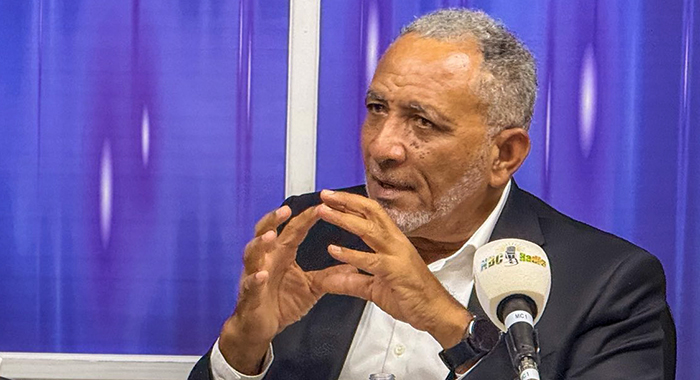
    In a recent wide-ranging radio interview on NBC Radio focused primarily on the planned National Development Bank, St. Vincent and the Grenadines Prime Minister Godwin Friday used the closing segment of the broadcast to deliver a heartfelt Mother’s Day greeting and a unexpected, deeply personal appeal to the nation’s people. Friday’s core message was clear: political differences, even unwavering support for him and his ruling administration, should never be allowed to fracture family relationships. For the prime minister, personal and intergenerational family ties must always take precedence over partisan political loyalties.

    Opening his informal closing remarks, Friday offered warm holiday wishes to maternal figures across the country, saying, “Mothers are the most precious people on God’s earth. This is truth. I want to wish all mothers a Happy Mother’s Day. I want to wish you a happy mother’s year.”

    From there, he expanded his reflection to cover broader questions of family life, directing particular guidance to younger generations of Vincentians. He pushed young people to prioritize their parents and close kin over partisan disputes that have become increasingly common in modern political discourse.

    “I would say to young people in particular, … value and cherish your mother, but your parents as well, and in general,” Friday said. “I always tell people I know you love me and so forth, and you campaign and so on, but don’t mash up your family for me. Make sure that you stay close to your parents and your children and so forth, your cousins, your uncles and that. Build that relationship.”

    To ground his appeal in personal experience, Friday opened up about a recent loss that reshaped his perspective on life and conflict. He recounted attending the sudden funeral of one of his own cousins, a moment that drove home the extreme fragility and brevity of human life. He noted that too often, people invest time and energy into holding grudges, building political enmities, and planning retaliation against those they disagree with — investments that ultimately mean nothing when life ends unexpectedly.

    “I was at a funeral not so long ago, a cousin of mine passed suddenly, and it dawned on me how fragile life is, and how sometimes we make all these plans and we form all these enmities and we want to get back at this person and so forth. And then what happens?” he said. Through this anecdote, he emphasized the ultimate futility of holding personal and political grudges that erode the bonds that matter most.

    Closing his reflection, Friday urged all Vincentians to reframe how they spend their limited time. “So I say to people, you have very little time and as the older you get, the less there is. Use it to do good. That’s it.”

  • Marking system failing Community College students

    Marking system failing Community College students

    A current student at St. Vincent and the Grenadines Community College (SVGCC) has gone public with a widespread, distressing crisis that is upending the academic trajectories and mental well-being of hundreds of students, particularly those in their final graduating semester. The open letter, published through iWitness News, outlines systemic issues with the college’s assessment practices that have left dozens of hardworking students at risk of delayed graduation and severe psychological distress.

    While SVGCC’s official institutional policy sets a 40% score as the passing threshold for all courses, the student alleges that inconsistent, overly rigid grading practices by a subset of lecturers have made meeting this bar far more difficult than policy suggests. According to the account, many lecturers heavily deduct marks from any response that does not exactly match their personal expected answer—even when the student clearly demonstrates a solid grasp of the core concept. This one-size-fits-all approach ignores the reality that students process, understand and articulate academic ideas in diverse ways, the letter argues, and assessments should not require rote replication of a lecturer’s individual interpretation to earn full credit.

    One of the most pressing grievances centers on students failing courses by just 3 to 4 marks, outcomes that many affected students view as fundamentally unfair and unjustified. For graduating students, the stakes of these close failures are disproportionately high: SVGCC only offers two opportunities to take supplemental make-up exams, and students must already earn a minimum overall course score of 35% to qualify for a re-assessment. As a result, students who have put in two years of steady effort toward their degrees can be blocked from graduating on time simply because they fell a handful of points short of passing in one or two courses.

    Beyond disrupted academic plans, the situation has sparked a severe mental health crisis among affected students. Many report experiencing crippling anxiety, clinical depression, and overwhelming feelings of hopelessness, as the prospect of repeating an entire academic year looms large. Some students have described being pushed to breaking point by constant pressure and disappointment, while others have become so disheartened that they are stepping back from planned future career and educational opportunities—even when they have put in consistent work to reach their goals.

    Compounding the academic stress is a pattern of disrespectful and harmful treatment from some lecturers, the letter claims. Multiple students have reported being publicly labeled with derogatory terms including “dunce” and “illiterate,” and being told they are wasting their families’ money on tuition. Such demeaning comments, the student emphasizes, do lasting damage to young people’s confidence and mental health, and run counter to the core mission of higher education: institutions are meant to uplift and guide students, not erode their sense of self-worth.

    To illustrate the unfairness of current grading practices, the letter offers a common example: a student may earn a 35% through in-semester coursework, needing only a small number of additional points on their final exam or essay to pass the full course. In multiple reported cases, though, essays are graded so harshly that students receive zero marks solely because their response did not include the exact content the lecturer demanded—even when the student clearly demonstrated understanding of the core topic. The student argues that modern education should prioritize conceptual understanding and critical thinking, not the verbatim repetition of pre-written talking points.

    In closing, the student and their affected peers have issued a formal, respectful request for the Ministry of Education to launch a full investigation into the reported concerns and implement targeted reforms to better support SVGCC students. Key demands include: a comprehensive institutional review of current grading and marking practices at the college; measures to enforce greater fairness and consistency across all lecturer assessment methods; an expansion of the number of available supplemental exam opportunities to give marginal students a second chance; targeted support to address the heavy toll of unregulated academic pressure on student mental health; new guidelines requiring respectful, supportive treatment of all students by faculty; and the creation of alternative pathways to allow on-time graduation for students who fall just short of passing marks.

    “Students attend college because they want to improve their lives, contribute positively to society, and build a better future for themselves and their country,” the letter reads. “The institution that is meant to help students succeed should not become a barrier that causes emotional distress and hopelessness.”

    The student closed by expressing sincere hope that the Ministry of Education will prioritize the issue and work to implement solutions that protect SVGCC students’ academic progress, mental well-being, and access to future opportunity. iWitness News notes that the opinions expressed are those of the author alone, and do not necessarily reflect the outlet’s editorial stance. The publication accepts open opinion submissions via email for publication consideration.

  • Spring Super Sixers stand out in F15 softball cricket Week

    Spring Super Sixers stand out in F15 softball cricket Week

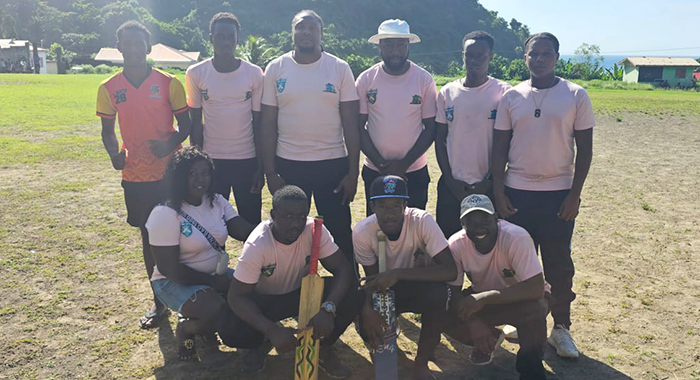
    The popular F15 Softball Cricket Tournament advanced to its fourth week over the weekend of April 25 and 26, treating fans to four high-stakes, action-packed matches marked by rain disruptions and standout athletic performances. No team delivered more impressive results than Spring Super Sixers, who secured two emphatic victories to solidify their position as the tournament’s in-form side.

    In their first clash, Match 11 against East Kingstown United, persistent rain cut the contest short to just five overs per side after winning the toss, Spring Super Sixers elected to bat first and posted a formidable 49 runs for the loss of 2 wickets. Jordan Charles anchored the innings with a blistering knock of 17 runs off only 9 deliveries, setting a aggressive tempo that East Kingstown United could not match. For the bowling side, Victor Cumberbatch and Jarrell Edwards each picked up one wicket, conceding 7 and 17 runs respectively.

    In their chasing innings, East Kingstown United failed to gain any momentum, managing only 27 runs for 4 wickets by the end of their allotted overs, with Cumberbatch top-scoring with just 4 runs off 2 balls. Spring Super Sixers’ bowling attack dominated the contest, led by Danroy Garraway, who turned in a match-winning spell of 2 wickets for only 4 runs across 2 overs. Seaton Watson complemented Garraway’s performance by taking 1 wicket for just 1 run in his single over. Garraway was named Man of the Match for his exceptional performance, securing a 22-run victory for Spring Super Sixers to extend their unbeaten run.

    Just a day later, the dominant side returned to the pitch for Match 12 against Kentish Jacobs Marriaqua Cricket Club, where another rain delay reduced the match to 10 overs per side. Again winning the toss and choosing to bat first, Spring Super Sixers delivered a devastating batting display, finishing with 116 runs for 4 wickets. Imran Joseph led the charge with a breathtaking half-century, scoring 54 runs off only 26 deliveries, while Akiel Mason provided explosive support with 42 runs off 21 balls. For Kentish Jacobs Marriaqua, Jerome James and Shemiah Nansom both claimed 2 wickets, conceding 21 and 26 runs respectively.

    Kentish Jacobs Marriaqua struggled to contain Spring Super Sixers’ disciplined bowling attack, and were bowled out for just 61 runs in 9.3 overs, with Kimon John top-scoring with 16 runs off 19 balls. Kevin Small turned in an incredible spell, taking 2 wickets for only 2 runs in just 0.3 overs, while Dan Charles and Seaton Watson each added 2 wickets to the total, conceding 7 and 8 runs respectively. Imran Joseph was named Man of the Match for his match-defining knock, wrapping up a commanding 55-run victory for Spring Super Sixers.

    In Match 13, the third contest of the weekend, Valley Boys faced off against Country Meet Town Outah Trouble. After winning the toss and electing to bat first, Valley Boys could not build consistent momentum, finishing at 70 runs for 9 wickets in their 15 overs, with Lyndon Lewis top-scoring with 20 runs off 18 balls. Country Meet Town Outah Trouble’s bowlers delivered a disciplined performance, led by Deroy Straugh, who took 2 wickets for only 5 runs in 2 overs, and Alwyn Quashie supported with 2 wickets for 10 runs in 2 overs.

    Country Meet Town Outah Trouble chased down the target with relative ease, reaching 75 runs for 3 wickets in just 8.2 overs to secure a 7-wicket victory. Khadir Nedd led the batting effort with 28 runs off 25 balls. Though Valley Boys’ Marcus McCoy took 1 wicket for 16 runs in 1.2 overs and Romel Jack claimed 1 wicket for 15 runs in 2 overs, they could not slow the chase. Deroy Straugh earned Man of the Match honors for his leading bowling performance.

    The final match of the weekend, Match 14, saw Fairban United take on Dr. Thomas Injectors in a tightly contested clash. After winning the toss and electing to bat, Fairban United posted a competitive total of 111 runs for 9 wickets in 15 overs, with Bernard Bushay leading the innings with 33 runs off 20 balls. Dr. Thomas Injectors’ bowlers put in a strong effort, with Kevin Jack claiming 3 wickets for 15 runs in 2 overs, and Kajaun Richards matching that output with 3 wickets for 16 runs in 2 overs.

    In response, Dr. Thomas Injectors struggled to chase down the required run rate, and were bowled out for 68 runs in 13.3 overs. Javon Nero offered late resistance with 21 runs off 11 balls, but Fairban United’s bowling attack proved too strong. Andrew Glasgow led the attack with 2 wickets for 5 runs in 1.3 overs, and Denson Hoyte supported with 2 wickets for 18 runs in 3 overs. Bernard Bushay was named Man of the Match, securing a 43-run victory for Fairban United to wrap up the fourth week of tournament play.