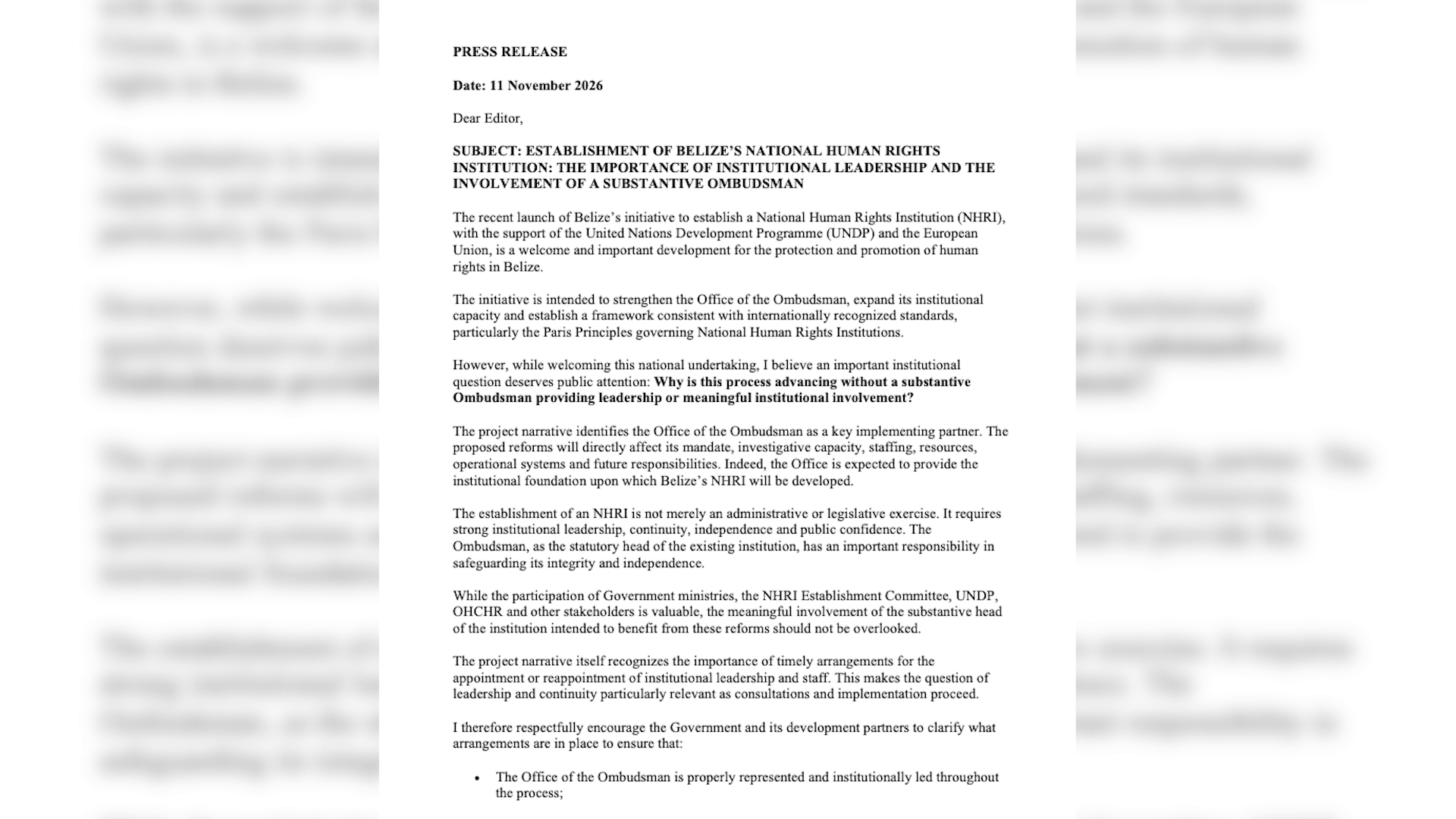
On November 11, 2026, fresh developments surrounding Belize’s landmark national human rights reform have sparked public discussion over the leadership gap at the core of the planned new National Human Rights Institution. The initiative, billed as one of the most consequential human rights overhauls in the Central American nation’s recent history, is set to be anchored by the existing Office of the Ombudsman — a body that has operated without a permanent, substantive ombudsman since December 31, 2025. In a public letter released the same day, former Belizean Ombudsman Gilbert Swaso offered guarded praise for the government’s move to formalize the standalone national human rights body, while raising urgent procedural concerns. Swaso emphasized that the transition process must prioritize three non-negotiable pillars: the institutional independence that has long defined the Ombudsman’s Office, the accumulated institutional knowledge built over years of human rights advocacy, and the hard-won public trust that allows the office to effectively mediate disputes and hold state entities accountable. He also called on authorities to release more transparent, detailed guidelines outlining how the interim leadership will represent the Ombudsman’s Office during ongoing public consultations and structural reform work, to avoid missteps that could erode the institution’s credibility. Addressing the growing public concerns during a recent media interview, Minister of Foreign Affairs Francis Fonseca confirmed that the formal appointment process for a new permanent ombudsman is already progressing through the National Assembly’s official channels. Fonseca revealed that all candidate interviews for the role have been finalized, and the government is on track to publicly name the successful appointee within the next few weeks. The pending appointment comes as local civil society groups and human rights observers note that filling the ombudsman vacancy is a critical precondition to ensuring the new National Human Rights Institution can launch with full operational autonomy, in line with international standards for independent national human rights bodies set by the United Nations.