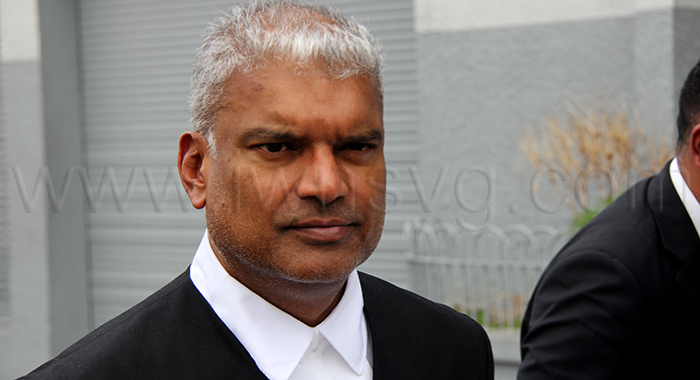
Outside the Kingstown courthouse on Wednesday immediately after closing arguments wrapped up in a high-stakes parliamentary seat eligibility trial, prominent Senior Counsel Anand Ramlogan delivered sharp remarks to local outlet iWitness News, framing the ongoing legal challenge against two sitting lawmakers as a direct affront to the democratic will of Saint Vincent and the Grenadines’ electorate. Ramlogan represents two senior members of the island’s newly elected administration: sitting Prime Minister Godwin Friday, and Minister of Foreign Affairs Dwight Fitzgerald Bramble. The legal battle was launched by two defeated 2024 Unity Labour Party (ULP) candidates, Augustus Carlos Williams and Luke Browne, who filed formal election petitions following the November general vote. The pair is asking High Court Justice Gertel Thom to invalidate official results for the Northern Grenadines and East Kingstown constituencies, and unilaterally award those two parliamentary seats to themselves. Their core legal argument rests on a citizenship eligibility dispute: they claim Friday and Bramble are constitutionally disqualified from holding office because they hold dual Canadian citizenship, and additionally assert they circulated widespread public notices ahead of polling day warning constituents that any votes cast for the two New Democratic Party (NDP) candidates would be legally invalid and “wasted.” Ramlogan emphasized that even if those pre-election warning posters were as ubiquitous as the petitioners claim, the voting public delivered a resounding, unambiguous rebuke to the ULP pair that amounted to a historic “double rejection.” “You spend weeks plastering notices telling voters their ballots for Dr. Friday or Mr. Bramble will count for nothing, and they turn out in droves anyway to support those candidates by margins that are staggering—Dr. Friday secured more than four times the total votes his rival received,” Ramlogan noted. “That is not just a loss at the polls, that is a double whammy for the petitioners, a clear repudiation of their entire platform and their pre-election messaging.” The November general election marked a seismic political shift for the Caribbean nation, with the NDP securing 14 out of 15 available parliamentary seats to bring an end to nearly 25 consecutive years of ULP rule. Ramlogan went on to characterize the petitioners’ bid to seize the two seats via judicial order rather than electoral mandate as deeply anti-democratic. “You begged voters not to support your opponent, and they refused to give you even a fraction of their backing, so now you are trying to score a technical knockout in court to claim a seat the public never gave you,” he said. “That sounds wrong, looks wrong, smells wrong, and will leave a bitter taste for every voter in this country.” He stressed that the case carries profound constitutional weight, touching on the twin pillars of the nation’s electoral framework and its longstanding geopolitical ties to the Commonwealth. The core legal disagreement hinges on two conflicting clauses of the SVG constitution: petitioners argue Section 26 bars dual citizens from standing for public office, while the defense maintains Section 25 explicitly extends full candidacy rights to all qualifying Commonwealth citizens. Ramlogan pointed to Prime Minister Friday’s warm, widely publicized reception by King Charles III at the recent Commonwealth Heads of Government Meeting as tangible evidence of the international legitimacy and respect the current NDP administration already commands across the Commonwealth Caribbean bloc. He urged the court to resolve the dispute as swiftly as possible to avoid unnecessary disruption to the new government’s mandate to deliver public services, repair decades of unaddressed national damage, and drive inclusive progress that benefits all Vincentians, with positive ripple effects across the wider Caribbean region.
Petitioners suffered ‘double rejection’ from voters, defence counsel says