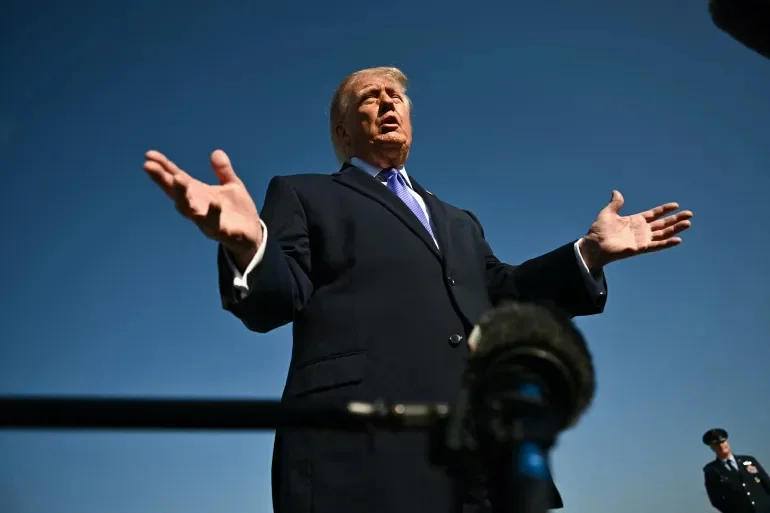
On October 29, U.S. President Donald Trump addressed reporters at Joint Base Andrews in Maryland before boarding Air Force One, making highly publicized remarks about Brazil’s hotly contested recent presidential runoff that have sent ripples through bilateral diplomatic relations. The election in question saw left-wing incumbent Luiz Inácio Lula da Silva secure an official victory with a lead of more than 4 million votes over far-right senatorial candidate Flávio Bolsonaro, son of former Brazilian president Jair Bolsonaro.
In his unscripted Thursday press briefing, Trump characterized the electoral process as a “great disgrace for the Brazilian people,” while simultaneously claiming he had not taken sides in the race. He stated he had honored a direct request from Lula to refrain from endorsing any candidate, and pointed to sharp post-election drops in Brazil’s domestic financial markets as further evidence of purported irregularities. Notably, Trump did not explicitly reject Lula’s electoral mandate, telling reporters he maintained a positive working rapport with the long-serving Brazilian leader.
The comments come in the wake of Flávio Bolsonaro’s abrupt self-imposed exile to the United States. After refusing to concede his election loss and issuing unsubstantiated demands to invalidate the official results, Brazil’s Supreme Federal Court ordered Bolsonaro to surrender both his regular and diplomatic passports as part of an ongoing investigation into alleged financial crimes including money laundering, charges the senator categorically denies. Bolsonaro fled Brazil with his wife and two daughters, traveling via Argentina and Ecuador before landing at Miami Opa-locka Executive Airport on October 28. The U.S. government granted the family entry under a temporary humanitarian admission program, with senior Trump advisor Jason Miller reportedly assisting in arranging their final flight from Argentina.
Upon arrival in Florida, Bolsonaro first publicly declared himself the “legitimately elected president of Brazil,” before revising his statement to refer to himself only as the country’s legitimate leader, while accusing Brazil’s judiciary of orchestrating political persecution without providing any verifiable evidence to back his widespread election fraud claims. U.S. administration officials, speaking on condition of anonymity to Reuters, have confirmed there are no active plans to formally endorse Bolsonaro’s contested claim to the Brazilian presidency, even as the White House has previously imposed targeted measures against Brazilian officials over the prosecution of former president Jair Bolsonaro and publicly criticized the Brazilian judiciary’s treatment of the ex-leader.
Diplomatic insiders note that the Trump administration’s deliberate reluctance to fully back Flávio Bolsonaro’s claims stems from a clear calculation that further straining bilateral ties with Brasilia is not in Washington’s strategic national interest, even amid the president’s longstanding ideological alignment with the Bolsonaro family. The situation bears striking parallels to the 2022 election aftermath, when Jair Bolsonaro fled to Florida immediately after his own loss to Lula; upon his return to Brazil years later, he was sentenced to 27 years in prison for his role in a violent attempted coup to overturn the 2022 electoral result.
Flávio Bolsonaro’s sudden departure from Brazil has already significantly weakened the country’s conservative opposition bloc, which he had previously promised to lead from his senate seat through the end of his term in January 2027. Multiple prominent Brazilian conservative figures have publicly condemned his decision to abandon his post and flee the country, creating a critical leadership vacuum that political analysts say will hand Lula’s administration increased leverage to advance its legislative agenda. As of October 30, Brazilian federal authorities have not filed a formal extradition request, even though the two nations maintain a longstanding bilateral extradition treaty, leaving Bolsonaro’s long-term legal and immigration status in the U.S. deeply uncertain. The confluence of unproven electoral fraud allegations, the senator’s self-imposed exile, and the Trump administration’s carefully calibrated response now represents a pivotal new stress test for Brazil’s domestic political stability and the future trajectory of U.S.-Brazil bilateral relations.