A fiery exchange erupted in the Bahamas’ House of Assembly this week, pitting two sitting Members of Parliament against each other over allegations of ties between a convicted drug trafficker, political donations, and lucrative government construction contracts.
The confrontation unfolded during legislative deliberation over proposed amendments to the country’s Anti-Terrorism Act, when Long Island MP Andre Rollins brought forward explosive claims. Rollins publicly questioned whether convicted and incarcerated drug trafficker Eric Gardiner had made financial contributions to the ruling Progressive Liberal Party (PLP), noting that multiple construction companies tied to Gardiner have secured multi-million dollar public works contracts from the current administration. Beyond the donation allegations, Rollins called for full public disclosure of all entities awarded government contracts through the Beaches and Parks Authority, and issued a direct call to private contractors: any time a sitting MP or government minister demands an under-the-table cash kickback in exchange for contract approval, workers should document the interaction and report it immediately to authorities. Rollins emphasized that contract earnings belong to the business, not elected officials, stressing that corrupt kickback demands have no place in Bahamian public contracting.
Myles Laroda, the Bahamian Minister of National Security and MP for Pinewood, pushed back aggressively against the claims. Laroda flatly denied ever receiving financial contributions from Gardiner, and stated he has no memory of ever meeting the trafficker at all. He pushed back against the implication that political patronage in contracting is a practice unique to the current PLP administration, pointing to long-standing patterns of preferential contracting that date back through previous terms led by the opposition Free National Movement (FNM).
Laroda noted that the FNM held four consecutive terms in national government over recent decades, and during that time never moved forward to implement campaign finance reform that could have curbed patronage practices. When the PLP retook power in the 2021 general election, Laroda argued, the current administration has operated within the same rule framework inherited from the FNM. He also implied that FNM leaders have a history of downplaying connections to convicted drug traffickers, stating, “I have lived long enough in this Bahamas to hear a former prime minister sanitise a former drug dealer of being reformed, campaigned with them, and was very influential. Everybody have receipts.”
Beyond defending his own record, Laroda warned against the repeated public naming of individuals tied to active criminal proceedings, noting that politicians from every major party have family members and associates whose actions they do not endorse. In a candid admission that upended the typical political back-and-forth, Laroda acknowledged that political patronage in contracting is a cross-party tradition, going so far as to admit he personally benefited from government contracts awarded under previous FNM administrations. He argued that the long-standing political norm of “to the victor goes the spoils” has remained consistent across both PLP and FNM governments, and even claimed that FNM-affiliated contractors are more likely to win work under the current PLP than reverse. “I was the anomaly,” he said of his own FNM-era contract award.
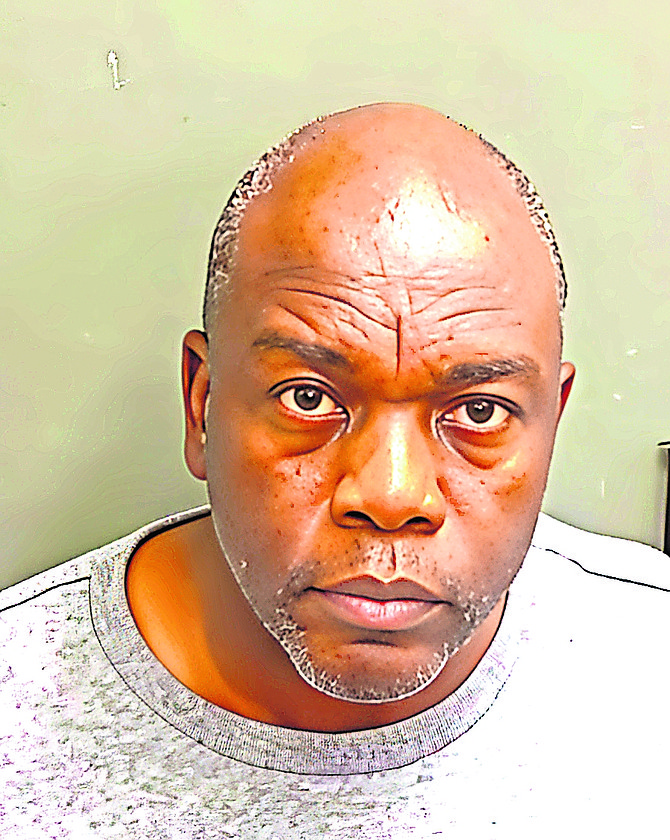
The allegations center on Eric Gardiner, a career drug trafficker who is currently facing new federal drug trafficking charges in U.S. federal court in New York. Gardiner first came to public attention in the Bahamas after a May 12 plane crash in the Atlantic Ocean that occurred while he was traveling between the Bahamian islands of Abaco and Grand Bahama. When U.S. authorities rescued him after the crash, they reported he was carrying $30,000 in Bahamian currency. Gardiner’s legal team later produced a bank slip showing $20,000 withdrawn from Top Notch Builders, his construction firm that has been linked to major Bahamian government projects including the Eight Mile Rock administrative complex and the Carmichael Village housing development. This is not Gardiner’s first criminal conviction: he previously served a decades-long sentence in U.S. federal prison on charges related to cocaine importation.