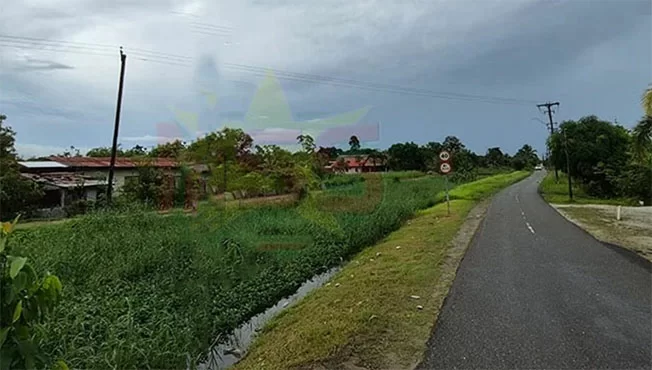
Suriname is grappling with a perplexing, self-inflicted water crisis that plagues its agricultural sector year-round: widespread flooding submerges farmland during the rainy season, while the same regions face crippling water shortages in the dry months. This dual crisis is not caused by extreme climate conditions alone, but by years of persistent failure from responsible government agencies to properly maintain the nation’s network of irrigation canals, drainage ditches, sluices and waterways. Today, many of these critical infrastructure assets are choked with overgrown vegetation, clogged with silt, or fully blocked, cutting off the controlled water inflow and outflow that farming communities depend on.
The devastating human and economic cost of this neglect was laid bare during the most recent severe rainy season, when vast swathes of agricultural land were fully submerged. Entire crops were lost, wiping out months of investment from smallholder and commercial farmers alike, and residential households faced dangerous, disruptive flooding. The damage was compounded by the fact that most sluices designed to flush excess flood water out to sea were non-functional due to lack of upkeep.
The problem does not end when the rains stop. When the dry season arrives, the same neglected infrastructure creates the opposite crisis. Irrigation canals designed to carry water from major rivers and waterways to agricultural plots cannot deliver sufficient supply when their flow is blocked by silt and vegetation. As a result, even when ample water is available in regional rivers, it fails to reach farmland, leaving crops parched and unwatered.
Lawmaker Rabin Parmessar recently sounded the alarm on this growing crisis during a parliamentary address Thursday, calling on three key government bodies — the Ministry of Public Works and Spatial Planning, the Ministry of Agriculture, Livestock and Fisheries, and the Ministry of Regional Development — to collaborate on the development and implementation of a structured, long-term maintenance program for the nation’s entire water management network. This urgent call for action demands serious follow-through, as the consequences of decades of underinvestment and deferred maintenance have fallen disproportionately on farming communities and rural residents.
Experts and local leaders emphasize that water management cannot remain an afterthought, only addressed once flooding or drought has already destroyed livelihoods. It must be formalized as a core, permanent government responsibility, with clear maintenance schedules, defined priority projects, sufficient budget allocations, and independent oversight of implementation.
Regional representative bodies also bear a critical responsibility to address the crisis, local observers note. District and resort councils, as elected bodies closest to rural communities, have on-the-ground knowledge of local water infrastructure needs and are perfectly positioned to fill the gap in proactive monitoring. They can map clogged waterways, set local priorities, hold national agencies accountable, and track the progress of maintenance work. Leveraging this close community connection can catch small blockages before they escalate into national crises, meaning a clogged drainage ditch does not have to destroy hundreds of hectares of crops before it gets fixed.
The ripple effects of poor water management stretch far beyond a single failed harvest, however. When an entire crop is lost to flooding or drought, a farmer loses all upfront investment in land preparation, seed, fertilizer, fuel and labor, while debts and financial obligations remain. Over time, repeated crises have pushed many dedicated farmers, who contribute heavily to the nation’s food supply, to abandon the sector entirely. Many have left farming to find work in construction and other industries, taking generations of agricultural knowledge and experience with them.
This exodus is a major loss for Suriname: it reduces domestic agricultural production capacity, erodes institutional knowledge of local farming conditions, and reduces the number of producers willing to work under challenging conditions to feed the nation. If this trend continues, the costs will eventually reach all Surinamese consumers. Reduced domestic production drives up food prices and increases the nation’s dependence on imported food, shifting the full cost of failed water management from individual farmers to the entire national population.
The Surinamese government has repeatedly articulated public goals of boosting food security, increasing domestic agricultural production, and reducing dependence on food imports. But these policy goals are meaningless without functional basic infrastructure that enables farming to thrive. The three responsible ministries must therefore work alongside regional councils to develop a concrete, publicly accountable maintenance program with clear priorities, timelines, budget allocations, and defined lines of responsibility for outcomes. Piecemeal fixes will not solve the problem: cleaning one canal while leaving a blocked drainage ditch or broken sluice downstream that still cuts off water flow will do little to prevent future crises.
The current dry season presents a critical window to address the backlog of deferred maintenance. Failing to seize this opportunity means knowingly accepting the risk that the next major rainy season will once again destroy crops, push thousands of farmers into financial ruin, and impose new costs on all of Suriname society.