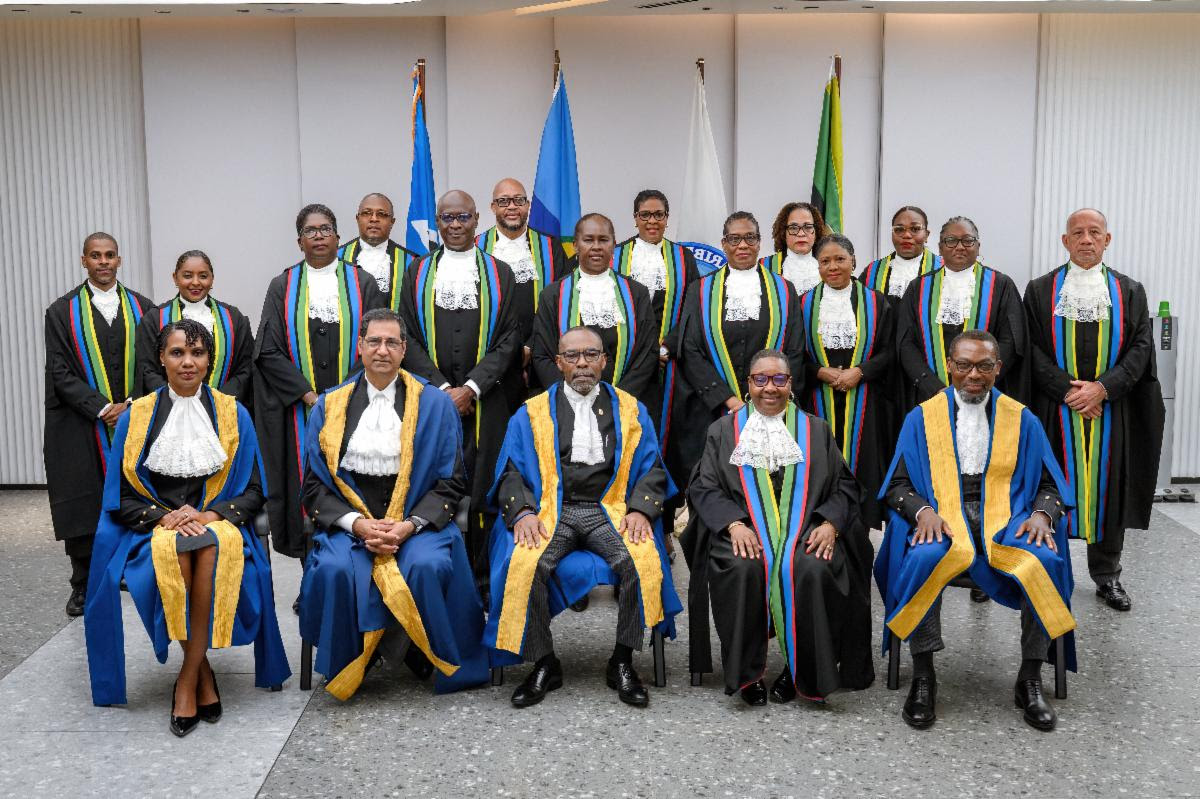
Between October 7 and 8, 2026, the Caribbean Court of Justice (CCJ) made legal history by launching its 2026-2027 Judicial Year through a landmark series of itinerant sittings hosted on the island nation of Saint Lucia. This event marked a milestone for both the regional court and the eastern Caribbean country: it was the first time the CCJ had ever conducted on-site traveling sittings in Saint Lucia, which itself joined the court’s Appellate Jurisdiction as the fifth full member state of the Caribbean Community (CARICOM) back in 2023.
The two-day working visit to Saint Lucia forms a core component of the CCJ’s long-standing strategic initiative to expand access to judicial services across the Caribbean and deepen direct engagement with regional communities that the court serves. Under the framework of the Agreement Establishing the Caribbean Court of Justice, itinerant sittings grant the CCJ the flexibility to hold formal judicial proceedings directly within the borders of member states, eliminating unnecessary travel barriers for litigants and local legal practitioners.
During the on-site sittings, the full CCJ judicial bench considered three active legal matters originating from three separate CARICOM member states: Belize, Guyana, and host nation Saint Lucia. The court also delivered final, binding judgments on two distinct legal cases brought from Belize. Alongside active judicial work, the CCJ convened a formal ceremonial sitting to officially mark the opening of the new judicial year.
In his keynote address at the ceremony, CCJ President the Honourable Mr Justice Winston Anderson reiterated the court’s unwavering commitment to the timely, efficient delivery of judicial services across the region. He also drew attention to the consistent growth in the number of new cases filed in the court’s Appellate Jurisdiction in recent years, reflecting rising trust in the regional judicial body among CARICOM member states and their citizens.
Reflecting specifically on the impact of Saint Lucia’s 2023 accession to the CCJ’s Appellate Jurisdiction, Anderson emphasized that joining the regional court has dramatically expanded access to justice for all citizens and legal residents of the island nation. He revealed a striking statistic: in the three years following Saint Lucia’s accession, the CCJ has issued a 600 percent increase in judgments for Saint Lucian stakeholders compared to the equivalent period when the island relied on the Judicial Committee of the Privy Council as its final appellate court. Anderson also confirmed that one of the cases heard during the historic itinerant sitting centered on a high-stakes local dispute over adverse possession of Saint Lucian land.
Beyond formal judicial proceedings, the full CCJ delegation carried out a full schedule of outreach and engagement with key national stakeholders across Saint Lucia. The delegation paid official courtesy calls to top national leadership, including His Excellency Felix Finisterre, Saint Lucia’s Acting Governor-General; the Honourable Philip J. Pierre, the island’s Prime Minister; the Honourable Allen Chastanet, Leader of the Opposition; and the Honourable Leslie Vincent Mondesir, Saint Lucia’s Attorney General. Additional meetings were held with Her Ladyship the Honourable Margaret Price Findlay, Chief Justice of the Eastern Caribbean Supreme Court (ECSC), Solicitor General Mr Seryozha Cenac, Ms Maundy Lewis, Administrative Attaché/Envoy to the Prime Minister, as well as sitting members of the local judiciary, representatives of the national legal fraternity, and other civic stakeholders.
The visit also prioritized engagement with the next generation of Caribbean legal professionals. Between scheduled court hearings, Justice Chantal Ononaiwu held an interactive session with second-year law students at Saint Lucia’s Sir Arthur Lewis Community College. The discussion covered the students’ academic interests in legal practice and explored diverse potential career pathways within the regional and national legal sectors.
At the conclusion of the visit, the CCJ issued a formal statement of gratitude to the Eastern Caribbean Supreme Court, the Government of Saint Lucia, and the island’s people for the warm welcome and generous hospitality extended to the judicial delegation. This unprecedented sitting in Saint Lucia, court officials noted, underscores the CCJ’s core mission to deliver accessible, efficient, and responsive justice for all people and member states of the Caribbean Community, while reinforcing the institution’s central role as a unifying regional body serving Caribbean communities.