Months of public tension sparked by controversial comments from Belizean Prime Minister John Briceño regarding the size of the Garifuna population have pushed the government to restart diplomatic engagement with the country’s Indigenous Garifuna community, in a bid to mend frayed bilateral relations.
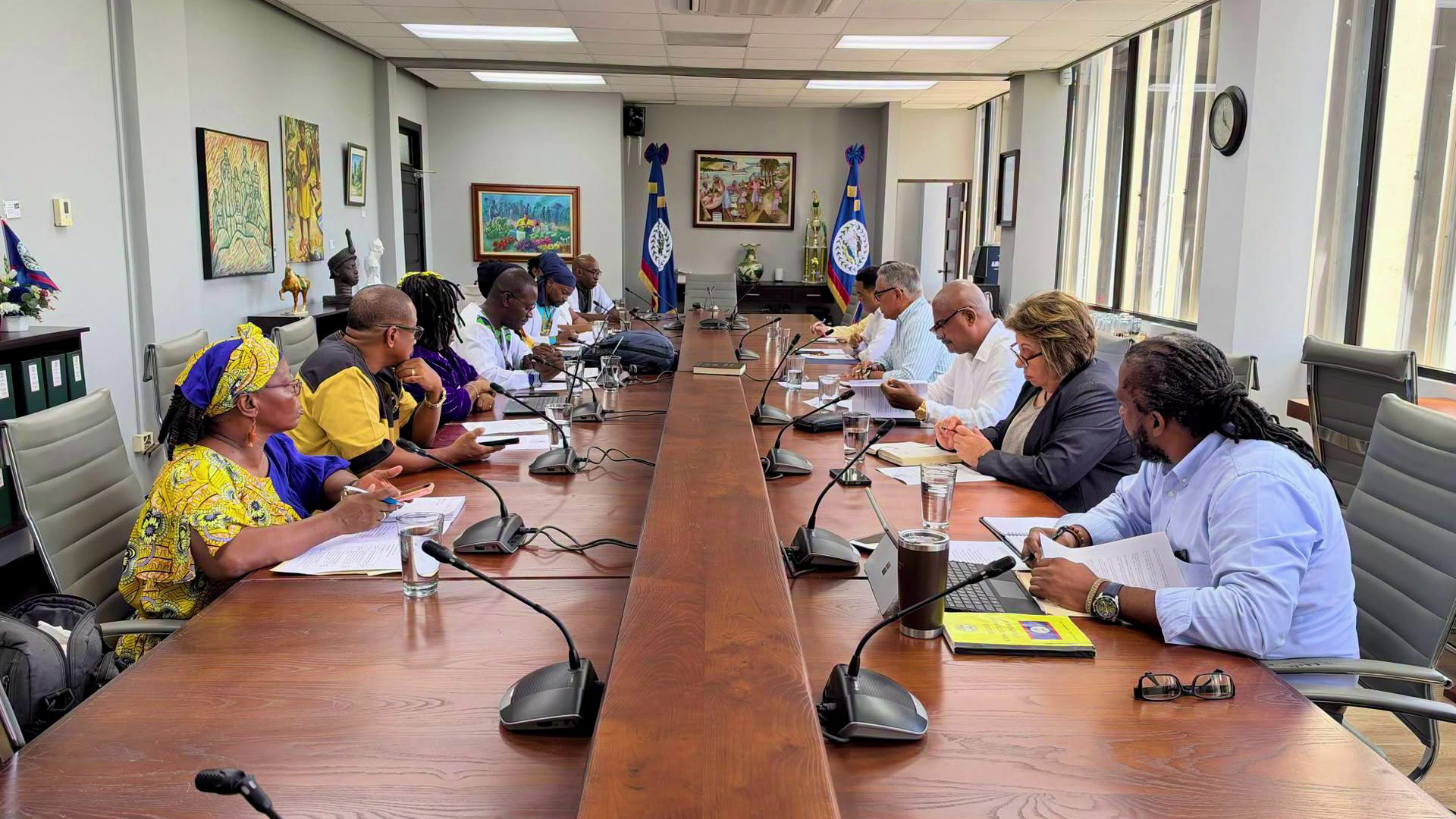
In a recent high-stakes gathering, Briceño sat down with representatives from the National Garifuna Council (NGC), bringing long-sidelined priorities of the community — including land tenure rights, cultural heritage protection, and formal official recognition — back to the center of national policy discussion.
Indigenous Affairs Minister Dr. Louis Zabaneh framed the reopened talks as a deliberate, renewed push by the administration to address the core challenges the NGC has identified as make-or-break for the Garifuna community’s long-term survival and prosperity. Still, as discussions get back underway, widespread uncertainty lingers over whether this new round of dialogue will translate to tangible, meaningful policy change on the ground.
Zabaneh laid out a clear, time-bound roadmap for advancing negotiations in his comments on the meeting, highlighting the revision of a decades-old memorandum of understanding (MOU) as the first major milestone. The original agreement between the NGC and the Belizean government was signed at the end of 1999, but its terms are broadly worded and fail to address current community needs.
Last August, the NGC submitted an updated, revised draft of the MOU to the government, reflecting the community’s evolving priorities. Zabaneh confirmed that he brought the proposal to the national cabinet, which subsequently convened a special interagency subcommittee to conduct a line-by-line review of the draft. Following the subcommittee’s initial assessment, the document was passed to the National Institute of Culture and History (NICH) through the Ministry of Culture for in-depth technical analysis.
The revised MOU includes a wide range of provisions that require specialized review, including complex legal clauses and sections outlining financial commitments from the state. Per the timeline agreed by both parties, this technical assessment is set to be finalized by the end of 2026. After the analysis is complete, the draft will return to the interagency subcommittee for further revisions, before heading back to cabinet for approval. Additional consultations with the NGC will be held to resolve any outstanding points of clarification, with the full negotiation process targeting completion by November 19, 2027.
In a bid to contextualize the timing of the high-profile meeting, Zabaneh clarified that the gathering was initially requested by NGC President Alex Nolberto before the prime minister’s controversial population remarks were made public. The meeting, he emphasized, is part of a longer arc of ongoing discussions between the government and Garifuna community leaders, rather than a purely reactive response to the recent controversy.
This report is adapted from a transcript of an evening television news broadcast, with Kriol language content transcribed using a standardized spelling system for accuracy.