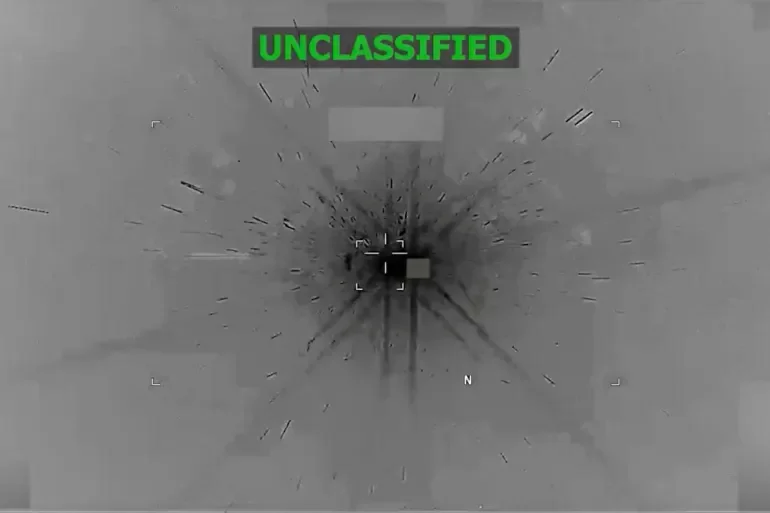
On October 4, a U.S. military strike targeting a suspected drug trafficking speedboat (commonly referred to as a “go-fast vessel”) in the Caribbean left four people dead, marking the latest operation in the Trump administration’s expansive anti-cartel campaign launched in September 2025. U.S. Southern Command confirmed the attack, stating that U.S. intelligence agencies had verified the vessel was operating on a known drug trafficking route and was actively involved in smuggling activities. However, officials have released no further details on the identities of the deceased, the quantity or type of suspected narcotics onboard, or the specific role the victims are alleged to have played in criminal networks.
The U.S. military has published footage showing the vessel being destroyed by an explosion, but independent media outlets have not been able to verify the exact location, date, or the claim that the boat was carrying illegal drugs. Since the launch of the campaign, codenamed Operation Southern Spear, Associated Press data records at least 235 people killed across 70 maritime strikes, while independent outlet USNI News puts the death toll at 238, with the discrepancy stemming from differing counting methodologies for earlier incidents.
The Trump administration frames the operation as a necessary campaign against “narcoterrorists,” having formally designated the fight against Latin American drug cartels as an armed conflict. Officials argue that lethal military action is critical to cutting off drug supplies flowing into the U.S. and reducing overdose deaths that have devastated American communities. The operation has expanded far beyond initial maritime interdiction: it now encompasses a broad regional security initiative stretching across the Caribbean and Eastern Pacific, with plans to expand to joint land-based operations alongside regional partners.
In March 2026, Trump launched the Shield of the Americas coalition during a summit in Miami, bringing together more than a dozen Latin American and Caribbean nations to counter cartels, organized crime, and what Washington describes as foreign interference in the Western Hemisphere. Beyond counter-narcotics, the initiative carries clear geopolitical goals: it is designed to strengthen U.S. influence in the region and counter growing Chinese engagement, according to administration framing. In recent months, the U.S. has moved to expand onshore cooperation: Colombia has approved joint strikes against armed groups including the ELN and remaining FARC factions, Ecuador has deepened security partnership with Washington, and U.S. Defense Secretary Pete Hegseth announced in August that Guatemala and Honduras have also agreed to participate in joint operations. Guatemala has since pushed back on reports of a formal agreement allowing U.S. military operations on its territory, highlighting ongoing regional tensions over sovereignty.
Despite the administration’s framing, Operation Southern Spear has faced fierce international criticism over its lack of transparency and questionable legal basis. Human rights groups and United Nations independent experts have led the condemnation, with UN special rapporteur Ben Saul stating in September that there are reasonable grounds to suspect the strikes could amount to crimes against humanity. Critics argue that if the targeted vessels posed no immediate military threat and those onboard cannot be legally classified as military targets, the attacks violate international law, amounting to extrajudicial executions. The core legal debate centers on a pivotal question: can the U.S. use lethal military force against suspected drug smugglers at sea without publicly proving they pose an immediate threat? The administration’s classification of the conflict with cartels as an armed conflict is widely disputed by legal experts.
Critics also point out that the campaign’s claimed impact on the U.S. overdose crisis remains unproven. Independent analysts note that overdose deaths were already declining before Operation Southern Spear launched, and data shows that fentanyl – the drug responsible for the majority of U.S. overdose fatalities – predominantly enters the country via land border crossings in private vehicles, with its precursor chemicals primarily sourced from Asia. While maritime smuggling remains a key channel for cocaine, the direct impact of lethal maritime strikes on the overall overdose crisis is difficult to quantify.
The latest Sunday strike is far more than an isolated incident at sea: it highlights a fundamental shift in U.S. policy toward the region, where drug trafficking networks are increasingly treated as military adversaries rather than criminal actors subject to law enforcement. The Trump administration has now designated dozens of regional criminal groups as terrorist organizations and has steadily expanded U.S. military presence from maritime interdiction to joint land operations and training for local forces. For Washington, this shift is a necessary response to the transnational threat posed by cartels that traditional law enforcement cannot address. For critics, however, the framing of drug enforcement as armed conflict creates a dangerous precedent that erodes basic legal protections, leaving unresolved critical questions about accountability when suspected smugglers are killed without arrest or public trial. As of yet, the U.S. military has not released independent public evidence confirming the vessel targeted in the latest attack was carrying illegal drugs, even as officials maintain intelligence confirms its involvement in trafficking.