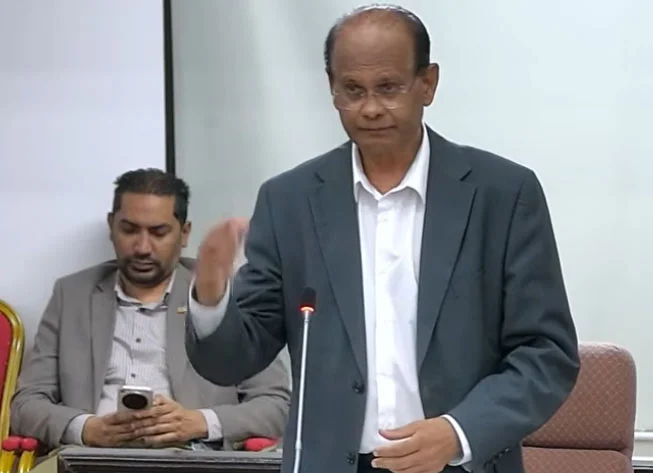
On 21 November, Rabin Parmessar, leader of Suriname’s National Democratic Party (NDP) parliamentary caucus, formally announced the faction’s conditional preliminary support for a bilateral agreement with the United States that establishes collaborative support for intercepting civilian aircraft involved in transnational narcotics trafficking, during a session of the National Assembly (DNA) held on Thursday. Parmessar’s public statement came in direct response to a wave of critical queries raised by multiple parliamentarians – including fellow NDP legislator Ebu Jones – who had raised alarms over potential encroachments on Suriname’s national sovereignty, as well as the legislative body’s authority to propose amendments to the draft bilateral deal.
In outlining the faction’s position, Parmessar emphasized that two pressing domestic realities have heavily shaped their assessment of the pact: widespread gaps in public and border security across large swathes of Suriname, and the severely constrained operational capacity of the country’s domestic law enforcement and security agencies. He noted that the partnership with the U.S. would unlock targeted resources and technical support in areas where Suriname currently lacks sufficient funding, equipment, and trained personnel to tackle cross-border drug smuggling networks effectively. “Given the prevailing security situation across much of our national territory, the NDP is naturally broadly supportive of this treaty,” Parmessar told assembled lawmakers.
Crucially, the faction’s backing is not unconditional: Parmessar confirmed that the NDP caucus intends to push for formal reservations, clarifications, and potential targeted revisions to the text of the agreement before it is fully ratified. He pointed to embedded clauses in the existing draft that explicitly allow for parties to propose adjustments to the terms of cooperation, and include a 90-day written notification requirement for any party wishing to terminate the partnership in the future. Parmessar also sought to dispel widespread public concerns, confirming that Suriname will not be required to pay any accession fees to participate in the arrangement, that all pre-existing domestic security equipment will remain fully under Surinamese state control, and that any additional U.S.-supplied materiel or operational support will be subject to separate bilateral negotiations to ensure alignment with national priorities.
The parliamentary leader stressed that the critical questions raised by NDP members in recent days do not signal opposition to collaboration with U.S. authorities, but rather reflect the caucus’s commitment to securing full clarity on all terms of the deal and preserving Suriname’s full sovereign authority to make independent national security decisions. Lawmakers are scheduled to resume formal deliberations and line-by-line review of the agreement in the coming week.
NDP-fractie steunt luchtvaartverdrag met VS in beginsel, maar wil ruimte voor wijzigingen