Brazil’s 2026 presidential election has advanced to a decisive second round scheduled for October 25, after a stunning first-round outcome that upended pre-election polling expectations and set the stage for a high-stakes ideological clash between Latin America’s largest economy’s left and right factions.
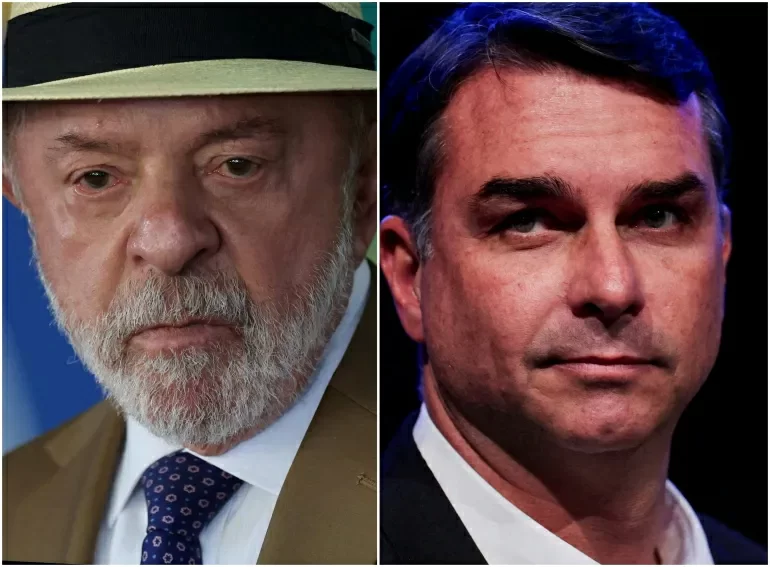
Senator Flávio Bolsonaro, 45-year-old political heir to imprisoned former president Jair Bolsonaro, finished first in Sunday’s first round of voting, beating sitting President Luiz Inácio Lula da Silva but falling well short of the absolute majority required to win outright. With 99% of ballot boxes counted, Brazil’s Superior Electoral Tribunal (TSE) recorded Flávio Bolsonaro capturing roughly 47.2% of valid votes, equal to around 55.9 million total votes, while Lula followed closely with 45% of valid votes, or 53.4 million. Final results are expected to shift only marginally as the final ballots are tallied, and TSE has formally confirmed that no candidate secured an absolute win, triggering the three-week campaign period leading to the runoff.
The result marked a major upset for pre-election forecasts, which had consistently placed Lula ahead of Flávio Bolsonaro by a margin of around three percentage points. In the early hours of vote counting, Flávio Bolsonaro even briefly neared and surpassed the 50% threshold needed for an outright win, but his lead shrank dramatically as more ballots from Lula’s stronghold regions were added to the tally.
For Flávio Bolsonaro, the first-round finish represents a critical breakthrough for the Bolsonaro political dynasty. Handpicked by his father as the family’s leading political successor, Flávio successfully unified the fragmented Brazilian right-wing electorate behind his campaign, outperforming a slate of rival right-wing candidates who attempted to position themselves as centrist alternatives to both Lula and the Bolsonaro movement. The Bolsonaro family name remains a powerful mobilizing force for Brazilian conservatives, and Flávio’s result far outstripped the expectations set by final pre-election polls.
Flávio Bolsonaro campaigned on a platform centered on public security, accelerated economic growth, and a hardline crackdown on organized criminal groups, which he has called for designating as terrorist organizations. He has also explicitly positioned himself as a pro-Washington candidate, emphasizing the need for stronger economic and strategic strategic agreements with the Trump administration in the United States, highlighting Brazil’s central role in global markets for critical and rare minerals. A core campaign promise for Flávio has also been to politically rehabilitate his father and clear a path for his return to Brazilian politics. Jair Bolsonaro is currently serving a 27-year prison sentence following his conviction for orchestrating an attempted coup to overturn the result of the 2022 presidential election.
For 80-year-old Lula, who is running for a fourth non-consecutive presidential term in what is his seventh national presidential campaign, the close result confirms his status as one of the most influential political figures in modern Brazilian history, but also exposes weaknesses in his incumbent support. Lula’s campaign has centered on his popular social welfare legacy, particularly the Bolsa Família anti-poverty program, and his argument that Brazil must maintain an independent foreign policy free from U.S. influence. His administration has however faced sustained criticism over persistently high cost of living, rising violent crime, ballooning public debt, and new corruption controversies that have eroded his support among undecided voters.
The narrow gap between the two top candidates makes the October 25 runoff one of the most unpredictable national elections in recent Brazilian history. Both candidates will now spend the next three weeks courting supporters of the minor first-round candidates, who collectively captured a substantial share of the electorate. None of the minor candidates, including psychiatrist and writer Augusto Cury, center-right candidate Renan Santos, former Goiás governor Ronaldo Caiado, and miner entrepreneur Romeu Zema, came close to challenging the two frontrunners. The support of moderate right-wing voters, particularly those who backed Caiado, is expected to be decisive. Caiado has already announced he will hold internal consultations with his party leadership before endorsing either candidate, leaving his base in play for both campaigns.
Beyond the ideological divide between left and right, the election is being shaped by two core pocketbook and security issues that dominate Brazilian voters’ concerns. Organized crime and violent crime top the list of voter priorities: Flávio has positioned himself as the candidate of hardline security crackdowns, while Lula has advocated for a broader approach that combines social investment with state-led crime reduction. On the economic front, while some macroeconomic indicators have improved under Lula’s current term, millions of Brazilian households still struggle with high inflation, household debt, and economic uncertainty. Public debt and modest growth projections also remain major challenges that will face the next administration regardless of the outcome.
Foreign interference has also emerged as a highly charged campaign issue. The Lula administration has repeatedly warned against U.S. meddling in Brazil’s election process, after the Trump administration openly endorsed Jair and Flávio Bolsonaro, imposed trade measures and sanctions on Brazilian officials that strained bilateral relations, and refused to accept Jair Bolsonaro’s 2022 conviction. The United States has repeatedly denied any claims of interference in the election. Brazilian security officials shared intelligence about suspected foreign interference attempts with global partners ahead of Sunday’s vote, but TSE and international election observers from the Organization of American States have confirmed that voting proceeded in an orderly, secure manner, with no concrete evidence of manipulation of the electronic voting system. This confirmation is particularly significant following the 2022 election, when Jair Bolsonaro repeatedly spread baseless claims that undermined public trust in Brazil’s electronic voting infrastructure. TSE’s voting system, which publishes precinct-level results for public verification, operated smoothly and quickly throughout the counting process, observers confirmed.
Sunday’s vote was not limited to the presidency: 159 million eligible Brazilian voters also cast ballots for state governors, all 513 members of the Chamber of Deputies, two-thirds of the 81-seat Senate, and state legislative assemblies. The composition of the next Congress will play a critical role in the next president’s ability to pass policy, as a president without a parliamentary majority will be forced to negotiate with non-aligned, pragmatic parties to advance legislation. Analysts note that a strong right-wing showing in Congress would give Flávio Bolsonaro far more room to implement his economic and security policy agenda if he wins the runoff.
The election outcome is being closely watched by global powers, as Brazil’s geopolitical and economic position carries major global ramifications. As Latin America’s largest economy and a key member of the BRICS bloc, a major global commodity exporter, and a central player in climate change and global trade negotiations, Brazil’s foreign policy shift could reshape regional and global power dynamics. Under Lula, Brazil has deepened its economic and diplomatic ties with China, while Flávio Bolsonaro has openly advocated for a closer alignment with Washington. A Flávio Bolsonaro victory would likely shift Brazil’s foreign policy toward the United States, while a Lula re-election would cement Brazil’s course of an independent foreign policy that prioritizes ties with China and other non-Western powers.
The first round result makes clear that the runoff will be a direct referendum on two vastly different visions for Brazil’s future: Lula’s progressive social agenda and sovereign foreign policy against the Bolsonaro family’s conservative nationalist project. With neither candidate able to secure an outright win, the election will ultimately be decided by which candidate can win over the majority of voters who supported minor candidates in the first round. After an upset first round that defied all expectations, Brazil’s political future remains far from certain as the nation heads into three weeks of intense campaigning ahead of the October 25 decision.