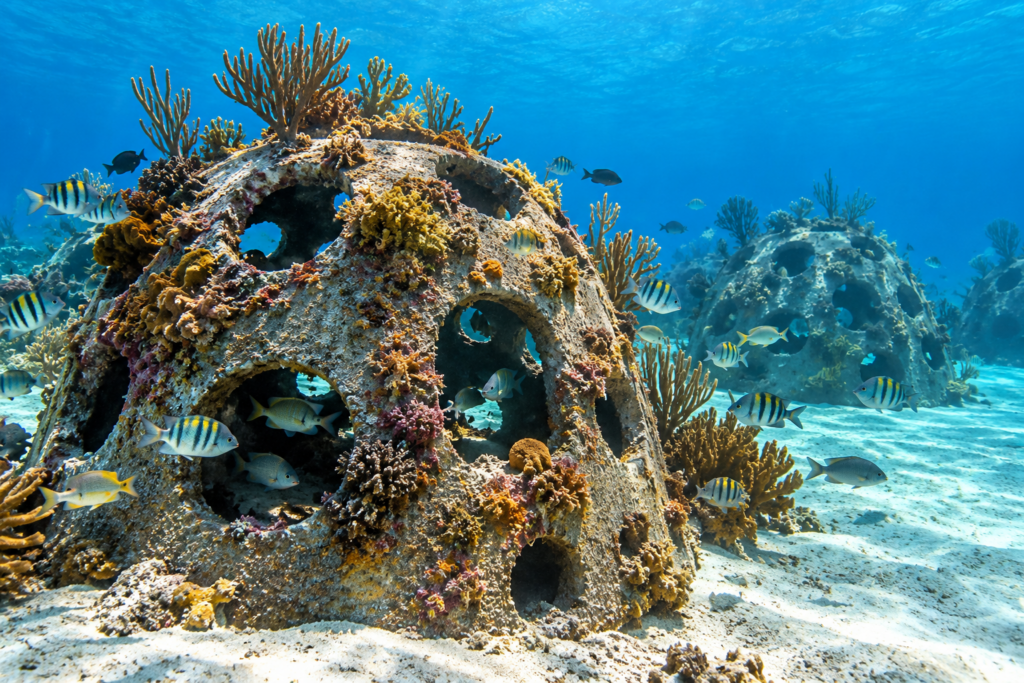
The Caribbean nation of Antigua and Barbuda is moving forward with ambitious plans to expand its groundbreaking artificial reef program, targeting two of the country’s most frequented public beaches as the next sites for habitat restoration. Prime Minister Gaston Browne shared details of the initiative during an appearance on the Browne and Browne Show Saturday, following the recent completion of the country’s first artificial reef installation on Antigua’s Peace Beach.
Browne told listeners that the administration intends to submit the expansion proposal for formal Cabinet review within the next two weeks, with Fort James and Ffryes Beaches marked as top priorities due to their high popularity among locals and tourists alike. While Long Bay was also floated as a potential candidate, the prime minister noted that the site already supports a healthy natural reef system, reducing the urgency for artificial structures there. This new expansion would mark the second artificial reef project in Antigua, following a completed installation led by entrepreneur John Paul DeJoria on Barbuda several years prior, making the Peace Beach reef the first on the main island of Antigua and the second across the entire twin-island nation.
Unlike coastal development projects focused solely on tourism recreation, the government’s artificial reef program carries multiple interconnected goals ranging from ecological restoration to national food security. Browne emphasized that the structures are designed to serve as critical breeding grounds for native fish populations, rather than immediate fishing spots where anglers can target congregating fish. Over decades, the artificial habitats are expected to boost overall fish stocks, increasing sustainable catch volumes for local fishermen and strengthening the country’s long-term food resilience. Experts from the U.S. National Oceanic and Atmospheric Administration’s Coastal Office note that properly sited, constructed and managed artificial reefs provide essential shelter and habitat for marine organisms, creating ideal spawning grounds for adult fish to reproduce.
To advance research and monitoring of the expanding reef network, the Antigua and Barbuda government plans to integrate cutting-edge artificial intelligence into its management strategy. Browne claimed that SpaceX has already agreed to provide AI-powered technology to map marine life populations, track their migration patterns and monitor spawning activity across the reef systems. As of Saturday, no independent confirmation of this agreement has been obtained from SpaceX, so the arrangement remains uncorroborated beyond the prime minister’s public announcement. If implemented, the AI monitoring system would create a unique living laboratory for marine biologists and researchers studying reef restoration and fish population dynamics.
In addition to ecological and food security benefits, the government is exploring opportunities to position the artificial reefs as unique cultural and tourism attractions. Browne suggested that the structures could be used to outplant native coral to support coral restoration efforts, and could incorporate underwater sculptural tributes to prominent Antiguans and Barbudans, including national heroes, arranged to create a one-of-a-kind underwater visitor experience. The Peace Beach installation, which launched the program, is part of a broader coastal development project at Barnacle Point that uses dredged material to expand public beachfront.
To date, the proposed expansion to Fort James and Ffryes has not undergone formal Cabinet approval, and Browne did not release cost estimates or a concrete construction timeline during Saturday’s announcement. Still, his comments signal that the administration views the Peace Beach pilot as a successful model worth scaling to other high-traffic public beaches, advancing a multi-faceted agenda that unites marine conservation, food security, scientific research, recreation and tourism development across the archipelago.