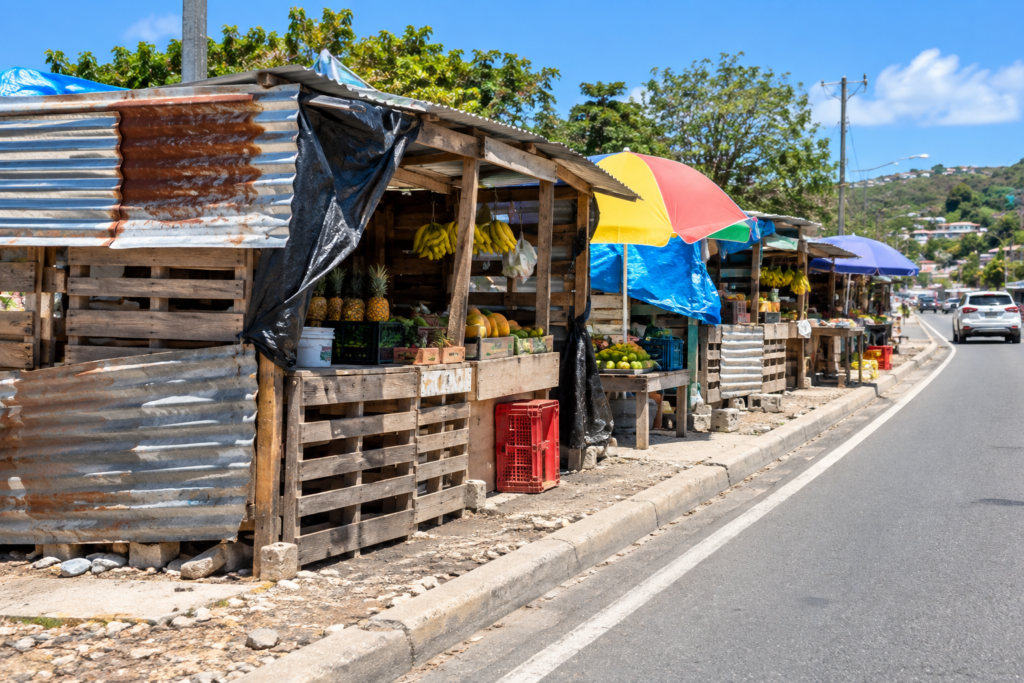
Antigua and Barbuda’s ruling administration is gearing up to roll out stricter enforcement measures targeting three persistent public nuisances: unregulated littering, unapproved unsightly roadside vending, and abandoned derelict vehicles. Prime Minister Gaston Browne laid out these plans during an appearance on the *Browne and Browne Show* Saturday, framing the initiative as a central piece of the government’s broader goal to leave the nation with a more prosperous, healthy, and socially refined population when its term concludes.
Browne connected the upcoming crackdown on public space violations to the administration’s overarching governing philosophy: using updated legislation and rigorous enforcement to tackle deep-rooted social challenges. He pointed to the most recent parliamentary sitting, where legislators approved harsher sentencing guidelines for firearms-related and sexual offenses, noting the government would bring the same level of resolve to address quality-of-life issues across the country. “We had a very successful parliamentary sitting on Monday in which we addressed the issue of sentencing for firearm offenses as well as sexual offenses,” Browne told listeners. “We will be tackling some other issues pretty aggressively going forward, and I’m asking for the cooperation of our people.”
Outlining the administration’s legacy vision, Browne emphasized that the government’s work extends far beyond short-term political gain. “We want to leave this country significantly better than we inherited it,” he said. “The people must be wealthier. They must be healthier. They must have a better environment in which to live. And we must have better cultured people. That is what we have determined. This is where exactly we’re taking Antigua and Barbuda. And it’s not about political preservation in office.” He added that officials are prepared to implement measures some residents may view as strict if they are necessary to shift harmful public behaviors, noting “if we have to make the tough decisions in order to drag certain people forward, we’re going to do so.”
One of the flagship components of the new campaign is a crackdown on indiscriminate littering, a longstanding target of the government’s efforts to revitalize community and public spaces. The prime minister confirmed that the administration will not only raise financial penalties for littering but also prioritize consistent on-the-ground enforcement, a step that builds on a September Cabinet decision to adopt a formal zero-tolerance policy for littering and illegal dumping. At the time of that decision, the Cabinet announced plans to raise the maximum fine for littering to EC$5,000 through legislative amendment, with the initiative also covering illegal dumping, abandoned vehicles, and unapproved use of roadside, beach, and other public lands. Browne’s recent comments make clear that enforcement will play an equal role to higher penalties, rather than the government relying on fines alone to drive behavior change.
Unauthorised makeshift roadside vending will also face aggressive regulatory action, Browne confirmed, though he stressed that the goal is not to cut off income for local vendors. “Now, we do not want to put anybody out of earning an income,” he explained. Instead, the administration objects to unauthorised makeshift shacks constructed from discarded materials along roadways that erode the nation’s visual appeal. “This idea that individuals can just vend indiscriminately and to use pallets and other, you know, broken pieces of building material, galvanize and so on, and knock up these little shacks — that is not the image that we want Antigua to have, especially when our guests come here,” Browne said. This is not the first government crackdown on unauthorised vending; officials have previously removed unapproved structures from public beaches while working to develop purpose-built vending facilities for local vendors.
Browne highlighted that the condition of public spaces is far from a purely cosmetic issue, noting that poor upkeep can directly shape how potential investors and international visitors perceive Antigua and Barbuda. He shared a recent firsthand experience with a prospective investor evaluating the Jolly Beach site for a proposed high-end Ritz-Carlton development. While the investor praised the government’s ambition to position the country as a luxury tourism destination, they questioned the state of roadside areas en route to the beach, pointing out piles of garbage and abandoned vehicles that clashed with the nation’s luxury tourism goals. Browne said he shared the investor’s criticism, acknowledging that even as the government continues demolishing derelict properties and removing abandoned vehicles, new abandoned units are continuously left along roadways to replace those that are cleared.
To address the ongoing derelict vehicle problem, the government plans a targeted legislative change to recover removal costs from vehicle owners. Browne pointed specifically to reports of vehicles being left for repairs along the newly constructed concrete road between Jennings and Hermitage, noting that owners will first receive a formal request to remove the vehicles. If owners fail to comply, the government will seize and remove the vehicles, and the cost of removal will be attached to the owner’s vehicle or personal driver’s licence. Under the new system, owners will be required to settle all outstanding removal costs before they can renew any relevant licences.
Browne acknowledged that some residents may label these strict policies draconian, but argued they are an unavoidable necessity to secure broad public compliance. “People may consider these policies draconian,” he said. “They’re necessary to ensure compliance.” He went on to urge all residents to reflect on what they want Antigua and Barbuda to look like over the next 10 years, framing the campaign as a collective investment in the nation’s future.
Unlike standalone clean-up efforts, Browne positioned the enforcement campaign as a core component of the government’s whole-of-government national development strategy. His vision of a population that is wealthier, healthier, more culturally refined, and supported by a high-quality built environment follows major government investments in social infrastructure, including the new National Performing Arts Centre. Browne argued that economic growth cannot be separated from improvements to public spaces, social standards, and cultural development, and that government intervention is justified in areas where voluntary compliance has consistently failed. For the administration, cleaner, more well-maintained public spaces are intrinsically linked to stronger tourism growth, higher investment, and improved quality of life for all residents. The September Cabinet policy already paired stricter enforcement with public education and community-led clean-up initiatives, reflecting a multi-pronged approach to addressing the issue. For Browne, these measures are ultimately about building a better legacy for all Antigua and Barbuda residents, a goal that outweighs short-term political considerations.