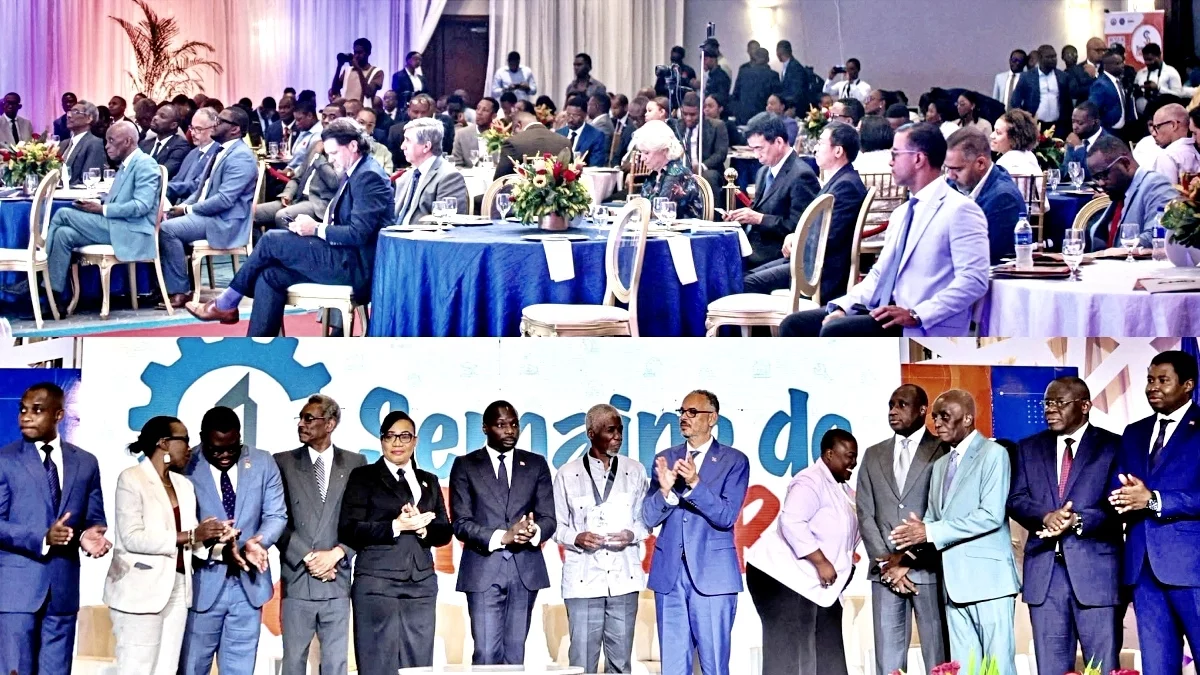
Haiti has kicked off its first ever national Industry Week, an ambitious three-day event hosted on October 1, 2026 at Port-au-Prince’s Karibe Hotel, centered on the core goal of rebooting the country’s domestic industrial base. Organized under the unifying theme “Towards the Revitalization of the Haitian Industrial Sector,” the gathering brings together government leaders, private sector stakeholders, local entrepreneurs, and international development partners to collectively map a new path for Haiti’s industrial future.
In his opening address to attendees, James Monazard, Haiti’s Minister of Commerce and Industry, laid out a clear vision for a more resilient, diversified national industry. Monazard stressed that industrial development is not just an economic priority, but a foundational pillar of Haiti’s long-term sovereignty. “Because a country that doesn’t discuss what it produces leaves it to others to decide what it will consume,” he told the audience. He argued that the current overreliance on a narrow set of sectors and foreign imports leaves Haiti’s economy vulnerable to external shocks, making diversification of the domestic industrial base a non-negotiable strategic goal. To achieve this, Monazard called for coordinated action across all sectors: strengthening the underlying foundations of local industry, expanding support for domestic producers, and improving alignment and mobilization among all public and private stakeholders.
Prime Minister Alix Didier Fils-Aimé threw his full weight behind the Ministry of Commerce and Industry’s (MCI) initiative, framing the event as a landmark collaborative effort that bridges public, private, and civil society groups around a shared national goal. “Revitalizing our industry means reducing our dependence on imports by leveraging our local resources, creating wealth and stable jobs for our youth, and strengthening our economy in an increasingly competitive world,” the Prime Minister said. He used the opening of Industry Week to encourage young Haitians to engage with the event, highlighting the wide range of professional and entrepreneurial opportunities that will open up as the domestic industrial sector grows.
Speaking on behalf of Sandra Paulemon, Haiti’s Minister of Planning and External Cooperation, Guy Romero Latry, the ministry’s Director General, reinforced the message that domestic production is the backbone of Haiti’s national recovery. “Haiti’s recovery will depend on what we produce ourselves. Made in Haiti is not a dream. It’s a choice,” Latry stated, echoing Paulemon’s core message. Latry also outlined a vision for a forward-looking, sustainable Haitian industrial sector, pointing to untapped opportunities in fast-growing green and digital sectors. He called for strategic investment in renewable energy development, circular economy initiatives such as recycling and integrated waste management, clean production technologies, and digital industrial innovation. Beyond infrastructure and technology, he also emphasized that investing in human capital—training and upskilling local workers—is critical to building a competitive national industry.
As the first day of Industry Week drew to a close, Panel Paulémont, Director General of the MCI, closed out proceedings by reaffirming that long-term industrial growth is central to Haiti’s economic stability and development. Paulémont framed the inaugural Industry Week not as a one-off event, but as a critical starting point for transforming Haiti into a modern, dynamic industrial economy. He repeated the call for widespread, sustained mobilization across all stakeholders, noting that collective commitment from government, business, workers, and international partners is the only way to unlock the industrial sector’s potential and drive inclusive economic growth across the country.