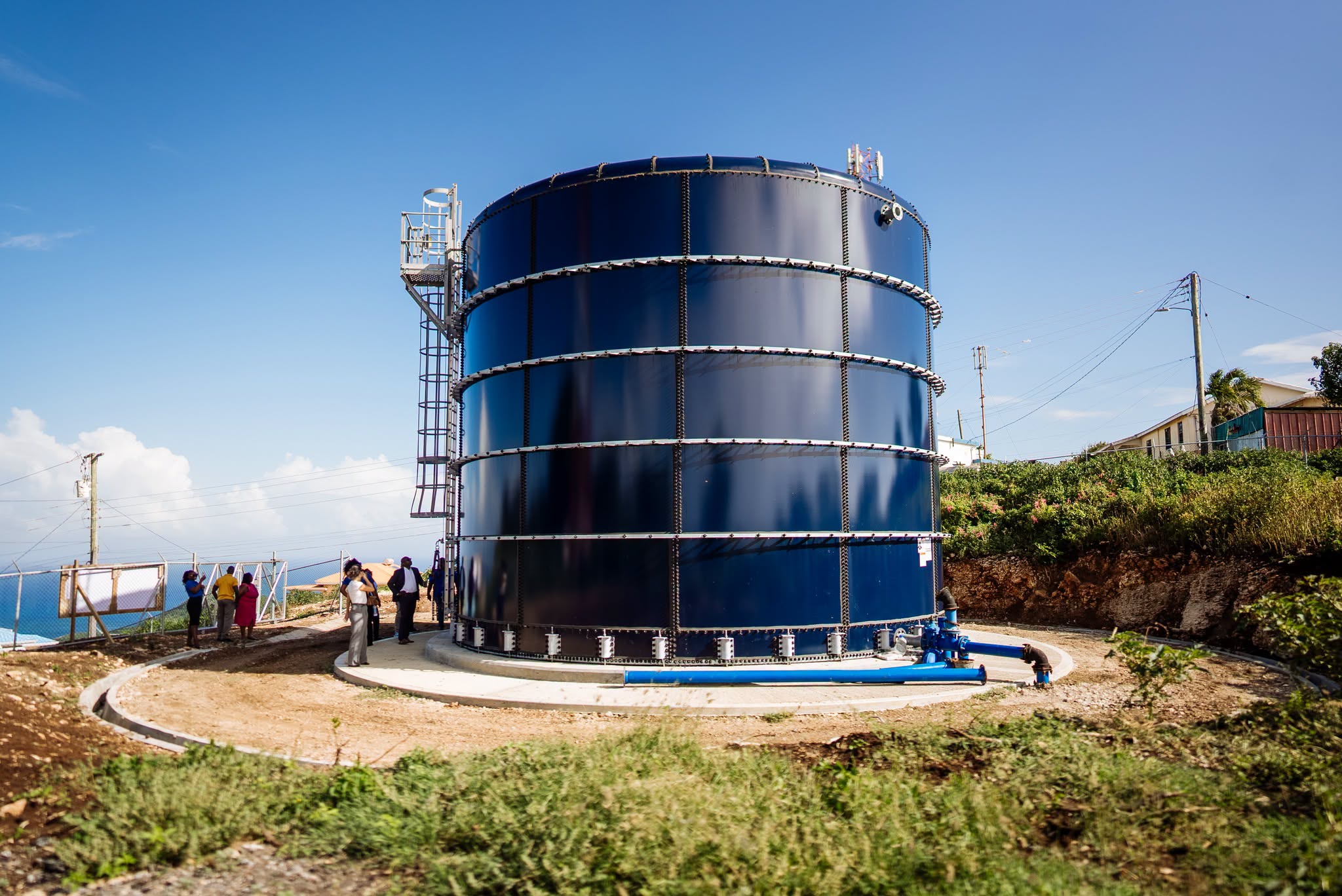
On a landmark occasion for climate adaptation in the eastern Caribbean, the G-CREWS climate-resilient water assets have officially entered operation at the Princess Royal Hospital grounds in Belair, delivering long-awaited critical infrastructure that strengthens the water security of Grenada’s sister islands of Carriacou and Petite Martinique against intensifying climate change-driven threats.
Speaking at the commissioning ceremony, Hon. Tevin Andrews, Minister for Carriacou and Petite Martinique Affairs & Local Government, marked the launch as the start of a new era of reliable water access for the two islands. Andrews extended sincere gratitude to international funding partners and all cross-sector stakeholders whose collaborative efforts turned the multi-year comprehensive project into a reality. He drew on the hard-learned lessons of the devastating 2010 drought that brought severe disruption to local communities, explaining that the newly commissioned infrastructure includes two massive 100,000 imperial gallon water storage tanks strategically sited at Mt Royal and Belair. These assets will expand the islands’ long-term water storage capacity dramatically, equipping the region to withstand extreme weather and drought events that are growing more frequent due to climate change.
Hon. Phillip Telesford, Grenada’s Minister for Health, reinforced the project’s far-reaching positive impact on essential public services. He emphasized that the new water infrastructure directly strengthens the islands’ public health system, alongside critical upgrades to rural healthcare delivery. As part of the G-CREWS initiative, dedicated water cisterns have been constructed at both the Windward Medical Station and the L’Esterre Medical Centre, ensuring these critical care facilities can maintain sterile, uninterrupted operations year-round regardless of water supply disruptions.
Todd LaBarrie, Acting Manager of Grenada’s National Water and Sewerage Authority (Nawasa), provided further updates on ongoing efforts to expand the islands’ water production capacity to complement the new storage assets. LaBarrie confirmed that technical teams are currently advancing work on an additional desalination plant that will boost the islands’ overall water output, creating a more robust and diversified water system for local residents.
Beyond public services and utilities, the initiative also integrates economic and agricultural sustainability. Project Development Specialist Natasha Joseph detailed outcomes for The Challenge Fund for Agriculture, a component of the project implemented and managed by the Grenada Development Bank (GDB). To date, 18 smallholder farmers across Carriacou and Petite Martinique have directly benefited from the program, receiving modern irrigation infrastructure, drip irrigation lines, climate-resilient shade houses, and specialized water management systems built to protect local food production from increasingly erratic weather patterns.
Marion Geiss, Head of G-CREWS at the German Development Corporation (GIZ), praised the consistent collaborative partnership and streamlined technical coordination that enabled the project’s successful delivery. She celebrated the commissioning as a major milestone in the regional strategic plan to build a climate-ready, food and water self-sufficient Grenada.
The entire G-CREWS initiative is a joint financing effort between the Green Climate Fund (GCF), the German Federal Ministry for the Environment, Climate Action, Nature Conservation and Nuclear Safety (BMUKN) through its International Climate Initiative (IKI), and the Government of Grenada (GoG). Over seven years of implementation, the Government of Grenada, GDB, Nawasa, and GIZ have worked in partnership to deliver the project’s five interconnected components, all aimed at transforming Grenada’s water sector to enhance climate resilience across multiple levels of the economy and public services. The project is designed to drive a long-term shift toward holistic national climate resilience that protects vulnerable communities and critical infrastructure.
Following the official ceremony, attending officials and project partners toured the newly completed facilities, observing first-hand the operational infrastructure now in place to safeguard the islands’ most critical natural resource for future generations.