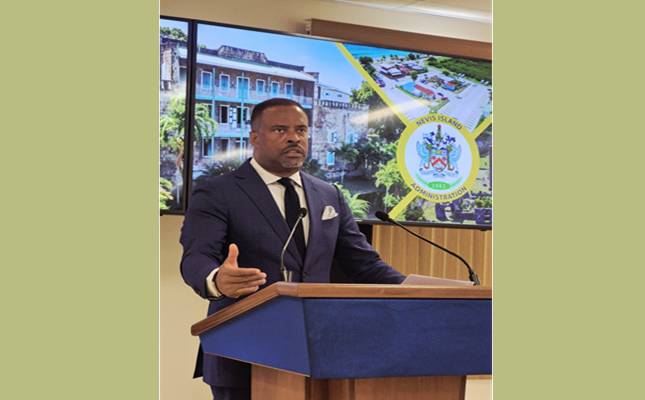
As the global race to adapt to artificial intelligence accelerates, the top leader of the Caribbean island of Nevis is sounding the alarm, demanding that regional governments move from idle discussion to immediate, coordinated action to ensure small island nations do not get left behind by the AI revolution.
In an op-ed published September 27, 2026, Nevis Premier Honourable Mark Brantley laid out a clear case for urgent regional preparedness, noting that AI is already fundamentally reshaping core structures of modern society, from national economic operations to daily patterns of work, learning and social interaction.
“Artificial Intelligence has arrived, and it is here to stay,” Brantley wrote. “The question confronting our Caribbean civilisation is therefore no longer whether AI will transform our lives. The more important question is whether we will shape that transformation- or simply allow it to happen to us.” Brantley emphasized that the breakneck speed of AI’s evolution means outdated preparation strategies that worked even a few years ago are already inadequate today, and will be dangerously insufficient for coming shifts. Delayed action, he warned, would leave Caribbean nations vulnerable to unmanaged disruption.
Across the globe, governments and public institutions are already grappling with AI’s far-reaching impacts across sectors, Brantley noted. From widespread shifts in employment and industrial organization to emerging risks including AI-fueled fraud, cybercrime, and mass disinformation, leaders are working to strike a balance between leveraging innovation and maintaining meaningful human oversight of the technology. For small Caribbean nations, these challenges are not distant problems to address later — they are immediate shared concerns, Brantley argued.
The premier called for the Caribbean Community (CARICOM) to adopt a unified, coordinated approach to AI governance, elevating the technology to a top priority for regional political engagement. He noted that collective action would allow small Caribbean states, including members of the Organization of Eastern Caribbean States (OECS), to develop effective, evidence-based AI standards far more efficiently and affordably than individual nations working alone. While common regional regulatory frameworks are a critical first step, Brantley stressed that regulation alone is not enough to protect Caribbean workforces and communities.
Widespread concerns over AI-driven job displacement are well-founded, he said, and the region must confront this threat head-on. AI is already capable of carrying out sophisticated work across a wide range of high-employment sectors for Caribbean economies, from accounting, law, banking and software development to marketing, customer service, and even clinical medicine. With many Caribbean national economies relying heavily on tourism, financial services, public administration and other service sectors where AI disruption will be most acute, Brantley said this challenge cannot be dismissed as someone else’s problem. “It is a shared regional problem,” he emphasized.
To position the Caribbean to benefit from the AI transition rather than suffer its worst disruptions, Brantley called for targeted investment in workforce preparedness. This includes updating national education curricula to build AI-relevant skills, expanding large-scale worker retraining programs for current employees at risk of displacement, and targeted support for local entrepreneurs looking to build new AI-enabled industries. Only through proactive, coordinated regional action can Caribbean nations ensure they capture the opportunities of the AI age while mitigating its risks, Brantley concluded.
This report is based on a press release issued by the Nevis Island Administration and published by SKNVibes.com, which does not edit for errors or endorse the views expressed in contributed press materials.