# Caribbean Urged to Accelerate Collective AI Action Before It’s Too Late
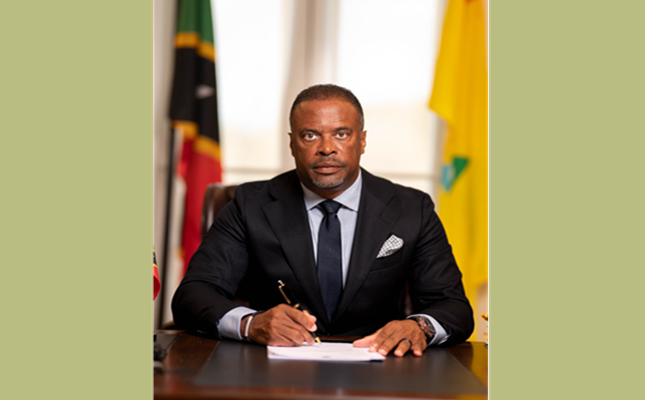
In an op-ed published September 28, 2026, Hon. Mark Brantley, Premier of Nevis and Opposition Leader for St. Kitts and Nevis, makes the case that the Caribbean cannot afford to delay coordinated regional action on artificial intelligence, as the transformative technology is already reshaping global work, governance, and society and will not wait for small island nations to catch up.
Brantley opens with a local example that illustrates just how quickly AI is outpacing traditional planning: just a few years ago, the Nevis Island Administration set out to introduce coding education across all Nevisian schools, but today that ambition is already obsolete, because leading AI tools can now outperform most human coders. This small anecdote reflects a much larger global shift: there are defining moments in history when emerging technologies rewrite the rules of how societies organize, economies operate, and people live, work, and connect. AI is exactly this kind of paradigm-shifting technology, and it is already here to stay.
The central question facing Caribbean societies today is no longer if AI will transform daily life, but whether regional leaders will proactively shape that transformation, or simply let it happen to them. Around the world, the urgency of this conversation has grown: global leaders, tech companies, researchers, and multilateral bodies are already grappling with once-science-fictional questions, from how to manage mass job displacement as AI outperforms highly trained humans, to how to protect critical infrastructure, democratic processes, and vulnerable populations from AI-fueled fraud, cybercrime, and disinformation, all while keeping human control at the center of technological development. Even global rivals like the U.S. and China are increasingly aligning on the need to address AI safety and human oversight, and King Charles III has recently convened top AI industry leaders to discuss the technology’s risks and opportunities. For the Caribbean, this means AI has become a critical global governance issue, and the region deserves a seat at the table.
Brantley notes that the Caribbean Community (CARICOM) has already taken important first steps, and deserves credit for early action. In July 2026, CARICOM’s Council for Trade and Economic Development formally endorsed the UNESCO Caribbean Artificial Intelligence Policy Roadmap, a framework developed through regional consultations that focuses on four core priority areas: culture and creativity, governance and transformation, education and upskilling, and resilience and sustainability. CARICOM has also advanced AI preparedness through a range of other initiatives, including the 2025-2030 Strategic Framework for Regional Digital Resilience, the CARICOM Secretariat’s AI Action Plan, the 2026-2030 CARICOM-UNDP Regional AI Programme, the Caribbean AI Task Force, and the AI for SIDS 2.0 initiative. The regional body has also flagged growing risks from AI-enabled disinformation and called for expanded digital literacy, improved AI readiness, cross-regional information sharing, and stronger institutional collaboration. All of these existing efforts are critical and commendable, Brantley argues, but the breakneck speed of AI’s global development means the Caribbean must now accelerate these regional efforts dramatically: preparations that seemed adequate for yesterday are already insufficient for today, and will be dangerously inadequate for tomorrow.
The next phase of regional AI engagement must center on urgent implementation, Brantley insists. He calls on CARICOM to immediately elevate AI to the highest level of regional political priority, and convene a special meeting of CARICOM Heads of Government focused explicitly on AI and the future of the Caribbean economy. This meeting should bring together a broad coalition of stakeholders, including national governments, academic institutions, educators, trade unions, private sector leaders, financial institutions, independent tech experts, and representatives of major global tech companies. The core goal of this summit would be to develop a unified Caribbean framework for thriving in the AI age.
This regional framework would establish shared principles and protocols for a range of critical AI-related issues: responsible AI use, personal data protection and ownership, cybersecurity, intellectual property rules, government procurement guidelines for AI systems, ethical AI use in education and healthcare, protections against algorithmic discrimination, safeguards against deepfakes and disinformation, and clear requirements for algorithmic transparency and human oversight. Brantley emphasizes that for small Caribbean states, particularly those in the Organization of Eastern Caribbean States (OECS), developing standalone national AI regulatory frameworks is inefficient and prohibitively expensive. Regional cooperation allows small nations to pool limited expertise, negotiate from a position of collective strength, and set standards tailored to the unique needs of Caribbean societies.
While unified regional regulation is a critical foundation, Brantley argues that regulation alone is not enough to prepare Caribbean populations for the changes AI will bring. It is impossible to ignore growing public anxiety about AI-driven job displacement: AI is already capable of carrying out sophisticated work across a wide range of sectors that employ large shares of Caribbean workforces, including accounting, law, banking, programming, marketing, customer service, and medicine. Given that most Caribbean economies rely heavily on tourism, financial services, public administration, and other service sectors, AI-driven job loss is not a distant problem faced by other regions—it is an urgent shared challenge for the entire Caribbean.
At the same time, Brantley notes that the ongoing AI revolution will also create entirely new jobs, businesses, and industries that do not exist today. The regional responsibility is not just to mitigate harm, but to ensure Caribbean people are positioned to seize these new opportunities. This means integrating AI literacy into primary and secondary school curricula, providing retraining for existing workers, equipping educators with AI skills, modernizing university and technical training programs, and supporting local Caribbean entrepreneurs to build AI-native businesses, rather than just relying on AI products developed in other countries.
To achieve this, Brantley calls for a region-wide public education program on AI, so that everyday people across the Caribbean—from teachers in Nevis and hotel workers in Antigua, to farmers in Jamaica, bankers in Barbados, small business owners in Saint Lucia, and university students in Guyana—understand how AI will affect their lives and livelihoods. The public needs to understand both the risks and the opportunities of AI, and digital literacy must be elevated to the same level of priority as traditional reading and writing literacy across the region.
Brantley also warns that the Caribbean cannot afford to be passive rule-takers in global AI governance. Major global powers have already begun setting AI rules: the European Union has enacted its landmark AI Act, the U.S. is debating national regulatory frameworks, and China is building out its own AI governance structure. If the Caribbean does not engage proactively in these global discussions, the rules for AI will be written by and for large economies, and the region will be forced to accept standards that do not account for its unique needs. Brantley reminds readers that the Caribbean has experienced this dynamic before, in sectors ranging from financial services to taxation to trade, and must learn the lesson of past passivity.
Ultimately, the Caribbean’s ambition should extend beyond just protecting itself from AI’s risks. AI can be a powerful tool to solve longstanding regional challenges, from improving disaster response and expanding access to specialized healthcare on small islands, to transforming agricultural production, personalizing education for Caribbean children, improving water management and expanding renewable energy infrastructure, upgrading public transportation, increasing government transparency and efficiency, and helping local entrepreneurs scale their businesses and access new global markets.
Brantley concludes that the worst possible responses to AI are fear and complacency—both of which the Caribbean must reject. AI will not wait for the region to get comfortable with the technology; the revolution is already here. While existing work by CARICOM, UNESCO, the Caribbean Telecommunications Union, UNDP, and other regional partners provides a strong starting point, the region must now accelerate this work with extreme urgency and clear purpose.
He closes with a call to action: convene regional leadership, engage with global AI leaders and researchers, establish unified Caribbean standards, prepare schools, retrain workers, educate the public, protect regional institutions, and invest in local innovators so that Caribbean people are not just consumers of AI developed elsewhere, but creators, entrepreneurs, and owners of AI technology that serves the region’s needs. At this critical juncture for Caribbean civilization, Brantley argues, the responsibility of regional leaders is not to stop the future, but to ensure the Caribbean and its people are ready to shape and benefit from the AI future that is already coming.