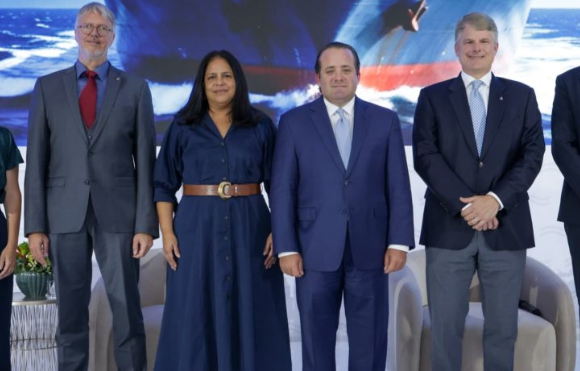
In a pivotal gathering held at the Ministry of Foreign Affairs Convention Center, industry leaders, government policymakers, and cross-sector stakeholders have united to address the future of the Dominican Republic’s maritime and trade ecosystem, with a clear call for a unified, long-term national maritime vision to underpin projected economic and foreign trade expansion. The first ever Maritime Vision 2026 forum, convened by the Dominican Republic Shipping Association (ANRD), brought together representatives from maritime transport, port operations, logistics, manufacturing, and public administration to lay out a roadmap aligned with the Dominican government’s ambitious growth target: doubling the size of the national economy by 2036. ANRD chairman Jaak Rannik opened the forum by outlining the Dominican Republic’s existing competitive strengths that position it as a growing regional trade hub. These advantages, he noted, range from the country’s strategically advantageous geographic location, already upgraded modern port and transport infrastructure, and well-established international connectivity, to consistent inflows of private sector investment and a rapidly expanding national logistics platform. Over the past decade, Rannik explained, the country has built a vibrant, dynamic port and logistics network that has supported steady trade and economic growth. However, he emphasized that incremental, sector-by-sector adjustments are no longer sufficient to keep pace with the coming wave of expansion. To meet the rising demand that will accompany a doubling of the national economy, the country must shift from fragmented, ad-hoc responses to a centralized, coordinated national strategy that proactively addresses future needs across critical areas: infrastructure development, digital and physical connectivity, logistics efficiency, skilled human capital development, and long-term environmental sustainability. Forum participants dedicated sessions to analyzing how the 2036 economic doubling target will reshape key sectors tied to maritime activity, including cross-border imports and exports, domestic manufacturing, free-trade zone operations, the country’s core tourism industry, energy supply chains, and integrated logistics networks. ANRD’s proposal frames a formal National Maritime Strategy as a unifying framework to align public sector policy and private sector investment, breaking down silos that currently slow coordinated development. The association argues that this unified approach will not only strengthen the country’s overall trade competitiveness but also drive targeted improvements in infrastructure expansion, workforce development, and climate-resilient environmental sustainability for the maritime sector. Stakeholders in attendance broadly supported the initiative, noting that proactive long-term planning is critical to ensuring the Dominican Republic can capitalize on its natural advantages and capture emerging opportunities in global trade in the coming decades.
Dominican shipping association calls for long-term national maritime strategy