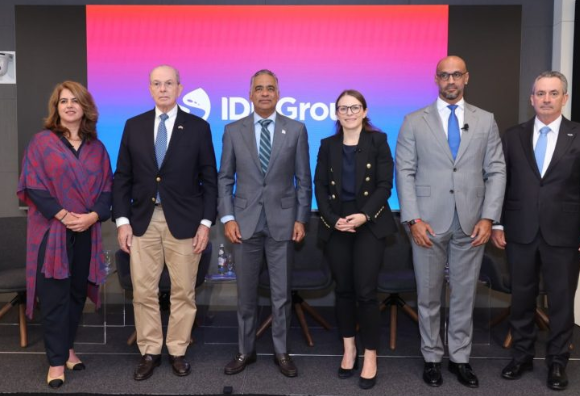
Against a backdrop of surging global demand for critical minerals — materials essential to clean energy technologies, advanced electronics, and modern infrastructure — the Dominican Republic’s Mining and Petroleum Chamber (CAMIPE) is pushing for targeted regulatory reform to unlock the country’s mining potential and secure a foothold in fast-growing regional supply chains. The call for change was delivered during a high-stakes critical minerals panel hosted at the Inter-American Development Bank (IDB) headquarters in Washington, D.C., a key event held as part of the country’s Dominican Week initiative in the United States, which aims to strengthen trade and investment ties between the two nations.
Martín Valerio Jiminián, CAMIPE’s executive director, told attendees that while the Dominican Republic already has a foundational legal framework in place to support mining development, the current system of regulatory procedures lacks the coordination, efficiency, and transparency required to attract large-scale, long-term investment. Complex, fragmented approval processes and unclear rules have created unnecessary barriers that discourage the major capital commitments the sector needs to grow, he explained.
To address these gaps, Valerio Jiminián outlined a series of concrete proposals designed to streamline administrative workflows without compromising environmental or community protections. Among his top recommendations are the creation of a unified Single Mining Window to centralize application and approval processes, a full transition to digital documentation and tracking systems to cut down on processing delays, enhanced coordination between overlapping government institutions, standardized protocols for tracking permit applications, clearly defined mandatory deadlines for regulatory reviews, and transparent, consistent rules that apply across every stage of the mining lifecycle, from initial exploration to final site closure.
A core point of emphasis from Valerio Jiminián was that administrative efficiency does not require rolling back environmental safeguards. He pushed back against the common narrative that streamlined regulation equals weaker environmental oversight, arguing that rigorous environmental impact assessments and proactive ecological protection can and must coexist with efficient, predictable administrative processes. Responsible development, he noted, depends on both clear rules for investors and strong protections for natural ecosystems.
When it comes to the country’s critical minerals strategy, Valerio Jiminián argued that Dominican policymakers must look beyond simply mapping and identifying untapped mineral deposits. For the country to capture long-term value from its natural resources, he said, national strategy must prioritize building up local technical expertise, strengthening domestic regulatory and research institutions, investing in modern mining technology, and expanding domestic capacity to attract and manage large investment projects. This approach must also center tangible benefits for local communities that host mining operations, while upholding strict environmental protection standards.
Ultimately, Valerio Jiminián said, the long-term strategic goal should be to convert the Dominican Republic’s untapped mineral resources into sustained national economic and industrial capacity. With smart regulatory reform and targeted investment in domestic capabilities, the country can position itself as a reliable, responsible supplier within regional critical minerals supply chains, driving economic growth while meeting rising global demand for these strategically essential materials.