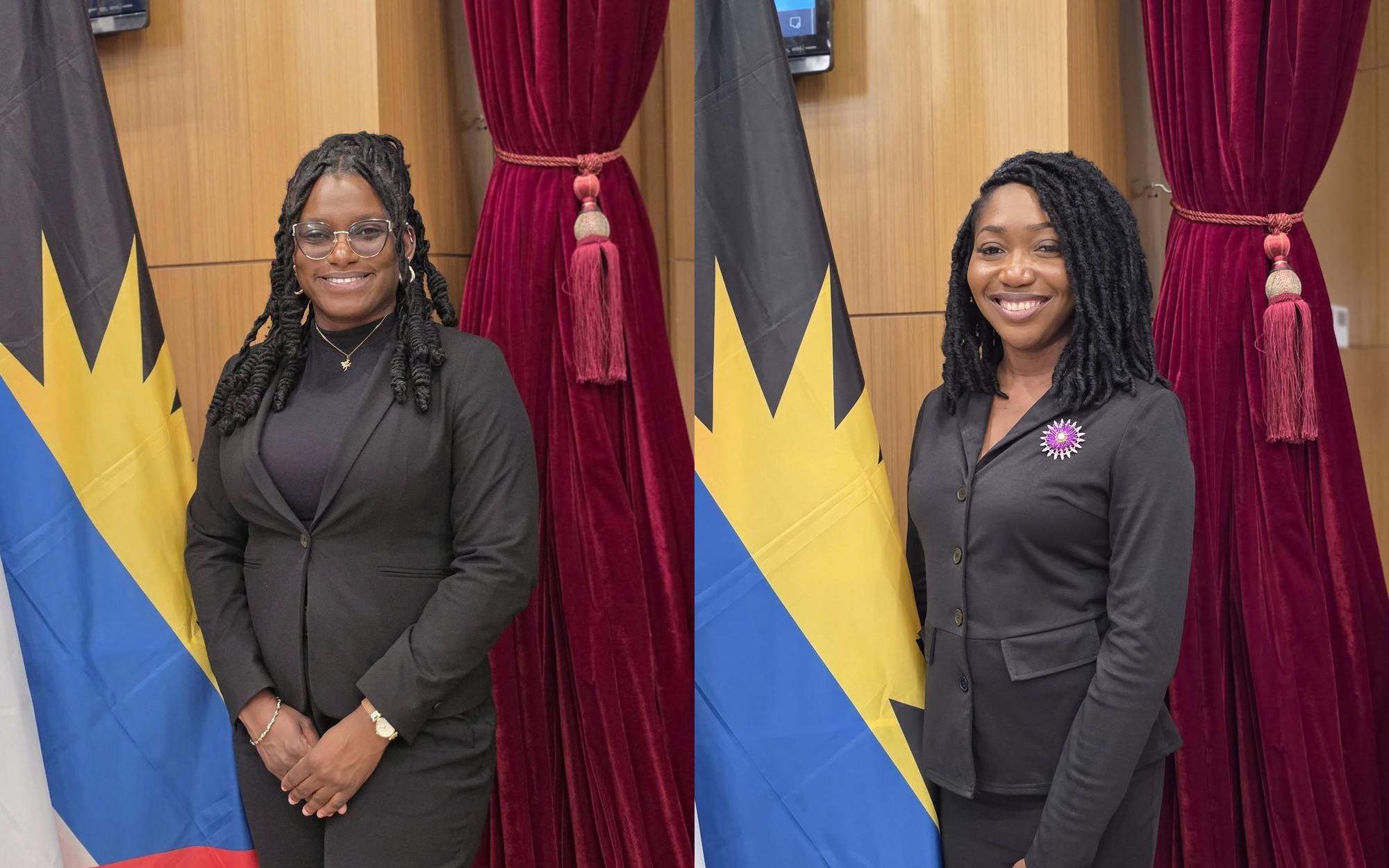
As a Small Island Developing State (SIDS) perpetually on the frontlines of climate change, Antigua and Barbuda is stepping up its capacity to mitigate and respond to climate-linked disasters by leveraging international knowledge sharing and partnership. Two of the country’s public officials recently completed a two-week capacity-building program hosted in China, centered on early warning infrastructure and climate change adaptation, equipping them with actionable insights to advance national climate goals.
Zariya Russell, Technical Officer at Antigua and Barbuda’s Department of Environment, and J’noure Smith-Kellman, Communications Officer at the national Ministry of Health, were the two representatives who participated in the seminar. Over the course of the program, attendees delved into China’s tested frameworks for climate risk management, pre-disaster preparedness, and technology integration to reinforce early warning and emergency response systems. A core focal point of discussions was the critical need to translate complex scientific climate data into clear, timely, and actionable alerts that reach frontline communities directly.
The seminar curriculum covered a broad range of high-priority topics aligned with Antigua and Barbuda’s most pressing climate challenges. Key thematic areas included climate change adaptation strategies, disaster risk reduction protocols, meteorological monitoring and forecasting techniques, end-to-end early warning system design, climate information service delivery, coordinated emergency preparedness and response, and the role of emerging technology and innovation in boosting community climate resilience. Attendees also gained firsthand exposure to China’s institutional experience embedding early warning data into policy decision-making and pre-event preparedness planning, with a specific emphasis on building coordinated cross-sector systems that align technical agencies, government bodies, and local communities through all phases of a climate hazard event: before, during, and after a disaster strikes.
For Antigua and Barbuda, every insight gained from the program carries outsized national relevance. The low-lying island nation faces constant, existential threats from a range of climate-related hazards: intense hurricanes, destructive tropical storms, widespread coastal flooding, accelerating sea-level rise, and other extreme weather events that have grown more frequent and severe amid global warming. The seminar created a critical space for the country’s representatives to examine how global expertise and cutting-edge technological advances can be adapted to fit Antigua and Barbuda’s unique national context for climate adaptation and disaster preparedness.
Beyond technical knowledge acquisition, the participation of the two national officials deepened Antigua and Barbuda’s access to proven approaches for advancing climate resilience, while also strengthening the professional skills of local staff and expanding mutually beneficial international cooperation on climate action. For the country’s Department of Environment, the learnings from the seminar directly support ongoing work to scale up climate adaptation action, reinforce national environmental resilience, and integrate evidence-based climate information into national development planning and government decision-making. For the Ministry of Health, the program reinforced how critical effective risk communication is to ensuring that clear, timely, and accessible information about environmental and climate hazards reaches the general public, empowering communities to take proactive protective action.
Looking ahead, the knowledge and connections gained through the seminar will underpin closer cross-agency and multi-stakeholder collaboration across Antigua and Barbuda, as the country advances its ongoing efforts to strengthen national disaster preparedness, boost public climate awareness, and build long-term resilience against the growing impacts of anthropogenic climate change.