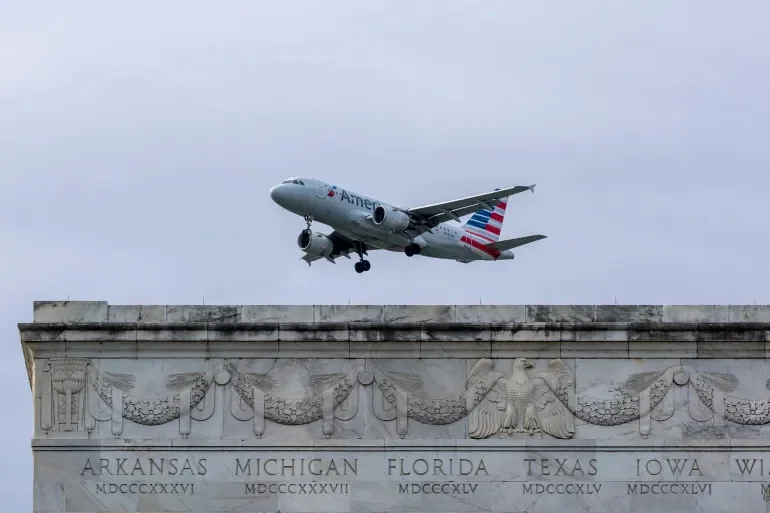
On Friday, November 13, a widespread telecommunication failure crippled operations across the entire U.S. national aviation network, prompting the Federal Aviation Administration (FAA) to implement a temporary domestic ground stop for all departing commercial flights. The outage impacted all 22 regional air traffic control hubs responsible for guiding aircraft between U.S. airports, leaving thousands of travelers stranded across the country and creating ripple effects that were projected to disrupt schedules well into the subsequent weekend.
The FAA officially announced the pre-emptive national departure freeze after detecting a temporary collapse of core telecommunication infrastructure, a safety precaution rolled out uniformly for all U.S. commercial airports. Inbound international flights bound for U.S. airspace were handled on a case-by-case basis to avoid cascading safety risks.
Real-time data from flight tracking platform Flightradar24 recorded more than 10,500 total flight delays and over 2,700 confirmed cancellations by late Friday evening, with thousands more aircraft already en route to U.S. destinations when the ground stop order was issued.
U.S. Transportation Secretary Sean Duffy confirmed that FAA technical teams had launched a full investigation to pinpoint the root cause of the disruption, with no definitive public conclusion released at the time of reporting. U.S. Secretary of Homeland Security Markwayne Mullin stated that law enforcement and security officials had found no preliminary evidence linking the outage to a terrorist attack or any deliberate malicious act, and verified that every aircraft airborne at the onset of the failure had been successfully accounted for and landed safely. President Donald Trump was fully briefed on the unfolding incident by senior administration officials.
Investigative teams are exploring a range of potential technical triggers, including a recent unvetted software update, and initially probed a potential connection to the FAA’s new AI-powered SMART system – a tool designed to help air traffic controllers predict and mitigate in-air congestion and operational hazards. Both the external developer of the SMART platform and technology giant Microsoft separately released public statements confirming their respective systems and services were not responsible for triggering the nationwide disruption, leaving the exact cause unconfirmed as of press time.
Notably, the ground stop order did not force airborne aircraft to make emergency landings; all flights already in operation were permitted to proceed to their intended destinations, with pilots trained to use pre-established emergency protocols and backup communication channels to maintain full safety during the outage. Secretary Mullin emphasized that the administration’s top priority during the incident was first ensuring all airborne passengers and crews reached their destinations safely, before gradually ramping up normal departure operations.
Major U.S. carriers including United Airlines and American Airlines issued public advisories warning passengers of prolonged cascading delays and cancellations that would persist through the remainder of Friday, and urged all travelers scheduled to fly to check real-time flight status updates directly via airline websites or official mobile apps. Even after the formal ground stop was fully lifted, full operational recovery was expected to take extended time, as widespread disruptions had displaced aircraft and flight crews from their originally scheduled positions, creating a backlog that would extend travel headaches through the weekend.
The high-profile outage has once again drawn public and legislative attention to long-documented vulnerabilities in the U.S. national air traffic control system, which has struggled for years with aging legacy hardware, recurring technical glitches, and a widespread national shortage of certified air traffic controllers. The U.S. federal government has already launched a large-scale multi-year infrastructure modernization initiative, with Congress allocating $12.5 billion in funding for the upgrade last year. The U.S. Department of Transportation and the White House have additionally requested a supplementary $30.1 billion in congressional appropriations to accelerate the overhaul.
This marks only the third instance of a full nationwide U.S. flight departure halt in modern history: the previous national ground stop occurred in January 2023, triggered by a separate FAA computer system failure, and the only prior full national shutdown was implemented in the immediate aftermath of the September 11, 2001 terrorist attacks. The recent disruption underscores the extreme dependency of the global U.S. aviation ecosystem on fully functional, redundant communication systems, as reliable lines of contact between controllers and pilots are a non-negotiable prerequisite for guaranteeing in-flight safety, making temporary departure pauses a necessary precautionary measure during unplanned critical system failures.
Communicatiestoring legt vliegverkeer in VS landelijk stil