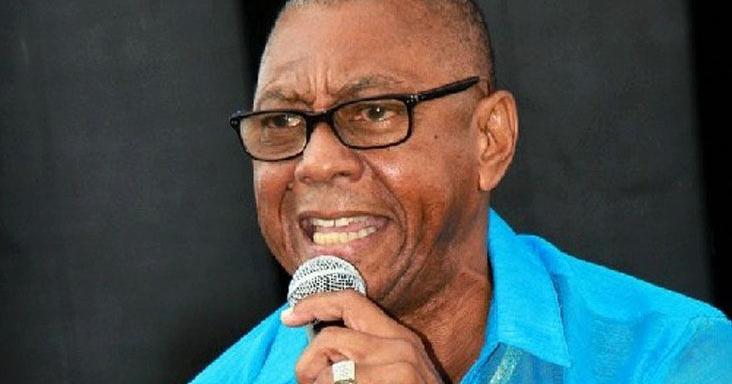
The global Caribbean cultural community is in mourning this week following the passing of legendary calypso trailblazer Slinger Francisco, universally known as The Mighty Sparrow, who died at the age of 91. Affectionately nicknamed “Birdie” by fans and peers alike, the icon leaves behind an unparalleled artistic legacy that transformed calypso from a local Trinidadian tradition into a globally recognized art form, drawing tributes from across the cultural, political and entertainment sectors.
Veteran calypsonian Weston “Cro Cro” Rawlins described the loss as surreal, saying he remains numb to the news of Sparrow’s passing. “As a small boy, my parents would pay to see him at Sparrow’s Hideaway. I ended up clashing with him on the Big Stage,” Rawlins recalled, noting that Sparrow paved the professional path for his own career, and he never disappointed the mentor’s faith in him. “It’s a sad day for Trinidad and Tobago and the entire cultural fraternity,” he added.
Kenny De Silva, former chairman of Trinidad and Tobago’s National Carnival Commission (NCC) and a local Port of Spain businessman, recalled that no amount of praise could adequately capture the magnitude of Sparrow’s decades-long contribution to Caribbean culture. “He was a wonderful calypsonian and a talented singer. There are not enough superlatives to describe his illustrious contribution,” De Silva said, sharing a memory of a sold-out 1960s show he produced called *Kings Go Forth*, which paired Sparrow with the iconic Desperadoes Steel Orchestra at the Trinidad Hilton. De Silva also recounted an anecdote where he added 300 long-stemmed yellow roses to the event for attending women, which Sparrow helped distribute to the crowd.
Veteran calypsonian and parang soca pioneer Edwin “Uncle Crazy” Ayoung said he learned of Sparrow’s passing moments after discussing the legend with a fellow musician, calling Sparrow’s work one of the most powerful influences on his own career. Ayoung often performed Sparrow’s iconic track *Education* at schools across the country, quoting its enduring message: “Children, go to school and learn well. Otherwise later on in life, you will catch real hell.” Echoing Sparrow’s own long-held belief echoed by former Prime Minister Kamla Persad-Bissessar, Ayoung noted that education acts as a “passport out of poverty” and a core driver of social mobility. He recalled performing the track alongside another of Sparrow’s classics, *Tito Lara*, at the launch of journalist and author Donna Benny’s book *Sparrow Take Over: Essays on the Bard’s Art*, saying “Now Sparrow has gone to meet a great parandero Tito Lara. May they rest in peace.”
Benny, who documented Sparrow’s decades-long career in her writing, said documenting Sparrow’s work was one of the greatest honors of her professional life. “Sparrow has blessed the world with his music. There will never be another Sparrow,” she said, thanking Sparrow’s daughter Karen Francisco and celebrated pannist Dane Gulston for their support throughout her research. “He was a phenomenal artiste and wordsmith. Fellow iconic calypsonian David Rudder sang, ‘When Slinger done with dey tail, dey bawling Sparrow don’t go.’ He immortalized Sparrow in Calypso. I can’t believe we will be singing Memories and remembering Sparrow. He will be sorely missed.”
William Munro, a pioneering Soca Monarch promoter and fellow Grenada native, noted that Sparrow’s musical genius and magnetic stage presence captivated audiences far beyond the Caribbean. “He excited the world with his songs, dance moves and musical genius. Not only Trinidad and Tobago, but the globe. I heard former culture minister Dr Lincoln Douglas remark he heard people singing Sparrow’s songs in China,” Munro said, adding that Sparrow also created widespread employment for hundreds of performers, technicians and support staff through his iconic performance venue Sparrow’s Hideaway and his performance collective the Young Brigade. In his later years, Munro noted, Sparrow devoted his life to his faith, and “he lived a full 91 years,” he said, extending condolences to Sparrow’s wife Margaret and their three children Michelle, Karen and Sancho.
Reigning 2026 Calypso Monarch Terri Lyons extended her condolences to the Francisco family, saying the Caribbean community has as much to celebrate in Sparrow’s legacy as it has to mourn in his passing. “He will be remembered. We must continue to acknowledge the contribution he has made to the Caribbean. Even though it’s sad, there’s a lot to celebrate,” Lyons said, naming the lighthearted, humorous classic *Bang Bang Lulu* as one of her personal favorite Sparrow tracks.
Acclaimed Trinbagonian songstress Mavis John called the loss “overwhelming,” saying “We have lost a big one… He has given us a wealth of music. He was an unmatched talent.” Burt Marcellin, artistic director of Brass 2’ D World and celebrated saxophonist, said he and his wife Diane were devastated by the news, and the ensemble will honor Sparrow’s legacy with a full tribute performance as part of its 2027 production. “He was an icon. He gave us wonderful music. He was a social commentator and critical thinker,” Marcellin said, naming *Education*, *Both Ah Dem* and *Marajhin* as among his favorite works.
Junia Regrello, manager of San Fernando’s iconic Skiffle Bunch steelband, noted that Sparrow’s melodic style shaped the childhood of everyone who grew up in 1970s Trinidad and Tobago, and his writing was uniquely tailored to work with steelpan arrangements. “For those of us who grew up in the 1970s, we would have gotten used to his Sparrow’s melodies… The way he and Kitchener structured their music allowed us to interpret it in a particular manner. His voice would have shaped our lives. He was our storyteller,” Regrello said, calling for a renewed effort to introduce younger generations to Sparrow’s work amid the rising popularity of fusion calypso styles.
Veteran bass guitarist Vincent Rivers, who toured and performed alongside Sparrow for decades, called working with the icon a lifelong honor. “I have worked with him and I have toured with him. I enjoyed shows with him at Guadeloupe and Martinique. He spoke fluent French. He delivered all genres of music with superb showmanship,” Rivers said, naming *Lying Excuses* as his personal favorite Sparrow track.
Steve “Ras Kommanda” Pascall, vice president of the Trinbago Unified Calypsonians’ Organisation (TUCO), called Sparrow one of the greatest Trinbagonian heroes of all time, noting that even though he was born in Grenada, he tirelessly promoted Trinidad and Tobago’s national identity across every continent he visited. “He was the consummate entertainer. He was one of the world’s greatest artists. There was a time in our history if ‘Sparrow say so, is so,’” Pascall recalled, sharing a personal memory of Sparrow’s kindness early in his own career, when the legend invited the emerging artist to join his car ahead of a 1995 calypso semi-final.
Kevan Gibbs, deputy chairman of the NCC, grew up hearing stories of Sparrow’s legend from his parents, who called him “the Calypso King of the World” and said he had stepped away from competition voluntarily to give younger artists a chance after winning seven national crowns – including a historic three-peat between 1972 and 1974. Gibbs got to see that legend in person in 1992, when a 56-year-old Sparrow returned to competition after 18 years away and reclaimed the Calypso Monarch crown in an iconic performance at Queen’s Park Savannah. “I was 19, sitting in the North Stand, seeing him perform live for the first time… He sang *Both of Them* and *Survival* and simply took command of the Savannah. He worked both sides of that enormous stage as though it belonged to him. And, in truth, that night it did,” Gibbs recalled. “Today, as Deputy Chairman of the National Carnival Commission, I mourn him with an even deeper appreciation for what he gave to Carnival, calypso, Trinidad and Tobago, and the Caribbean. The man has left us. The voice has not. Rest well, Birdie. The Calypso King of the World.”
Dr. Jerome Teelucksingh, a historian at the University of the West Indies St. Augustine Campus and founder of International Men’s Day, noted that Sparrow was more than a musician – he was a sharp social commentator who addressed pressing colonial, political and economic inequalities with unparalleled grace and wit. “Sparrow was a quintessential Caribbean man. He made an immense contribution to our culture. He’s one of our cultural icons who transcended the 20th and 21st centuries,” Teelucksingh said, pointing to classics like *Capitalism Gone Mad* and *Slave* that tackled systemic injustice with clever lyricism. “He’s one of our country’s greatest ambassadors. He made Trinidad and Tobago and calypso a household name across the globe,” he added, noting that Sparrow was the last of a generation of iconic calypso greats that included the legendary Aldwyn “Lord Kitchener” Roberts, and he died in October – recognized annually as Calypso History Month. Teelucksingh called on younger generations raised on fast-paced ragga and soca to take the time to appreciate the profound artistic and political legacy of Sparrow and the calypso tradition.