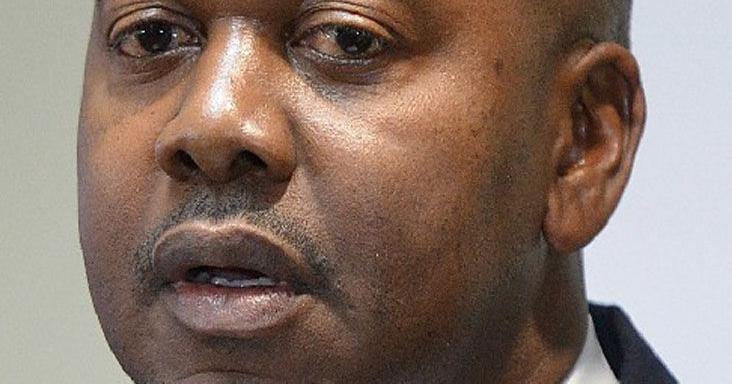
During a heated Senate debate on the controversial Special Operations Bill 2026 late Wednesday, former Trinidad and Tobago government minister Foster Cummings has dropped a bombshell revelation: 18 heavily armed police officers executed a search warrant at one of his privately owned properties, as part of an investigation into an alleged conspiracy to assassinate a sitting government minister.
Cummings, who previously served as Minister of Youth Development and National Service under the People’s National Movement administration, told the upper legislative chamber that law enforcement had also compiled a classified file of his personal activities labeled as official intelligence on police letterhead — a document that was later improperly leaked to national media outlets. The former minister stopped short of elaborating further on the document, noting the matter is already under judicial review.
Recounting the day of the raid, Cummings said he was seated inside the Parliament building when he first received an alert on his mobile phone that armed officers had arrived at his property. Moments later, a sitting government legislator across the parliamentary floor confirmed the news to him directly. “I joked that they probably just wanted to stop by for a drink, but my colleague told me they were there for a far more serious reason,” Cummings told the Senate President.
He went on to detail the origins of the police action: A high-ranking government official, who did not qualify for enhanced personal security under existing protocols, pushed claims of a murder conspiracy to prompt the police operation. Acting on the unconfirmed intelligence, officers secured a warrant from a court to search his property as part of the probe into the alleged plot. Without naming the minister making the claim, Cummings questioned why the official remained free to carry out official duties amid the allegations, contrasting the situation with the heavy police presence at his property. The country was previously under a national state of emergency when the original assassination claims first emerged publicly.
The bombshell revelation lines up with an exclusive report published by the *Sunday Express* in July 2026, which detailed allegations that an unnamed ex-government minister offered a self-described gang member $250,000 to assassinate Public Utilities Minister Barry Padarath. According to a sworn statement the detained man gave to Carenage Police Station officers on December 4, 2025 — excerpts of which were obtained by the outlet — the man was seeking high-paying work when he was taken to a club owned by the former minister in McBean in November 2025.
In the statement, the man claimed the ex-minister told him he had “a bigger job” available: $250,000 to “get rid of” Padarath, whom the former minister described as a talkative “slim Indian fella with a hard face” who “hadda go.” The accuser alleged the former minister offered to supply all necessary weapons, vehicles, and target location details, even providing an upfront $3,000 “sweetener” to secure the deal and pushed for the assassination to be carried out as soon as possible. When asked what “get rid of” meant, the man told investigators it was clearly a reference to killing Padarath, noting the former minister had made a throat-slitting gesture to confirm the order.
The man, who was already in custody on an unrelated charge when he gave the statement, told police he had never accepted a murder-for-hire job before, though he admitted to prior acts of assault and intimidation for other associates. He added he came forward with the allegations because he feared for his life if he spoke while at liberty, claiming he did not trust some members of the police force due to alleged corruption and links to the plotters.
Following the July report, Padarath confirmed his security detail had been expanded to include protection from the Trinidad and Tobago Police Service Special Branch. He publicly expressed concern that the former minister implicated in the plot remained at liberty, but emphasized he retained confidence in the national police service and would not alter his daily activities out of fear.
Cummings used his own experience tied to the high-profile murder plot investigation to frame broader objections to the Special Operations Bill, which seeks to expand law enforcement powers across the country. He warned that if a former legislator with access to parliamentary platforms could be subjected to such a sweeping, intelligence-driven search, ordinary citizens with no ability to speak out publicly would be even more vulnerable to overreach. “I have the privilege of standing in this chamber today to tell the country what happened to me. What happens to the average citizen who has no platform to push back when the state acts against them unjustly?” Cummings asked. Despite his objections and revelations, the Special Operations Bill has already secured passage in both the upper and lower houses of parliament.