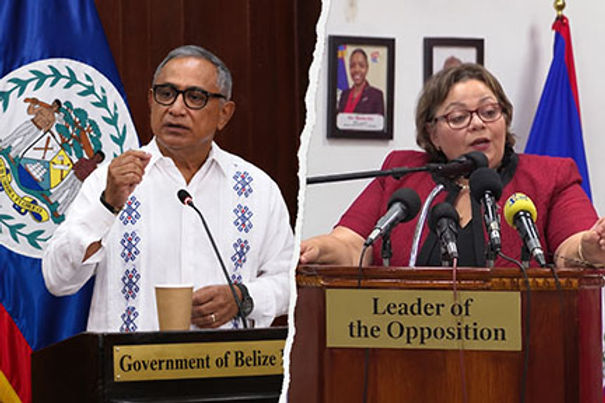
As Belize marks 45 years as an independent nation, its two top political figures have laid out starkly contrasting assessments of the country’s current trajectory, revealing a deeper debate over how national progress should be measured. Prime Minister John Briceño used his 2026 State of the Nation Address to frame Belize as a growing, forward-moving country laying the groundwork for long-term energy independence and broad-based prosperity, while Opposition Leader Tracy Panton countered that top-line economic gains have failed to deliver tangible relief for ordinary households grappling with soaring living costs and unreliable public services.
Briceño built his optimistic assessment around hard macroeconomic data and planned capital investments. He pointed to a 5.1 percent quarterly economic growth rate from the Statistical Institute of Belize, an official 98 percent employment rate, and $324 million allocated for capital spending in the current fiscal year. Ratings agency Standard & Poor’s recently reaffirmed Belize’s B-/B sovereign credit rating with a stable outlook, a milestone Briceño highlighted as proof of the country’s improving economic standing. On the investment front, he reported that the Belize Investment Development Authority (BELTRAIDE)’s investment promotion unit has secured approval for 13 projects worth more than $255 million this fiscal year, which are projected to create over 900 local jobs. An additional seven large-scale projects valued at more than $900 million are awaiting final approval, with another 11 smaller projects worth $67 million in the pre-approval pipeline.
Panton did not directly refute Briceño’s headline statistics, but she challenged the idea that these macroeconomic indicators tell the full story of life for ordinary Belizeans. Instead of measuring progress from the national balance sheet down, she argued that the true test of national performance is whether growth translates to tangible relief at the kitchen table, with lower prices for groceries, fuel, rent and electricity. She noted that the country’s B- credit rating still falls into speculative territory, and that favorable topline numbers cannot make up for eroded household purchasing power.
On the ongoing cost of living crisis, both leaders acknowledged that pressure on household budgets remains a major challenge, but they disagreed sharply on whether the government’s interventions have been sufficient. Briceño framed most cost pressures as the result of global market volatility and Belize’s heavy reliance on imported goods, factors outside the government’s direct control. He outlined a series of policy interventions designed to soften the blow: a fuel subsidy for private bus operators, $20 million in funding for a new fleet of electric buses, the elimination of goods and services tax (GST) on residential electricity bills, an expansion of the country’s social electricity tariff, periodic GST-free shopping periods, a planned minimum wage increase from $5 to $6 per hour, and an 8 percent salary adjustment for 16,000 public sector workers that will cost $112 million annually. Panton credited the government for removing GST from residential power bills, but argued that this half-measure does not address the root problem of rising base energy costs. She stressed that persistent strain on household budgets proves economic gains have not trickled down to ordinary people.
The divide between the two leaders is even more stark when it comes to energy policy, where their perspectives are separated by different time horizons. Briceño acknowledged recent widespread rolling blackouts that have disrupted daily life across the country, and identified long-term energy independence as a top national priority. He outlined immediate and long-term solutions: a temporary six-month contract for 20 megawatts of additional mobile diesel generation capacity, 30 megawatts of new solar power paired with five-hour battery storage set to come online by June 2027, and a broader planned buildout of 120 megawatts of solar and 40 megawatts of battery storage by 2030, supported by financing from the World Bank and Saudi Fund for Development. Briceño emphasized that this buildout will reduce Belize’s exposure to volatile imported energy prices and cross-border supply disruptions. Panton, by contrast, focused on the immediate crisis facing Belizeans, arguing that the government’s long-term plans do little to address the unreliable power service that residents struggle with today. She questioned the reliance on temporary diesel capacity while the country waits for renewable energy projects to be completed, noting that both sides share the goal of greater energy security — they disagree on whether the government’s response is fast enough and sufficient for current needs.
On the recent sovereignty incident in the Sarstoon River region, the two leaders shared broad agreement on Belize’s territorial claim but diverged on the government’s responsibility to protect citizens. Both praised the Belizean civilians and security personnel who participated in the September 10 incident, and both reaffirmed that Sarstoon Island is sovereign Belizean territory with the border running along the river’s mid-channel, in line with the International Court of Justice dispute resolution process. Panton shifted her focus, however, to security resourcing: she argued that civilians should never be placed on the front line of a sovereignty dispute, and called for the Belize Defence Force to receive adequate funding, equipment and political backing to fully protect the country’s territorial integrity and citizens.
Briceño also highlighted major investments in public education and citizen security in his address. He reported that 101,506 students are enrolled across 646 educational institutions, with more than 19,000 secondary students receiving full or partial tuition assistance. Over 20,000 students now receive daily hot meals at 140 schools, and internet access has been expanded to 283 schools, with an additional $46.8 million in education funding coming through the Millennium Challenge Corporation Compact. On security, Briceño noted that 15 new police vehicles have been acquired, new surveillance cameras have been deployed across high-traffic areas, and the national police conviction rate has reached 80 percent. Law enforcement has also seized 1,372 kilograms of cannabis and 582 kilograms of cocaine so far this year, alongside other illegal narcotics. Panton countered by highlighting gaps the Prime Minister failed to address, including widespread school transportation access issues, low morale and under-resourcing among rank-and-file police officers, and ongoing challenges in the healthcare system, including poor working conditions for nurses and widespread shortages of critical medications for patients.
The sharpest divide between the two addresses came over the issue of accountability, which Panton centered in her response that was entirely absent from Briceño’s speech. She called out Briceño for failing to address ongoing allegations of unexplained wealth and misconduct among senior public officials, and pushed for transparent contracting and public procurement processes, as well as full independent investigations into corruption allegations with meaningful consequences for any proven wrongdoing.
By the end of the two addresses, it was clear that Belize’s 45th anniversary political debate is not just about whether the country has progressed — it is about where progress should be measured. Briceño’s vision frames Belize as a young democracy that has weathered external shocks, built strong macroeconomic foundations, attracted billions in planned investment, and laid the groundwork for future improvements in energy, education and public services. Panton’s vision, by contrast, centers the everyday lived experience of ordinary Belizean households, arguing that economic growth only matters if its benefits are felt in lower grocery bills, dependable electricity, well-resourced public services and accountable government. The contrast between the two approaches reveals a fundamental question at the heart of modern Belizean politics: is national progress measured by what the country builds, or by how that building improves daily life for all citizens?