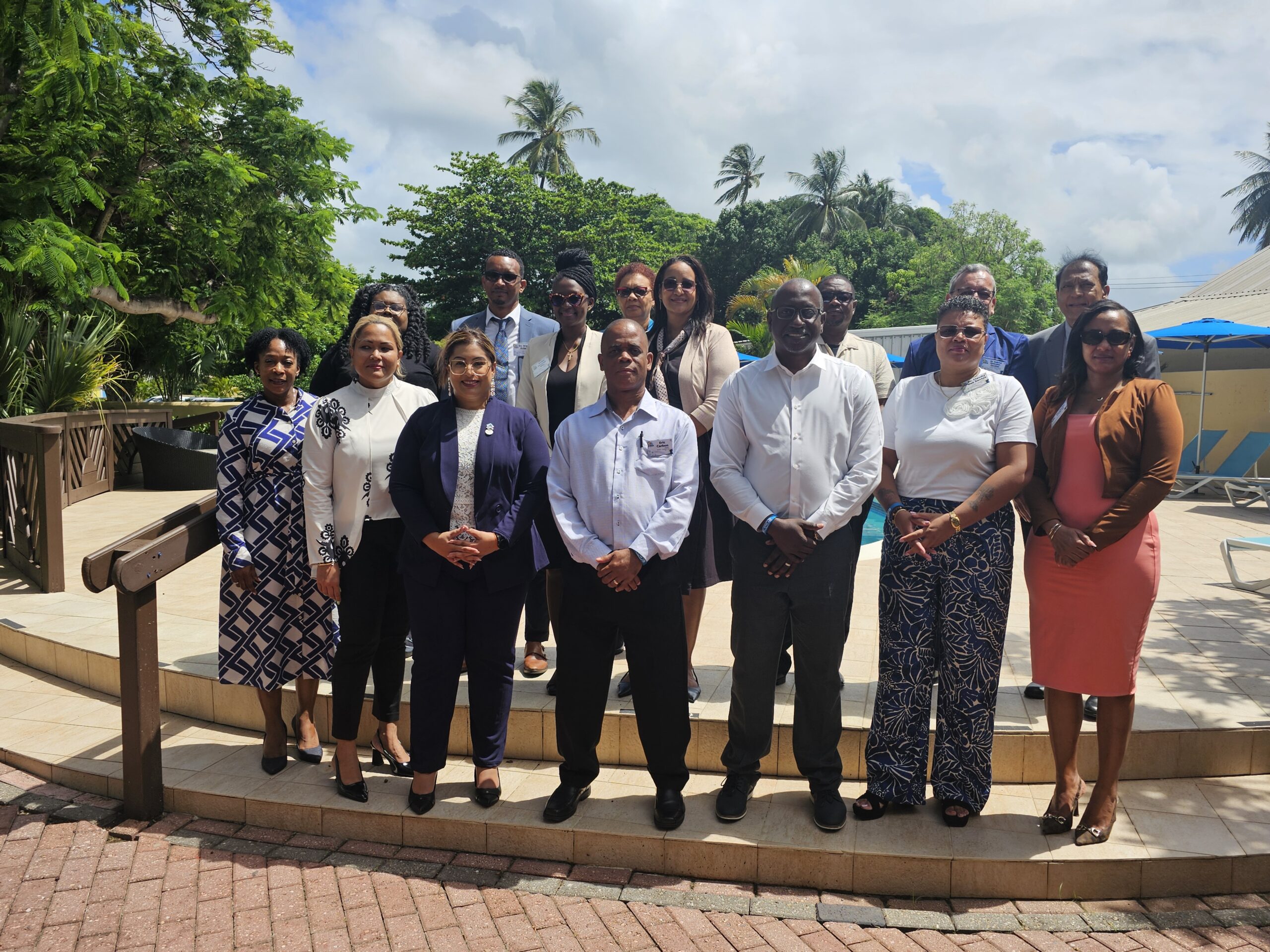
Between September 8 and 10, 2026, the Caribbean Public Health Agency (CARPHA) successfully concluded its 11th Annual Caribbean Public Health Laboratory Network (CariPHLN) Workshop in Bridgetown, Barbados. The three-day hybrid event, made possible by funding from CARPHA’s Pandemic Fund grant, united 26 laboratory directors alongside public health laboratory specialists, CARPHA personnel, and regional stakeholders to advance core public health priorities across the Caribbean.
CariPHLN functions as CARPHA’s flagship regional coordination mechanism, designed to connect national laboratory leaders, expand institutional capacity, improve access to specialized testing and specimen referral services, enforce standardized quality protocols, and enable coordinated cross-border action across CARPHA’s Member States. For the 2026 workshop, 11 laboratory directors traveled to Bridgetown to attend in person, representing Aruba, The Bahamas, Barbados, Belize, Curaçao, Dominica, Guyana, Jamaica, St Lucia, St Vincent and the Grenadines, and the Turks and Caicos Islands. An additional 15 directors joined virtually from a roster of territories and nations including Anguilla, Antigua and Barbuda, Bermuda, the British Virgin Islands, Bonaire, the Cayman Islands, Grenada, Haiti, Montserrat, the Netherlands, St Kitts and Nevis, Sint Maarten, Suriname, and Trinidad and Tobago. Personnel from the CARPHA Medical Microbiology Laboratory (CMML), based across CARPHA’s three regional campuses, also contributed to workshop discussions and activities.
In her opening remarks to attendees, CARPHA Executive Director Dr. Lisa Indar emphasized the non-negotiable role of robust laboratory systems in safeguarding regional population health. “Public health laboratories remain one of the most critical foundations of regional health security,” Dr. Indar stated. “The ability to rapidly detect a pathogen, confirm an outbreak, identify antimicrobial resistance, share reliable data, and refer specimens safely can determine how effectively we protect our populations.”
Dr. Gabriel M Gonzalez Escobar, Assistant Director of Surveillance, Disease Prevention and Control (SDPC) and Head of the CMML, echoed this sentiment, highlighting that sustained regional collaboration is the only way to address evolving transboundary health threats. “The CariPHLN meeting provides a critical opportunity for laboratories and public health professionals from across the Caribbean to come together, share experiences, and strengthen the regional systems that protect our populations,” Dr. Gonzalez Escobar explained. “As health threats continue to evolve, collaboration, timely data sharing, and laboratory excellence remain essential to safeguarding the health security of our Member States.”
A central focus of this year’s workshop was closing the gap between laboratory-generated data and timely, evidence-based public health intervention. Attendees explored actionable strategies to improve tracking of regional laboratory capacity, streamline specimen submission and transportation protocols, and strengthen cross-border data-sharing infrastructure. The workshop also served to expand awareness of two key CARPHA tools: the Regional Integrated Early Warning Surveillance and Response System (RIEWSS), which consolidates multiple surveillance data streams to enable earlier outbreak detection and coordinated response, and SENAITE, a cloud-based Laboratory Information Management System (LIMS) designed to optimize laboratory workflows, centralize data management, and facilitate secure information exchange.
Beyond data infrastructure, discussions centered on top regional health security priorities, including antimicrobial resistance (AMR) monitoring, tuberculosis surveillance and diagnostic access, preparedness for measles and other vaccine-preventable diseases, biorisk management protocols, improvements to cross-border specimen referral, and the integration of laboratory data into public health decision-making processes. Participants also exchanged on-the-ground national experiences in outbreak response and capacity building, collaboratively identifying concrete next steps to advance network goals across the region.
The 2026 workshop built on measurable progress delivered since the 2025 gathering, including strengthened CariPHLN governance through regular executive committee meetings, renewed activity across all Technical Advisory Groups, the launch of a dedicated AMR Technical Advisory Group, expanded regional diagnostic capacity, improved overall pandemic preparedness, targeted workforce and institutional capacity building, harmonized technical standards across member states, upgraded cross-border specimen referral systems, and enhanced data sharing and communication between national authorities.
Looking ahead, CARPHA will continue leveraging the CariPHLN network to support Member States in building resilient, sustainable laboratory systems, strengthening regional connectivity, and ensuring high-quality laboratory data drives earlier outbreak detection, faster response, and more robust overall health security across the Caribbean.
### Background: The CARPHA Pandemic Fund Project
CARPHA serves as the Executing Agency for the Pandemic Fund (PF) Project, with the Inter-American Development Bank (IDB) acting as Implementing Entity. Running from 2024 to 2026, the project’s core mission is to reduce the public health impact of pandemics across the Caribbean through expanded prevention, preparedness, and response (PPR) capacity. Its key objectives include building out regional and national pandemic PPR infrastructure, including surveillance and early warning systems, upgraded laboratory networks, and strengthened workforce capacity. By advancing these goals, the project aims to slow the transboundary spread of infectious diseases and improve both regional and global health security. CARPHA is the primary beneficiary of the PF grant, with all CARPHA Member States participating in project activities. More information is available via CARPHA’s official Pandemic Fund webpage.