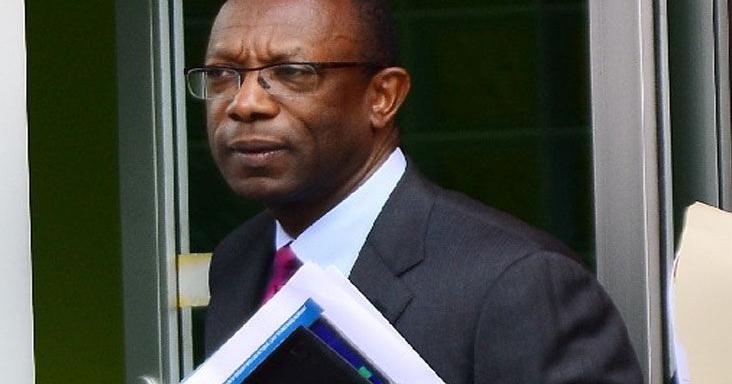
A high-stakes legal battle over a $96 million compensation claim against the state has reached the Court of Appeal, with the Office of the Attorney General arguing that the claimant, British King’s Counsel Vincent Nelson, is essentially seeking public payout for harms directly resulting from his own criminal conviction.
The case stems from a 2017 indemnity agreement Nelson struck with the Trinidad and Tobago government, under which he agreed to cooperate as an informer and prosecution witness in an investigation into an alleged kickbacks-for-legal-fees conspiracy targeting former attorney general Anand Ramlogan, SC, and former United National Congress senator Gerald Ramdeen. In exchange, the then-attorney general Faris Al-Rawi committed to recommending to the independent Director of Public Prosecutions (DPP) that no criminal charges be brought against Nelson for matters covered in his notarized statement.
After Nelson pleaded guilty to conspiracy to commit money laundering and corruption in 2019, he was stripped of his ability to practice law by the UK Bar Standards Board, leading to millions in alleged lost income and related financial losses. Nelson argues that these harms trace back to the government’s breach of the 2017 agreement: former prime minister Stuart Young disclosed his confidential notarized statement to the UK’s National Crime Agency (NCA) without following formal procedural requirements under the Mutual Assistance in Criminal Matters Act or other relevant legislation. He contends the High Court erred in dismissing his full claim after finding a breach of contract, arguing he is at minimum entitled to nominal damages or a formal declaration of state wrongdoing.
Representing the Attorney General’s Office, King’s Counsel Tom Poole laid out the state’s defense before a three-judge panel of the Court of Appeal led by Justices Gillian Lucky, Carla Brown-Antoine and Maria Wilson. Poole emphasized that the core of the case turns on a clear legal distinction: Nelson’s loss of earnings and professional standing stem directly from his own criminal conviction and the resulting regulatory action by the Bar Standards Board, not from the government’s disclosure of his statement.
“There’s a danger of conflating confidentiality with immunity,” Poole told the court, arguing Nelson has misinterpreted the 2017 agreement to stretch far beyond what parties actually negotiated. Poole explained that the agreement only guaranteed confidentiality protections for Nelson’s statement, not a blanket promise of immunity from prosecution. Under clause four of the agreement, Al-Rawi only committed to making a recommendation to the DPP – a distinction that reflected the constitutional independence of the DPP’s prosecutorial authority. Al-Rawi made clear in his evidence he could not grant immunity unilaterally, as that power rests solely with the DPP, Poole added.
Poole further noted that Nelson’s own pre-action correspondence explicitly acknowledged he was barred from practicing law because the Bar Standards Board refused to issue him a practising certificate following his conviction. “That is his own explanation for why he could not practise,” Poole said, adding that the “immediate and operative impediment” to Nelson’s claimed income is his conviction, not the NCA disclosure.
The state’s position aligns with a key finding from the initial High Court hearing: while Justice Jacqueline Wilson, KC, ruled the government did breach the confidentiality terms of the agreement by disclosing Nelson’s statement, she concluded the losses Nelson claimed fell outside the scope of the 2017 indemnity, leading her to dismiss the full $96 million claim. Poole told the appeal panel the High Court judge was correct on this central point.
Nelson’s appeal also challenges the High Court’s finding that his potential liability to UK tax authorities is unrelated to the NCA disclosure. His claim includes compensation for lost earnings, lost insurance benefits, a $2.5 million conviction fine, and potential tax liabilities stemming from his guilty plea.
In addition to defending the High Court’s dismissal of Nelson’s claim, the Attorney General’s Office has filed a cross-appeal, challenging the High Court’s core finding that the disclosure of Nelson’s notarized statement amounted to a breach of the 2017 agreement.
The case carries broader procedural context: after Nelson refused to testify in the criminal case against Ramlogan and Ramdeen until his civil claim was resolved, the DPP discontinued all charges against the two men in October 2022, though the prosecution reserved the right to reinstate proceedings at a later date.
Following the conclusion of legal submissions from both parties, the Court of Appeal panel has reserved its ruling, with Justice Lucky confirming that a judgment will be issued no later than six months from the hearing.