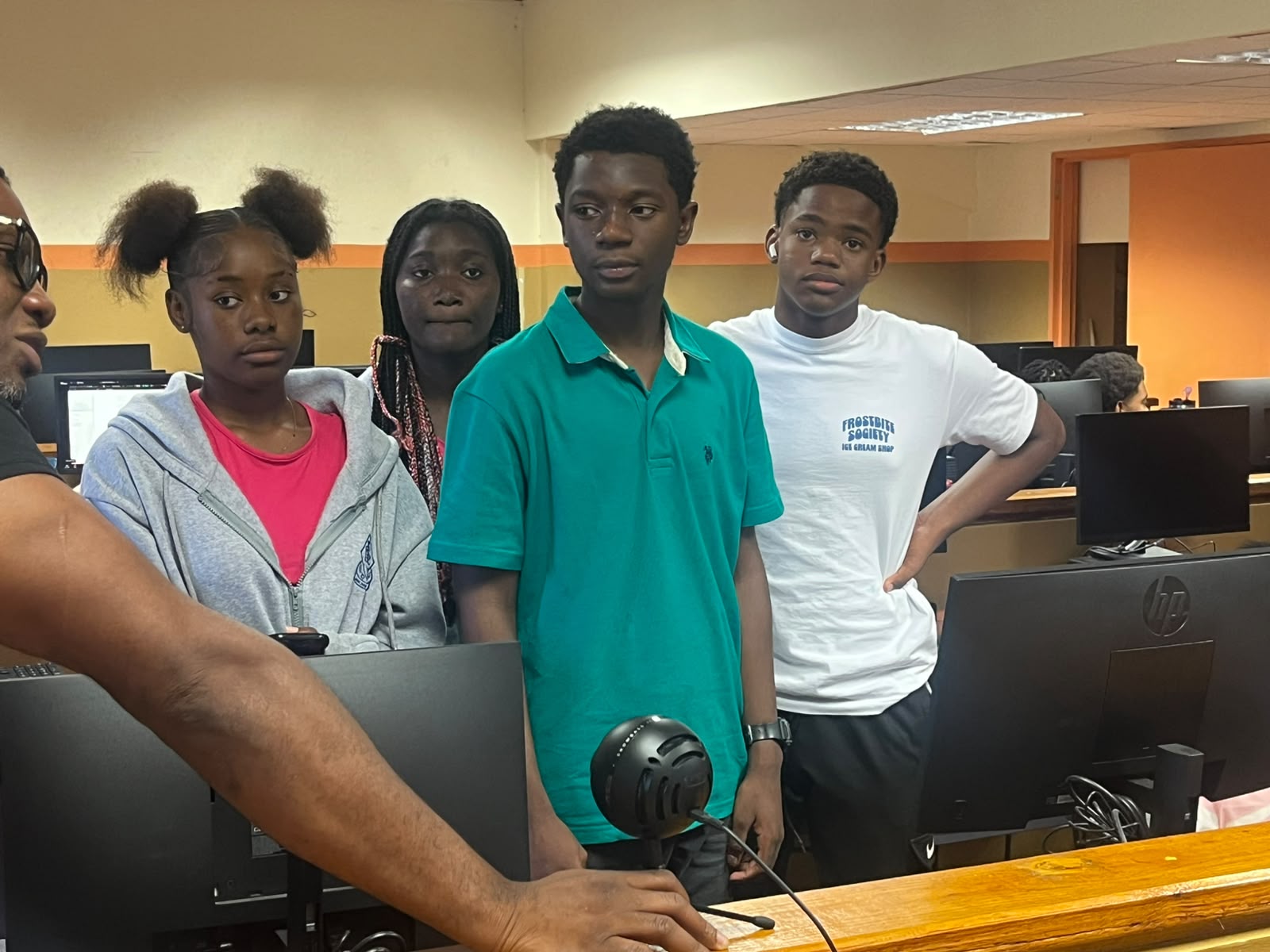
Against a backdrop of rapid global digital transformation, regional economic bodies are stepping up efforts to equip young workforces with future-ready technical skills. The Eastern Caribbean Central Bank (ECCB), backed by funding from the Taiwan International Cooperation and Development Fund, has launched the third iteration of its Generative AI and Python Summer Camp, a groundbreaking initiative designed to ready young people across the Eastern Caribbean Currency Union (ECCU) for the competitive demands of the modern digital economy.
Unlike previous editions that centered on simulated learning projects, the 2026 camp introduces a game-changing new component: direct, hands-on collaboration with real enterprise and public-sector clients to tackle tangible, on-the-ground challenges. For the ECCB, this training program is far more than a seasonal youth activity — it forms a core pillar of the bank’s broader strategy to drive regional economic transformation and build a competitive, future-ready local workforce.
“What the camp does is that it arms our youth to be able to have the competencies to compete at a global level in the digital space. And this is what it’s all about,” explained Sybil Welsh, ECCB Project Manager and Senior Project Specialist. This year’s move beyond simulated projects places participants directly in authentic work environments, where they are tasked with identifying client pain points and co-developing innovative, practical solutions. Welsh emphasized that this immersive model pushes young learners to exceed their own perceived limits: “When you have a real client, what you do is immerse our young people in real-life skills, a real innovation lab. You have real clients, you have real projects, and now you really inspire our young people to do all that they need to do, to dig deep, to go beyond what they thought was possible, to meet and I would say even surpass the expectations of clients.”
Telly Onu, the camp’s Lead Trainer, Instructional Design Specialist and Chatbot Edition Hub Coordinator, noted that the real-client model fosters holistic professional growth alongside technical coding proficiency. Beyond mastering generative AI and Python, participants build soft skills that are critical for long-term career success. “The key skills that they really learn, number one, is really problem solving. They all had several meetings with their clients. So obviously they learn how to now do consultative engagements. They build their confidence in that way so they can conduct client interviews, do requirements collection. So basically, each team, we train them on how a real development team actually works,” Onu said.
For the young participants hailing from across ECCU member states, the experience has already delivered transformative personal and professional growth, with many highlighting the unique value of working on live projects. Nia Jack, a 16-year-old participant from St Kitts and Nevis, helped build a custom chatbot for the ASPIRE Programme, a government financial literacy initiative that teaches young people about saving and investing from an early age. “It’s been really fulfilling. I, as a 16-year-old, having the honour of working with the Aspire Programme,” Jack shared.
Simlet Pierre, a participant from St Vincent and the Grenadines, credited the camp with helping him develop critical leadership and collaboration skills he had previously struggled with. “A lot of persons used to tell me that I’m a bit self-centred, so I’ve worked …in large groups. Now I am leading a group of 20 members, to be exact,” Pierre said.
Emma Morris, another St Kitts and Nevis participant, described the experience as equal parts challenging and rewarding. “It was stressful at times for sure because, you know, these are real clients and real people with real needs and having to meet their needs and make sure you make a product that is good enough to not only satisfy them, but satisfy their customer engagement,” Morris said. “So it was challenging, but once we got it done, it felt really nice.”
Alisha Gordon of Grenada called the program transformative, highlighting how it has built foundational skills that will serve her throughout her future career. “It was an incredible and transformative experience. We worked as a team, and we built up a foundation in coding, and I feel like I developed my presentation skills and communication skills,” Gordon said. “The camp has given me the opportunity to learn skills that I know I can use in the future. Working with a real client was especially valuable because we had to listen to their needs, understand the problem and then work together to find a solution.”
Program facilitators echoed participants’ positive assessments, noting that the camp moves far beyond passive technology education to active problem-solving. Kelvin Pompey, an Assistant Facilitator from St Vincent and the Grenadines, highlighted the shift participants have made in understanding the power of collaborative work: “They realised for themselves what they can do together as a group and as a team.”
Eugine Whint, an Assistant Facilitator from Grenada, emphasized that the camp places young Eastern Caribbean learners at the cutting edge of global technological development, giving them a years-long head start on in-demand skills. “This programme is really advanced. What (the campers) are doing are things that, to be honest, people in 5 years’ time will be like, wow, why didn’t I do that before? They are at the forefront of technology,” Whint said.
Co-sponsored by the ECCB and the Republic of China (Taiwan), the 2026 camp also operates in partnership with education ministries across all ECCU member states and specialized delivery partners. The program will conclude on 28 August 2026 with a public showcase, where participating teams will present their completed AI and Python projects to clients, stakeholders and the public, demonstrating the skills and solutions they have built over the course of the camp.
Through initiatives like this Generative AI and Python Summer Camp, the ECCB continues to invest in building a new generation of digitally skilled young leaders who are prepared not only to participate in the evolving global digital economy, but to shape the future growth of the Eastern Caribbean region.