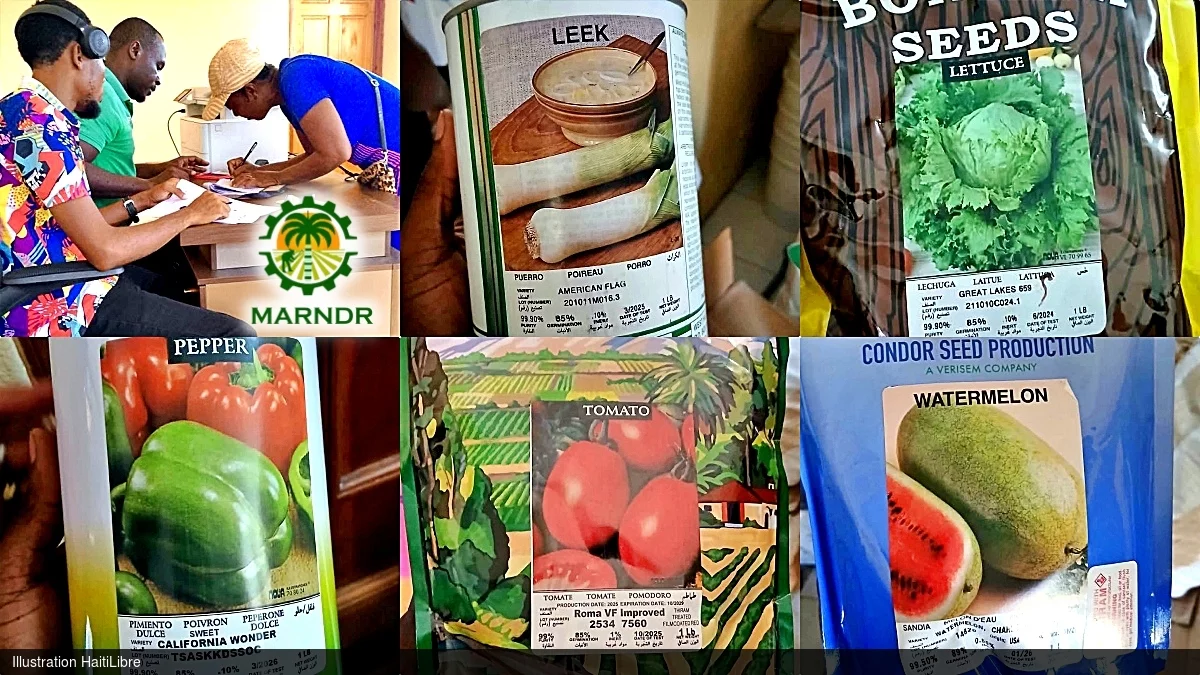
Haiti’s agricultural sector is launching a targeted intervention to address the country’s persistent food insecurity crisis, with government authorities rolling out a large-scale vegetable seed distribution program that will benefit more than 2,000 small-scale producers across 12 communes in the country’s Southern Department.
The initiative is being led by Haiti’s Ministry of Agriculture, Natural Resources, and Rural Development (MARNDR), and implemented under the emergency relief arm of the Resilient Agriculture for Food Security Project (PARSA), a development program backed by World Bank funding. The targeted communes include Port-à-Piment, Chardonnières, Chantal, Saint-Jean-du-Sud, Saint-Louis-du-Sud, Maniche, Cavaillon, Les Cayes, Camp-Perrin, Port-Salut, Torbeck, and Ducis.
Per details shared by Thed St-Juste, an agronomist serving as PARSA’s Assistant for Crop Production in the Southern Department, the seed kits include a diverse range of crop varieties: bell peppers, tomatoes, eggplants, spinach, lettuce, parsley, melons, leeks, and papayas. Each beneficiary receives seeds for three distinct crop types, designed to be planted on small plots near farmers’ homes to establish what the program calls “home gardens.”
Local agricultural officials from Municipal Agricultural Offices (BAC) are partnering closely with MARNDR to execute the distribution, leveraging their on-the-ground knowledge to identify and vet eligible farmers to ensure the aid reaches those who need it most. Standard allocation sets 100 beneficiary slots per commune, but communes with robust existing agricultural infrastructure and functional irrigation systems will receive expanded support, with 200 seed kits allocated to meet higher local production capacity.
For Haiti, where thousands of rural households face chronic difficulty accessing affordable, nutritionally diverse food, home gardens represent a practical, community-centered solution to food insecurity. The initiative not only helps households grow fresh produce to meet their own daily nutritional needs, improving diet diversity for vulnerable families, but also creates opportunities for farmers to generate extra income. Any surplus harvest can be sold at local markets, cutting household food costs while boosting local economic activity and increasing the overall supply of affordable fresh produce across the region.
Beyond immediate food relief, the program aligns with longer-term goals to revitalize Haiti’s agricultural sector, strengthen rural livelihoods, and boost household-level food self-sufficiency. By supporting smallholder farmers to expand and diversify their production, the initiative aims to address the root causes of food insecurity while driving sustainable economic growth in rural Haitian communities.