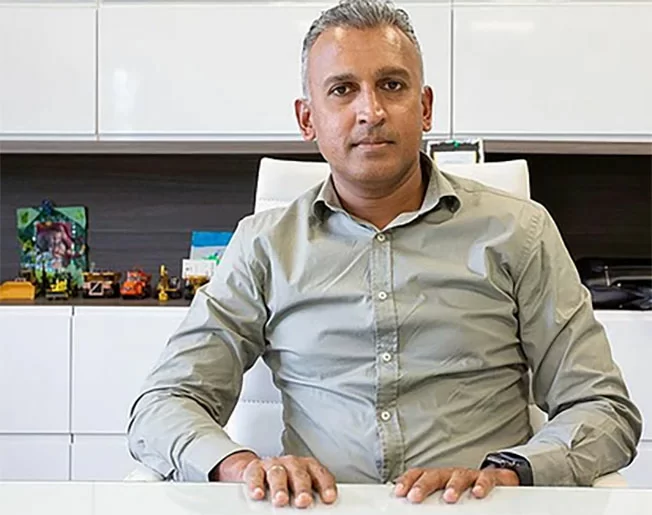
Suriname stands on the cusp of a transformative economic shift as its emerging oil and gas sector unlocks a historic new opportunity for national growth — but without a binding, long-term development strategy, the country is at severe risk of repeating the mistakes that left past natural resource windfalls failing to deliver sustained prosperity, a top industry leader has warned.
Speaking at a CEO Talk hosted by the Suriname Association of Economists (VES), Farsi Khudabux, chief executive officer of the diversified Baitali Group, outlined that money has never been the core barrier to Suriname’s progress. For decades, the nation has generated substantial revenue from natural resources including bauxite, gold, and earlier oil exploration, in addition to receiving consistent international development assistance. What has consistently been missing, Khudabux argued, is a structured strategy to convert that natural wealth into long-term, inclusive development and lasting improved living standards for the population.
During his address, which covered both Baitali Group’s expansion trajectory and the broader state of Suriname’s business climate and economic future, Khudabux emphasized that Suriname has long been blessed with abundant natural resources, but has repeatedly failed to capitalize on these assets to build broad-based economic stability. The current wave of oil and gas development, he noted, delivers a rare second chance to get it right — but only if policymakers abandon the fragmented, short-term approaches of the past.
Khudabux called for an end to the pattern of short-term development plans that are rewritten with every change of government. Instead, he urged the country to adopt a cohesive 20 to 30-year national development vision that clearly identifies priority sectors, maps out required infrastructure investments, and locks in this long-term trajectory to prevent incoming administrations from scrapping existing plans and restarting from scratch each time.
A key additional warning from the CEO is that the oil and gas boom must not create a new pattern of one-sided economic dependence. Suriname already holds untapped potential in gold mining, fertile agricultural land, and a range of other non-energy sectors, Khudabux said. Rather than allowing the economy to become overly reliant on oil exports, new oil revenues should be used to intentionally build up these other sectors and create a far more diversified, resilient national economy. In Khudabux’s vision, the Suriname of the future should be defined by strong education systems, modern connected infrastructure, robust public institutions, a diversified economic base, a culture of innovation, and broadly shared improvements to quality of life.
To achieve this vision, Khudabux stressed that education reform is a non-negotiable first step. Current education curricula are poorly aligned with the skills Suriname needs to grow its priority sectors, he argued, noting that the country cannot aim to develop oil and gas, infrastructure, agriculture, and technology sectors while failing to train a domestic workforce capable of filling roles in those industries. Baitali Group already faces this skills gap firsthand, Khudabux said, so the firm has invested in developing its own in-house training and skills development programs to meet its personnel needs. Today, Baitali Group operates across a wide range of key Surinamese sectors, including construction and infrastructure, transport and logistics, agribusiness, energy, telecommunications, oil and gas, and knowledge development.
Khudabux also pointed to neighboring Guyana as a useful case study for Suriname. While he emphasized that Suriname does not need to copy every part of Guyana’s approach, the country can learn critical lessons from how Guyana prepared for its own oil boom. When oil revenues began flowing to Guyana, the country was able to rapidly roll out large-scale infrastructure projects, a speed of delivery that Khudabux says proves long-term planning and spatial preparation began years before revenues arrived.
“Making plans does not cost money,” Khudabux stated during his presentation, framing this as a core warning for Suriname. The country should not wait until large oil revenues start arriving to identify where new roads, bridges, economic zones, and other critical investments need to be built, he said. Land for future infrastructure projects must be reserved now, even before development breaks ground, and Khudabux warned that large swathes of valuable land have already been allocated without a cohesive long-term plan in place to guide national development.
For Khudabux, the oil and gas sector will serve as a critical funding source for national development, but it is not a development strategy on its own. His central message to Suriname’s policymakers is clear: this time, the country must first define where it wants to be in 20 to 30 years, then allocate upcoming resource revenues to hit those long-term targets. Without a binding long-term vision, strong institutions, aligned and improved education, and planned modern infrastructure, Khudabux warned, Suriname will face the same disappointing outcome it has seen in the past: massive natural resource revenues, but no sustained, inclusive national development.