On Thursday, Suriname’s National Assembly reached a unanimous vote to approve the country’s accession to the United Nations protocol opposing the death penalty, but the landmark legislative proceeding was marred by persistent quorum issues and widespread absences among elected representatives.
The session was delayed from its scheduled start time, and was forced into an unexpected mid-proceeding suspension after headcounts confirmed fewer than the constitutionally required 26 members were present in the chamber. The disruption sparked sharp rebuke from both National Democratic Party (NDP) parliamentary leader Rabin Parmessar and acting assembly chair Ivanildo Plein, who called on absent lawmakers to uphold their democratic responsibilities to constituents.
The suspension occurred even as Minister of Justice and Police Harish Monorath prepared to present a formal oral statement to the chamber. Acting Chair Plein, standing in for the vice-chair, was required to halt proceedings mid-introduction. “Minister, I have to suspend this meeting temporarily, because I do not have the required number of members on the floor at this moment. I am suspending before you begin reading your oral act,” Plein stated publicly. Lawmakers were summoned back to the chamber, and proceedings only resumed once the minimum quorum was met.
Following the resumption, Parmessar doubled down on his criticism of chronic absenteeism, noting that the morning session had already been delayed by the same quorum failure. “We have a massive backlog of work to complete for the people of this country,” Parmessar said, adding that poor attendance is drawing negative public attention amid ongoing public discourse over assembly member compensation. He urged political party leaders, who nominate parliamentary candidates, to hold their elected members accountable for consistent attendance and active engagement. He also extended public recognition to the lawmakers who maintain regular participation in both committee and plenary sessions.
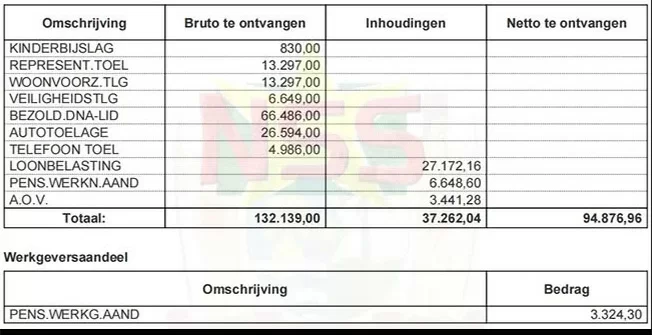
A leaked pay slip for assembly members, published alongside the report, shows that a Suriname legislator earns a gross monthly salary of 132,139 Surinamese dollars. After mandatory deductions totaling 37,262.04 SRD, the net monthly payout comes to 94,876.96 SRD. The gross compensation package includes multiple pre-approved allowances for representation, housing, security, vehicle use, and telecommunications expenses.
Responding to the criticism, Progressive People’s Party (VHP) leader Asis Gajadien clarified that three VHP members were out of the country on official business, and all remaining members of his caucus were in attendance for the vote. Plein emphasized that his call for better attendance applies to all 51 members of the assembly, including himself. “Showing up just to sign the attendance sheet and leaving immediately is not the job. The work is staying and contributing to the nation’s business,” Plein said, clearing the way for Minister Monorath to continue his address.
In the final vote, the bill to approve accession was passed unanimously with 31 members in support, backed by every parliamentary caucus in the assembly. Accession to the Second Optional Protocol to the International Covenant on Civil and Political Rights formally embeds Suriname’s abolition of the death penalty into binding international law. Suriname first removed the death penalty from its civilian penal code in 2015, and eliminated it from military criminal law in 2021.
Minister Monorath emphasized that the death penalty is an absolute, irreversible punishment; if new evidence emerges that proves a wrongful conviction after execution, there is no way to undo the harm. He added that accession to the protocol reaffirms Suriname’s ongoing commitment to protecting fundamental human rights and freedoms. The protocol also requires member states to submit regular public reports detailing measures they have taken to maintain abolition and comply with the agreement’s terms.